Peace for the World World ! Your War Our Lives

The Dalai Lama
A Brief Colonial History Of Ceylon(SriLanka)
Sri Lanka: One Island Two Nations
A Brief Colonial History Of Ceylon(SriLanka)
Sri Lanka: One Island Two Nations
(Full Story)
Back to 500BC.

Sunday, September 23, 2018
Shielding Wijegunaratne Amounts To Abuse Of Power & An Assault On Democracy!

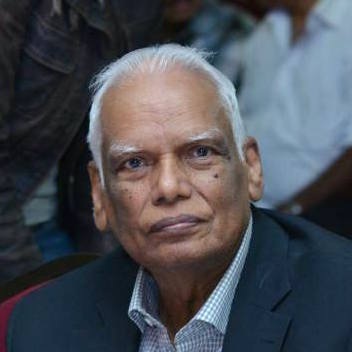
Veluppillai Thangavelu
 A
fuming President Sirisena summoned a special cabinet meeting just two
days after the regular cabinet meeting held on Tuesday, September 11,
2018. On that day the Cabinet adopted a 77-page draft Counter-Terrorism
Law presented by Foreign Affairs and Development Assignments Minister
Tilak Marapana. This Bill, when passed by parliament, will replace the
current Prevention of Terrorism Act of 1978 which vests the police with
broad powers to search, arrest, and detain suspects. It was first
enacted as a temporary law in 1979 under J. R. Jayewardene presidency,
and then made permanent in 1982.
A
fuming President Sirisena summoned a special cabinet meeting just two
days after the regular cabinet meeting held on Tuesday, September 11,
2018. On that day the Cabinet adopted a 77-page draft Counter-Terrorism
Law presented by Foreign Affairs and Development Assignments Minister
Tilak Marapana. This Bill, when passed by parliament, will replace the
current Prevention of Terrorism Act of 1978 which vests the police with
broad powers to search, arrest, and detain suspects. It was first
enacted as a temporary law in 1979 under J. R. Jayewardene presidency,
and then made permanent in 1982.
This is one of the assurances Sri Lanka gave to UNHRC in terms
of Resolution 30/1 of October 01, 2015 titled Promoting reconciliation,
accountability and human rights in Sri Lanka. The following are some of
the key commitments the Government of Sri Lanka undertook to implement
within a time frame.
(1) To undertake a comprehensive approach to dealing with the past,
incorporating the full range of judicial and non-judicial measures; also
the proposal by the Government to establish a commission for truth,
justice, reconciliation and non-recurrence, an office of missing persons
and an office for reparations;
(2) To uphold the rule of law and to build confidence in the people of
all communities of Sri Lanka in the justice system, notes with
appreciation the proposal of the Government of Sri Lanka to establish a
judicial mechanism with a special counsel to investigate allegations of
violations and abuses of human rights and violations of international
humanitarian law, as applicable; affirms that a credible justice process
should include independent judicial and prosecutorial institutions led
by individuals known for their integrity and impartiality; and also
affirms in this regard the importance of participation in a Sri Lankan
judicial mechanism, including the special counsel’s office, of
Commonwealth and other foreign judges, defence lawyers and authorized
prosecutors and investigators.
(3) To accelerate the return of land to its rightful civilian owners,
and to undertake further efforts to tackle the considerable work that
lies ahead in the areas of land use and ownership, in particular the
ending of military involvement in civilian activities, the resumption of
livelihoods and the restoration of normality to civilian life, and
stresses the importance of the full participation of local populations,
including representatives of civil society and minorities, in these
efforts;
(4) To a political settlement by taking the necessary constitutional
measures, encourages the Government’s efforts to fulfil its commitments
on the devolution of political authority, which is integral to
reconciliation and the full enjoyment of human rights by all members of
its population; and also encourages the Government to ensure that all
Provincial Councils are able to operate effectively, in accordance with
the thirteenth amendment to the Constitution of Sri Lanka;
(5) To sign and ratify the International Convention for the Protection
of All Persons from Enforced Disappearances without delay, to
criminalise enforced disappearances and to begin issuing Certificates of
Absence to the families of the missing as a temporary measure of
relief.
Although some progress has been made to comply with Resolution 30/1, the
Government has been dragging its feet over the above commitments. The
Government has not done anything about (2) above. An independent
investigation into war crimes committed during the war is a
pre-requisite for genuine reconciliation. However, the President has
taken the stand that the army has not committed war crimes and no member
of the armed forces will be put on trial courts with foreign judges.
