Peace for the World World ! Your War Our Lives

The Dalai Lama
A Brief Colonial History Of Ceylon(SriLanka)
Sri Lanka: One Island Two Nations
A Brief Colonial History Of Ceylon(SriLanka)
Sri Lanka: One Island Two Nations
(Full Story)
Back to 500BC.

Tuesday, September 18, 2018
‘We can’t be complacent about disaster management’ - Dilanthi Amaratunga
 2018-09-14
I recently read in the news that some of the early warning towers had been vandalised in Mullaitivu. What would have happened to the people who are relying on that particular early warning tower if a disaster was to take place, on that day
- Economic losses caused by disasters are increasing
- Private sector’s involvement is vital in disaster risk reduction
- Need to be rid of the silo mentality
- Policy makers brush aside science and research
- Disaster Risk Reduction must be incorporated into development
- Appreciate the commitment made by the Government
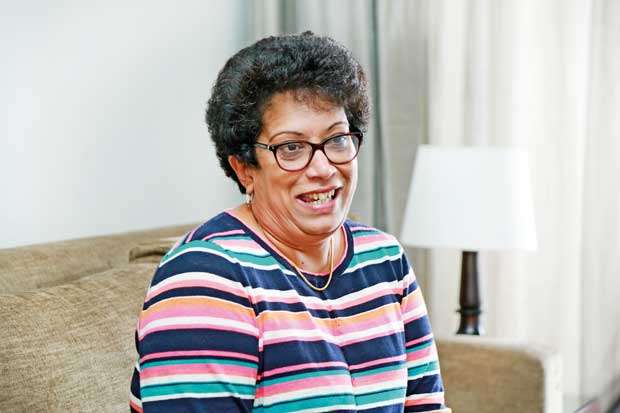
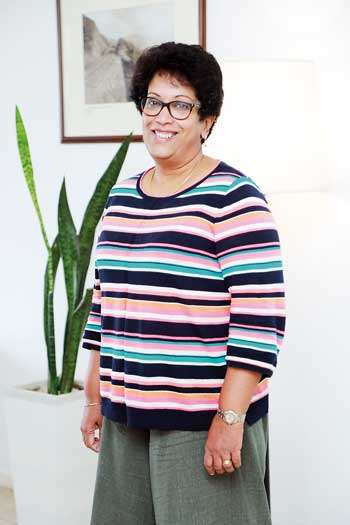
Dilanthi Amaratunga is a Professor of Disaster Risk Management at the University of Huddersfield, United Kingdom with 27 years of experience in the
 higher
education sector. She is a leading expert in disaster resilience,
currently leading the Global Disaster Resilience Centre, a global leader
in interdisciplinary research, education and advocacy to improve the
resilience of countries and communities. Her work recognises that with
the growing population and more extensive and interconnected
environments, the world’s exposure to hazards is increasing. In a recent
interview done with The , Dailymirror Prof. Amaratunga discussed challenges, opportunities and concerns related to disaster management in Sri Lanka. Excerpts:
higher
education sector. She is a leading expert in disaster resilience,
currently leading the Global Disaster Resilience Centre, a global leader
in interdisciplinary research, education and advocacy to improve the
resilience of countries and communities. Her work recognises that with
the growing population and more extensive and interconnected
environments, the world’s exposure to hazards is increasing. In a recent
interview done with The , Dailymirror Prof. Amaratunga discussed challenges, opportunities and concerns related to disaster management in Sri Lanka. Excerpts: Q Many global disaster risk reduction campaigns emphasise on the need for immediate action in disaster preparation. Why is this need urgent?
The urban population is increasing at a rapid pace. In Sri Lanka the
rural population is still higher, but the urban population is
increasing. Globally too, urban populations have risen in numbers and
this is quite an alarming trend. On the other hand we have mega cities
developing. Even in Sri Lanka people are now migrating to cities in
search of economic opportunities. This is actually quite a scary
situation as a highly populated city is a recipe for disaster.
Putting these facts in perspective, natural hazards don’t actually kill
people, but most of the time, buildings do. When natural hazards
interact with other elements, then disaster occurs. This is the
difference between a hazard and a disaster.
Disasters play a key role in every sector of the economy. Hazards can
actually wipe away quite a number of systems which have been in place.
Because of the very good early warning systems in place, the number of
people affected by disasters is decreasing; which is a very good sign.
Having said that, the economic losses caused by disasters are
increasing. Saving lives of course is the most important aspect, but
these economic losses cannot be ignored either. Disasters are capable of
exposing people to poverty and making them experience other
difficulties. That is why I believe that the time to take action is
now.

Q How important is disaster risk reduction in order to minimise economic losses?
There is no way that we can prevent natural disasters. The only thing we
can do is to be prepared in order to face a disaster situation and make
sure that losses are minimal. There’s no science there and anyone
should be able to understand this. People need to understand that
preparedness is the key. They need to be aware of how best to face a
disaster and how to act once it takes place.
In Sri Lanka there is quite a number of small businesses operating. How
they would cope after a disaster is an issue which has not really been
addressed. This is where the private sector’s involvement is vital. I
really don’t see any sort of engagement with the small businesses in Sri
Lanka. I also don’t see how they can cope with the aftermath of a
disaster. Small businesses especially need the continuity of businesses
as it is their lifeline.
Q What is your opinion of the mechanisms put in place by the Government in terms of disaster management?
The issue in Sri Lanka is that it doesn’t treat the subject of disaster
management as a multi-stakeholder discipline. Even the public is of the
opinion that disaster management is the Government’s responsibility. Of
course the state has a major role to play, but it should also be able to
bring all stakeholders together.
The Government has recognised the importance of Disaster Risk Reduction
and I see this as a very positive move. They have set up the Disaster
Management Act, which is headed by the President and the National
Disaster Council. The President also graced the launch of the
Association of Disaster Risk Management Professionals (ADRiMP), which I
believe is encouraging. In that sense I think Sri Lanka has recognised
the importance of this field. Certainly there’s lot more to do, but
there are some countries in the world where even this recognition does
not exist.
Q What are the shortcomings you have observed in Sri Lanka?
One of the major issues I have observed is that people are working in
absolute silos. The Government, the Disaster Management Centre (DMC),
the Meteorological Department they all work as individual entities.
We’re currently engaged in a project bringing in the Met and the DMC
together. For the first time they have sat around a table to discuss
this particular subject. In Sri Lanka I think people are very much used
to working in silos. Be it academia or research, there is no space for
discussion. That is why they wanted to promote disciplinary approaches
through the launch of ADRiMP. I’m not saying that we need to do blue sky
research (research without a clear goal) because we need to be adding
to the knowledge. But there are certain areas of research that add
direct value to the beneficiaries or the rest of the stakeholders.
Similarly, policy makers always brush aside the science and the
research. Instead they consult Wikipedia to find out what is happening.
Whatever their policies are, they are not based on the actual science or
the latest development. That is why I believe, if it functions properly
ADRiMP will have a very important role to play, because it will be
independent and will be able to facilitate a platform where people can
work collaboratively.
Q Can you name some areas which needs improvement?
The Government has been funding and supporting the Disaster Management
Ministry as well as finding resources for the DMC. The investment in
these areas has been very visible. But whether these resources have been
used properly remains to be seen. I think it is caused by a lack of
coordination between different stakeholders. It is imperative that the
public must be included as a stakeholder. I don’t know what sort of role
the public are expected to play in Sri Lanka.
The state, policy makers, researchers, local Government, private sector
and the public need to come together. I believe ADRiMP provides this
opportunity.
Q How do you view Disaster Risk Reduction in relation to development efforts in Sri Lanka?
In Sri Lanka, with the construction boom, it is very scary to think
about whether they have all the ways of incorporating DRR into their
processes. That is why mainstreaming disaster elements into every sector
of the economy is very important, but I don’t know if there is a
mechanism as such in practice. It would be very interesting to find out
what mechanisms are involved.
Q In you view, how can disaster awareness and education be mainstreamed?
Education has an integral part to play in disaster management. In the
UK, there are elements of disaster management in the curriculum. Japan
is a classic example where children are well informed about disasters.
But are we in Sri Lanka knowledgeable to that extent? Or are we just
getting kids to run behind the grade 5 scholarships?
We need to start this education at the smallest level, in order to raise
awareness. Therefore mainstreaming disaster awareness at every level of
the society is imperative, which is the only way the general public
will take it seriously. Of course when something goes wrong, the people
are very good at passing the blame on somebody. What people need to
realise is that everybody has a role to play.
Q How prepared do you think we are as a country for a major disaster?
For Sri Lanka, like many other South Asian countries, the eyeopener was
the 2004 Indian Ocean Tsunami. Prior to this catastrophic we weren’t
actually familiar with mega disasters. Soon afterwards there was a great
volume of investment made in the name of Tsunami preparations which
happened at a good scale at the time.
However, now the world is beginning to focus on a multi-hazard approach in managing disasters.
However, now the world is beginning to focus on a multi-hazard approach in managing disasters.
None of the countries can invest on systems for individual hazards as it
is very expensive. Therefore the concept of multi hazard preparation
has been developed. However I’m not aware of the strategies developed in
Sri Lanka as far as the multi hazard concept is concerned or whether we
are still dealing with individual hazards.
Similarly, policy makers always brush aside the science and the research. Instead they consult Wikipedia to find out what is happening
Even though hazards cannot be prevented, we can always prepare for them
and minimise adverse effects by communicating it to the general public.
The ordinary person needs to know what to do, where to go and what
immediate steps they should be taking. This is a primary responsibility
of policy makers.
Q What is your opinion on the country’s preparedness in the event of a Tsunami?
The Tsunami early warning front has been quite good in the past. I was
here as an international observer for the International Tsunami drill on
September 5. The drill is conducted in order to test the system.
Tsunami wise, therefore Sri Lanka has some form of preparation. On other
fronts, particularly in disaster continuity, there’s a lot to be
desired.
With the construction boom in Sri Lanka, we sincerely hope there will be
no earthquakes or any other form of disaster. After the Indian Ocean
Tsunami the entire earth has moved by so many centimetres, which is
actually a significant change in terms of geology. Since then, there
have been several Tsunamis. This is why we cannot disregard the
possibility of yet another Tsunami. We need to be prepared especially
because of all the changes happening around us such as the extreme
changes in temperature and melting of glaciers. All these things are
interlinked.
Q Do you think there is room for improvement in terms of technological capacity and expertise in Sri Lanka?
We absolutely can’t be complacent in disaster management. You can never
know enough and this attitude is particularly a Sri Lankan problem. We
need to be constantly updated with our knowledge.
There needs to be a 100% change of attitude. Why does UNESCO spend
millions of money annually training people from all around the world, if
it is a futile exercise? I’m one of the professionals of the Indian
Ocean Early Warning system training team. If everything is in order
there really wouldn’t have been a need to invest billions of dollars in
training. This is done because there are changes we need to adapt at any
given time. We can never be complacent because we have a very good
system in place. The system is only the operational side of it. If the
system is not based on the latest findings, then what’s the point of
having a system?
I recently read in the news that some of the early warning towers had
been vandalised in Mullaitivu. What would have happened to the people
who are relying on that particular early warning tower if a disaster was
to take place, on that day? Having a system in place is futile if it is
not constantly tested. We need to evaluate if the system reflects
whatever the latest findings coming in from other directions. Of course,
Sri Lanka is still a developing economy and it does not possess the
infrastructure nor the capacity like India and Jakarta. But we need to
make sure that there is a really good downstream mechanism to pass on
the information and to take action on the various levels of warnings.
Q What is Sri Lanka’s position in terms of climate change adaptation?
People should know that climate change will have direct and indirect
impacts. Direct impacts are quite visible in the form of droughts,
floods and changes in seasons. In the past Sri Lanka had been a very
prosperous country and we had a really good balance of the sun and the
rain. But we are losing that balance now.
What they can’t see and need to be aware of are the things happening
elsewhere in the world which can have an impact on Sri Lanka. This is
why the public should not be complacent about things. For instance
people cannot pacify themselves into thinking that there won’t be
another Tsunami in their lifetime. That is a very
dangerous assumption.
dangerous assumption.
Recently in Indonesia there were two major earthquakes and due to their
preparation, they were able to save a great number of lives. If they
weren’t prepared I’m sure the number of deaths would have been more.
Northern Pakistan for example is full of glaciers. Because of increased
temperatures, they have started to melt. Experts have warned that it is a
Tsunami in the making because the ocean will not cope. If their
predictions are proven true, Sri Lanka is vulnerable to a major impact.
Rising sea levels are other areas we really need to focus on. We need to
be prepared and vigilant and cannot afford to be complacent about any
type of disaster.
Q What are the opportunities and challenges you see for Sri Lanka?
I need to admire the commitment of the leadership irrespective of which
party they represent. The country as a whole is completely committed and
is a signatory to the Sendai framework.
There is also fairly a decent research base on the subject matter while
new courses are introduced at the Colombo and Peradeniya Universities.
There’s a lot of building going on in the country and believe that some
are very good opportunities.
In terms of challenges, the silo needs to be rid of and public
engagement is key. I have observed that the academia is reluctant
probably due to a lack of trust. They work in isolation. The
practitioners think the researchers don’t share information; therefore
the mistrust needs to be cleared. These two groups need to come together
which is a very big challenge.
Pics by Damith Wickramasinghe
