Peace for the World World ! Your War Our Lives

The Dalai Lama
A Brief Colonial History Of Ceylon(SriLanka)
Sri Lanka: One Island Two Nations
A Brief Colonial History Of Ceylon(SriLanka)
Sri Lanka: One Island Two Nations
(Full Story)
Back to 500BC.

Tuesday, October 2, 2018
MAP Calls For Independent Evidence-Gathering Mechanism For Sri Lanka
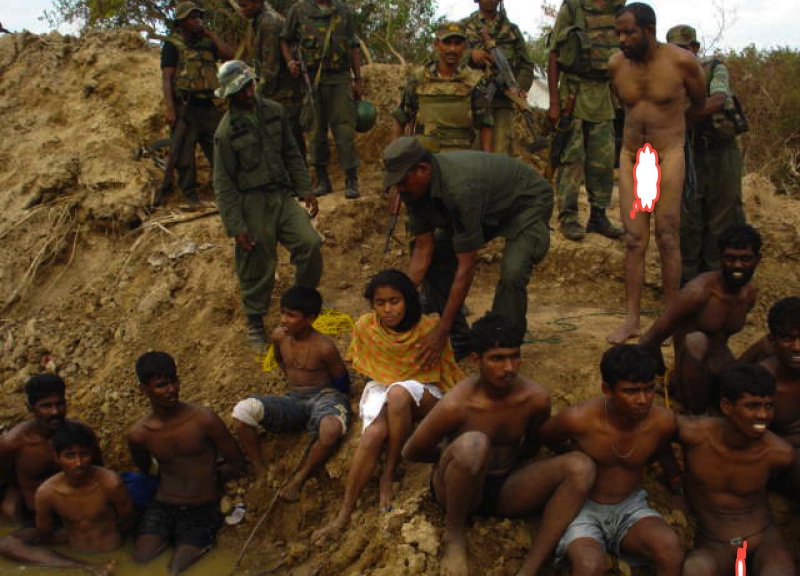

Sri Lanka Monitoring and Accountability Panel (MAP) called for the UN Human Rights Council to set up an independent evidence-gathering mechanism for Sri Lanka with a similar mandate to those on Syria and now Myanmar.
 The
organization made this request in light of the Sri Lankan government’s
continued delaying tactics in setting up an accountability mechanism for
the country.
The
organization made this request in light of the Sri Lankan government’s
continued delaying tactics in setting up an accountability mechanism for
the country.
“Looking ahead to the HRC’s 40th Session in March 2019—when the question
of Sri Lanka’s compliance is back on the agenda—a fresh approach is
needed. And, fortuitously perhaps, recent events at the Council provide a
potential solution. On 27 September, with respect to the situation in
Myanmar, the HRC ‘overwhelmingly supported a resolution to set up an
“independent mechanism” that will collect and analyze evidence of the
“most serious international crimes” and prepare dossiers that will make
it easier for prosecutors to bring cases to trial in national, regional
or international courts’,” the organization said.
It also added, “As noted by the International Commission of Jurists, the
rationale behind such a mechanism is clear: ‘The passage of time
increases the chances that critical evidence will deteriorate or be lost
entirely, reducing the possibility of effective prosecution. An IIIM
mechanism would ensure that evidence is collected, preserved and
analyzed to a standard and methodology facilitating its use in national,
regional or international courts.’”
We publish below the statement issued by MAP in full:
Sri Lanka and the 39th Human Rights Council Session: Playing Domestic Politics on the International Stage
1 October 2018
In early-September 2018, former Sri Lankan president Mahinda Rajapaksa proclaimed that his government’s fight against the Liberation Tigers of Tamil Eelam (LTTE)
should not be considered an ‘ethnic war’, as ‘military action was not
directed against the Tamil community’.[1] While the veracity of such a
claim remains open to heated debate, its delivery at this point in time
is not surprising. Mr Rajapaksa appears poised to stage a political
comeback, and anti-Tamil assertions are catnip to his Sinhalese
supporters—especially members of the military.[2] At the same time, a
central element of his platform involves depicting current Sri Lankan
President Maithripala Sirisena as a stooge to foreign influence for
having endorsed UN Human Rights Council (HRC) Resolution 30/1—a move Mr
Rajapasksa and his supporters consider a blow to the country’s
sovereignty and an incursion on ‘processes that are exclusively the
domain of Sri Lanka’s Parliament’.[3] In a further slap to victims, Mr
Rajapaksa also characterized the well-founded allegations of human
rights abuses by the ‘victorious Sri Lankan military’ as ‘false’.[4]
Fearing for his political life, President Sirisena moved to distance himself from the transitional justice program he had signed-up to:
Two days before the [HRC] sessions in Geneva, Sri Lanka’s president
announced plans to move away from implementing [Resolution 30/1] with
the aim of saving the security forces accused of war crimes and mass
scale human rights violations. […] ‘I am going to introduce a new
resolution at the UN […] mainly to get rid of resolutions and human
rights allegations against the security forces […] and on the program we
should implement with regard to LTTE terrorists.’[5]
Unsurprisingly, this statement was made before a group of Sinhalese activists.[6]
Days later, in her inaugural speech to the HRC, the new High
Commissioner for Human Rights, Michelle Bachelet, ‘expressed her concern
on Sri Lanka’s lack of progress in addressing war crimes’.[7] Echoing
her predecessor, she called for ‘[m]ore progress in advancing
accountability and truth-seeking’ and denounced ‘[r]ecurrent incidents
of racist and inter-communal violence’.[8] Ms Bachelet said Sri Lanka
had ‘moved too slowly towards meaningful implementation of the
transitional justice agenda’.[9] Members of the Sri Lanka Core Group
also lamented the lack of progress on important areas, emphasizing
(among other things) that despite firm commitments by the Government of
Sri Lanka (GSL), ‘national accountability mechanisms […] have yet to be
established’.[10] Human Rights Watch later catalogued precisely how the
GSL has ‘fallen far short’ on its transitional justice
efforts[11]—points consistently raised by the Sri Lanka Monitoring and
Accountability Panel (MAP) over the last three years.
On 15 September, amid the HRC session, it was again announced that
President Sirisena would ask the UN to refrain from pursuing
accountability for war crimes committed by Sri Lankan troops and that he
would ‘instead call on the [HRC] to “remove these charges”.’[12]
Ignoring the existence of Resolution 30/1, its two-year extension, and
the last several decades of history, he disingenuously claimed that
‘[w]e can amicably resolve this issue’ and—even more brazenly—that ‘he
expected “concessions” from the [HRC]’.[13] The move appears to have
played well at home.[14]
And yet, despite his previous political bluster, President Sirisena’s
delivery from the international stage was decidedly muted—presumably, to
suit his audience. In his 19 September address to the 73rd UN General
Assembly, the president was oblique with respect to his view on the
GSL’s commitments under Resolution 30/1:
[W]e seek the respectful support of all, as we take steps in a progressive manner, to address allegations and implement resolutions, while protecting the independence and sovereignty of my country. Some expect quick action and short-sighted, short-term solutions. As
a country which has suffered an almost 30-year-long conflict, I urge
the respectful support of all, in ensuring the success of the journey we
have embarked upon to unite the people who were torn by division in my
country, to build feelings of unity and compassion, to dispel fear,
suspicion, anger and hatred and take forward the beloved people of my
country and strengthen and rebuild my beloved motherland as a strong and
prosperous democracy. Our
path forward must be stable and progressive and not one of haste that
may be destabilizing, considering the complex and sensitive nature of
issues that we face.[15]
Although the terms were vague, the message—to both his domestic and
international constituencies—was clear: The contours of Sri Lanka’s
‘path forward’ will not be charted by the UN.[16] While the HRC should
be supportive of any country making genuine efforts to reconcile
conflict-affected communities, the evidence has suggested for some time
that domestic politics in Sri Lanka will trump international commitments
to human rights. Those holding out for the implementation of a
credible criminal-justice mechanism under the terms of Resolution 30/1
can expect a very long ‘journey’ indeed.
