Peace for the World World ! Your War Our Lives

The Dalai Lama
A Brief Colonial History Of Ceylon(SriLanka)
Sri Lanka: One Island Two Nations
A Brief Colonial History Of Ceylon(SriLanka)
Sri Lanka: One Island Two Nations
(Full Story)
Back to 500BC.

Sunday, November 4, 2018
Glowing chemical 'could aid brain cancer surgery'
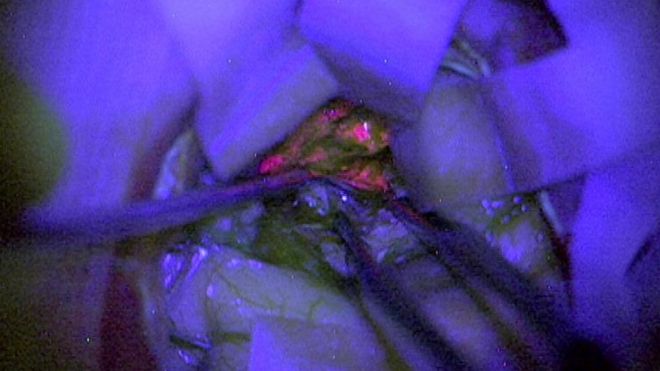
The chemical causes tumours to glow pink under UV light

A chemical that makes brain tumours glow pink could help surgeons to remove the cancer safely, a trial suggests.
Scientists gave people with suspected glioma a drink containing 5-ALA, a
substance known to accumulate in fast-growing cancer cells.
The pink glow the chemical causes was found in people with the most aggressive cancers.
Researchers hope it will make it easier for surgeons to distinguish between cancer cells and healthy brain tissue.
- Common virus to help fight brain cancer
- 'Kinder' care hope for child brain cancer
- Extra cancer funding in Tessa Jowell tribute
Treatment for glioma, the most common form of brain cancer and the one
that killed ex-Labour cabinet minister Dame Tessa Jowell, usually
involves surgery to remove as much of the cancer as possible, and the
prognosis for patients is often poor.
For this new trial, 99 patients with suspected high-grade (fast-growing)
gliomas were given a drink containing 5-ALA before surgery.
Research has previously shown that 5-ALA ends up in fast-growing cancer
cells, because they lack an enzyme needed to break down the chemical.
Surgeons used microscopes to help them look for fluorescent tissue while removing tumours from the patients' brains.
During their operations, surgeons reported seeing fluorescence in 85 patients.
Of these, 81 were confirmed by pathologists to have high-grade disease,
one was found to have low-grade disease and three could not be assessed.
In the 14 patients in whom surgeons did not see any fluorescence, seven
tumours were found to be low-grade gliomas while the other seven could
not be assessed.
Study author Dr Kathreena Kurian, associate professor in brain tumour
research at the University of Bristol, said: "There's an urgent need to
have something while the patient is on the table, while the neurosurgeon
is operating, which will guide them to find the worst bits.
"The beauty of 5-ALA is that they can see where high-grade glioma is, while they're operating."
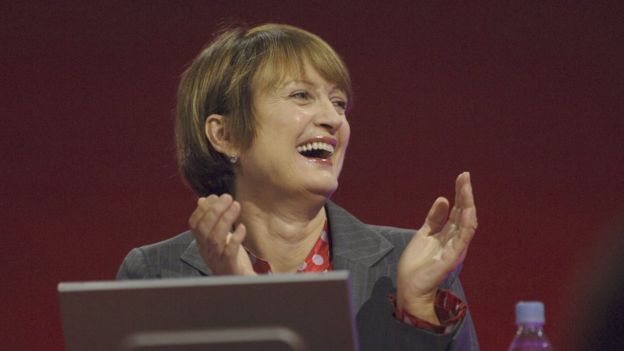
Dame Tessa Jowell died in May this year
The researchers caution that the study looked at patients who were
already suspected to have high-grade tumours, and a larger study in
which more patients have low-grade disease would provide more
information on the use of this technique.
Other types of markers may need to be tested for detecting low-grade glioma cells, they say.
Next steps could include testing the 5-ALA in children with brain
tumours, or to help surgeons distinguish between tumour tissue and scar
tissue in adult patients, whose brain cancers have recurred following
treatment.
Dr Paul Brennan, from Cancer Research UK, said: "Highlighting the more
aggressive tumour cells in real-time could help doctors achieve the
delicate balance between removing as much of the tumour as possible
while preserving surrounding healthy tissue.
"The fluorescent marker may also ease the burden of follow-up treatment,
as cancer cells left behind after surgery require additional
radiotherapy or chemotherapy."
The National Institute for Health and Clinical Excellence approved the
use of 5-ALA for patients with brain tumours, prior to surgery, earlier
this year.
The research is being presented at the 2018 NCRI Cancer Conference in Glasgow from 4 to 6 November.
