Peace for the World World ! Your War Our Lives

The Dalai Lama
A Brief Colonial History Of Ceylon(SriLanka)
Sri Lanka: One Island Two Nations
A Brief Colonial History Of Ceylon(SriLanka)
Sri Lanka: One Island Two Nations
(Full Story)
Back to 500BC.

Thursday, January 24, 2019
Political Economy Of Post-Coup Yahapālana

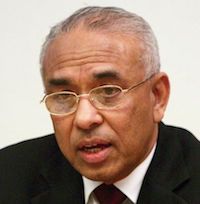
Dr. Ameer Ali
 The
fifty-two days torment the nation endured since President Sirisena (MS)
sacked Prime Minister Wickremesinghe (RW) on October 26th last
year, has cost the country’s economy immensely. Capital flight, rupee
depreciation, decline in tourist arrivals and above all investor
uncertainty and external confidence are the direct result of Sirisena’s
impetuous and unconstitutional action. Although RW and his government
have been reinstated the political situation is not back to normal.
There is continuous turbulence and MS, still smarting under defeat from
his constitutional fiasco and public ignominy arising from it, continues
to undermine the smooth functioning of an elected government. At the
same time, the opposition led by the Rajapakse clan and its SLPP, which
is hankering for power at any cost, is adding fuel to fire. The ultimate
victim of this power play is the nation’s economy. No one seems to care about this victim.
The
fifty-two days torment the nation endured since President Sirisena (MS)
sacked Prime Minister Wickremesinghe (RW) on October 26th last
year, has cost the country’s economy immensely. Capital flight, rupee
depreciation, decline in tourist arrivals and above all investor
uncertainty and external confidence are the direct result of Sirisena’s
impetuous and unconstitutional action. Although RW and his government
have been reinstated the political situation is not back to normal.
There is continuous turbulence and MS, still smarting under defeat from
his constitutional fiasco and public ignominy arising from it, continues
to undermine the smooth functioning of an elected government. At the
same time, the opposition led by the Rajapakse clan and its SLPP, which
is hankering for power at any cost, is adding fuel to fire. The ultimate
victim of this power play is the nation’s economy. No one seems to care about this victim.
“Neither a borrower nor a lender be” said Polonius in Shakespesare’s Hamlet. In one of the episodes in the Tamil epic Ramayanam of Kampan, King Ravana’s torment was compared to that of a person in deep financial debt. Instead
of a Ravana today, Sri Lanka itself is tormented with a debt burden
mounting to more than 70% of the value of all what she is producing. May
be the Minister of Finance Mangala Samaraweera, has become a modern day
Ravana to be tormented by an escalating national debt and a slow moving
economy. In a sense, the debt burden is mostly an inherited one, but to
which his government has contributed a fair share. Already, at least
one lender has demanded and acquired one of the nation’s real assets,
the Hambantota Harbour, ostensibly on a ninety-nine year lease. Will
this asset ever revert to Sri Lanka? There is also no guaranty that
more such acquisitions will not occur if Sri Lanka fails to free itself
from its mounting foreign debt. The minister is now begging another
lender, the IMF, to show mercy in renegotiating the terms of repayment
for existing loans while beseeching IMF to lend even more.
Lending
and borrowing are normal state of economic behaviour in modern life
whether for an individual, corporation, institution or nation. However,
if one wants to borrow one should first think of the reason for
borrowing and of the ways and means of settling the loan. Without going
into the economics behind public and private sector deficits, one can
state in simple terms that a government borrows either to cover a
temporary disequilibrium in its finances or to embark on specific
development projects to increase the nation’s production capabilities
that would earn more revenue in the future. Samaraweera believes that he
could resurrect the ailing economy by attracting more foreign
investment, spending on development projects such as his gamperaliya,
reducing budget deficit and giving more incentives to the private
sector, while at the same time bringing down the cost of living for
struggling Sri Lankans. This is no less than a Herculean task and his
options to accomplish it are severely constrained because of domestic
political realities. No economy can operate independently of its political environment.
The
most important issue facing the minister is to achieve fiscal
consolidation to satisfy IMF monitors. This has to be achieved through
cutting expenditure and increasing tax revenue. Even with increased flow
of foreign investment to encourage production and export, which in any
case is a medium to long term option to yield result, budgetary savings
cannot be avoided. The question is ow is he going to reduce budget
deficit especially when his government has just about a year to face a
general election? Which expenditure to curtail and who to tax are
sensitive issues especially for a government that is facing the polls
soon. Political expediency is sure to overwhelm economic rationality in
the forthcoming budget.
To
make the minister’s task even more difficult, MS has determined to take
revenge on RW and his UNF government, which is hanging on to power
because of support from the Tamil National Alliance (TNA). MS’s
decision to establish a Presidential Commission of Inquiry to probe UNF
government’s performance between 2015-2018 while excluding a similar
probe into the regime of Mahinda Rajapakse (MR), as promised to the
people when MS was elected as president, is a deliberate ploy to tarnish
the image of RW and redirect his government’s attention more on
countering MS’s and SLPP’s political manoeuvres than on concentrating on
economic development.
As
mentioned already, the economy is the chief victim of planned political
instability and reckless competition for power among the chief
contestants, RW, MS and MR, not to mention Gotabaya Rajapaksa who is
waiting in the wings. Currently, neither MS nor MR seems to worry about
the economy, and neither of their parties SLFP and SLPP respectively has
any economic blueprint for the future.
Read More
