Peace for the World World ! Your War Our Lives

The Dalai Lama
A Brief Colonial History Of Ceylon(SriLanka)
Sri Lanka: One Island Two Nations
A Brief Colonial History Of Ceylon(SriLanka)
Sri Lanka: One Island Two Nations
(Full Story)
Back to 500BC.

Friday, March 1, 2019
The Language Barrier

RAISA WICKREMATUNGE-02/27/2019
Sitting on Maatram Editor
Selvaraja Rajasegar’s desk is a thick envelope containing details of
elephant deaths on the railway track. The information took him over a
month to receive, because he made the request in Tamil. The response,
when it eventually came, was in English.
This is not unusual – as someone who requests in Tamil, Maatram’s
requests will often only be responded to in a month’s time, if at all.
Vikalpa Editor Sampath Samarakoon meanwhile, says that those who file in Sinhala do not face the same barriers.
Both Maatram and Vikalpa have
been active in applying for information under the Right to Information
Act since it was operationalised in 2016. They are colleagues who file
requests on similar issues. But their experience of using the Act is
very different. This does not just reflect structural issues within the
Government departments that they have applied to – it reflects language
barriers that ordinary citizens continue to face in accessing essential services.
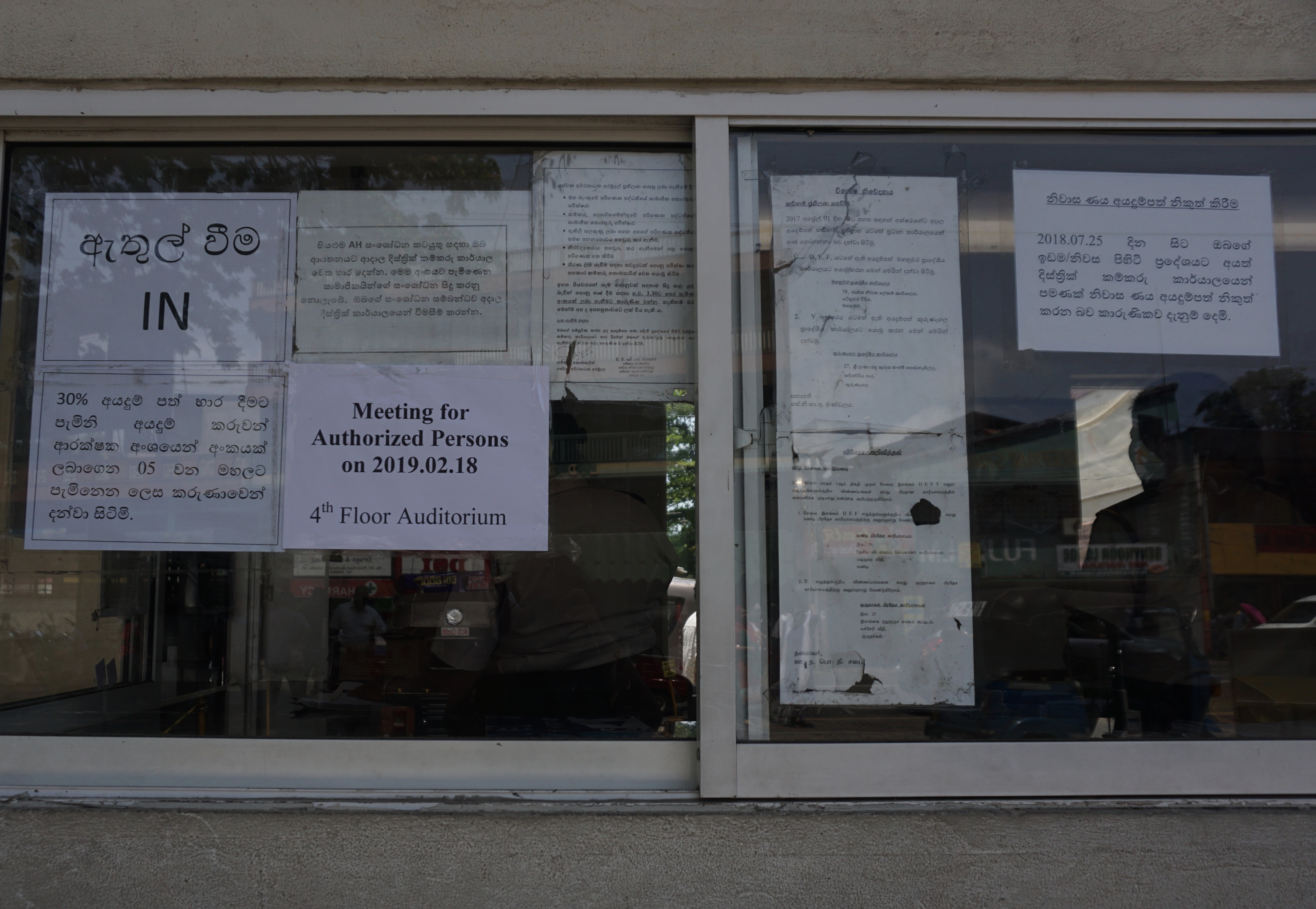
A 2017 survey by
the Centre for Policy Alternatives found that all the main name boards
in Ministries were in line with the Official Languages Policy, although
section name boards and designation boards were not always trilingual.
Just four Ministries had a public announcements system that was in line
with the Languages Policy.
Despite a 2007 circular specifying that all State sector employees must
gain proficiency in a second language within five years of employment,
just 2% of employees had scored over 75% in 2015 and 2016.
The Consultation Task Force of Reconciliation Mechanisms in its final report pointed
out the lack of bilingual proficiency within the State sector, and the
barriers it posed for ordinary people accessing services.
February 21 marked International Mother Language Day. It is worth
reflecting on these divisions and how they continue to impact citizens
today.
