Peace for the World World ! Your War Our Lives

The Dalai Lama
A Brief Colonial History Of Ceylon(SriLanka)
Sri Lanka: One Island Two Nations
A Brief Colonial History Of Ceylon(SriLanka)
Sri Lanka: One Island Two Nations
(Full Story)
Back to 500BC.

Saturday, April 27, 2019
Federal judge blocks anti-BDS law in Texas

A federal judge in Texas has blocked the state’s anti-BDS law on constitutional grounds. (Jonathan Cutrer)

-26 April 2019
In a major victory for free speech rights, a federal court judge in
Texas issued a temporary injunction on Thursday against the state’s 2017 law that
requires public employees and companies who contract with the state to
certify that they will not engage in a boycott of Israel.
The Texas law is part of a systematic nationwide attempt to stigmatize
and outlaw the boycott, divestment and sanctions (BDS) campaign for
Palestinian rights in the US.
In his 56-page order,
US District Judge Robert Pitman writes that the law, House Bill 89,
“threatens to suppress unpopular ideas” and “manipulate the public
debate through coercion rather than persuasion.”
The injunction follows similar orders issued by federal judges against anti-BDS laws in Arizona and Kansas, citing First Amendment violations.
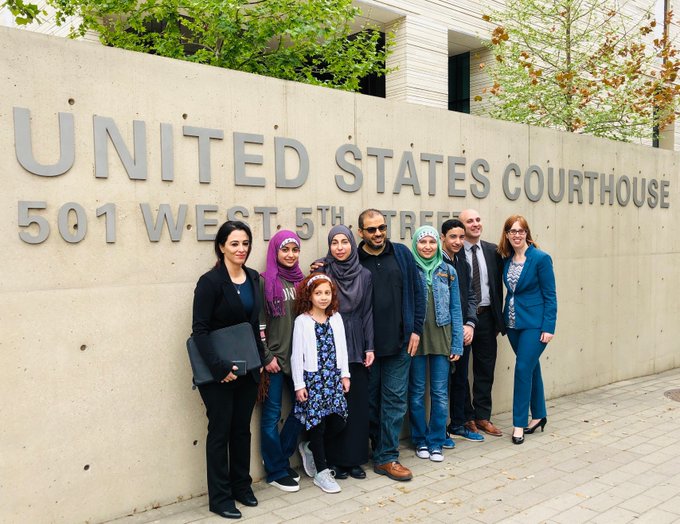
#BREAKING: CAIR Wins Landmark #FirstAmendment Victory Striking Down Texas Anti-BDS Law
H.B. 89, the Texas Anti-BDS Act, stuck down as facially #unconstitutional.
READ FULL PRESS RELEASEcair.com/breaking_cair_…#BDS #Texas #Constitution #CAIR #Arkansas

In December, the Council on American-Islamic Relations (CAIR) filed a lawsuit against
the state’s anti-BDS law on behalf of Bahia Amawi, a speech pathologist
in Texas who refused to sign a contract to renew her job with the
Austin public school district.
The contract included a clause that she “does not” and “will not” engage
in a boycott of Israel or “otherwise tak[e] any action that is intended
to inflict economic harm” on that country.
In response to Amawi’s lawsuit, Texas Governor Greg Abbott tweeted that “Texas stands with Israel. Period.”
State officials then offered to amend the law to block it from applying to individuals, but according to the Statesman newspaper,
Amawi said the amendment would not satisfy the plaintiff’s demands as
it would not strike language that stops the government from contracting
with companies that refuse to do business with Israel.
Thursday’s injunction “clears the way for Amawi to return to her position teaching 3-, 4- and 5-year-olds,” the Statesman reports.
The attorney general of Texas, CAIR notes, “is no longer permitted to include or enforce ‘No Boycott of Israel’ clauses in any state contract.”
“The First Amendment blocks any effort by state governments or the
federal government from forcing their citizens to take sides in the
widespread international debate about the relationship between Israel
and Palestine,” said CAIR trial attorney Carolyn Homer.
The ruling is “a complete victory for the First Amendment against
Governor Abbott’s attempt to suppress the rights of Texans to exercise
their constitutional rights,” said Amawi’s lawyer, Gadeir Abbas, who
added that it is forever “going to be a stain” on Abbott’s record.
“This victory should send an important warning to federal and state
lawmakers across the country who have sought to suppress [the] rights of
Americans to engage in the wonderful American tradition of expressing
their views via boycott,” Abbas said.

BREAKING: A federal court in Texas just blocked the state's law suppressing boycotts of Israel, ruling that the law violates the First Amendment.
This is now the third federal court to block an anti-BDS law as unconstitutional. We won't stop defending the right to boycott.
This is now the third federal court to block an anti-BDS law as unconstitutional. We won't stop defending the right to boycott.
In addition to Amawi’s lawsuit, a separate suit was filed by the
American Civil Liberties Union on behalf of four Texans who were forced
under the law to “choose between signing the certification or forgoing
professional opportunities and losing income,” according to the ACLU.
They include a freelance writer who lost two contracts with the
University of Houston; a doctoral candidate at Rice University who was
forced to forfeit payment for judging a debate tournament; a student at
Texas State University who lost opportunities to judge high school
debate tournaments; and George Hale, a reporter for radio station KETR,
who was forced to sign the certification in order to keep his job.
Hale told The Electronic Intifada on Friday that Texas has no right to
tell public radio journalists what they can or can’t say about the
situation in Palestine.
“I’m relieved that I can finally resume my boycott of companies
complicit in Israel’s violation of Palestinian rights without fear of
losing my job,” he said.
The ACLU applauded Thursday’s federal court decision as a victory for
free speech and said it was not surprising since the right to boycott is
“deeply ingrained in American tradition.”
“In its decision the court has affirmed its understanding that this law
was intended to chill the expression of personal opinion,” said Terri Burke, executive director of the ACLU in Texas.
“Impermissible purpose”
Judge Pitman’s order states that the plaintiffs are likely to succeed on
their claims that the law is unconstitutional because it is “an
impermissible content- and viewpoint-based restriction on protected
expression.” The order adds that the Texas law “imposes unconstitutional
conditions on public employment [and] compels speech for an
impermissible purpose.”
He also concludes that the law is too vague to implement. It makes it
impossible for state contractors to know whether they could decline to
purchase an Israeli product – or a US-made product from a company that
does business with Israel’s military – or if they were “obliged to
purchase it unless they can justify not doing so for business purposes.”
The plaintiffs “therefore have suffered harm by the enforcement of HB 89
and will continue to suffer harm unless it is enjoined,” the judge
adds.
Notably, Pitman references the US Supreme Court’s 1982 decision in
a Mississippi case over boycotts organized by Black civil rights
activists who refused to buy from stores owned by white merchants in the
1960s, in protest at racist and unequal treatment.
The white merchants sued the National Association for the Advancement of
Colored People, the civil rights group whose members called the
boycott, demanding damages for lost earnings.
Mississippi state courts sided with the white merchants, holding the NAACP liable and declaring the boycott illegal.
But the US Supreme Court unanimously overturned these decisions, finding
that boycotts called to bring about social and political change enjoy
the highest protection of the First Amendment.
In his order, Pitman concludes that the “plaintiffs’ BDS boycotts are
inherently expressive conduct,” just as the Mississippi case proved.
“I’m very happy that the judge has decided to support our right to hold
our own political beliefs and express them as we see fit,” said John
Pluecker, the freelance writer who was one of the plaintiffs in the ACLU
lawsuit.
“This ruling goes beyond just the plaintiffs – this law needed to be
challenged for everyone. People in Texas need to know that our ability
to earn our livelihoods won’t be threatened by the state because of our
political positions,” Pluecker added.
Earlier this month, Texas announced that it would pull $72 million in
stocks from DNB, a Norwegian financial services agency managing two of
the state’s pension funds, over its naming of three Israeli firms as human rights violators.
Thursday’s injunction means that the state may not be compelled to pull
the funds from DNB on the grounds that the company has chosen not to do
business with the firms, which are engaged in weapons manufacturing and
illegal settlement construction in the occupied West Bank.
Meanwhile, civil rights attorneys have said they will continue to challenge the anti-BDS laws which remain on the books.
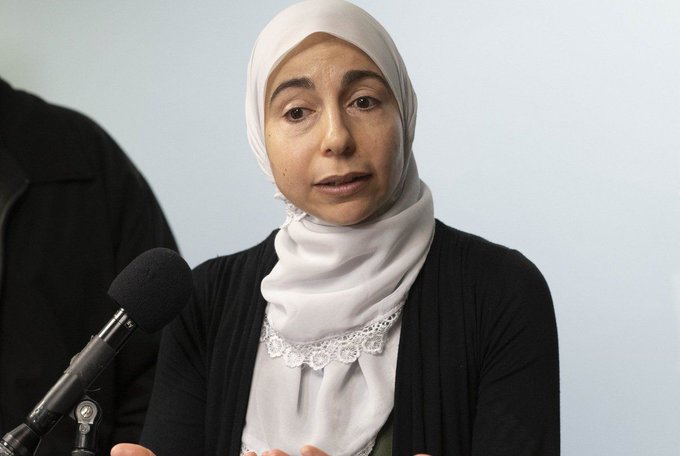
 "Texas cannot suppress boycotts for Palestinian rights just because lawmakers don't like the message that Palestinians deserve equality,” said Palestine Legal Senior Staff Attorney Liz Jackson. (1/2)
“Texas cannot suppress boycotts for Palestinian rights just because
lawmakers don’t like the message that Palestinians deserve equality,”
said Palestine Legal senior staff attorney Liz Jackson. “Neither can
Congress, Arkansas, Kansas, Arizona, or any of the 27 states who have
tried to restrict our right to boycott.”
“Judge Pitman of the US District Court in Texas got it right: there is
no First Amendment exception when it comes to Palestine,” Jackson added.
