Peace for the World World ! Your War Our Lives

The Dalai Lama
A Brief Colonial History Of Ceylon(SriLanka)
Sri Lanka: One Island Two Nations
A Brief Colonial History Of Ceylon(SriLanka)
Sri Lanka: One Island Two Nations
(Full Story)
Back to 500BC.

Tuesday, April 30, 2019
Was The Sri Lankan Law Adequate For Dealing With The Easter Bombers Before They Attacked?
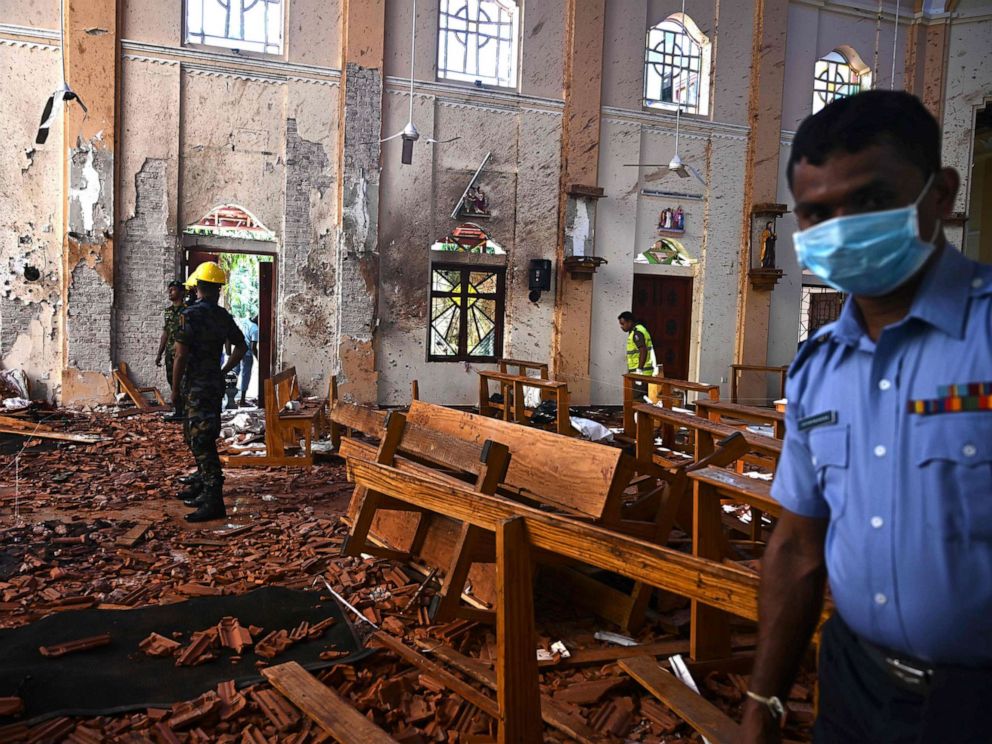
Photo by Jewel Samad / AFP/Getty Images via ABCNewsGo
 The
Prime Minister has gone on record with the international media saying
that, even though Sri Lankan authorities were aware of Sri Lankan
jihadists who had returned from Syria who might be engaged in
questionable activities, the country’s laws prevented action being
taken. This is not true, and only serves to evade accountability,
because there are a number of existing laws that could have been used to
arrest and investigate these persons. The most obvious is the
Prevention of Terrorism Act 1979 (the PTA), which authorises the arrest
and/or detention of persons suspected of the kind of terrorism-related
activities that those who had joined Islamic State (IS) and returned to
Sri Lanka would clearly be covered by.
The
Prime Minister has gone on record with the international media saying
that, even though Sri Lankan authorities were aware of Sri Lankan
jihadists who had returned from Syria who might be engaged in
questionable activities, the country’s laws prevented action being
taken. This is not true, and only serves to evade accountability,
because there are a number of existing laws that could have been used to
arrest and investigate these persons. The most obvious is the
Prevention of Terrorism Act 1979 (the PTA), which authorises the arrest
and/or detention of persons suspected of the kind of terrorism-related
activities that those who had joined Islamic State (IS) and returned to
Sri Lanka would clearly be covered by.
There is also the International Covenant on Civil and Political Rights
Act 2007 which makes it a criminal offence to incite religious hatred
and to propagate war. This Act also makes it a criminal offence to
attempt, aid, abet, or threaten to commit acts of inciting religious
hatred or propagating war. There is the Suppression of Terrorist
Bombings Act 1999 which again covers attempts to commit, or aiding and
abetting, terrorist bombings. There are also various provisions in the
Penal Code in relation to murder, hurt, use of criminal force, and
criminal conspiracy, as well as attempting to commit any of these
offences, that could have been used. Finally, there are UN sanctions
against IS which have been given effect by domestic statutory
instruments under the United Nations Act 1968. These are regulations
made under the United Nations Act 1968 to give effect to Sri Lanka’s
international obligations with regard to the UN anti-terrorism sanctions
regime. They were first made in 2012 and subsequently amended in 2016
to specifically include Islamic State (or Islamic State of Iraq and
Levant, or Da’esh). The regulations set out the domestic machinery
through which UN sanctions against these terror groups can be upheld.
Section 27 of the PTA could easily have been used to proscribe the
National Thowheed Jama’ath (NTJ) or any other such organisation. This
provision gives the Minister the power make regulations for the purpose
of carrying out or giving effect to the principles and provisions of the
PTA. A proscription order or regulation under Section 27 must be
published in the Gazette and comes into operation on a date prescribed
by the relevant Minister. As soon as convenient, such regulations must
be brought before Parliament for approval, and they are deemed rescinded
if parliamentary approval has not been given. The Liberation Tigers of
Tamil Eelam (LTTE) was first proscribed in the wake of the bombing of
the Temple of the Tooth in 1998 by emergency regulations. In 2001, when
the government lost its majority in Parliament and the state of
emergency lapsed, so did the ban on the LTTE. The President then used
Section 27 of the PTA to reintroduce the proscription. Even after the
state of emergency was terminated after the war in 2011, PTA regulations
were made to continue to the proscription of the LTTE and the Tamil
Rehabilitation Organisation (TRO), which are still in force. So even
without a state of emergency, the PTA provides a wide proscribing power
to the government in relation to organisations associated with
terrorism.
It can therefore be seen that existing laws were certainly sufficient to
detain, investigate, and convict, and even to proscribe, the
individuals and groups currently being identified with the Easter Sunday
attacks. Had the evidence that had been emerging about these activities
been taken seriously and acted upon, then we could have made meaningful
progress in preventing the attacks. If it had proved necessary, laws
could also have been swiftly amended to deal with any gaps.
However, to the extent that there is an international dimension to these
attacks, it is fair to say that Sri Lankan laws needed to be updated to
take account of the new globalised context of terrorism. One of the
purposes of the Counter Terrorism Bill currently being considered by a
parliamentary oversight committee was to modernise our anti-terrorism
powers framework in the context of global terrorism. It is important to
stress that several critical defects in the Bill need to be corrected so
that there are effective and adequate safeguards against the abuse of
anti-terrorism powers. However, the government has been both opaque in
the process of drafting and dilatory in enacting this legislation. We
are familiar with the criticism about the tardiness and inefficiency of
governments when it comes to areas like economic development and even
constitutional reform, where a globalised world constantly outpaces the
Sri Lankan way of doing things. The events of Easter Sunday have
tragically demonstrated the consequences of this lethargy when it comes
to securing our society against internationalised terrorism.
While we can no longer afford the luxury of isolated indolence, the
various instances of incompetence and dysfunction that allowed the
attacks to happen do not justify the arrogation of excessive powers by
the government after the fact. More than arguably, the emergency
regulations promulgated last week in the aftermath of the attacks are
overbroad and prone to abuse, and potentially transgress the outer
limits of the restrictions on fundamental rights permitted by our
Constitution. The same danger applies to kneejerk responses such as the
announcement by the President that he has ordered the preparation of new
counterterrorism legislation. Not only does the President not have any
moral authority left to direct the country’s response to the Easter
Sunday tragedy given his palpable responsibility for the errors and
omissions that led to it, but he is an intentional violator of the
Constitution and so demonstrably out of his depth in the high office he
holds, that it would be ridiculous to entrust him with such a task. In
combatting the clear and present danger of international terrorism, the
importance of striking the proper balance between security and freedom
cannot be overstated. For this, all counterterrorism measures going
forward must conform to the minimum standards established by both the
Constitution and international law.
