
Peace for the World World ! Your War Our Lives

The Dalai Lama
A Brief Colonial History Of Ceylon(SriLanka)
Sri Lanka: One Island Two Nations
A Brief Colonial History Of Ceylon(SriLanka)
Sri Lanka: One Island Two Nations
(Full Story)
Back to 500BC.
Saturday, April 27, 2019
'We failed many times': How Sudan's protest leaders seized their moment
The
Sudanese Professionals Association has emerged to head the revolution.
Can the group convince the military to relinquish power?

Sudanese
protesters open their smartphones lights as they gather for a
"million-strong" march outside the army headquarters in Khartoum on
April 25 (Ozan Kose / AFP)
 26 April 2019
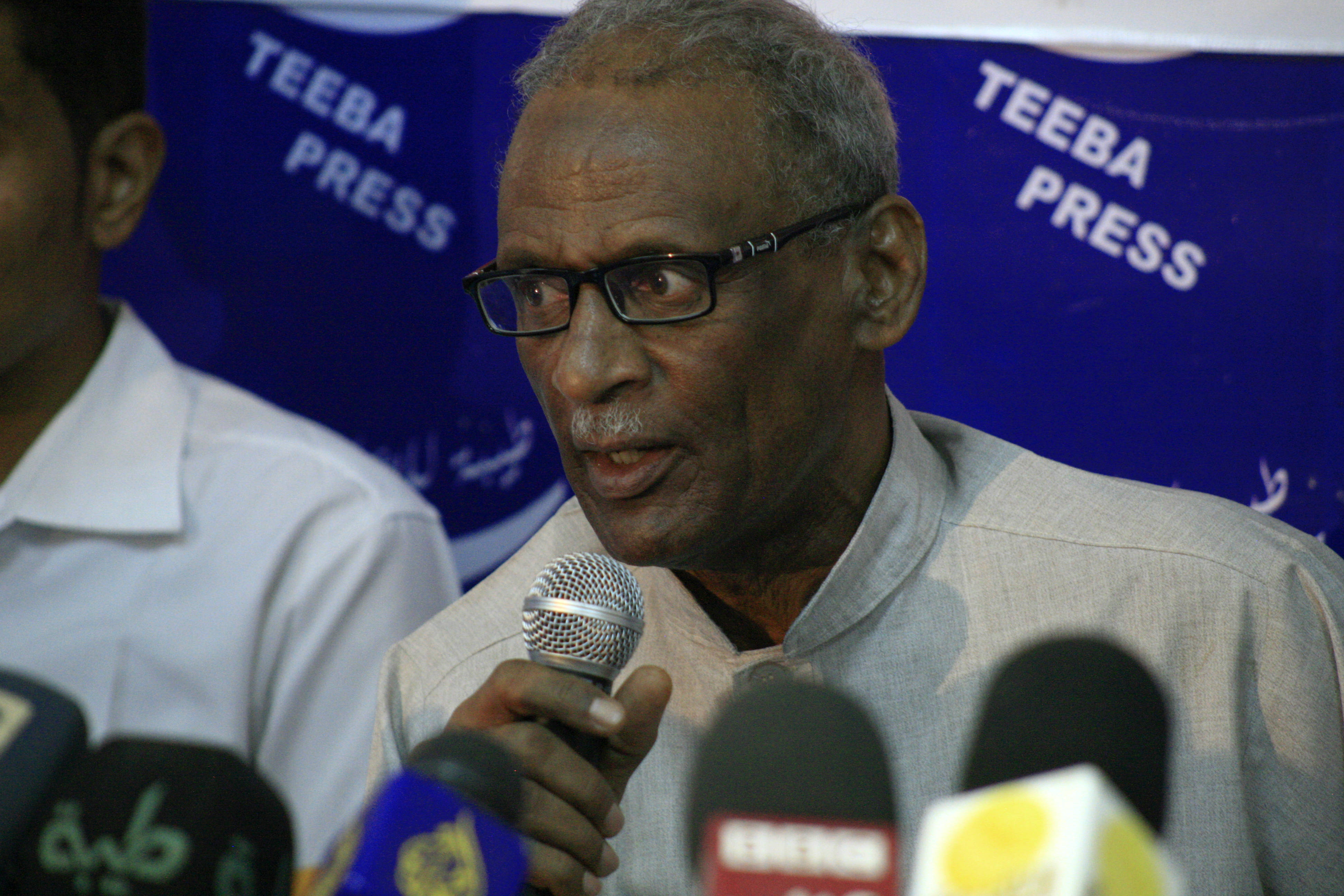
From his time-aged and threadbare office in Khartoum, anthropology
professor Mohammed Youssef al-Mustafa has been working since 2010 on
rebuilding an independent trade union movement in Sudan.
In that office, he gathered the vestiges of the country’s independent
labour leaders, who met with the hope of restoring the movement’s former
glories but were always doubtful of their chances for success in a
country where Omar al-Bashir’s ruling class had dominated the unions and
crushed the creation of any parallel organisations.
But when Bashir was ousted from the presidency on 11 April, after 30
years in power, it was exactly that type of independent trade union, the
Sudanese Professionals Association (SPA), which Mustafa is chairman of,
that had played the role of rallying the population against the
president.
Formed in August, the SPA came to the fore a few months later, when
protests started in December. Now it is tasked with negotiating a
handover of power from the military council that replaced Bashir to a
civilian leadership.
Security tracking
Mustafa had been a member of the rebel Sudan People’s Liberation
Movement (SPLM), a group that fought Bashir's government and helped
birth South Sudan in 2011. He became a minister in 2005, when the
SPLM signed a ceasefire agreement and took on positions in the Sudanese
government.
But as it became increasingly obvious to him that the secession of South
Sudan, where the group was strongest, was an inevitability, he started
to turn his thoughts to what could be done for what remained of Sudan.
“I started to think about how to create an umbrella to salvage the
remaining northern part of the country. The idea of creating a coalition
of trade unions was brought up by many trade unionists,” Mustafa, a
professor at the University of Khartoum, told Middle East Eye.
Forging that coalition was difficult. Sudan’s security agencies tracked
their initial attempts, forcing them to freeze their operations. They
tried again in 2012 but could not manage to bring together the various
leaders. Their next attempt came in 2013, when austerity measures
sparked anti-government protests and a crackdown that killed up to 200.
“We failed many times, but we were insisting on achieving our goal, so we tried again in 2013 but we also failed,” he said.
Long struggle
The SPA began to really take shape in August 2018, as a large and
well-organised structure with sub-committees formed of the many
professions that had joined the coalition - doctors, teachers,
journalists and lawyers among them.
They were acting in response to increasing hardship caused by the
country's economic difficulties and associated austerity measures,
including the ending of subsidies on fuel, bread, electricity and other
essential commodities.
Those same concerns fuelled the anger that on 19 December led to protesters in the northern city of Atbara torching the ruling party headquarters and setting off a chain of daily protests against Bashir’s rule.
The SPA soon started organising regular marches on the presidential
palace, where they wanted to hand over a petition demanding Bashir's
resignation but were consistently met with force, often lethal, by the
security forces. By January, they were developing a daily programme of
protest activities.

“We kept monitoring the situation closely since the revolution began on
19 December in Atbara and we [eventually] saw that the anger of our
people has defeated the massive force of the ruling party and the inner
circles of the old regime,” said Mustafa.
He said the SPA is now working on studies about wages for the different
professions and on economic inequality in the country, showing how what
started as a set of demands on a petition has become something far more
substantive.
“The uprising has rapidly expanded in all directions. That was a real
moment of change for our movement, from a movement demanding change to
one raising more radical political demands,” said Mustafa.
Until they were subjugated by Bashir’s ruling machinery, Sudanese unions
had a strong role in organising against the country's previous
autocratic rulers. Atbara, the town where the current protests started, was key to that resistance because it was the heart of the country’s railway network, where workers actively organised.
In that same spirit, a train packed with protesters travelled from
Atbara to Khartoum on Tuesday, arriving to a welcoming committee of
thousands lining the tracks in the capital.
'The SPA deeply understands the needs of the youth, their hopes and the right language for reaching them'- Haitham Mustafa, former footballer
Mohamed Ali Khogali, a Sudanese expert on social and economic rights,
said the SPA now fits into that history of Sudanese trade unions
fighting for civilian rights and rule, similar to the coalitions that
ended the military rules of Ibrahim Abboud in 1984 and Gaafar Nimeiry in
1985.
“The trade unions garner more popularity and trust during uprisings in
Sudan because they don’t have any [political] affiliation, other the
demands of the people,” he said. “The economic and social demands they
raise always brings them close to ordinary citizens.”
He said the SPA has also achieved a rare feat in managing to unify
protests and create a political alternative to the government without
actually being able to address them in person, circumventing the
security threat from the regime. Though a few spokespeople like Mustafa
are known, many of the other leaders have stayed in the background.
“The hunted SPA leaders have managed to operate underground to protect
it from the security forces by using social media to call on people
around the entire country to mobilise for protests,” said Khogali.

SPA spokesman Mohamed al-Amin Abdul Aziz told MEE that because of the
threat of arrest, the leaders had developed a “flexible formula” to
react dynamically to the changes in the country.
Social media allowed them to reach the Sudanese people while hiding from the security forces, he explained.
“The entire coalition is working towards the same goals that we agreed
on from the beginning, this is why we don’t need to meet a lot, so we
have evaded the security forces,” he said.
A changing role
The SPA’s role has changed since Bashir’s removal, forcing it to become a
more public organisation as it and other groups try to present a
civilian alternative to military rule.
This new phase of the protest movement has raised questions about
whether the activists who forced Bashir’s ousting can capitalise on the
moment and prevent the ruling military council’s “transitional”
government becoming permanent.
The general mood among protesters seems to be one of trust in the group
after the successes of its organising, which not only included regular
marches but also a programme of entertainment and education at the site
of a sit-in outside the military headquarters, which has lasted more
than two weeks.
Haitham Mustafa, a former captain of Sudan’s national football team,
used social media to call for protests against Bashir. He said the group
has succeeded by connecting with the country’s youth.

“The SPA deeply understands the needs of the youth, their hopes and the
right language for reaching them,” he told Middle East Eye.
Aisha Ali Abdul Rahim, a 30-year-old employee in a private company, said the group’s approach had connected with her.
“We trust the SPA because they present a different discourse that
understands our problems more than the political parties,” she said.
Whether that appeal can extend beyond the professional class who make up
most of the organisation’s membership is crucial to whether its success
can continue, according to Magdi el-Gizouli, an academic at the Rift
Valley Institute.
“Unless the SPA expands to engage and include other bases, including
labourers, farmers, pastoralists and others in the countryside and
conflict areas of Sudan, it would never be able to realise the deep and
radical demands of the revolution,” he said.
“Radical and popular layers [of society] need to be unified to fight against the deep state.”
