Peace for the World World ! Your War Our Lives

The Dalai Lama
A Brief Colonial History Of Ceylon(SriLanka)
Sri Lanka: One Island Two Nations
A Brief Colonial History Of Ceylon(SriLanka)
Sri Lanka: One Island Two Nations
(Full Story)
Back to 500BC.

Saturday, May 11, 2019
10 years today - Final ‘No Fire Zone’ declared
 Marking 10 years since the Sri
Lankan military onslaught that massacred tens of thousands of Tamils, we
revisit the final days leading up to the 18th of
May 2009 – a date remembered around the world as ‘Tamil Genocide Day’.
The total number of Tamil civilians killed during the final months is
widely contested. After providing an initial death toll of 40,000, the
UN found evidence suggesting that 70,000 were killed. Local census
records indicate that at least 146,679 people are unaccounted for and
presumed to have been killed during the Sri Lankan military offensive.
8th May 2009
Photograph above: Shells land inside the No Fire Zone on May 8th 2009.
Marking 10 years since the Sri
Lankan military onslaught that massacred tens of thousands of Tamils, we
revisit the final days leading up to the 18th of
May 2009 – a date remembered around the world as ‘Tamil Genocide Day’.
The total number of Tamil civilians killed during the final months is
widely contested. After providing an initial death toll of 40,000, the
UN found evidence suggesting that 70,000 were killed. Local census
records indicate that at least 146,679 people are unaccounted for and
presumed to have been killed during the Sri Lankan military offensive.
8th May 2009
Photograph above: Shells land inside the No Fire Zone on May 8th 2009.
 With GPS co-ordinates, Sri Lanka attacks hospitals
The Sri Lankan military stepped up its barrage of the No Fire Zone with
heavy shelling reported, including with cluster munitions.
The US State Department quotes a HRW source in the NFZ who “witnessed an
SLA drone conduct reconnaissance above the Valayanmadam hospital”.
With GPS co-ordinates, Sri Lanka attacks hospitals
The Sri Lankan military stepped up its barrage of the No Fire Zone with
heavy shelling reported, including with cluster munitions.
The US State Department quotes a HRW source in the NFZ who “witnessed an
SLA drone conduct reconnaissance above the Valayanmadam hospital”.
“Shortly thereafter the hospital
was attacked, killing four or five people including a doctor and
wounding more than 30. Several sources informed HRW that each time a
hospital was established in a new location, GPS coordinates of the
facility were transmitted to the Sri Lankan government to ensure that
the facility would be protected from military attack. Witnesses said
that on several occasions, attacks occurred on the day after the
coordinates had been transmitted.”
Final ‘No Fire Zone’ declared
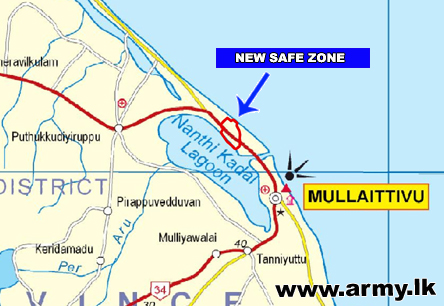 The Sri Lankan government declared the third and final No Fire Zone.
The OISL reports “tens of thousands of civilians were squeezed into this tiny area”.
The Sri Lankan government declared the third and final No Fire Zone.
The OISL reports “tens of thousands of civilians were squeezed into this tiny area”.
“The SLA force now confronting
the LTTE was probably in excess of 50,000 soldiers, with significant
heavy weapons capability and air supremacy… The SLA was on one side of a
large lagoon, the LTTE on the other, the civilians being at some
distance behind the LTTE.
However, witnesses, described to the OISL “continuous shelling and
devastation as the shells hit the ground”. One source told the OISL,
“Firing from the SLA would pass over the LTTE front line “and impact on the civilians behind it”.”
“He said that everyone was
squeezed into a small piece of land and practically each time a shell
fell, people would be injured and killed. Another witness said he saw
nine people being killed when a shell hit a mango tree by a well where
they had gathered. One saw a woman killed when a shell hit her bunker…
she had a sewing machine and used to make cloth bags to fill with sand
for the bunker. “
Often, people fled when family
members were killed – they had no time to mourn or bury the dead…”
Another witness described seeing more than a 100 dead bodies, including
children, near his bunker.”
Meanwhile General Shavendra Silva, the Commander of the 58th Division, stated,
“At the last stages of the
operation we just did not go blind, everything was planned through UAV
pictures and where we exactly knew where the civilians and the LTTE were
and where we found that at least a little bit of confusion whether the
civilians are too close to the LTTE cadres we had to resort to other
means and buy time to separate the two parties.”
 No food, no medicine
The US State Department reported said that “local sources in the NFZ
reported that a supply ship had arrived but was forced by the GSL to
return to Trincomalee with its cargo of food and medicine still on
board. The sources reported that the SLN had refused to allow them to
offload the cargo, and then began firing on the beach.”
No food, no medicine
The US State Department reported said that “local sources in the NFZ
reported that a supply ship had arrived but was forced by the GSL to
return to Trincomalee with its cargo of food and medicine still on
board. The sources reported that the SLN had refused to allow them to
offload the cargo, and then began firing on the beach.”
“An organization reported that
shipments of food and medicine to the NFZ were grossly insufficient over
the prior month and that the GSL reportedly delayed or denied timely
shipment of life-saving medicines as well as chlorine tablets. A source
in the NFZ reported that patients were brought to the hospital for
fainting attacks attributed to their lack of food.”
“Mothers were crying at the
hospital and asking for milk powder. They had not eaten and were unable
to feed their children, but the hospital did not have milk powder in
stock.”
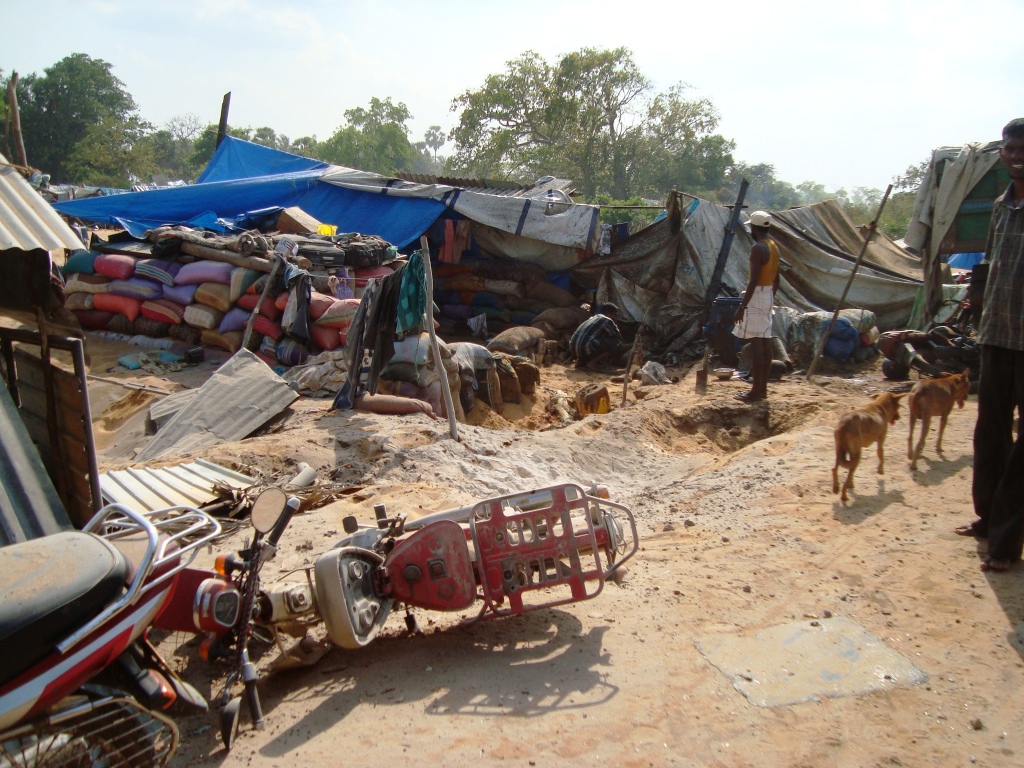
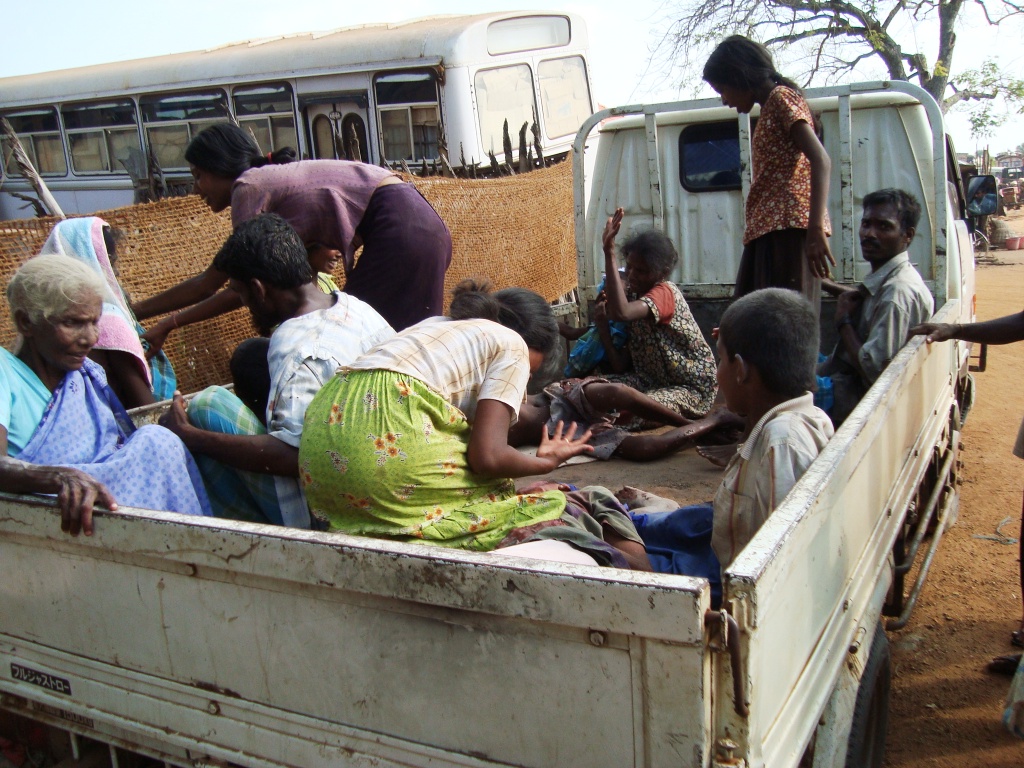 Photographs: The aftermath of attacks inside the No Fire Zone on May 8th 2009.
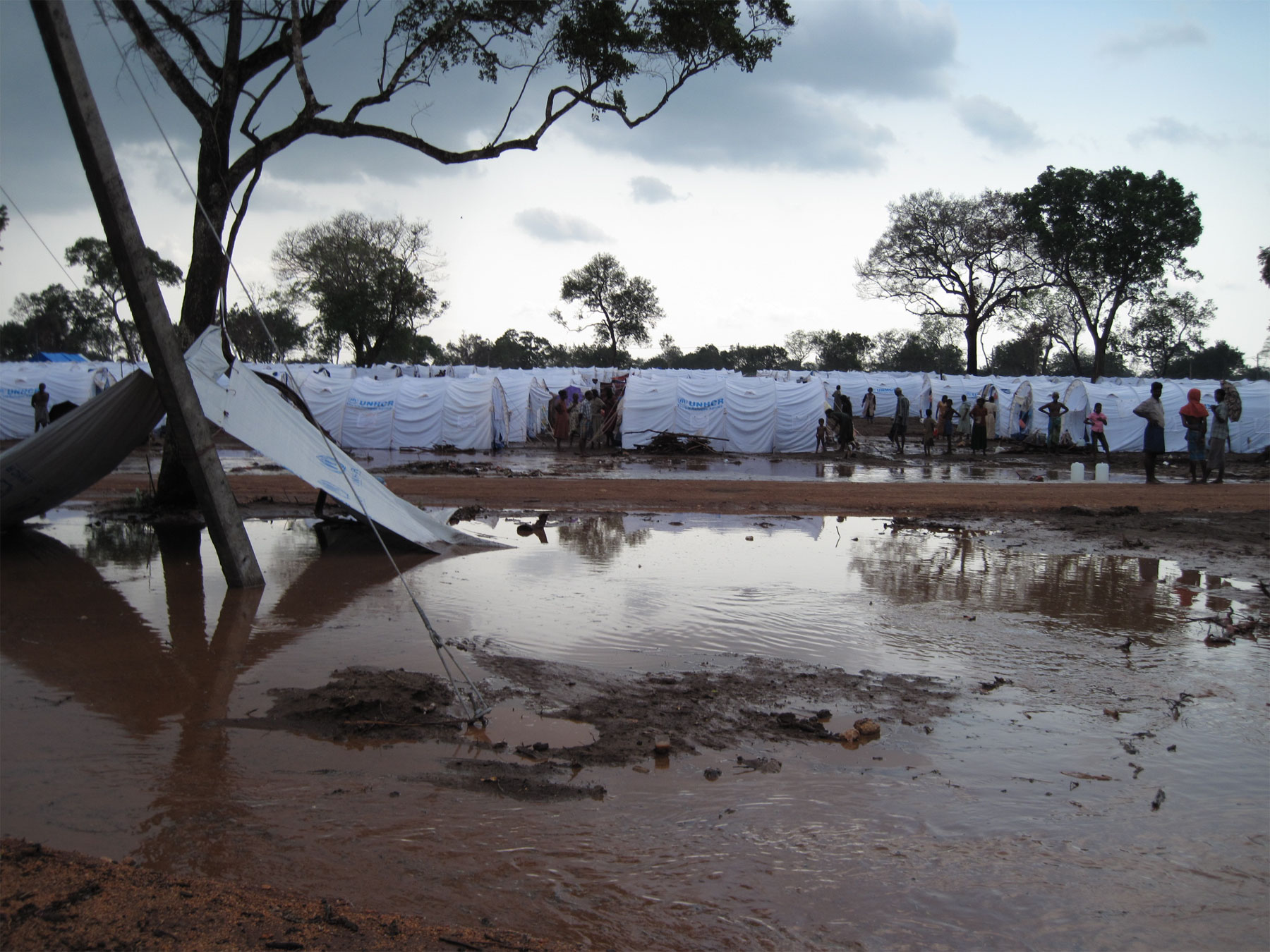
Heavy rains at internment camps
Rains in Vavuniya, where hundreds of thousands of Tamils were being interned, cause mass flooding.
Photographs: The aftermath of attacks inside the No Fire Zone on May 8th 2009.
Heavy rains at internment camps
Rains in Vavuniya, where hundreds of thousands of Tamils were being interned, cause mass flooding.
Marking 10 years since the Sri
Lankan military onslaught that massacred tens of thousands of Tamils, we
revisit the final days leading up to the 18th of
May 2009 – a date remembered around the world as ‘Tamil Genocide Day’.
The total number of Tamil civilians killed during the final months is
widely contested. After providing an initial death toll of 40,000, the
UN found evidence suggesting that 70,000 were killed. Local census
records indicate that at least 146,679 people are unaccounted for and
presumed to have been killed during the Sri Lankan military offensive.
8th May 2009
Photograph above: Shells land inside the No Fire Zone on May 8th 2009.
With GPS co-ordinates, Sri Lanka attacks hospitals
The Sri Lankan military stepped up its barrage of the No Fire Zone with
heavy shelling reported, including with cluster munitions.
The US State Department quotes a HRW source in the NFZ who “witnessed an
SLA drone conduct reconnaissance above the Valayanmadam hospital”.
“Shortly thereafter the hospital was attacked, killing four or five people including a doctor and wounding more than 30. Several sources informed HRW that each time a hospital was established in a new location, GPS coordinates of the facility were transmitted to the Sri Lankan government to ensure that the facility would be protected from military attack. Witnesses said that on several occasions, attacks occurred on the day after the coordinates had been transmitted.”
Final ‘No Fire Zone’ declared
The Sri Lankan government declared the third and final No Fire Zone.
The OISL reports “tens of thousands of civilians were squeezed into this tiny area”.
“The SLA force now confronting the LTTE was probably in excess of 50,000 soldiers, with significant heavy weapons capability and air supremacy… The SLA was on one side of a large lagoon, the LTTE on the other, the civilians being at some distance behind the LTTE.
However, witnesses, described to the OISL “continuous shelling and
devastation as the shells hit the ground”. One source told the OISL,
“Firing from the SLA would pass over the LTTE front line “and impact on the civilians behind it”.”“He said that everyone was squeezed into a small piece of land and practically each time a shell fell, people would be injured and killed. Another witness said he saw nine people being killed when a shell hit a mango tree by a well where they had gathered. One saw a woman killed when a shell hit her bunker… she had a sewing machine and used to make cloth bags to fill with sand for the bunker. “Often, people fled when family members were killed – they had no time to mourn or bury the dead…” Another witness described seeing more than a 100 dead bodies, including children, near his bunker.”
Meanwhile General Shavendra Silva, the Commander of the 58th Division, stated,
“At the last stages of the operation we just did not go blind, everything was planned through UAV pictures and where we exactly knew where the civilians and the LTTE were and where we found that at least a little bit of confusion whether the civilians are too close to the LTTE cadres we had to resort to other means and buy time to separate the two parties.”
No food, no medicine
The US State Department reported said that “local sources in the NFZ
reported that a supply ship had arrived but was forced by the GSL to
return to Trincomalee with its cargo of food and medicine still on
board. The sources reported that the SLN had refused to allow them to
offload the cargo, and then began firing on the beach.”
“An organization reported that shipments of food and medicine to the NFZ were grossly insufficient over the prior month and that the GSL reportedly delayed or denied timely shipment of life-saving medicines as well as chlorine tablets. A source in the NFZ reported that patients were brought to the hospital for fainting attacks attributed to their lack of food.”“Mothers were crying at the hospital and asking for milk powder. They had not eaten and were unable to feed their children, but the hospital did not have milk powder in stock.”
Photographs: The aftermath of attacks inside the No Fire Zone on May 8th 2009.
Heavy rains at internment camps
Rains in Vavuniya, where hundreds of thousands of Tamils were being interned, cause mass flooding.
Read More
