
Peace for the World World ! Your War Our Lives

The Dalai Lama
A Brief Colonial History Of Ceylon(SriLanka)
Sri Lanka: One Island Two Nations
A Brief Colonial History Of Ceylon(SriLanka)
Sri Lanka: One Island Two Nations
(Full Story)
Back to 500BC.
Monday, May 13, 2019
Barricades, tents and community: A guide to Sudan's sit-in
'It's
a new Sudan,' protesters tell MEE, as the site of demonstrations has
grown in the span of a month into a community of its own

A
sprawling site outside Sudan's military headquarters has become the
centre for protesters demanding civilian government (MEE/Kaamil Ahmed)
 12 May 2019
Holding their fingers up to form peace signs, protesters reaching the
barricades around the sit-in at the heart of Sudan's revolution raise
their arms to be searched by groups of volunteer guards.
Without a hint of irritation, they go through the safety measures
several times, smiling, sometimes dancing every time they reach one of
the makeshift checkpoints built from rocks, scrap metal and upturned
dumpsters.
The barricades went up a month ago to protect the sit-in that has
occupied the sprawling space outside Sudan's military headquarters,
where protesters successfully demanded the exit of three-decade ruler
Omar al-Bashir - and now want the military who ousted him to hand power
over to a civilian government.
Images from the sit-in fail to illustrate the sheer size of the protest
area, which can span around a mile and is regularly filled with tens of
thousands of people on any given night.
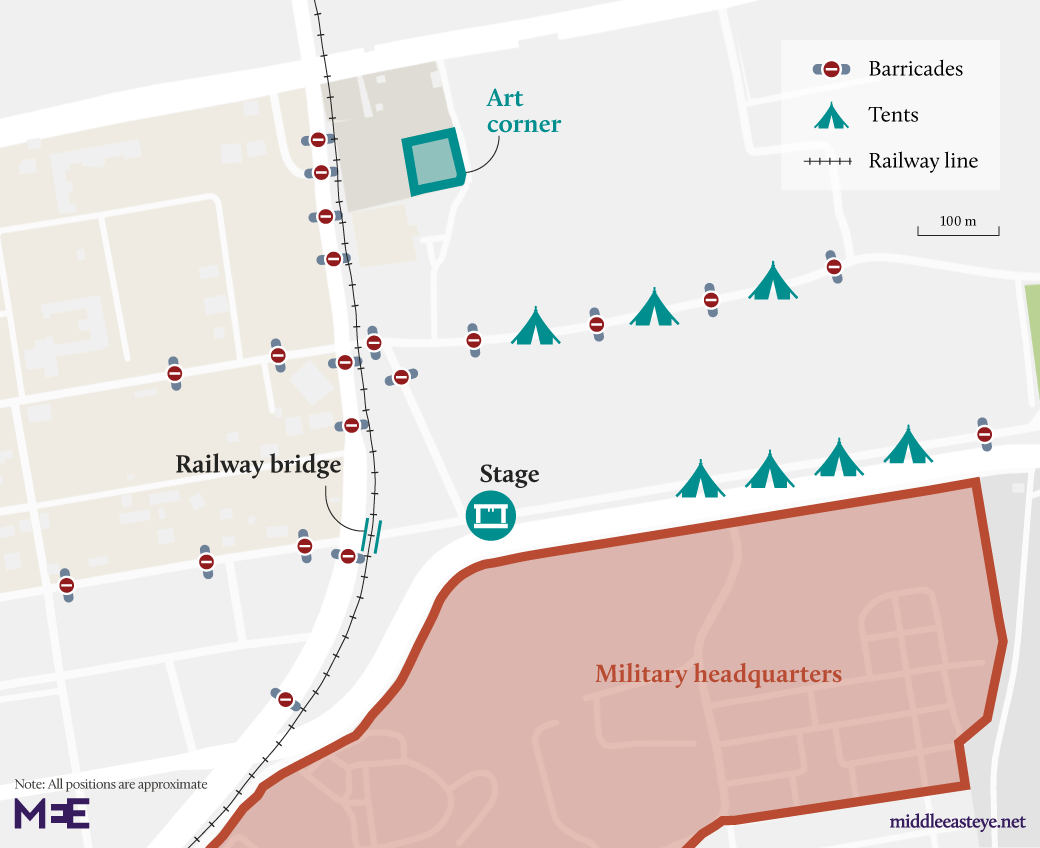
Beyond the barricades are a scattering of rallying points and a main
stage, tents for the protesters, hubs for artists, medical services and
spaces for prayer and breaking Ramadan fasts.
For many, it has become a community that represents the new Sudan they want to see.
The barricades
During the early days of the sit-in, it was common for Bashir's security
forces to raid the site, beating the protesters and firing at them,
leading to gun fights between Bashir's security and low-level soldiers
stationed around the sit-in who had sided with the protesters.
That quickly led to the erection of the crude barricades, aimed at
stopping vehicles used by paramilitaries still loyal to Bashir from
entering.
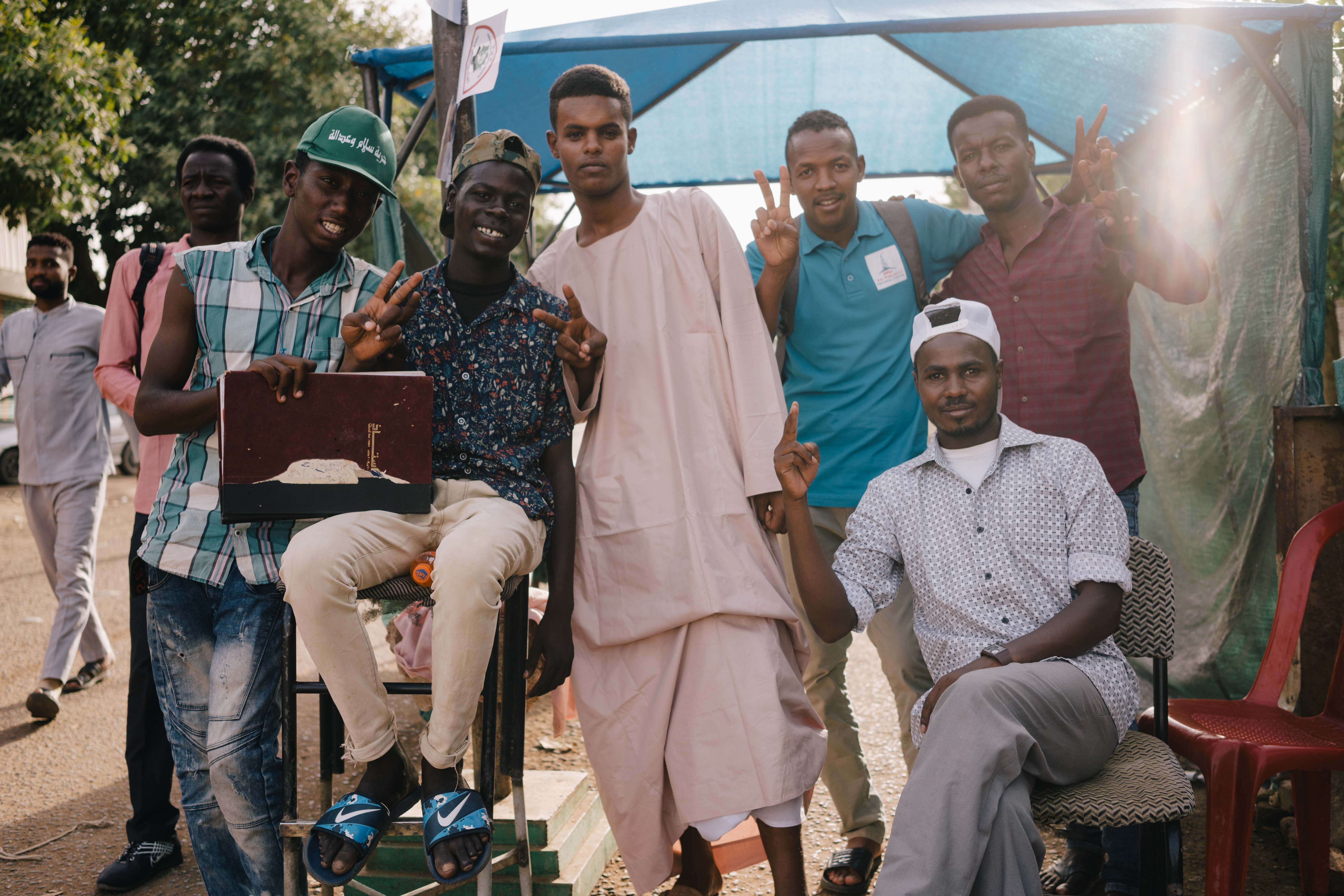
Mohammed Abbas, 21, is one of the young Sudanese who man those
barricades, searching everyone who enters for weapons and apologising
for the inconvenience.
"These barricades are for security, for all the people," he said,
describing how, in the early days of the protest, militia fighters
regularly tried to enter the protests without uniforms and with
concealed guns.
"Now the situation's better...these barricades are so important."
The 'heartbeat'
Most of the half-dozen checkpoints protesters have to pass through to
enter the sit-in open up on a central junction, where the sound of iron
and steel being clattered has become an unmistakable soundtrack for the
protest.
Rhythm of the revolution: The iron heartbeat of Sudan's sit-in
Read More »
"This knocking is like the heartbeat of the collective," said Abdulraziq, 19, from southern Sudan.
He and others sit atop the railway bridge in the middle of the protest,
banging its sides and striking the railway lines to create a
never-ending rhythm for the protest movement, to rally demonstrators
passing through.
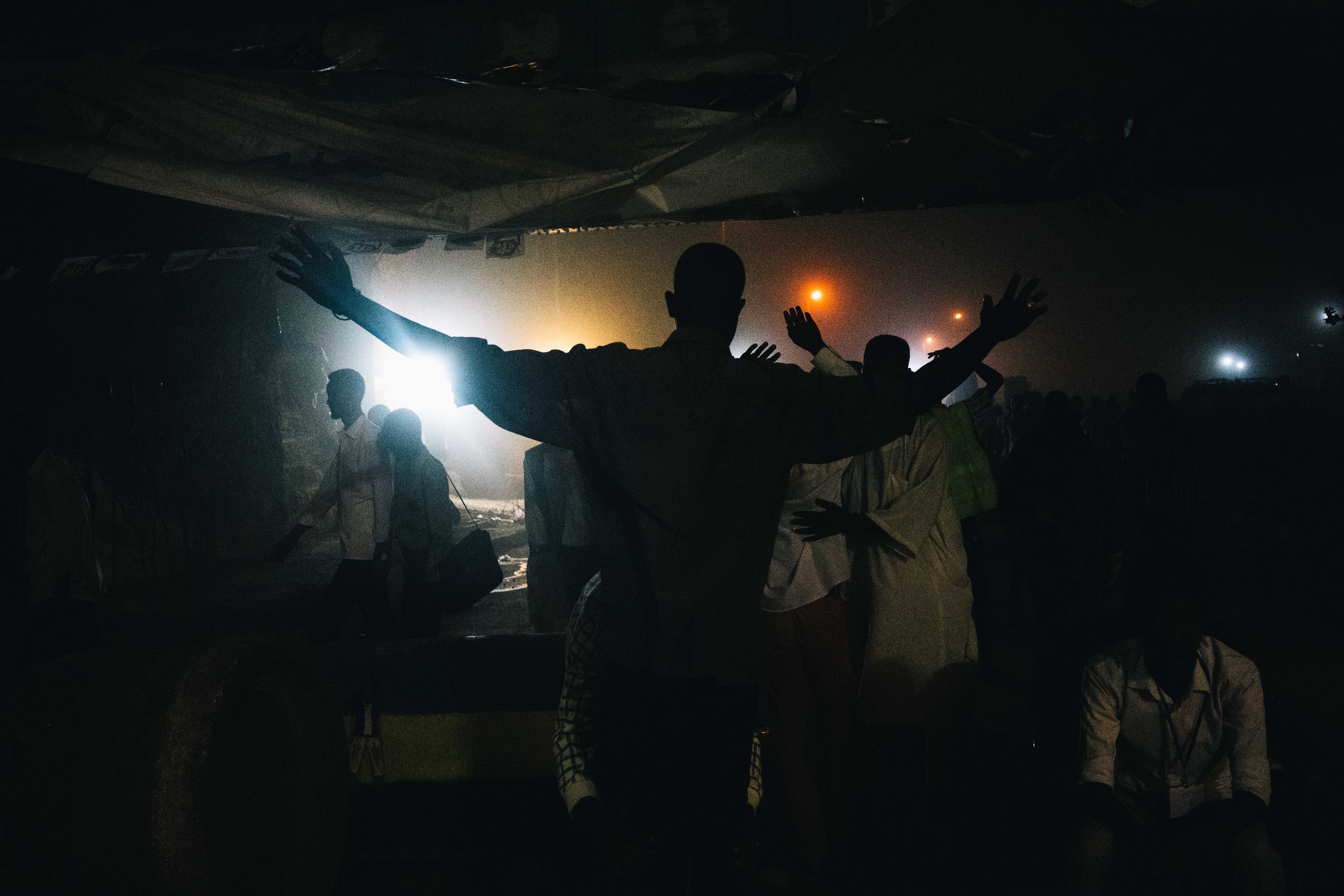
In the tunnel underneath, more youth strike a different rhythm on sheets
of scrap metal; the sounds meld chaotically and the youth see it as a
way to signal their resistance to the military council now running the
country.
The military headquarters
On 6 April, the anniversary of the last successful Sudanese uprising in
1985, the protesters who had been demanding Bashir's resignation began
their sit-in outside the military headquarters in the capital Khartoum.
The pressure eventually led to military leaders intervening and ousting
Bashir - but protesters have demanded that power be handed over to
civilians, not kept within the military council the generals had set
up.
So the protesters have refused to move. Throughout the night when
- especially during the Muslim holy month of Ramadan - the numbers of
protesters multiply, groups of hundreds of youth shuttle up and down
alongside the fence of the military headquarters.
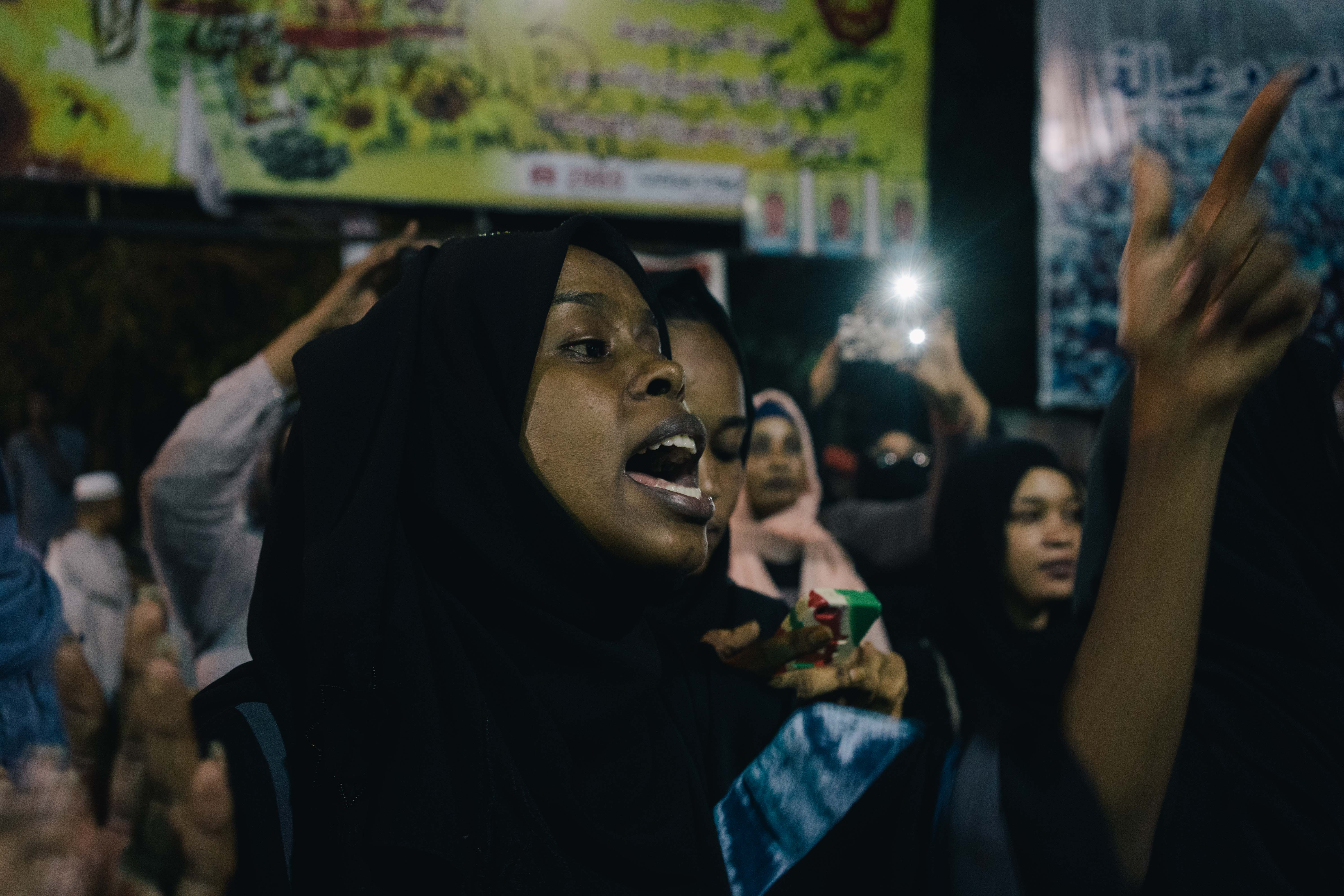
"Fall, or no fall, we stay here," they chant, stopping momentarily
outside the base's gates, facing the soldiers standing guard.
The image is replicated throughout the protest area, where demonstrators
spontaneously burst into chants or charge from end to end, picking up
others along the way.
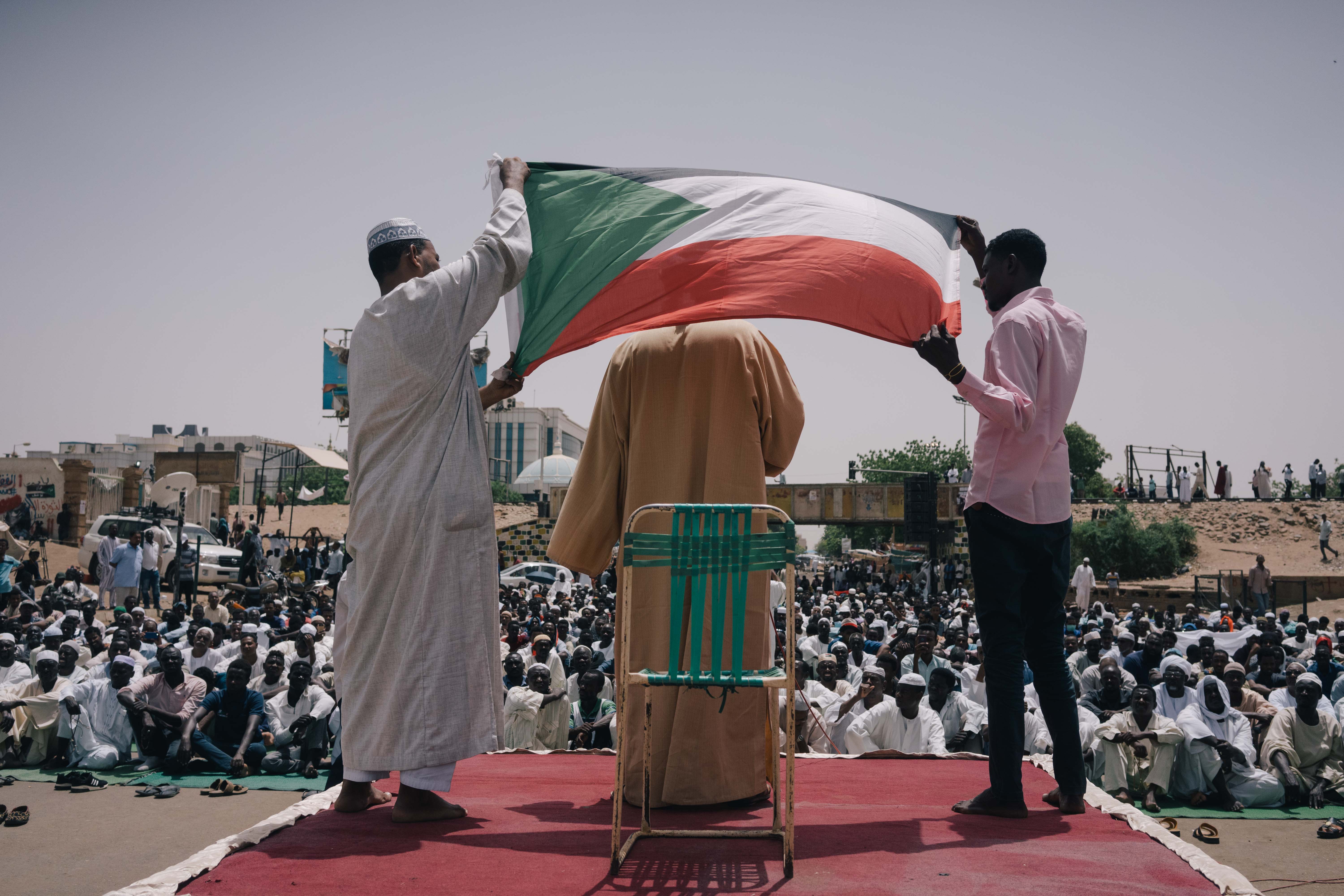
Impromptu speeches or political poetry readings happen on little stages
throughout the site, while a large main stage in the centre is used for
concerts or to play films documenting the whole protest movement, which
began in December.
The tents
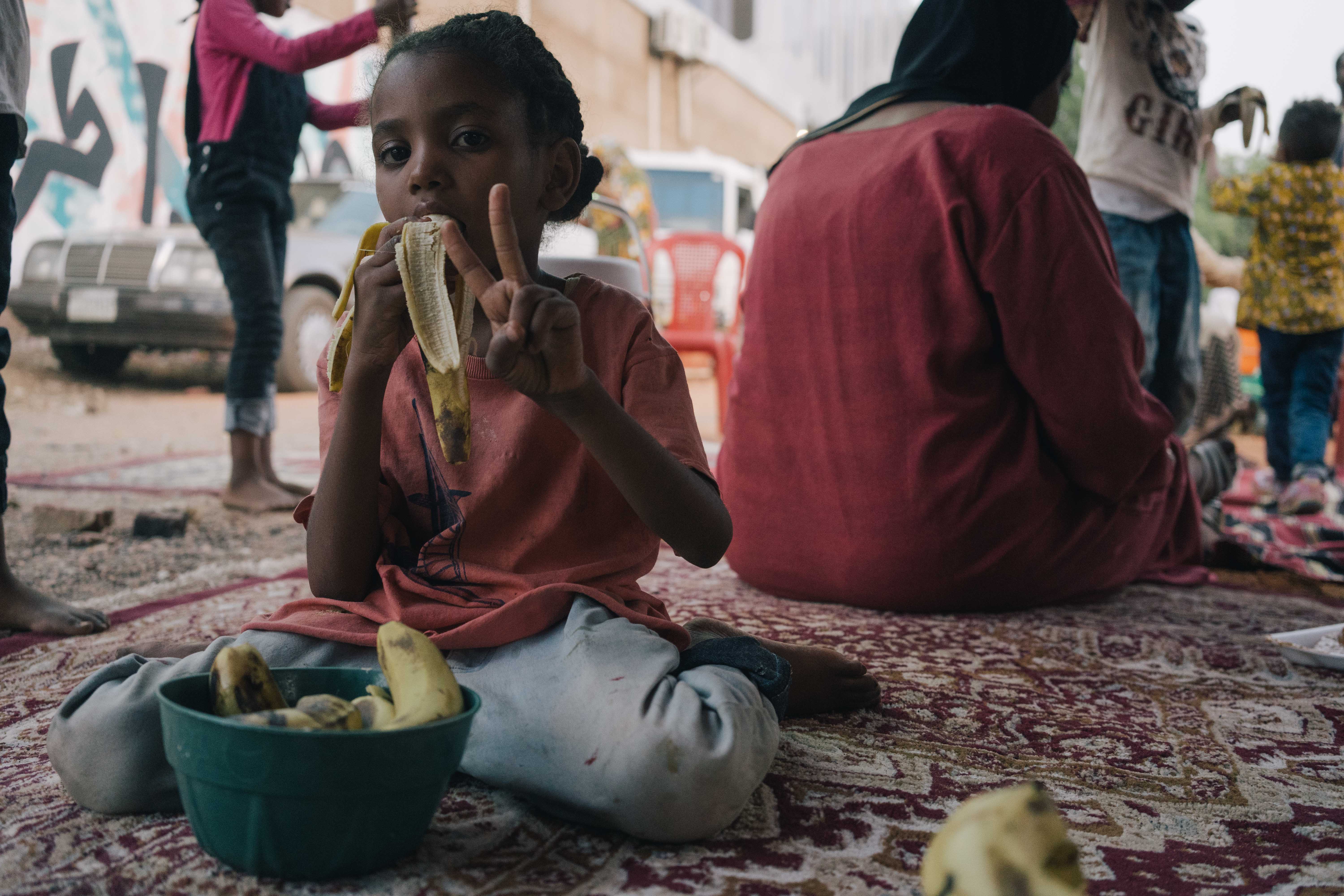
As the sit-in endured, tents sprung up. They belong to various groups of
workers who organised to attend together, civil society groups who have
been galvanised by the movement and camps of Sudanese who have
travelled to the capital from cities further away.
Each proudly declares the city they travelled from to join the sit-in,
creating a common space for the many ethnic groups of Sudan who felt
they were divided under Bashir's rule.
Outside these tents, and in any free space available, green weaved mats
are laid out just before sunset every day. Fasting protesters, drained
of their last ounces of energy, gather around to share bowls of
traditional meals cooked in makeshift kitchens and excite themselves
over the chance to quench their thirst with some of the treasured drinks
exclusive to Ramadan. Afterwards the mats, set in rows, are cleared
away and used for Ramadan's nightly Taraweeh prayer.
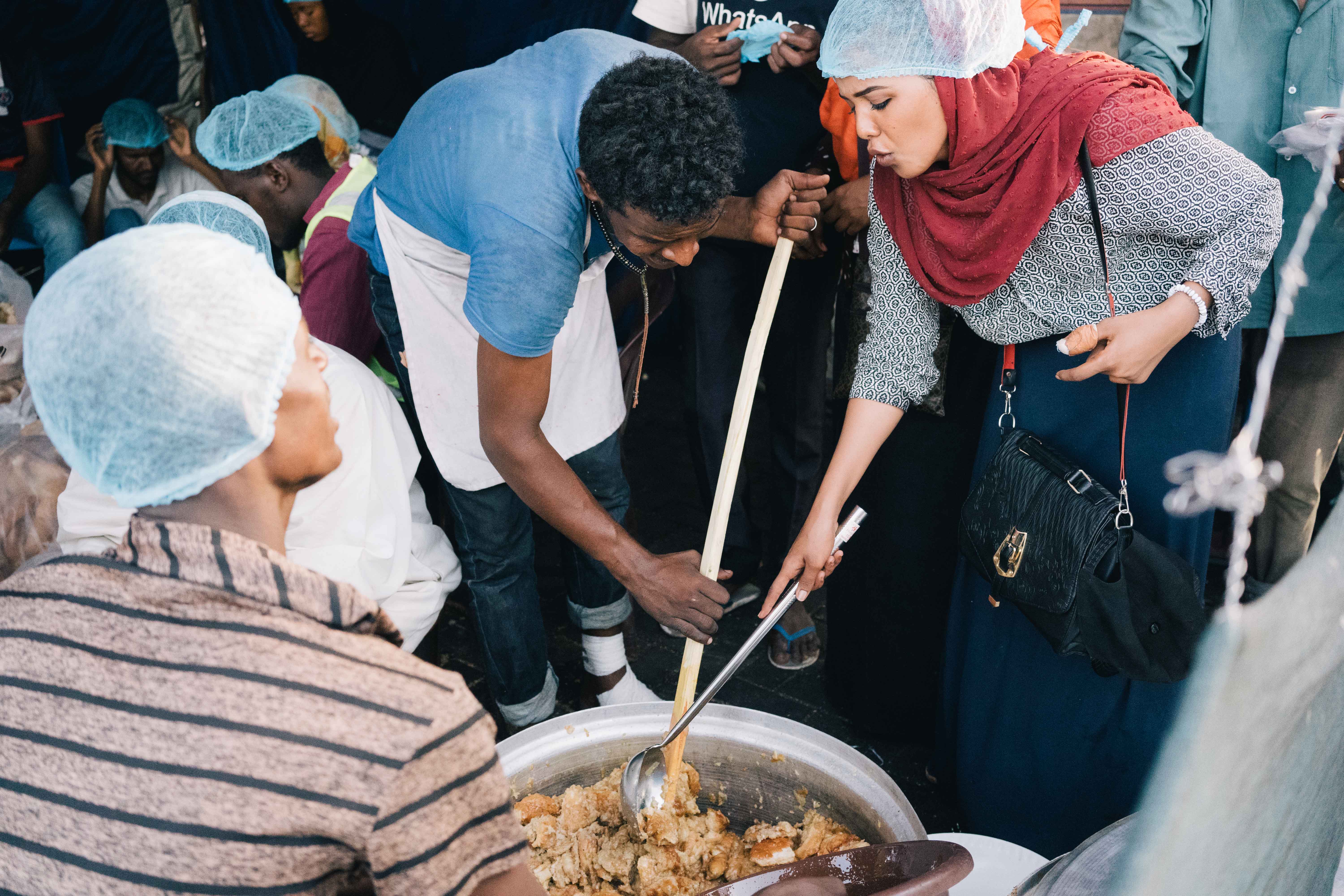
Women selling ginger-infused coffee, tea and Sudan's beloved hibiscus
drinks set up for the night, starting up their fires and putting out
stalls, benches or simple rugs for their customers.
"I haven't been outside [of the sit-in since it started] so I don't want
to know what it's like outside, but the life inside here is better,"
says Fatima Ibrahim, 30, who started selling coffee in Khartoum after
fleeing conflict in the western Darfur region, where Bashir is accused
of war crimes. "Thank god, we've managed to change the situation a bit."
The art corner
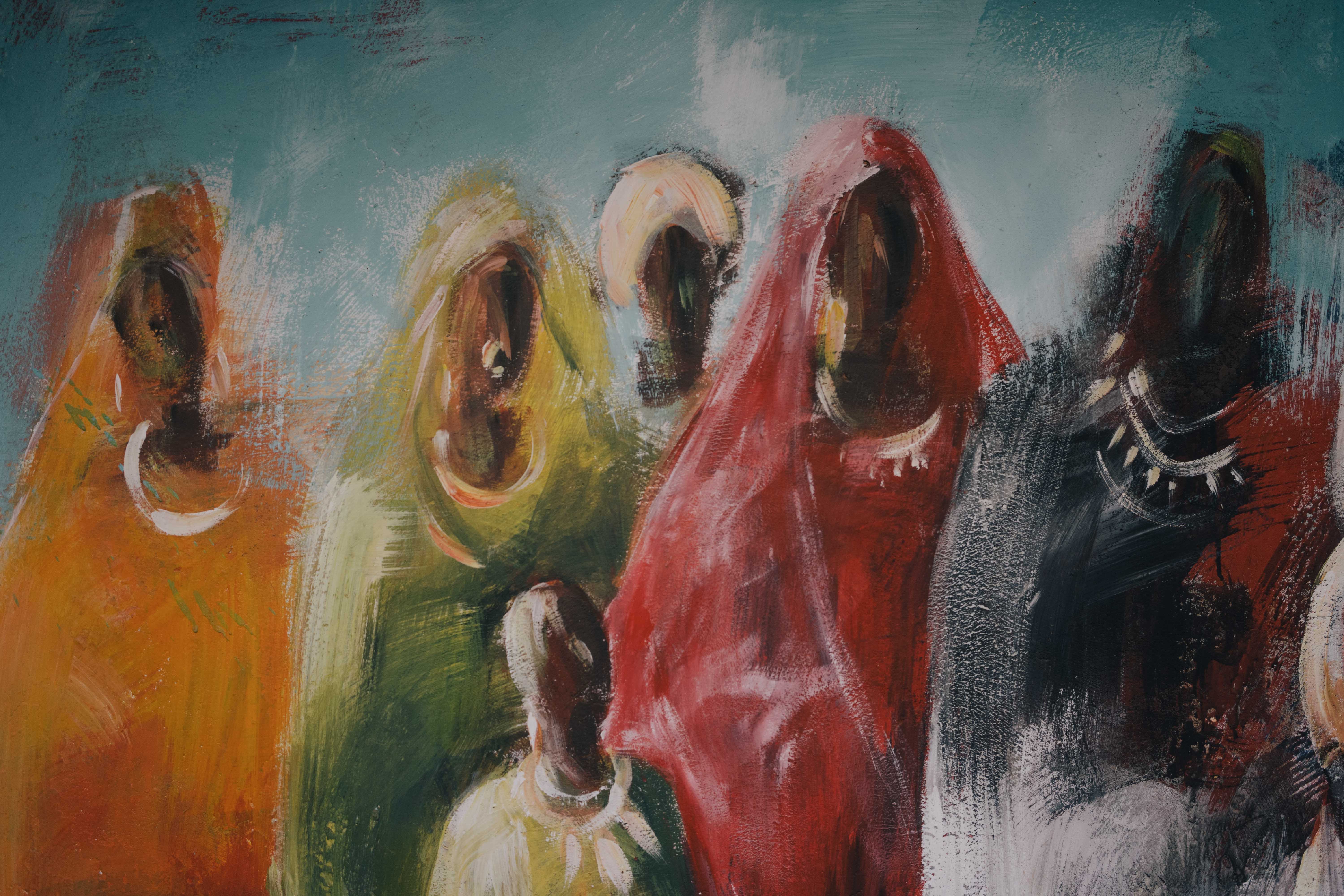
Hidden away in the northern end of the protest is a corner many have
come to cherish. Artists who felt restrained under Bashir now welcome
the freedom they have found within the sit-in, painting the walls,
setting up exhibitions and putting on nightly performances of art and
theatre.
"We've been suffering for so many of years from not being free," Arif
Ibrahim, a photographer exhibiting his pictures, told MEE. "This is the
opportunity to show the art and be more open about our art and ideas and
send a message."
"We've been suffering and it's time to make a break. It's a new Sudan. For artists and for [all] citizens too."
