Peace for the World World ! Your War Our Lives

The Dalai Lama
A Brief Colonial History Of Ceylon(SriLanka)
Sri Lanka: One Island Two Nations
A Brief Colonial History Of Ceylon(SriLanka)
Sri Lanka: One Island Two Nations
(Full Story)
Back to 500BC.

Monday, May 13, 2019
Denver votes to decriminalise magic mushrooms by razor-thin margin
 9 May 2019
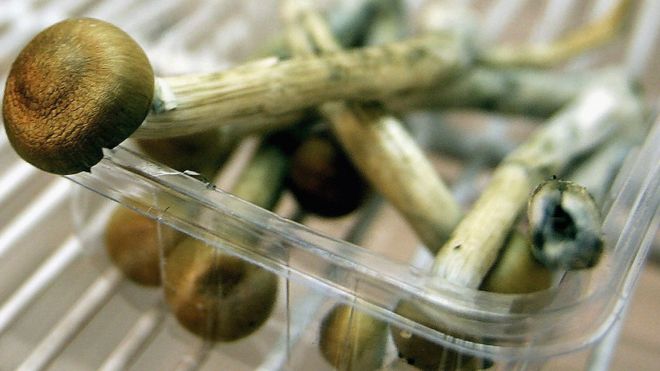
Denver has voted to decriminalise the use of magic mushrooms - the first US city to do so.
The motion was put to a public vote on Tuesday, and passed with a slim majority of 50.6%.
Although the mushrooms will technically still be illegal, restrictions
on personal use and possession by adults will be drastically loosened.
Police officers will now be instructed to treat magic mushroom users as their lowest priority.
Denver decriminalised cannabis in 2005 ahead of the rest of the state of
Colorado. Tuesday's referendum was the first US public vote on magic
mushrooms.
What are magic mushrooms?
They are a form of fungus found across the world which contains a psychedelic chemical called psilocybin.
The UK's National Health Service describes them as a hallucinogenic
"making people see, hear and experience the world in a different,
'trippy' way".
- Can psychedelics transform mental health?
- Psychedelic 'mimics near-death experience'
- Magic mushrooms 'reset' depressed brain
Westerners began taking them as a recreational drug in the 1950s but
they may have been used long before that in rituals in parts of the
world such as Central America.
Under US federal law, psilocybin belongs in the same group of banned
drugs as heroin and LSD, and it has been designated a Class A drug in
the UK since 2005.
The US federal government argues that psilocybin has high abuse potential and no accepted medical value.
The drug remains illegal in many other countries.
What is the argument for decriminalisation?
Campaigners in Denver say certain mushrooms "may be helpful in the
treatment of cluster headaches, PTSD [Post Traumatic Stress Disorder]
and OCD [Obsessive-Compulsive Disorder]".
Advocates say that a growing body of evidence suggests that the drug has therapeutic benefits for a wide range of illnesses, from anxiety to addiction.
A UK study in 2016, found a hallucinogenic chemical in magic mushrooms shows promise for people with untreatable depression.
In Iowa, a Republican lawmaker recently introduced two bills to remove
magic mushrooms from the state's list of controlled substances.
In two other US states - Oregon and California - campaigns have launched
to have similar issues on the ballot for the 2020 elections.
How will the new law work in Denver?
Officials will now be barred from "spending resources to impose criminal
penalties" for personal use and possession of the drug for residents
over the age of 21, effectively preventing the city from prosecuting or
arresting adults found with mushrooms.
According to the ballot, adults can even grow mushrooms for personal use.
But psilocybin is not being legalised and cannot be sold by cannabis businesses.
Before the vote Denver's district attorney, Beth McCann, said that
although she was against the motion, if it passed she would support the
formation of a review panel to study the effects of the drug.
The changes could take effect as soon as next year.
How are people reacting?
Kevin Matthews, who led the campaign to decriminalise the mushrooms,
told the Denver Post: "Against all odds, we prevailed. This is what
happens when a small team of dedicated and passionate people unite under
a single idea to create change."
His group Decriminalise Denver, which was behind the initiative, said:
"No-one should go to jail, lose their children, lose their job, and lose
their citizen's rights for using a mushroom. One arrest is too many for
something with such low and manageable risks for most people, relative
to its potential benefits."
Several major figures opposed decriminalisation, including Denver Mayor Michael Hancock and Ms McCann.
Ms McCann told the Washington Post: "At this point, I don't think it's a
good idea. We're still figuring out marijuana, and even though things
are going well so far, we're still measuring the impacts on the people
of Denver."
