Peace for the World World ! Your War Our Lives

The Dalai Lama
A Brief Colonial History Of Ceylon(SriLanka)
Sri Lanka: One Island Two Nations
A Brief Colonial History Of Ceylon(SriLanka)
Sri Lanka: One Island Two Nations
(Full Story)
Back to 500BC.

Saturday, May 11, 2019
Easter Sunday In Sri Lanka: Crisis, Correction & Hope

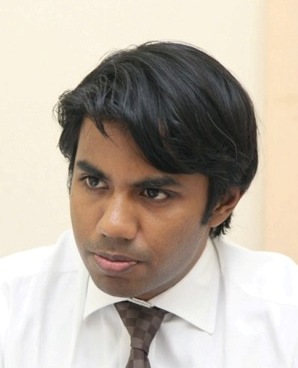
Asanga Abeygoonasekera
 “What happened on September 11th is at least, theoretically, small stuff compared to what can happen.” ~ Robert D. Kaplan
I was 16 when I witnessed the horror terrorism first hand. It was the blast I lost my father in.
When the long battle ended with the Tamil Tigers in 2009, I was relieved that what I witnessed would not be seen by my children.
I was wrong.
April 21st 2019 was when I had to cover my seven-year-old child’s eyes
while my family was evacuating from the emergency exit of the Shangri La
Hotel soon after the two suicide attacks which shook the entire
building. The steps were soaked in blood. Lifeless bodies were carried
out and many body parts blown off. Not many families made it out of the
fire exit like us. My family is shocked and living in fear like many
others today. I sympathize with the victims and their families who have
lost loving family and friends.
Had I been 3 minutes earlier to the lift, I would not be writing this piece.
Since this day, questions raised by my six-year-old and seven-year-old
are hard for me to answer. Why do people kill each other? How many bad
people are there in the world? Why do people make bombs? It goes on. For
my young son’s peace of mind and happiness, I painted a heroic story
that life will all be better soon after a superhero saves us.
In my capacity as the Director General of the National Security think
tank, I see this event as gross national security negligence.
The Easter Sunday attack stands
apart from previous faces of terror. Nine extremists turned the entire
nation to a state of fear by killing the innocent. The targets were
Christians and foreign nationalities to get the maximum global
attention.
Sri Lanka is a geo strategically blessed paradise island that lives with
an ‘existential threat’ (as my book further outlines). This is due to
its internal disarray of politics and external geopolitics. Countries
facing an existential threat for a long period of time tend to become a
‘national security state’ according to John J.Mearsheimer. Out of its 71
years of independence, Sri Lanka has fought a brutal terrorist war for
almost 30 years. Today there is another phase of terrorism: violent
extremism.
Certain liberal values introduced by the present government made our
nation vulnerable and a soft target for terrorist to breed and function.
What was seen by the West as an autocratic state under Rajapaksa was
reset overnight, tagging Sri Lanka to a global liberal order. This was
done at the expense of an ensured demilitarization and the complete
dismantling and weakening of the country’s military apparatus.
It brought prosperity to individuals without understanding the setbacks
of liberalism. The principal of liberalism was confused with
nationalism. Some policy makers saw one against the other to push
agendas forward.
Many extra regional nations came forward with certain agreements which
had direct and indirect influences on our national security.
Noncooperation with some powerful nations may lead to the assumption
that certain powerful nations may have used a backdoor to enter the
island using terror.
Cardinal Malcolm Ranjith explained at a press conference warning that
“powerful nations could be behind these attacks”. It is an urgent area
for Sri Lankan national security to invest in serious research and
investigation. This lacuna is due to the lack of support by certain
policy makers. A glance at the support extended to Sri Lanka’s national
security think tank will reveal its rank on the State’s list of
priorities. The ‘National Defence Policy’ is the leading document
capturing all threats. It remains a classified document inside a
cupboard for three years. None of the policy makers bothered to take
this forward.
The National Security think tank (INSSSL) at its internal Ministry of
Defence discussion held in 2017 March identified the threat of extremism
that could trigger in Sri Lanka and documented in its monthly threat
forecast written in March and October of 2017 and subsequently in
January of 2019 after the discovery of 100 detonators and explosives in
the West coast of the Island. How did such warnings go unheard?
This gross negligence was clearly due to the malfunction of processes
within the government, perhaps due to political meddling within
intelligence agencies and political division. The consequence is
devastating and has dragged the entire nation to a “state of fear”,
taking more than 350 innocent lives.
When the state cannot manage the consequence of an extremist act,
extremism presents a clear threat to national security. Extremist groups
can operate in emerging democracies, while also finding operational
space in failed or failing states. Post war Sri Lanka was a soft target
for extremist to creep in due to the political instability with two sets
of instructions flowing in from the bipartisan government. I have
indicated multiple times the grave danger to national security from the
existing political instability of the country.
It was not even a month ago when President Trump announced, “we just
took over 100% of the IS caliphate,” in a victorious speech seeing the
end as the last bullet was fired in the IS held Syrian town of Baghouz,
on the banks of the Euphrates River. Lina Khatib, an expert from
Chatham House, UK who analyzed the victory of the U.S., British, and
French-backed Kurdish and Arab coalition, said, “The group itself has
not been eradicated,…The ideology of IS is still very much at large.”
She states that IS will revert to its insurgent roots as it moves
underground, using the territorial loss as a call to arms among its
network of supporters.
Joseph Votel, the top American general in the Middle East, warned: “(The
caliphate) still has leaders, still has fighters, it still has
facilitators, it still has resources, so our continued military pressure
is necessary to continue to go after that network.”
In the same manner Prof. Rohan Gunaratna, the international terrorist
expert, analyzed how this spilled over to Sri Lankan attack. He stated,
“With a vengeance, the returnees from Iraq and Syria and diehard
supporters and sympathizers in their homelands responded to the call by
the IS leadership to avenge Baghouz, the last IS stronghold. The
indoctrinated personalities and cells attacked Buddhist shrines and
broke Buddha images.”
At least 41,490 international citizens traveled to Syria and Iraq to
join ISIS, according to ICSR; this is at least 50 each month. A total of
41 Sri Lankan Muslims from two extended families travelled to Iraq and
Syria. There were many individuals who migrated as refugees to Sri Lanka
from Muslim nations in the last several years.
The members of the IS branch that staged the attacks in Sri Lanka
believed in martyrdom. They were educated and mostly from upper
middle-class families. This is a different scale and complexity of
threat when compared to the LTTE threat. The extremist bombers were
calm. One bomber even gently holds a child just before his suicide. This
shows they were well trained for months and perhaps years.
Some see this as a retaliation to the Christchurch attack, which took
place last month. The Christchurch footage was used for election
campaigns in Turkey weeks after the attack. It was used by a political
leader to win popular support, which will further divide the Christian
and Muslim communities in the same way as President Trump’s Muslim ban
did soon after his victory. The danger in such populist acts by
politicians will further polarize and lead towards a clash among two
great civilizations.
Read More
