Peace for the World World ! Your War Our Lives

The Dalai Lama
A Brief Colonial History Of Ceylon(SriLanka)
Sri Lanka: One Island Two Nations
A Brief Colonial History Of Ceylon(SriLanka)
Sri Lanka: One Island Two Nations
(Full Story)
Back to 500BC.

Saturday, May 11, 2019
Identifying the killer ideology
Finding a black cat in a dark room
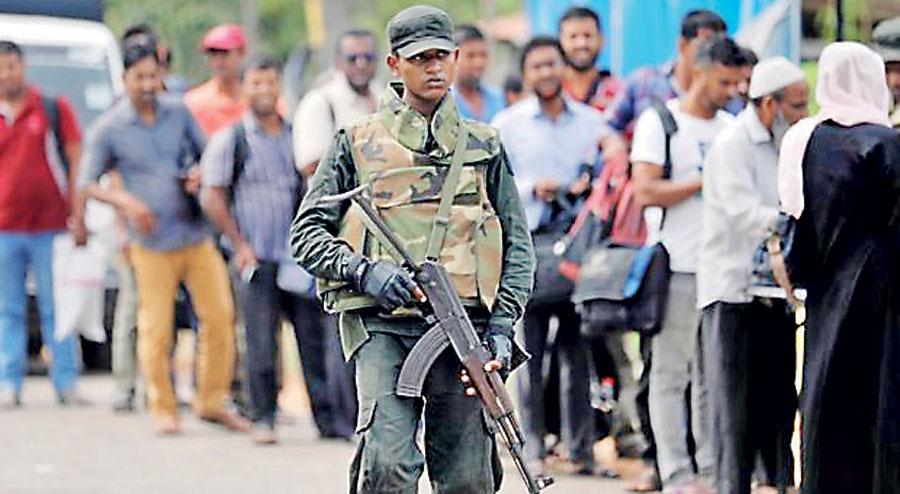
- Only about five persons linked to the killer group were at large
- It is the responsibility of the Muslims to identify the killer ideology among them
- What to correct and where to start correcting is not clear even to Muslims
 10 May 2019
The terrorist group that was behind the barbaric suicide bomb attacks on
three churches and three five-star hotels on Easter Sunday (April 21)
which killed nearly 300 innocent men, women and children seem to have
been contained. President Maithripala Sirisena, who is in charge of
defence as well as law-and-order said on Wednesday in Sainthamaruthu
where the last suicide bombs were exploded by terrorists on April 26,
that only about five persons linked to the killer group were at large. 
In the light of the experience gained by the security forces during the
30-year long war against the LTTE and the seeming weak organizational
structure as well as the short-term target of the Muslim terrorist
group, the battle-hardened troops could wipe out the remaining criminals
within weeks.
But the ideology that drove the religious fanatics to kill people would
haunt the masses of this country including the Muslims until it is wiped
out from among the people of the Islamic faith. These fanatics do not
have a long- term or collective objective such as carving out a separate
State as the former suicide bombers, the LTTE had. They have an
individual objective - attaining paradise -by killing people other than
them. Hence one man or a woman with this lunatic objective can create
havoc.
Yet, first, you have to identify it or differentiate this killer
ideology from the faith of the ordinary Muslims to exterminate it. It
would be a gigantic task even for the Muslims as there is no clear-cut
dividing line between the deadly ideology and Islam that is followed by
the Muslims.
One cannot identify the extremists with the Burqa or Niqab or the bushy
beard people don. That is not that easy. They are donned by many
ordinary Muslims as well. The women whom the Police described as
terrorists were not in Burqa or Niqab in the pictures published by the
Police.
Burqa ban only facilitated the law enforcement authorities to identify whether a person is a man or a woman.
Also having studied in a Madrasa or an Islamic religious school cannot be a criterion to identify a terrorist, as many people suggest.
Also having studied in a Madrasa or an Islamic religious school cannot be a criterion to identify a terrorist, as many people suggest.
All Maulavis or Islamic scholars in the country are the products of
Madrasas and they were recognized as Maulavis after the Al-Alim
examinations conducted by the Examination Department.
Some of the Madrasas are nearly a hundred years old. For instance, the
Gafooriyya Madrasa in Maharagama has been founded in 1931. It was mainly
these Maulavis who had been instrumental in maintaining peace during
the anti-Muslim propaganda campaign during the last regime and when
anti-Muslim riots broke out in Beruwala, Aluthgama and Welipenna in 2014
and in Ampara and several places in Kandy District in February/March
last year.
Hence, it is the responsibility of the Muslims to identify the killer
ideology among them that is hanging over their head as well, like the
proverbial Sword of Damocles and wipe it out from among them.
"In the light of the experience gained by the security forces during the 30-year long war against the LTTE …the battle-hardened troops could wipe out the remaining criminals within weeks"
A state of total denial would be disastrous. It is an invisible suicide
bomb that they are carrying with them which might someday bump them off
along with some others.
It is a well-known fact that the killer ideology is an extension of
various ideologies that were imported since 1980, from the Middle East
where the Western powers had created armed groups fighting in the name
of Islam. The initial call to the Muslims by those who brought these
ideologies was not harmful. They called on the Muslims to dissociate
from the innovations such as wearing talismans, vows to those other than
the God, soothsaying, over respect for the graves of saints, sorcery,
magic spells, astrology, image-drawing and image-making of living
creatures. Even a Materialist would agree with them.
However, the gradually increasing infighting over religious issues that
were brought in by these ideologies created a group of zealots or cults
with crude rituals sans ceremonies within the Muslim community. The
cults had gone to such an extent to reject the science for which Muslim
Arabs contributed immensely hundreds of years ago that they even
foolishly reject the immunization for children and injections for
patients. Yet, it was not considered or seemed as harmful, in spite of
the fact that it has divided the community.
The overzealousness created by this infighting also gave rise to the
Muslims being isolated among other communities while Muslim groups among
themselves. This was where the Sri Lankan Muslims might have crossed
the Laxamana Rekha. The ethnicity-based political parties created by the
war, ethnicity-based schools created by the lack of inclusiveness and
rivalry in the education system and the PR electoral system aggravated
the divisions among the communities.
Meanwhile, some sort of religious exhibitionism crept into the Muslim
community with this overzealousness created by the infighting. Many
wanted to show off their religious identity with their clothing instead
of the righteous behaviour stressed by Islam. This happened parallel to
the isolationism. The Muslim housemaids and men who returned from the
Middle East had already brought in the Abayas, Burqas, Niqabs and Jubbas
(For men) which well suited to this exhibitionism.
They spread among Salvar-Kameez-clad women and sarong-clad Muslims to
such an extent that they became an eyesore to the other communities, who
started to look at those who don these attires and coverings as a set
of strange animals. But the overzealousness and the resultant isolation
blinded many Muslims not to be concerned about the apprehensions among
other communities.
That was another point where the Muslims made a blunder. True, they
should not be dictated to by others in respect of their attires or
lifestyle. Yet, neither should they unnecessarily irritate their
neighbour, when Islam has not recommended any particular dress or
lifestyle. On the other hand, it is the responsibility of any community
to embrace the local culture as far as possible while maintaining their
religious or ethnic identity.
"Muslims, especially women are being vilified in buses, trains, hospitals and workplaces which in the long run might push them to find solace in justifying the very same terrorists, as happened to the Tamils after 1983"
The three-year-long hate campaign against the Muslims between 2012 and
2014 which was triggered and encouraged by the business and political
rivalries played a negative role in Muslims coming to terms with the
situation. The hate campaign instead united the Muslims and even pushed
the moderate Muslims to defend the Arabian attires as rights of
individuals, since the opposition to the so-called Arabisation sprang up
as a part of the demonization of Muslims.
According to a statement by a suspect arrested after the Easter Sunday
carnage which had been quoted by Sunday Lankadeepa last week, the hate
campaign has also furthered the radicalism which seems to have been in
the making then.
Nevertheless, some Muslims had woken up with the hate campaign. For
instance, the Muslim Council of Sri Lanka (MCSL), an amalgam of over 50
organizations requested the Muslim women during the hate campaign
against Muslims to shun black colour in their attires as an initial
step, but to no avail, apparently, as it was deemed as a surrender of
their rights.
The MCSL had even started a dialogue with the Bodu Bala Sena (BBS) over
the controversial issues. But the cultism seems to have grown as an
undercurrent which had turned into another hate campaign against all
those who are not them. Yet, what to correct and where to start
correcting is not clear even to Muslims.
Shedding Burqa or even the head cover which is religiously mandatory to Muslim women would be self-deceptive as the issue is a question of ideology.
Shedding Burqa or even the head cover which is religiously mandatory to Muslim women would be self-deceptive as the issue is a question of ideology.
On the other hand, the support expected by Muslims from the other communities seems to be not forthcoming.
They expect them to be recognized as a part of the anti-terror
movement. The President and the Prime Minister have been requesting the
Sinhalese and the Tamils not to push the Muslims towards
terrorists. Ordinary Sinhalese and Tamils too accept that almost the
entire Muslim community is against terrorism. Yet, they are justifiably
not sure about any individual Muslim.
Thus Muslims, especially the women are being vilified in buses, trains,
hospitals and workplaces which in the long run might push them to find
solace in justifying the very same terrorists, as happened to the
Tamils after 1983.
Wiping out the terrorist ideology must be a national campaign with Muslims being in the forefront. But politicians seem to be playing politics with one wanting to become the President, another the Law and Order Minister another wanting to get the proposed anti-terror laws passed using the situation.
Wiping out the terrorist ideology must be a national campaign with Muslims being in the forefront. But politicians seem to be playing politics with one wanting to become the President, another the Law and Order Minister another wanting to get the proposed anti-terror laws passed using the situation.
