Peace for the World World ! Your War Our Lives

The Dalai Lama
A Brief Colonial History Of Ceylon(SriLanka)
Sri Lanka: One Island Two Nations
A Brief Colonial History Of Ceylon(SriLanka)
Sri Lanka: One Island Two Nations
(Full Story)
Back to 500BC.

Wednesday, May 8, 2019
Why is peace failing in the Philippines?


A soldier from the the Philippines Army's 2nd Mechanized Infantry
Division fires a rocket launcher towards the positions of members of the
Bangsamoro Islamic Freedom Fighters (BIFF) militants during clashes in
Maguindanao, Philippines July 4, 2018. Source: Reuters

6 May 2019
WITH the defeat of the Islamic State in Syria,
ISIS fighters are exporting their combat to other parts of the world.
One of the places they’re eyeing with interest is the Mindanao region in
the southern part of the Philippines.
This area is fertile soil for radicalisation. Different clans and extremist militants struggle for control of the shadow economy of drugs, extortion, kidnapping and other sources of illicit income.
In 2017, extremist groups linked to Islamic State and previously Al-Qaeda fought a six-month battle with the Philippines government over Marawi, a city of 200,000 people, leaving it in ruins and killing more than 1,000 people.
In my research,
I study countries that have emerged from civil conflicts where the
inspiration to fight came from a sense of grievance and discrimination
arising from identity. I examine how identity matters in the transition
to the post-conflict period.
The majority of modern peace agreements fail within five years. What is causing these negotiated peace settlements to collapse?
Two nations in one country
There are approximately 5 million Muslims in the Philippines, now
concentrated into a corner of the Mindanao island, plus an archipelago
of smaller islands, measuring only 13,000 square kilometres. They call
themselves the Moro peopleand believe themselves to be a nation, the Bangsamoro, that is separate from the rest of the Philippines.
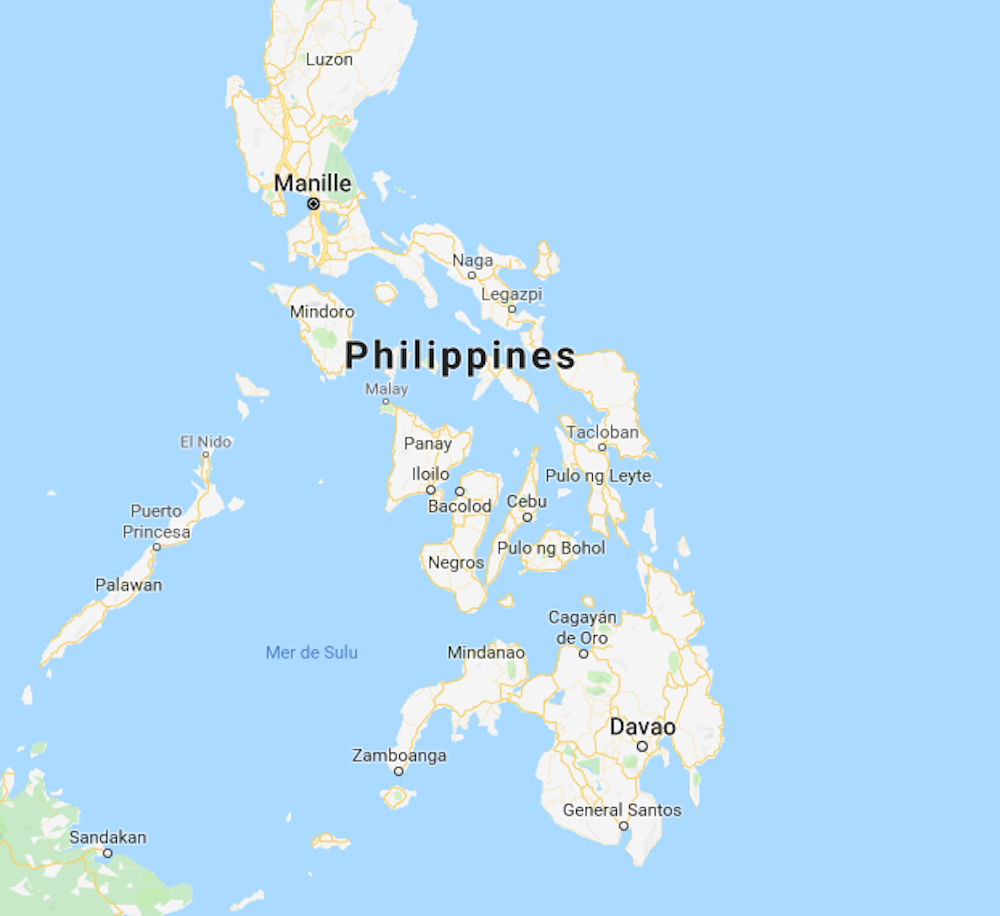
Mindano is located among the southern islands of the Philippines. Source: Google, 2019
However, the United States began a policy of encouraging Christian
settlers from the rest of the Philippines to move into Mindanao and
dispossess the local people of their land. This policy was continued by the central government after independence from the United States.
By 1982, the Moros owned only 18 percent of the land on which they
lived. Today, their region is the poorest and least-developed area in
the Philippines. According to the Philippine Statistics Authority,
GDP per capita is approximately US$650, about 20 percent of the average
for the Philippines, and most people are subsistence farmers.
Since the 1970s, armed groups in the Bangsamoro area of Mindanao island have been fighting for independence, with an estimated 120,000 deaths from the conflict. Despite peace agreements with successive groups, parts of the area are still lawless and racked with violence.
Identity claims over unsatisfied grievances
Using identity markers as fuel for mobilisation and conflict onset is a
well-known mechanism. A failure to deal with identity claims in peace
settlements will often lead to failure. In the Philippines, the
government has repeated failed to accommodate the Moros and accept that
the Philippines is a multinational state where all groups have equal
rights. The Moro are still a second-class minority within their own
country, without their own government and without investment.
Dealing with identity claims is important. On the one hand, granting
rights and autonomy to minority groups makes peace stronger because it
reduces their grievances. On the other, granting autonomy helps to unite
the minority group and reinforce its identity.
My research has shown that in the Philippines the grievances have not
been satisfied through the peace agreements. In 1996, the government
first signed a peace agreement with the Mindanao rebels.
However, the expected autonomy did not take place, in part because
Muslims felt that they had been subsumed into the Philippine culture.
For example, the former rebel leader ran for election but as a member of
the party of the Philippine president. The region did not get the
control it hoped for over its budgets, but rather was dependent on
unpredictable handouts from the central government.
Nor were the Moros given political representation in the central
government, where political appointments were optional. Furthermore, the
former rebels have been accused of using their political position only
for widespread personal enrichment, while the situation of the Mindanao
people was not significantly affected by the changes.
A rich breeding ground for ISIS
This peace agreement failed because it did not reduce the grievances of
the Moros, but neither did it serve to unite them and bring real
political representation.
Other Islamic groups have continued fighting. A peace agreement was made with one of the groups in 2014, though it was only ratified in the Philippine Congress in 2018.
It remains to be seen whether the concessions in the peace agreement
can create a sense of Moro unity, can reduce their sense of grievances
and can improve their governance.
In the meantime, hard-line Islamist groups and rival clans fester, a
rich breeding ground for ISIS fighters looking for recruits.
However, this does not need to be the outcome of an identity conflict.
To understand better the processes at work, I also look at a similar
situation with a very different outcome.

Personal belongings are scattered inside a damaged room of an apartment
house located in a residential area in Malutlut district, Marawi city,
southern Philippines October 27, 2017, which was believed to have been
rented by pro-Islamic State militant group leaders Isnilon Hapilon and
Omar Maute before their battle in Marawi city. Source: Reuters/Romeo
Ranoco
A better outcome in Indonesia
The westernmost tip of Indonesia is Aceh. The region is the most Islamic
area of Indonesia and was the site of a long-running low-level fight
for independence, which claimed up to 15,000 lives.
As in Mindanao, this is largely an identity conflict for an area that has a proud and independent history but
that had become one of the poorest and most exploited areas of
Indonesia. This sense of resentment was a powerful mobilising force for
both fighters but also for supporters of the armed movement within the
civilian population.
When peace was agreed between
the government of Indonesia and the armed fighters (GAM) in 2005, the
agreement granted significant autonomy to Aceh including control over
revenue, local political representation, and recognition of the
distinctive religious, language and cultural environment.
Aceh was given powers that no other area in Indonesia has and controls
itself as a self-governing and distinct entity. Since the agreement, the
area has been peaceful with large-scale reconstruction and investment.
So why has the peace agreement been successful in Aceh?
My research indicates that granting identity rights augments the sense
of coherence of a sub-national state. Aceh controls its own budget, can
determine its own development policy, can invest in its own education
system, has its own legal system, and has its own symbolic head of
state. These rights, powers and institutions work together to create a
sense of unity within Aceh.
Recognition can help unifying groups of different people
The area is not without its disputes. Rival political factions attempt to win support by appealing to a narrow and hard-line view of Islamic law in
order to mobilise people. Yet these disputes are contained within the
political system, rather than preventing the creation of a political
system, as in Mindanao. A return to violence seems inconceivable.
The peace agreement in Aceh worked because, on the one hand, it reduced
the sense of grievance, reduced economic resentments and granted
political power. On the other, it created a separate and unified Aceh
identity. By giving wide-ranging recognition to Aceh, the government of
Indonesia defused the resentment against the central government.
Identity is widely used as a way to mobilise fighters. Concessions over
identity can also work to create peace, by tackling grievances, but also
by creating a more coherent sense of identity. Governments are often
scared to recognise minority groups, believing that giving them rights
will create a desire for more autonomy.
However, recognition can also unify groups, creating a confident and
coherent nation that can demand better internal governance, better
political representation, and ultimately, a more durable peace.
Lesley Ann Daniels, Post-Doctoral Research Fellow AXA Research Fund, Institut Barcelona Estudis Internacionals
This article is republished from The Conversation under a Creative Commons license.
