Peace for the World World ! Your War Our Lives

The Dalai Lama
A Brief Colonial History Of Ceylon(SriLanka)
Sri Lanka: One Island Two Nations
A Brief Colonial History Of Ceylon(SriLanka)
Sri Lanka: One Island Two Nations
(Full Story)
Back to 500BC.

Sunday, June 9, 2019
Australia should give victims a voice in tackling environmental crimes
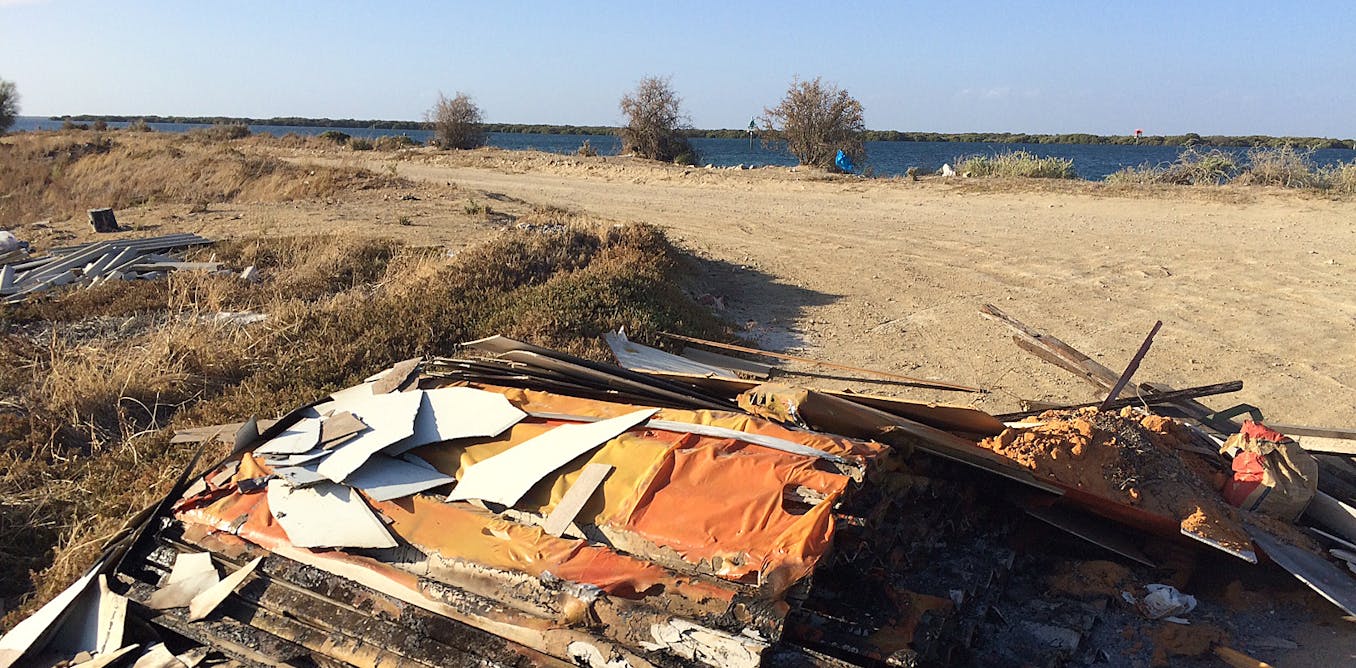
Environmental crimes such as asbestos dumping are far from victimless. AAP Image/CFMEU, Dave Kirner
 June 5, 2019 12.14am EDT
Environmental crimes such as asbestos dumping are far from victimless. AAP Image/CFMEU, Dave Kirner
June 5, 2019 12.14am EDT
Contrary to popular belief, crimes against the environment are not “victimless”. They affect many people, animals, plants and landscapes. Crimes against the environment should not be taken lightly.
Broadly defined, environmental crimes are those that harm the environment. This includes acts
such as polluting water or air, illegal fishing or trade in wildlife,
and water theft. The international Environmental Investigation Agency reports environmental offending is “one of the most profitable forms of criminal activity”.
Australia is currently missing out on a hugely useful tool in the fight
against environmental crime: restorative justice. This approach, which
has been used successfully in New Zealand, deserves a nationwide
commitment.
Restorative justice conferencing
Australia is a world leader in using restorative justice to deal with both adult and young offenders.
Simply defined, restorative justice is a process in which the victim,
offender, and other parties affected by a crime come together to discuss
the aftermath of the offence and its impact. Each party plays a role in
resolving the dispute with the help of an impartial facilitator.
Restorative justice is all about restoring harm, preventing the crime from reoccurring, and fixing (or building) relationships.
Research has found that, compared with the traditional criminal court process, restorative justice can reduce the chances of reoffending, increase victim satisfaction, and prompt offenders to feel more responsibility for their actions.
During a conference, victims can explain the effect a crime had on them, and ask questions – giving them a voice in
traditional proceedings. Offenders can give reasons why the crime
happened, and apologise. A range of other outcomes may be agreed to in a
conference, including compensation and community work.
However, our research reveals that conferencing is underused when it comes to environmental crimes in Australia.
New Zealand leads the way
New Zealand is leading the world in using restorative justice to deal
with environmental crimes. This is largely a result of two pieces of
legislation passed in 2002. First, the Victims’ Rights Act 2002 says
that, if possible, the court (or other representative) must arrange a
restorative justice conference at a victim’s request. Second, the Sentencing Act 2002 makes it mandatory for a judge to take into account any outcomes reached in a conference.
While more research focusing on the precise benefits is needed,
anecdotal evidence from shows New Zealand’s approach is effective.
Several judges, prosecutors and facilitators have praised environmental justice in addressing environmental crime.
Australia is failing to reap the benefits
Unlike New Zealand, Australian courts have not embraced restorative
justice for environmental offending. In fact, Australia has only used
restorative justice conferencing in two cases of environmental crime: Williams (2007) and Clarence Valley Council (2018).
Both Williams and Clarence Valley Council involved offending against Aboriginal cultural heritage, in breach of New South Wales’s National Parks and Wildlife Act. The outcomes reached in the conferences went well beyond what a court could have imposed on the offenders.
For example, in Williams,
where a mining company built exploratory pits and a private railway
siding across areas of Indigenous significance, the maximum penalty at
the time was a fine of A$5,500 and 6 months’ imprisonment. The judge
suggested the parties engage in a restorative justice conference, during
which Craig Williams donated A$32,200 worth of items to the local
Aboriginal people.
In Clarence Valley Council,
which concerned the council cutting down a protected tree, the council
agreed in the conference to donate A$300,000 to the local Aboriginal
community to fund research into cultural heritage. The council also
agreed to create employment opportunities and youth initiatives for
Aboriginal people.
These outcomes are far better in repairing the damage done than a mere fine or prison term.
Complementary to traditional prosecution
Despite these significant benefits, restorative justice conferencing is
not a replacement for prosecution. It should be used only after the
offender has been assessed as suitable, as in the cases of Williams and Clarence Valley Council.
Restorative justice conferencing can be suitable for all sorts of
environmental crime, from water pollution to breaches of planning laws.
In the case of offending against Aboriginal cultural heritage,
conferencing may be appropriate given its ability to give a voice to
members of the Aboriginal community who would otherwise be unable to
participate in the formal court process.
The ideal time to integrate conferencing is after conviction but before
sentencing, which we refer to as a “back-end model” of conferencing (the
method most commonly used in New Zealand).
Typically, a back-end model involves the prosecution bringing charges
before the court. The court then considers holding a restorative justice
conference and, if appropriate, the proceedings are postponed to allow
the conference to occur. The matter is later referred back to the court
for sentencing.
This creates an opportunity for the sentencing judge to consider any
results from the conference, but maintains a court’s essential oversight
role by ensuring the outcomes reached are adequate, achievable and
legally binding.
A more environmentally friendly response
Restorative justice conferencing can provide a more effective way of dealing with environmental harms because, according to Trevor Chandler, a facilitator in Canada, “punishment makes people bitter, whereas restorative solutions make people better”.
Of course, conferencing is not without limits. Just as restorative justice may not work for all young people,
it may not work for all environmental offenders. Conferencing can
require more time, money and energy than traditional court processes.
However, this may be an investment well worth making for the
environment.
It is time for Australia to follow New Zealand’s example by embracing a back-end model of restorative justice.
This would give victims a much-needed voice in the process, and create a
better chance to heal ruptured relationships and restore the harm done
to the environment as far as possible.
