Peace for the World World ! Your War Our Lives

The Dalai Lama
A Brief Colonial History Of Ceylon(SriLanka)
Sri Lanka: One Island Two Nations
A Brief Colonial History Of Ceylon(SriLanka)
Sri Lanka: One Island Two Nations
(Full Story)
Back to 500BC.

Friday, June 7, 2019
Bidding farewell to my soulmate and cellmate
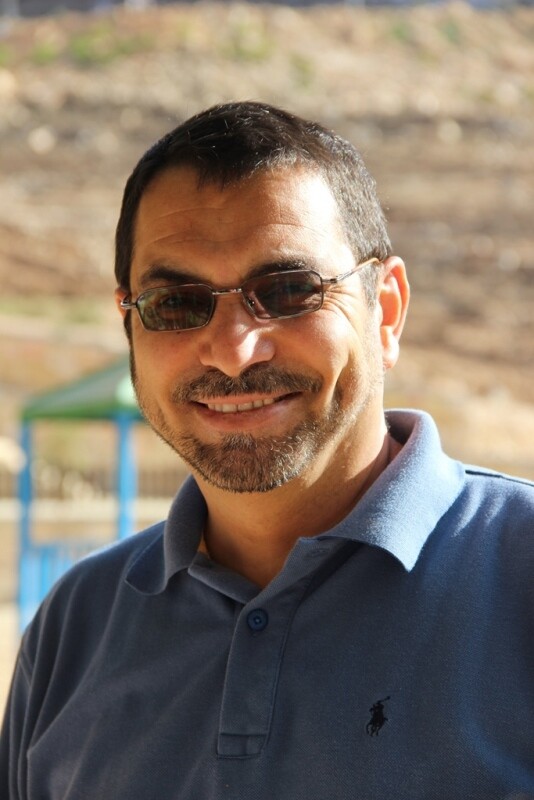
Sameeh Hammoudeh

-4 June 2019
There has been a big void in my heart since 25 May 2019, the day I lost a dear friend, brother, and “cellie,” Sameeh Hammoudeh.
Sameeh and I were in prison together in Florida for more than three
years beginning in 2003, when the US government sought to send us to the
gulag for the rest of our lives. While we had been friends and
colleagues for more than a decade, our shared struggle solidified our
brotherly bond.
When you live with someone in the same tiny space of less than 70 square
feet for 24 hours a day for years on end, they eventually become a part
of you, etched in your memory for life, a brother and kindred spirit.
I first met Sameeh in 1992 when I invited him to speak at a conference I organized on Palestine during the first intifada.
Already an accomplished scholar with a degree in political science from
Birzeit University, he moved to the US to pursue graduate studies at the
University of South Florida, where I was teaching.
He also worked as an editor for an Arabic-language journal called Political Readingspublished
by a think tank in Tampa, Florida, called World and Islam Studies
Enterprise (WISE), which was shut down by the US government in 1995 in a
crackdown on Palestinian activism.
In prison, we talked endlessly about everything, laughed at the jokes
our families would mail us and the stories they’d share during weekend
visits. He was the first to hear and comment on the dozens of poems I’d
written on spirituality, our struggle for justice, on Palestine and
freedom.
When my collection of poems was published in 2004, I thanked him for
being the first to listen to the poems and for his critique and support.
Dark days together
We were arrested in the aftermath of 9/11 when, under pressure from
special interest groups and right-wing media, the Bush administration
targeted us in a politically motivated indictment related to our Palestinian activism and charitable work a decade earlier.
During these dark days we became cellies, sharing a tiny prison cell
together for more than 20 months when we were held in isolation in a
federal penitentiary.
When we were occasionally allowed to go to a bigger cell for recreation,
either in the early morning or late at night in order not to mix with
other prisoners, we would throw a small rubber ball against the wall
until we were exhausted, making up our own rules for the game. He was
more fit than I was, and would almost always beat me. We would run and
sweat and laugh and argue before going back to start or end our day
together.
We prayed together each day. Along with the five daily prayers, we would
also devote an additional hour to prayer each night. Over that period,
we probably prayed more than 18,000 rakas, while reciting the entire Holy Quran many times over.
During the all-too-frequent times our cells were searched, we would be
taken out in handcuffs and placed in a holding cell while the intrusive
search was underway. Our simple routines would be interrupted, and trial
preparation disrupted, as we realized upon our return to the cell that
our massive legal documents were misplaced, missing or in complete
disarray.
We would console each other, keep faith, control our anger and counsel
patience. Sometimes during the search, we’d be detained in a room with a
telephone. Because we were restricted to only one 15-minute call a
month, we would take the risk and call our families while the search was
underway.
One of us would dial the number without seeing the dial buttons as our
hands were cuffed behind our backs, while the other was looking at the
buttons to guide the caller to dial the right number. We’d then cover
for each other by blocking the view from the guards while the other was
talking to his family. Had we been caught we would have been severely
punished.
We spent countless hours preparing for the trial, reviewing thousands of
surveillance tapes, calls and CDs. We trawled through massive amounts
of documents, records, summaries and testimonies.
Sometimes we would be reviewing documents in a sea of boxes in a bigger
room in prison with an FBI agent observing us. Sameeh would often engage
the agent and express his disgust at the politically motivated case,
and his bewilderment that a country that prides itself on democratic
ideals and principles would stoop so low as to manipulate facts and
sacrifice justice to please politicians or foreign countries.
Refusing to bow
On more than one occasion, the government offered Sameeh citizenship, a
job and the opportunity to finish his degree or anything else he wanted
in exchange for flipping to their side and testifying against me.
He told them emphatically that he would rather stay in prison for the
rest of his life than lie or harm another person for personal gain. When
they upped the pressure by threatening to charge him and his wife on
separate bogus charges related to taxes, he still did not relent or give
in. His faith in God was infinite and his faith in our ultimate freedom
absolute.
Every day, we would eat our three meals together on the floor, and
during Ramadan, we would break our fast together. Some evenings we would
spend hours trying to get hot water to have a cup of tea, a treat we
were not afforded. Because we were considered “special prisoners” we
were denied many rights and privileges granted to “regular” criminals,
including getting hot drinks.
I would have my family send money to another inmate who would then buy
tea from the prison canteen and occasionally smuggle a few bags to us.
We’d then spend hours at the cell door trying to persuade one of the
inmates cleaning the premises – called an orderly – to smuggle hot water
to us in a plastic bag without being noticed by the guards. It would
cost us one dollar per cup.
On those days that we were successful, we would – against the odds –
feel a sense of accomplishment. One day one of the orderlies advised us
that instead of waiting hours to get hot water we could simply light our
own fire by using the batteries in our transistor radios. Even though
he showed us how to do it in a few seconds, we spent hours trying to
light one without success. We laughed endlessly at our ineptitude.
When the trial date got closer, we were separated. The government moved
us from the federal prison 75 miles away to a local jail in Tampa, where
I was housed in an emptied section of the women’s unit so that I would
be totally isolated.
Yet, during the six-month trial, we would meet every day and ride the
same van to court. As our hands and legs were shackled, we would assist
each other since the marshals would not fasten our seatbelts while they
drove recklessly. In one instance, upon a sudden stop, I flew from my
seat, hit my head and landed on Sameeh’s lap. We were there for each
other.
Two weeks before the verdict, I dreamed that Sameeh and another
co-defendant were totally acquitted of all charges. In the dream, I was
also found not guilty yet remained trapped in the courtroom unable to
get out – as it happened, it took almost nine more years before I’d be
granted my ultimate freedom.
In fact, the government did not obtain a single guilty verdict out of
over 100 counts on any defendant. While I was acquitted on the most
serious counts, the jury deadlocked on other charges with 10-2 in favor
of total acquittal before the judge suddenly ended the deliberations
when two jurors refused to deliberate and despite having four alternate
jurors in the building.
Sameeh was acquitted on all counts.
When the verdict was read in December 2005 it was an emotional day, as
we teared up when we said goodbye to each other knowing it would be a
long time before we would see one another again. Sameeh asked for my
blessings as he was going home, and I asked for his prayers. It would be
11 more years before we would meet again, in Istanbul.
But because of his immigration status, Sameeh had to leave the US and
resettle in Palestine, where much of his family still lived. He was born
in Bethlehem in 1960.
Inspiration and role model
Before our time in prison, Sameeh was one of the main people who helped
me run a mosque and Islamic center that I established in 1987, after I
joined the faculty of the University of South Florida a year earlier.
He also worked as a high school teacher and vice-principal in a private
Islamic school that I founded in 1992 and managed for over a decade. We
considered the school to be our most enduring contribution. He was an
inspiration and role model to our students to whom he taught the Arabic
language, religious studies and history.
It was a great treat for the generations of students who learned the
history of Palestine from one so knowledgeable and passionate.
A historian of Palestine
As a historian and political scientist, Sameeh specialized in
researching and analyzing Palestinian and Ottoman archives in Jerusalem
and other Palestinian urban centers.
He published studies in academic journals and authored several books and
chapters about major Palestinian political movements, intellectuals and
leaders of the 20th century.
Just before the first intifada broke out in 1987, Sameeh was the first
to write a detailed study on Sheikh Izz al-Din al-Qassam, the iconic
religious leader who fought the British and armed Zionist groups in
Palestine in the 1930s.
One of Sameeh’s last works, published in 2017, was Ottoman Ramallah: A Study in its Social History, 1517-1918. The groundbreaking piece received high praise from historians.
He also published several volumes on important Palestinian historical
events and personalities, such as the Buraq Revolt of 1929, the
Palestinian uprising of 1936-1939, life in Jerusalem during the British
Mandate and World War II, and the memoirs of many Jerusalem political
leaders including Daoud Saleh al-Husseini and Taher Abd al-Hamid
al-Fityani.
He was also instrumental in organizing the archives of Birzeit University and the city of Ramallah.
Until 2015, Sameeh served as the editor-in-chief of Hawliyyat al-Quds, a peer-reviewed Arabic-language journal focusing on Jerusalem, published by the Institute for Palestine Studies.
Stolen years
Sameeh was an instinctively intellectual person, an avid reader and a serious scholar with an expansive historical memory.
He loved knowledge and was keen on acquiring it from any source. He
inspired many of his students to do the same. He would engage any
person, from a primary school student to a doctoral candidate, on any
topic but especially history, politics, social sciences and Islam.
Education was his passion and making a difference in the lives of people
intellectually and academically was his lifelong mission to which his
many students would attest.
I had the privilege of hosting Sameeh twice in the past two years through the Center for Islam and Global Affairs (CIGA), which I founded in Istanbul in 2017.
He addressed our students and faculty on Ottoman Palestine and the international relations between Islam and capitalism.
Sameeh finished his doctoral dissertation, submitted it to his committee
and was weeks away from defending it when we were arrested at dawn on
20 February 2003.
During our trial in 2005, his PhD adviser testified that Sameeh was one
of the most serious and decent people he had encountered, and his work
was among the best he had ever supervised.
Sadly, even though he was found innocent of all the charges, Sameeh was
not permitted to defend his dissertation or earn his PhD even after
completing all of its requirements. It was another miscarriage of
justice perpetrated by the malice or cowardice of a university and the
haughtiness of an empire.
Even after his acquittal of all charges in December 2005, it was not
enough that three years were unjustly stolen from his life, that he was
denied his degree or that his wife and six children were deprived of his
warmth and presence.
But because of sheer arrogance, it would take the US government another
six months before allowing him to leave to the West Bank, in an effort
to further punish him for their utter defeat at the hands of a jury
after a six-month trial with over 75 witnesses.
While still in prison five months after his acquittal, Sameeh spoke to Democracy Now about his ongoing ordeal.
Once back in the West Bank in mid-2006, the Israeli authorities
interrogated Sameeh and detained him, taking yet more time away from his
family before he was allowed to join them again.
Legacy of love for education
Sameeh was a model husband, father and son. He was able to care for his
elderly parents before they passed away a few years after his return.
His beloved wife and life partner of over three decades, Nadia, was
always the bedrock of the family – pious, patient, kind, caring and
supportive.
During the long ordeal, she was able to keep the family together and
have their young children excel in their studies. Two years ago his
eldest daughter, Weeam, received her PhD in sociology from Brown
University and, following in her father’s footsteps, she has gone on to teach and lead research projects at Birzeit University.
Sameeh’s second daughter, Doaa, will receive her PhD this year from
Oxford University. His other three daughters, Hanan, Alaa and Noor have
all either received their master’s or bachelor’s degrees with
distinction.
And this year, his youngest, Muhammad, received a full scholarship to an Ivy League school.
Sameeh was successfully able to transmit his love of and dedication to
education to his children. When I talked to him recently, he was very
proud of his children’s accomplishments.
Even though he knew that his days were numbered, Sameeh asked me during
our last phone call a few days before he passed away to get him books
from Istanbul that were not available in the West Bank.
He reminded me of a saying by the Prophet Muhammad – peace be upon him –
“If the Day of Judgment is about to take place and there is a seed in
your hand, go ahead and plant it.” This was Sameeh. He was faithful and
devoted to knowledge and scholarship to his last breath.
I bid my friend and brother farewell. A courageous, generous, patient, calm, pious, decent, peaceful and loving soul.
Palestine has indeed lost one of its most loyal and devout sons. He had
several unfinished and unpublished projects that I hope his students can
carry on and complete.
Despite his sudden departure, he has undoubtedly left his indelible mark
on Palestine and beyond. May God have mercy on his soul, and may he
reside in the highest levels of Heaven.
As the Islamic saying goes, “Our eyes are weeping, our hearts are heavy
and for your loss, Abu Muhammad, we are saddened. To God we belong and
to Him is our return. There is no power or strength except that of God,
the Most Great, the Most High.”
Sami Al-Arian is director of the Center for Islam and Global Affairs
(CIGA) at Istanbul Zaim University in Turkey. Dr. Al-Arian was an
academic, civil rights advocate and Palestinian activist in the US for
more than 30 years. Along with Sameeh Hammoudeh, he was indicted in 2003
by the US government, and tried in 2005 on terrorism-related charges
without reaching a single guilty verdict after a six-month trial.
He spent more than 11 years, from 2003 to 2014, between prison and
house arrest until he eventually was forced to relocate to Turkey in
2015 after living four decades in the US.
