Peace for the World World ! Your War Our Lives

The Dalai Lama
A Brief Colonial History Of Ceylon(SriLanka)
Sri Lanka: One Island Two Nations
A Brief Colonial History Of Ceylon(SriLanka)
Sri Lanka: One Island Two Nations
(Full Story)
Back to 500BC.

Friday, November 29, 2019
Of a Disciplined Society
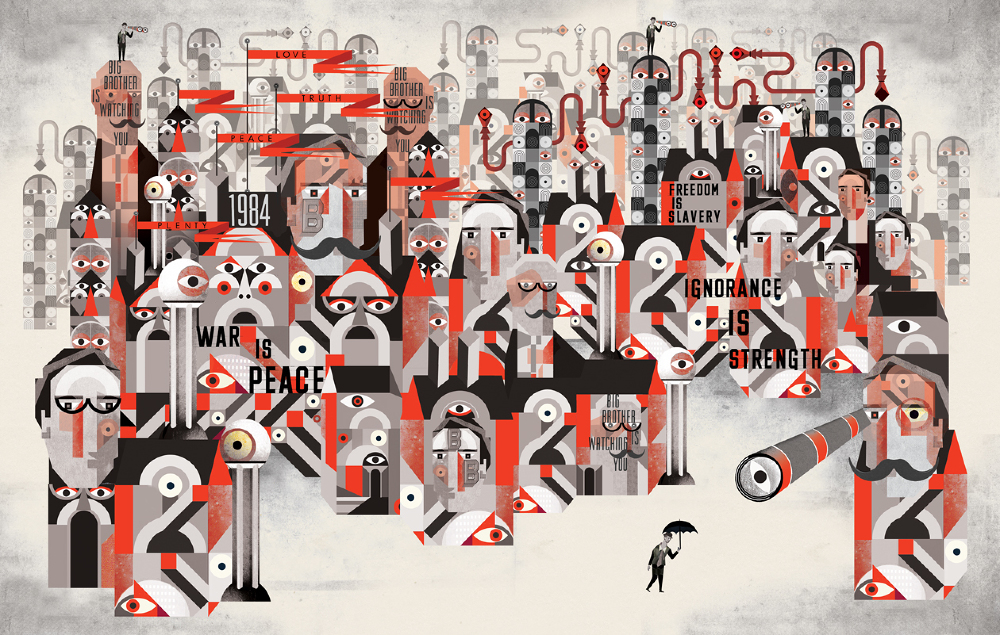

Photo courtesy Lesley Barnes
MINOLI WIJETUNGA-11/27/2019
On the day that marks a week since a new era of Sri Lankan politics dawned, the country that voted for a disciplined society is
rapidly falling in-line. No gunmen are wrestling the unwilling
dissenters to toe the line, though. There is no island-wide curfew; no
social media block. Instead, self-policing is the rule of the day. The
social conduct and expected behaviour ingrained during the 2010-2015
period appears to be muscle memory. Having been herded back – or
wilfully walked back in – to the discipline hinted
at during the Mahinda Rajapaksa era, our collective behaviour is
rapidly reverting to self-policing. It’s like riding a bicycle.
The Panopticon
This idea of a self-policing society is nothing new. The 18th century
utilitarian Jeremy Bentham created the concept of the panopticon,
meaning “all-seeing”, as a blueprint for a prison. The basic structure
of the panopticon was thus: a central tower surrounded by cells; a
watchman occupies the central tower, keeping an eye on the prisoners;
the tower is illuminated to such a degree that the watchman is able to
see everyone in the cells, but the occupants of the cells are not able
to see the watchman. Later, the French philosopher Michel Foucault
revisited the idea of the panopticon. He stipulated that the panopticon
is a means of subjugating the citizens of a disciplined society.
Its importance lay not in the industrious nature of labour use, but in
the conditioning, it imposes on the occupants. There is asymmetrical
surveillance, a condition where the occupants of the cells are seen, but
they do not see; at least, they believe they are being seen. As a
result of this asymmetrical surveillance, the inmates fear the eye of
the watchman and discipline themselves; there is self-policing. Foucault would have been thrilled at the microcosmic panopticon we are now building.
A Disciplined Society
The newly appointed President to the Democratic Socialist Republic of
Sri Lanka rode on a populist wave under the promise of creating a disciplined society.
There were fears, not unfounded, that this discipline would be achieved
through violent means, a throwback to the pre-2015 era. However, if the
past week is any indication, our new President need not employ any
overt means of establishing discipline. In addition to the journalists
who have had to leave their public social media platforms due to
individuals threatening their safety, and dissenting voices being told
they have no space in the public forums, there is a strong
self-censoring among the general public. From locking-down social media
profiles to not getting into a heated debate with the tuk-tuk driver, we
are in the process of disciplining our
conduct. We are convinced that any voice of dissent will disappear
without a trace; that there has not been any evidence to support this
the past week remains irrelevant. If at all, it makes us all the more
convinced that there is a watchman in the tower; whether there really is
one or not is irrelevant.
This, however, is the beauty of the promised prosperity. The newly
appointed regime need not be brutal, need not be violent; they could
very well be in full support of dissenting voices – except, there would
be none. The authorities need not assign a watchman to man the central
tower. The existence of the tower and our collective memories of what
once was is sufficient grounds for a disciplined society. For, disciplinary power is not like traditional power; it is not the obvious pomp, circumstance, or pageantry. Disciplinary power
is invisible; it is internalised. It does not require the subjects to
know or see who is wielding the power. In fact, the more invisible the
authority is, better disciplined the society. On the other hand, the subjects of a disciplined society are completely visible at all times. The crux of being disciplined lies
in being constantly watched, or believed that they are being constantly
watched. This ultimately leads to an internalization of the
regulations; discipline, when done right, becomes almost a way of life.
Therein lies the stark difference between what once was and what now is:
one used brute force seeking the traditional notion of power; what we
face today is more insidious in that it is invisible – it uses your own
mind against you. If we are waiting for a public display of power as it
was five years ago, it is highly possible it may never occur. True power
lies not in fear, but in being able to re-wire the human psyche to
adhere to your own agenda. Self-censoring and self-isolation are but the
beginning of a process of conformity. As long as we keep to the
panopticon mind-set, the newly elected President is likely to have no
problem in delivering his promise of a disciplined society. There will be no destroying of enemies; the conformist society will take on the mantle of merely changing them.
Noori Estate
Although the policing of the society by society is nothing new, the
violence reported from Noori Estate in Deraniyagala provides an apt
preface for things to come. It stands out not merely due to the reason
for violence, but also due to the way in which it was administered.
According to reports, the individual has been warned prior to the
election to vote for candidate X. Upon returning from the polling
station, the suspects had accused the individual of not voting for X and
assaulted him. Extending from that, the suspect had later visited the
individual at his house and assaulted the individual’s family. This
targeted violence that moves from threats to adhere to a particular code
of conduct, and extended punishment not only to the supposed
perpetrator but to their family as well is indicative of a society that
has taken discipline unto
itself. The assaults are concentrated on one individual and delivered in
excess; it’s almost as if he’s being made an example of. Considering
the reported fear among the Noori Estate families in the aftermath of
this incident and their reluctance to vote, one could argue that the
lesson has achieved its intended learning outcomes.
While these incidents are concerning enough, it is the lack of clear
political involvement that is more concerning. Instances where the
community takes law unto its own hands was becoming increasingly common
in the past couple of years, especially with regard to violence against
minorities. What we are likely to see in the aftermath of the
Presidential Election is another manifestation of this. The general
public taking to heart the call to do their duty for the nation, and
taking to disciplining the
neighbour. When you cannot trust your own neighbour, when you do not
know if your friend will be another face in the mob demanding you
conform, it is but natural for self-policing and self-censoring to
happen. When done for long enough, we would have convinced ourselves
that non-conformity is a crime; that a disciplined society is a conforming society; that to dissent is immoral and unethical.
It is easy to yearn for the disciplined society,
one where that annoying motorbike rider does not cut across your lane,
one where the Municipal Council collects garbage on time. Yet, what a disciplined society truly is, extends far beyond adherence to road rules or clean public places. Discipline is a type of power that derives from conformity. If dissenting voices are allowed to exist, it would do so within a structured, disciplined framework
that is allowed to exist by the authority that it claims is oppressive.
Although we see this more clearly under the current era, complete
credit for it cannot be laid at the altar of Rajapaksa’s. Chandrika
Bandaranaike-Kumaratunga spoke of being a “benevolent dictator”; erstwhile Army Commander and unsuccessful President-hopeful Mahesh Senanayake commented to BBC that there has been “too much of freedom, too much of peace for the last 10 years”. As a people, we seem to yearn for someone to discipline us; we seem to have a strong distaste towards peace and democracy.
After all, our President did say that “the public voted for me after considering all of these factors.”, only to correctly note a while later “and the public accepted our way”.
