Peace for the World World ! Your War Our Lives

The Dalai Lama
A Brief Colonial History Of Ceylon(SriLanka)
Sri Lanka: One Island Two Nations
A Brief Colonial History Of Ceylon(SriLanka)
Sri Lanka: One Island Two Nations
(Full Story)
Back to 500BC.

Tuesday, January 28, 2020
Battling dengue with multisectoral approach
Yet another bucket list goal for 2020

- There are other types of fevers that are also making the rounds
- There is no red alert issued on dengue
- 90,000 odd patients recorded for 2019 with nearly 100 recorded deaths
- There is no such posi
- tion as a ‘dengue specialist’ in any part of the world
- Patients are duped by these quack doctors appearing as dengue specialists

 28 January 2020
With
unprecedented rain wreaking havoc in many parts of the country, one has
to take extra precaution to prevent the threat of dengue; a menace that
has not been curbed successfully to date. As per the latest statistics
of the Epidemiological Unit of the Ministry of Health, a total of 100,
212 dengue cases were reported during 2019. Colombo recorded the highest
number of dengue cases with as many as 20,183 cases being reported in
2019. The Epidemiology Unit of the Ministry of Health further states
that 51,659 dengue cases were recorded in 2018, in contrast to the
100,212 cases of dengue reported to them as of 2019.
 In this backdrop, the need to take extra precaution against the outbreak of dengue is vital. Hence,Dailymirror
spoke to the Director of the National Dengue Control Unit Dr. Aruna
Jayasekara to inquire into the preventive steps taken to address the
issue. “The spread of the dengue mosquito has increased following the
heavy rainfall. In order to mitigate the spread of dengue, we are
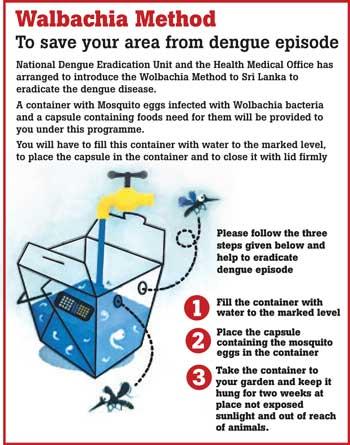
planning on introducing a new method. Wolbachia, a naturally available
bacteria will be infected into the dengue mosquito. The dengue mosquito
infected with Wolbachia cannot transmit the dengue disease. This is a
method that was initially introduced in Australia where it has been very
effective; no dengue was found in the region where the bacteria was
introduced” Dr. Jayasekara explained.
In this backdrop, the need to take extra precaution against the outbreak of dengue is vital. Hence,Dailymirror
spoke to the Director of the National Dengue Control Unit Dr. Aruna
Jayasekara to inquire into the preventive steps taken to address the
issue. “The spread of the dengue mosquito has increased following the
heavy rainfall. In order to mitigate the spread of dengue, we are
planning on introducing a new method. Wolbachia, a naturally available
bacteria will be infected into the dengue mosquito. The dengue mosquito
infected with Wolbachia cannot transmit the dengue disease. This is a
method that was initially introduced in Australia where it has been very
effective; no dengue was found in the region where the bacteria was
introduced” Dr. Jayasekara explained.Currently, this method is running as a pilot project comprising 12 countries. Plans are ahead to release mosquitoes infected with Wolbachia into the environment in February, this year. The Government is currently working in collaboration with the World Mosquito Programme to release these mosquitoes in two MOH areas, which include all areas that come under the purview of D1 of the Colombo Municipal Council and in Nugegoda.
“Presently, we are working on the reduction of mosquito breeding sites since the need to bring down the level of mosquito density is crucial. We employ techniques such as fogging mosquito breeding sites, while raising public awareness through mass communication in the hope of changing the community behaviour towards this mosquito issue” he added.
Patients with fever seek immediate medical attention
When inquired as to why there is a high prevalence of dengue in the
Colombo region in comparison to other regions, Dr. Jayasekara said that
since Colombo is a densely populated region where the rate of garbage
and buildings are significantly high, this situation has given rise to
the higher number of dengue cases being reported.
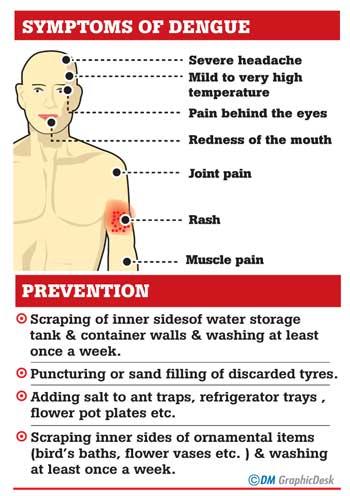
“A patient with dengue is often detected with symptoms including persistent fever, body aches, joint pains and red patches or skin rashes. While these are the main symptoms of dengue, it is always advisable to seek immediate medical attention if the fever persists continuously for a day. Therefore, it’s important that a patient immediately visits a doctor and gets a blood test done instead of waiting for the completion of three days, with persistent fever to make a visit to the doctor. Currently, this is the proper management with regard to dengue fever. Also, it is important to take note that there are other types of fever that are also making the rounds these days, such as influenza and the viral flu. We have advised patients with fever to take only Paracetamol and no other medication as an alternative remedy for cure” Dr. Jayasekara explained further.
“A patient with dengue is often detected with symptoms including persistent fever, body aches, joint pains and red patches or skin rashes. While these are the main symptoms of dengue, it is always advisable to seek immediate medical attention if the fever persists continuously for a day. Therefore, it’s important that a patient immediately visits a doctor and gets a blood test done instead of waiting for the completion of three days, with persistent fever to make a visit to the doctor. Currently, this is the proper management with regard to dengue fever. Also, it is important to take note that there are other types of fever that are also making the rounds these days, such as influenza and the viral flu. We have advised patients with fever to take only Paracetamol and no other medication as an alternative remedy for cure” Dr. Jayasekara explained further.
When asked whether a red alert was announced regarding dengue, Dr.
Jayasekara refuted such a claim stating that no official announcement
had been made as such. However, he noted that certain districts were
identified as high risk zones; these include Colombo and Gampaha. He
added that despite the high number of cases that have been reported from
Colombo and Gampaha region, a downward trend in the number of cases
reported have been observed since December. When asked if Galle and
Kandy districts would fall under the same category, he said that a
declining trend has been observed in both Galle and Kandy since of late.
“In the case of Kandy, a sharp decline has been observed owing to the
two monthlong clean up campaign that has been carried out effectively in
the area. So, there is no red alert issued on dengue,” he affirmed.
Stakeholder meeting to prevent dengue to be held soon
 The
Government Medical Officers’ Association (GMOA) when contacted said
that they have submitted a proposal to the Minister and Secretary of the
Ministry of Health concerning how to mitigate the threat of dengue. The
proposal contains details regarding how to control and take forward the
system of managing dengue. The GMOA stressed on the Government’s need
to focus more on preventive care than focusing only on the curative
management sector. Commenting on the most beneficial approach to tackle
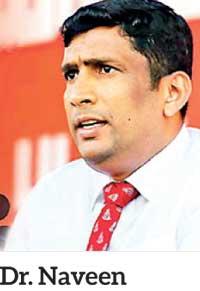
dengue, GMOA Assistant Secretary Dr. Naveen De Soyza noted that the
preventive care sector would be the least expensive and most effective
method to be adopted. “Not only the Government or the Ministry of
Health, but all other public and private institutions are equally
responsible for the dengue epidemic,” he said.
The
Government Medical Officers’ Association (GMOA) when contacted said
that they have submitted a proposal to the Minister and Secretary of the
Ministry of Health concerning how to mitigate the threat of dengue. The
proposal contains details regarding how to control and take forward the
system of managing dengue. The GMOA stressed on the Government’s need
to focus more on preventive care than focusing only on the curative
management sector. Commenting on the most beneficial approach to tackle
dengue, GMOA Assistant Secretary Dr. Naveen De Soyza noted that the
preventive care sector would be the least expensive and most effective
method to be adopted. “Not only the Government or the Ministry of
Health, but all other public and private institutions are equally
responsible for the dengue epidemic,” he said. Not only the Government or the Ministry of Health, but all other public and private institutions are equally responsible for the dengue epidemic
“Even during Dr. Rajitha Senaratne’s era, we asked to have an
inter-sectoral meeting among the Local Government authorities, the
school units and other public institutions. Unfortunately, there is no
inter-sectoral coordination to date. Instead what they do is carry out
haphazard dengue campaigns. So, we requested for a stakeholder meeting
at the Ministry of Health chaired by them. That should be the first step
to be taken to control the epidemic from spreading. Also, we have
observed that an experience sharing mechanism isn’t in place. This is
why at present, we had nearly 90,000 odd patients recorded for 2019 with
nearly 100 recorded deaths. The dengue fever can be categorised into
three parts; dengue fever, dengue haemorrhagic fever and dengue shock
syndrome. Since the dengue haemorrhagic fever and the dengue shock
syndrome are life-threatening it is crucial to closely monitor the
patient while constantly monitoring the fluid balance within the
patient,” he explained.
“The Ministry is going to have a stakeholders’ meeting soon. We need to prepare ourselves better to confront dengue. For this, we must forecast the weather and the potential epidemic that would surface next. Then we can assert the situation and plan ahead. Otherwise, when the epidemic breaks out suddenly, you cannot prevent it halfway through” Dr. Soyza affirmed.
“The Ministry is going to have a stakeholders’ meeting soon. We need to prepare ourselves better to confront dengue. For this, we must forecast the weather and the potential epidemic that would surface next. Then we can assert the situation and plan ahead. Otherwise, when the epidemic breaks out suddenly, you cannot prevent it halfway through” Dr. Soyza affirmed.
Stating that the previous regime and the then Health Minister only
focused on how to console those who were victimised by dengue, he
pointed out that the duo were not inclined towards establishing the
preventive mechanism against the epidemic. Adding that the public had to
be educated, he said that the legal system should be strengthened and
implemented properly in this regard. Unless the legal provisions are put
into practice, awareness cannot be fully created among the public.
“We need to focus more on how to manage dengue than spend a huge amount
of money on drugs. Unfortunately, there are certain paediatricians who
appear as dengue specialists. There is no such position as a ‘dengue
specialist’ in any part of the world. There are only epidemiologists. In
Sri Lanka however, there are so-called dengue specialists both in
western and ayurvedic medicine despite the fact that the Sri Lanka
Medical Council has no such person registered as a dengue specialist. We
have a specialist registry where every specialist should declare that
he or she is a specialist in the individual’s respective medical fields.
Very often patients are duped by these quack doctors appearing as
dengue specialists and they earn a lot of money through these means. It
is sad to see how some of these people are working closely with drug
companies,” Dr. Soyza stressed.
Target the behavioural change of people
 Speaking
to Daily Mirror, Consultant Physician of the Infectious Diseases
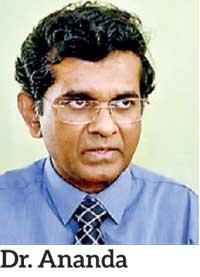
Hospital (IDH) Dr. Ananda Wijewickrama said that patients suspected of
dengue fever should take a blood count within 48 hours of the onset of
fever. This can be done at the OPD section of Government hospitals.
Patients should be administered only Paracetamol in the event fever
persists- no other medication should be prescribed including NSAIDs
(nonsteroidal anti-inflammatory drugs) and steroids, said Dr.
Wijewickrama.
Speaking
to Daily Mirror, Consultant Physician of the Infectious Diseases
Hospital (IDH) Dr. Ananda Wijewickrama said that patients suspected of
dengue fever should take a blood count within 48 hours of the onset of
fever. This can be done at the OPD section of Government hospitals.
Patients should be administered only Paracetamol in the event fever
persists- no other medication should be prescribed including NSAIDs
(nonsteroidal anti-inflammatory drugs) and steroids, said Dr.
Wijewickrama.The media should initiate CSR projects targeting the behavioural change in people
Observing an increasing trend in dengue mosquitoes, he said that this
situation is mainly due to a rise in mosquito breeding sites and poor
waste disposal habits. Hence, he noted the importance of a behavioural
change in people in this regard. Stating that the media have a proactive
role to play in raising awareness and creating the platform for a
positive behavioural change concerning dengue mitigation, he stressed
the need to kickstart various CSR projects to address the issue. “The
media should initiate CSR projects targeting the behavioural change of
people. This definitely will yield fruitful results in the process of
battling dengue. If the CSR projects target the behavioural change of
people in the case of proper waste disposal, it isn’t only going to be
beneficial in ending dengue, but would produce positive results in many
other aspects as well” Dr. Wijewickrama underscored.
Wolbachia method
 In
a bid to battle the dengue menace, the World Mosquito Program is also
working in the forefront with the Ministry of Health and Indigenous
Medicine. The project is supported by the Australian Government. As a
result of their fruitful efforts to this end, plans are afoot as
mentioned previously by Dr. Jayasekara, to release Wolbachia carrying
mosquitoes into the environment targeting other mosquitoes. Wolbachia is
a self sustaining, natural method and when released, these mosquitoes
breed with wild mosquitoes. This results in the percentage of Wolbachia
mosquitoes increasing overtime with no further need to release Wolbachia
mosquito carriers to the wild again. Thus, there would be a natural
decline in dengue overtime. Wolbachia , which is a natural bacteria
found in about 60% of insects, is a bacterium that doesn’t naturally
occur in the Aedes aegypti mosquito. Hence, the Aedes aegypti mosquito
has posed a serious threat to the lives of people as the infamous
carriers of not only dengue, but also for other mosquito borne diseases
such as yellow fever, Zika virus and Chikungunya.
In
a bid to battle the dengue menace, the World Mosquito Program is also
working in the forefront with the Ministry of Health and Indigenous
Medicine. The project is supported by the Australian Government. As a
result of their fruitful efforts to this end, plans are afoot as
mentioned previously by Dr. Jayasekara, to release Wolbachia carrying
mosquitoes into the environment targeting other mosquitoes. Wolbachia is
a self sustaining, natural method and when released, these mosquitoes
breed with wild mosquitoes. This results in the percentage of Wolbachia
mosquitoes increasing overtime with no further need to release Wolbachia
mosquito carriers to the wild again. Thus, there would be a natural
decline in dengue overtime. Wolbachia , which is a natural bacteria
found in about 60% of insects, is a bacterium that doesn’t naturally
occur in the Aedes aegypti mosquito. Hence, the Aedes aegypti mosquito
has posed a serious threat to the lives of people as the infamous
carriers of not only dengue, but also for other mosquito borne diseases
such as yellow fever, Zika virus and Chikungunya.
The innovative method of releasing Wolbachia mosquito carriers into the
wild is done to reduce the rate of dengue. It was first experimented in
Cairns, Australia; the area since has not experienced a locally
transmitted case of dengue for 8 years.
Project based on community engagement
 Speaking to,Dailymirror Campaign
Manager of the World Mosquito Program Sudheera Bandara stated that
officially the programme has been launched and comprises of two stages;
one is the communication stage and the other is the release of the
Wolbachia mosquitoes scheduled to happen in February 2020. Stating that
the process of communication has already commenced, he noted that the
project is intended to be carried out as a pilot project in two areas,
mainly the area that comes under the D1 section of the Colombo Municipal
Council and in Nugegoda.
Speaking to,Dailymirror Campaign
Manager of the World Mosquito Program Sudheera Bandara stated that
officially the programme has been launched and comprises of two stages;
one is the communication stage and the other is the release of the
Wolbachia mosquitoes scheduled to happen in February 2020. Stating that
the process of communication has already commenced, he noted that the
project is intended to be carried out as a pilot project in two areas,
mainly the area that comes under the D1 section of the Colombo Municipal
Council and in Nugegoda. It should be noted that the project is mostly based on community engagement
“The entire community comprising these two areas need to be fully aware
of the project, the expectations and on how everything is going to be
executed. It should be noted that the project is mostly based on
community engagement. The method we are going to employ is totally
opposite to what we have been practising to prevent dengue. However, it
should be noted that the existing preventive methods in place employed
to prevent the breeding of dengue shall not be compromised during this
entire process.
Currently we are receiving great community support in the pursuit to
mitigate dengue. At least one close member in every family has been
affected by dengue. So, there is a good support in terms of community
engagement from the public’ Bandara stated.
Potential impact on 40% of the world’s population
According to the World Mosquito Program’s research base in Monash
University in Australia, the organisation is currently impacting 4.4
million people in 12 countries – with a goal of reaching 100 Million
people worldwide by 2023. In a recent press statement issued by the
World Mosquito Program, the organization’s Director Prof. Scott O’Neill
acknowledged that there is growing evidence to prove that the Wolbachia
method is effective in reducing cases of dengue. According to him,
“Dengue is the fastest-growing tropical disease in the world with 40% of
the world’s population potentially impacted. We have partnered with
communities in 12 countries to reduce the impact of dengue – we now want
to work with local communities in Sri Lanka to do the same,” said Prof.
O’Neill.
“Averaging 30,000-50,000 cases per year during the past 10 years, these statistics shows the huge impact dengue is having on local communities in Sri Lanka. We want to work with the community, the Government and our partners to ease that burden” Prof. O’Neill added conclusively.
“Averaging 30,000-50,000 cases per year during the past 10 years, these statistics shows the huge impact dengue is having on local communities in Sri Lanka. We want to work with the community, the Government and our partners to ease that burden” Prof. O’Neill added conclusively.
