Peace for the World World ! Your War Our Lives

The Dalai Lama
A Brief Colonial History Of Ceylon(SriLanka)
Sri Lanka: One Island Two Nations
A Brief Colonial History Of Ceylon(SriLanka)
Sri Lanka: One Island Two Nations
(Full Story)
Back to 500BC.

Sunday, January 26, 2020
Ekneligoda disappearance – 10 years struggle for truth and justice

Photo by Ishara S.KODIKARA/AFP via The Independent
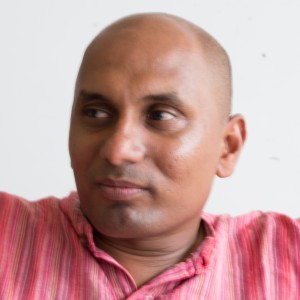
Today, 10th January
2020, is 10 years since the disappearance of journalist and cartoonist
Prageeth Ekneligoda. It also marks 10 years of struggle for truth and
justice by his wife, Sandya Ekneligoda and two young sons.
Investigative reports by the Criminal Investigation Department (CID) to
the Homagama Magistrate Courts indicate that Ekneligoda was abducted
from Rajagiriya in the Colombo district by Army Intelligence personnel,
and taken to Giritale Army Intelligence camp in Polonnaruwa district.
There he had been questioned about a book related to Rajapaksha family –
which includes present President Gotabhaya and former President
Mahinda. Army Intelligence personnel have been arrested as suspects and
released on bail. Both the CID and State Counsel leading the case on
behalf of the Attorney General’s (AG) department, had repeatedly told
courts of the Army providing false information, denying possession of
evidence, delaying production of evidence and misleading investigations
and courts. They had also reported a lack of cooperation and
obstructions towards investigations from the Army, and intimidation of
witnesses. A key witness, who had seen and questioned Ekneligoda in the
Giritale camp on 25th January 2010, has complained to the Police about a
conspiracy to harm his life from the Giritale camp.
The trial for the 2010 January abduction began in November 2019, at a
three judge special high court trial at bar, in Colombo. Nine accused
are being prosecuted. Separately, in December 2019, trial began in
Homagama High Court in relation to abduction of Prageeth in 2009.
Sugirtharajan – killing of Tamil jourmalist on 24th January 2006
Four years before Prageeth’s abduction, in 2006, on the same day, 24th January,
Sugirtharajan, popularly known as SSR, a part-time provincial
journalist working for the Tamil language daily Sudar Oli, was killed.
Like Prageeth, he was a father of two children. He was shot less than
100 meters from the Eastern Governor’s office and about 200 meters from
his own house. Before the killing, SSR had been feeling insecure and
wanted to find a safer house in a different location. A house had been
identified, but he was killed before he could actually move. The reason
appears to be the photos he took of 5 youth murdered on the beach of
Trincomalee on 2nd January
2006, popularly known now as the “Trinco 5 case”. The military was
trying to prevent anyone, even the families of the youth, access to the
mortuary to see the bodies, but SSR had persisted. The photos he took
were published on “Sudar Oli” newspaper on 4th January
2006. They had shown clear gunshot wounds, thus, disputing the version
that the youth had not been shot dead. Reporters sans frontières (RSF)
had noted that SSR had also detailed the abuses committed by Tamil
paramilitary groups including the EPDP in the Trincomalee region, the
day before his murder. One journalist friend of SSR in Trincomalee said
he had spontaneously rushed to the spot of the killing when he heard the
news, but later, was too scared to go to the hospital to see the body
or even for the funeral. Two days later, he had got a letter, from group
called “Force destroying the Enemy”. The letter had accused him of
canvassing for Vanni Tigers, that 3 such persons had been identified,
verdict had been delivered and implemented on one person (Sugirtharajan)
and that he should count his days, as he was going to be the 2nd.
Death threats to journalists and continuing violations of free expression
Yesterday, 23rd January
2020, seven Tamil journalists in Eastern district of Batticaloa were
threatened with death, through a leaflet left at the Batticaloa Press
Club. A police complaint was lodged, but no protection was offered by
the police. About 30 incidents threatening freedom of expression had
been reported in local media in 2019, including arrests, questioning,
assaults, threats, intimidations, and restrictions of journalists, media
personnel, writers, artists and raids on media offices. Also in 2019,
during the time of the former president, the state owned TV “Rupavahini”
was reported to have been brought under Ministry of Defense and the
ICCPR Act was used and threatened to be used against writers.
Self-censorship has re-emerged after the presidential elections.
New challenges for truth and justice
There has been some progress in perusing justice for Prageeth, but there
is also uncertainties and fears that the progress achieved may not be
sustained through the two trials which have just began. After the
November 2019 presidential elections, there has been dramatic changes in
the CID whose investigations and reports to Homagama courts had enable
the trial to commence. A top investigator in the CID had fled the
country and the Director of the CID was transferred. During the
presidential election campaign, the present President had pledge to
release all war heroes.
Compared to Ekneligoda, there has been very little national and
international interest about Sugirtharajan, murdered four years before
Ekneligoda disappeared. Not surprisingly, there is no progress in
investigations and no arrests. Justice for Sugirtharajan is unlikely, as
it is for killing numerous other journalists and disappearances of tens
of thousands of Sri Lankans.
On 17th January
2020, the new President followed in the footsteps of former Prime
Minister Ranil Wickramasinghe in making casual, insensitive and
irresponsible statements that disappeared Sri Lankans are dead, without
providing details of how, where, when and at whose hands they died to
families. He seems to be ignoring the efforts of families of disappeared
– some Tamil families have been at continuous roadside protests in the
North for nearly three years, others have perused court actions in North
and South, held discussions with the political leaders including former
President, and involved in variety of initiatives to know the truth –
about their disappeared sons, daughters, brothers, sisters, husbands and
even grandchildren. The President had also chosen to refer to them as
“missing” and tell this to the UN Resident Coordinator instead of to the
families of disappeared. The President also says “Most of them had been
taken by the LTTE or forcefully conscripted”. It is true that LTTE had
taken away many, but many families of disappeared have personally seen
their family members and others they knew been taken away by the Army
after surrendering at the end of the war – this includes children and a
Catholic Priest. They have stated this to Presidential Commissions of
Inquiry appointed by Gotabaya’s brother Mahinda Rajapakse and also in
Sri Lankan courts. President’s statement saying that death certificates
will be issued is also very much concerning, as families only want to
have death certificates after knowing for sure their family member are
dead, such as by seeing the body, ascertaining identity of remains and /
or knowing circumstances of the death. It is also a step backwards from
the 2016 amending of the registration of deaths (temporarily
provisions) Act no. 19 of 2010 to facilitate issuance of temporary
“certificates of absence” till fate and whereabouts of disappeared
persons are confirmed.
Signs of hope
In this bleak scenario, there are signs of hope – journalists and others
who continue to reveal uncomfortable truths, ask difficult questions,
challenge the powerful and the rich and expose past and ongoing abuses
such as corruption, militarization, environmental problems, repression
of religious and ethnic minorities etc. Many survivors, victim’s
families and affected communities continue to pursue truth and justice.
On 28th January,
media freedom organizations have organized the annual “Black January”
commemoration. Despite fears, defiance and resistance is alive and must
be nurtured.
Prageeth Ekneligoda’s wife, Sandya Ekneligoda is an icon of defiance,
resistance and hopes for justice. A symbol of the power of the
vulnerable, overcoming the vulnerabilities of the powerless. She had
braved death threats to her and children, intimidations, discrediting to
pursue truth and justice. Hostile posters had appeared in public places
against her and there has been online vilifications. Around 2012, she
was subjected to harsh questioning in courts by a Deputy Solicitor
General at the Attorney General’s Department, implying her search for
truth and justice for her husband was bringing the country into
disrepute. When Mr. Mohan Peiris, the head of the then Government’s
delegation to the UN Committee Against Torture claimed that Prageeth was
living abroad, Sandya wrote to the Committee to make further inquiries
and in Sri Lanka, persisted in getting Mr. Peiris to testify in courts.
She has been in courts more than 100 times, sometimes alone, despite the
hostility of suspects and accused from Army Intelligence (and their
supporters). When she was threatened inside court premises by Buddhist
Monk Galaboda Ethhe Gnanasara, leader of the Bodu Bala Sena, she
complained to the police, and later resisted attempts to “settle” the
case through mediation. The Magistrate at that time, also complained
about the Monk’s behavior in courts on that day and the Monk was
convicted for both cases. The former President pardoned the monk, but
Sandya is now challenging that pardon in courts. As a mother and a wife,
Sandya wrote to the then President Mahinda Rajapakha’s wife, appealing
for the first lady’s interventions to help find Prageeth. She stood
outside the parliament with her teenaged son and distributed appeals to
parliamentarians. She and her son went to the Galle Literary Festival
and distributed appeals to the writers and others gathered there. She
took the initiative in organizing numerous protests and vigils in
Colombo. When it became obvious that Army was not cooperating with the
investigators, Attorney General’s Department and courts, Sandya met the
then Army Commander personally to appeal for help. She also met with
diplomats, UN officials, international organizations and foreign
journalists to generate international support to seek truth and justice.
She worked with Prageeth’s friends and concerned people to publish
books with his articles and cartoons. She also supported Tamil families
of disappeared in their struggles, visiting and joining them in protests
in the North and talking about their struggles in her own work. And
alongside all of this, she also had to struggle to bring up her two
teenaged sons, now young adults, trying to fill the void of the
disappeared father.
Although I never knew Prageeth personally, in the last ten years, I had
spent some significant amount of time with Sandya. Often on the streets
at vigils, protests, religious events – in Colombo, but also in North
with Tamil families of disappeared. Also in courts, at seminars,
meetings. At the UN and with diplomats, foreign journalists. Sometimes
interpreting for her. And at her house. This ten year long association
with Sandya has been very challenging – her energy, proactive and
regular initiatives, courage, determination is difficult to keep up
with. But it’s also been one of the most rewarding and inspiring
experiences for me as an activist.
