Peace for the World World ! Your War Our Lives

The Dalai Lama
A Brief Colonial History Of Ceylon(SriLanka)
Sri Lanka: One Island Two Nations
A Brief Colonial History Of Ceylon(SriLanka)
Sri Lanka: One Island Two Nations
(Full Story)
Back to 500BC.

Monday, January 27, 2020
Macao has a history of more than 400 years as a bridge between the West and the East
Macao is one of the fastest growing economies in the world
 25 January 2020
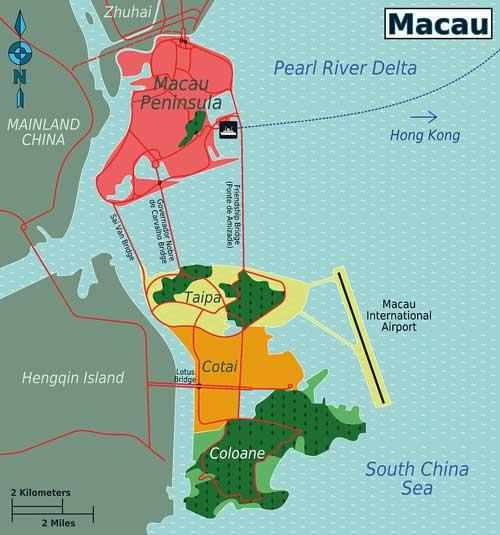
Macao is a special administrative region (SAR) and is located on the
southeastern coast of China and borders Zhuhai in Guangdong Province. It
has a population of 676,000 and an area of 32.989km2. It became a
Portuguese colony after China leased the territory as a trading port in
1557. Portugal ruled this territory until 1999 when it was transferred
back to China. Known as Monte Carlo of the East, Macao is a famous
gambling city.
‘One country-two systems’ is a form of governance introduced by former
leader Deng Xiaoping of China for Hong Kong and Macao. These two areas
were governed by European nations for a few centuries. As a result of
the life pattern, socio-economic systems and culture were totally
different from the people living in mainland China. English received
prominence in Hong Kong and Portuguese language is popular in Macao.
Even the currencies used in these two regions were different from
mainland China. They also have free ports.
China did not want to change the life pattern or the existing capitalist
economic systems of these regions after the takeover. They came forward
to introduce a system of government where people could run their own
affairs in the said regions. One country- two systems came into being as
a result of that. This act of China was greatly appreciated by the
world community and the transfer took place without shedding a drop of
blood. This system came into effect on December 20, 1999 in Macao.
Under this system, Macao has its own local government, legal and
financial systems. According to their laws, gambling is legalised. This
region has been granted the power to select its own chief executive
officer. He is being selected by a political body of the region. This
selection body comprises politicians and members of the business
community numbering 400. Only defence and foreign affairs are being
controlled by Beijing.
Macao has a history of more than 400 years as a bridge between the West
and the East. The integration of Chinese and Western cultures in the
city has made it a well-known tourist destination. Major attractions in
Macao include St. Paul’s ruins, Casino Lisboa, A-Ma temple, memorial
house of Dr. Sun Yat Sen and Gua hill. Regional convention and
exhibition centres are created to streamline the inflow of tourism. Last
year, it received more than 35.8 million visitors, a big leap from
fewer than 8 million in 1999. Tourism and related industries have
brought economic benefits and created jobs for 380,000 people.
Another important economic system created by China is the formation of
an inter-state linkage among the Portuguese-speaking countries with
Macao to improve trade relations. A platform between China and Lusophone
countries through Macao were included in China’s twelfth and thirteenth
five-year plans to appreciably diversify the region’s economy. Two
years ago, the ‘China-Portuguese Speaking Countries Cooperation and
Development Fund’ was founded in Macao. Macao is regarded by the World
Trade Organisation as one of the most open economies for trade and
investment and thanks partly to its free port, low tax rate and close
connection with Portuguese-speaking countries.
The outline development plan for Guangdong, Hong Kong, Macao Greater Bay
area – unveiled by the central government in February 2019 – listed
Macao as one of the four core engines for the region’s development. In
June 2019, it released an annex to Macao’s five-year development plan
that was dedicated to Macao’s participation in the Bay Area
construction, covering a wide range of issues including social welfare,
education, youth entrepreneurship, technology, infrastructure and
culture. Macao is able to diversify its industry and better integrate
into mainland economic plans under this new scheme. Macao will be
connected to Hong Kong and nine neighbouring cities in Guangdong
Province to form an economic powerhouse.
China has recently opened a new express sea way connecting Hong Kong,
Zhuhai and Macao. The sea bridge connects mainland China with Macao and
has made it easy for personal and goods transportation. The central
government thinks Macao is “Window and Bridge” connecting China to the
world. As a node city of the 21st Century Maritime Silk Road, it has a
special role in promoting mutual understanding between the East and
West.
Macao is willing to enhance interaction with international organisations
to build a platform for China to participate in global governance by
using its free port to take advantage in order to attract more global
organisations to set up branches in the city, which will further enhance
cooperation and communication among China and international
organisations.
We witnessed the large, rapid changes Macao has experienced since its
return to the motherland. The region’s once depressed economy has grown
continuously during the past 20 years with its GDP soaring to Patacas
444.7 billion (USD 55.4 billion) in 2018 from Patacas 51.9 billion in
1999. Today, Macao is one of the fastest growing economies in the world
and China’s richest city with its per capita GDP of USD 82,600 in 2018
being the second highest in the world.
Chinese President Xi Jinping highly commended Macao’s successful
development in the last 20 years in his speech on December 20, 2019 at
the 20th anniversary celebration of Macao’s return to the motherland. He
said the central government would fully support the new government of
Macao SAR led by CEO Ho Lat Seng. Xi underlined the need for leaders to
pursue a people-centred approach and urged them to take people’s
well-being seriously.
Ho Lat Seng, incoming chief executive of Macao SAR, recently said he
would work together towards one goal, which was to build a more
prosperous and beautiful Macao and ensure the ‘One country-two systems’
principle went far and remained steady. “Love for the motherland and
love for Macao and ‘One country-two systems’ have become the core values
of the Macao society,” he said.
Jinith de Silva,
Vice President,
Sri Lanka-China Society
Vice President,
Sri Lanka-China Society
