Peace for the World World ! Your War Our Lives

The Dalai Lama
A Brief Colonial History Of Ceylon(SriLanka)
Sri Lanka: One Island Two Nations
A Brief Colonial History Of Ceylon(SriLanka)
Sri Lanka: One Island Two Nations
(Full Story)
Back to 500BC.

Tuesday, April 28, 2020
Implosion of COVID cases at Welisara Navy Camp: Something is not right
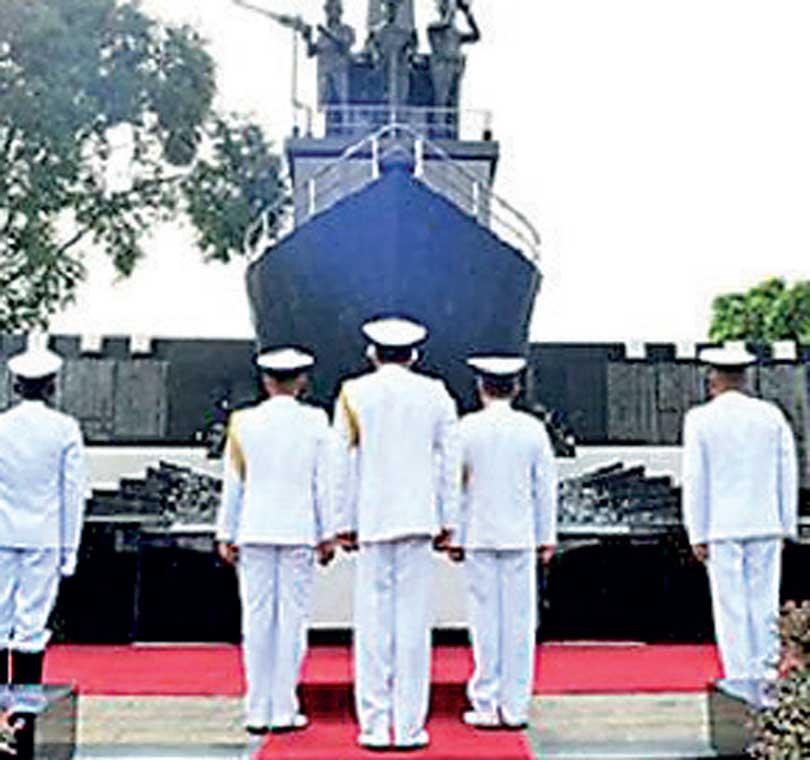
- Military bases are tinderboxes for the virus spread. The close-knit living arrangements and shared amenities provide a fast track for the multiplication of virus cases
- Military played a pivotal role in Sri Lanka’s response to COVID-19, aggressively tracing contacts, effectively enabling the medical authorities to try to stop the virus on its tracks
 28 April 2020
Sri Lanka’s initial COVID-19 response was, by and large, a success.
Immediately after the discovery of the first case, a Chinese tourist
from Wuhan, the government responded promptly. It set up a task force,
sent an aircraft to evacuate the Sri Lankan students from Wuhan, and
established a network of quarantine facilities where all arrivals from
high-risk countries were self- isolated for 2-3 weeks. Military
intelligence units undertook aggressive contact tracing. An islandwide
lockdown brought the country to a standstill, but also limited the
spread of the virus. A combination of mitigation and suppression
strategies averted an implosion of local cases.
Now, that early success hangs in the balance. Last week, a naval
personal, who served in the frontline of contact tracing was tested
positive for the coronavirus. Subsequent PCR testing revealed a large
cluster of naval personnel in the same barrack of the Welisara Naval
complex as infected with COVID-19. As of noon yesterday, 95 sailors
attached to the Navy base have been tested positive. That includes at
least 27 personnel who were on leave.
The sprawling complex of 4000 uniformed and civil employees is now
sealed off. Also an Army Special Force camp in Seeduwa was isolated on
Sunday after an officer there was tested positive. His spouse, a naval
officer attached to the Welisara base is believed to have contracted the
virus first. Also, an Airman has been tested positive for the virus. He
is believed to have come into contact with a group of navy personnel.
Military bases are tinderboxes for the virus spread. The close-knit
living arrangements and shared amenities provide a fast track for the
multiplication of virus cases. In their susceptibility to the virus
transmission, those dwellings are little different from cruise ships or
aircraft carriers. The only difference is while the spread is confined
in the ship, military bases, as feared now, could become a nexus for
community transmission.
After the recent developments, the Government’s Medical Officers
Association (GMOA) has raised concerns that new cases are being reported
in the far-flung areas which until now had limited exposure to the
virus. Thirty-four additional cases were reported by yesterday noon,
bringing the total number of positive cases to 568.
“ The emerging situation in Anuradhapura, Kurunegala, Ratnapura, Polonnaruwa, Monaragala, Ampara, Trincomalee and Hambantota districts should be taken into attention,” it wrote in a letter addressed to the Commander of Army, Lt. Gen. Shavendra Silva. The GMOA proposed that the existing social distancing methods be continued until they are reviewed.
“ The emerging situation in Anuradhapura, Kurunegala, Ratnapura, Polonnaruwa, Monaragala, Ampara, Trincomalee and Hambantota districts should be taken into attention,” it wrote in a letter addressed to the Commander of Army, Lt. Gen. Shavendra Silva. The GMOA proposed that the existing social distancing methods be continued until they are reviewed.
Combating the virus spread within the confines of the closed-off naval
garrison would not be much of a hassle for the medical officers.
However, tracing the cases spread out potentially countrywide would be
extremely difficult.
The ministry of defence yesterday directed all military personnel who were on leave to report to duty. That was a change of heart. The earlier position was that the naval personnel on leave to spend their holiday in their residences. The change may highlight the gravity of the emerging situation and fear that potential and undiscovered virus clusters would implode without prompt action. The recent developments would disappoint the government’s plans - which the majority public had been eagerly awaiting- to relax the curfew and the gradual revival of social and economic activities. Needless to say, it is dangerous to open the country without knowing the full scale of the virus spread.
The ministry of defence yesterday directed all military personnel who were on leave to report to duty. That was a change of heart. The earlier position was that the naval personnel on leave to spend their holiday in their residences. The change may highlight the gravity of the emerging situation and fear that potential and undiscovered virus clusters would implode without prompt action. The recent developments would disappoint the government’s plans - which the majority public had been eagerly awaiting- to relax the curfew and the gradual revival of social and economic activities. Needless to say, it is dangerous to open the country without knowing the full scale of the virus spread.
The military played a pivotal role in Sri Lanka’s coronavirus response,
aggressively tracing contacts, effectively enabling the medical
authorities to try to stop the virus on its tracks.
However, in hindsight though, when the military personnel were sent to
the frontline of the epidemic without proper Personal Protection
Equipment and adequate training on the unseen enemy, it was a disaster
waiting to happen.
Also, some lessons could come handy when Sri Lanka and the world is getting ready for a long haul battle against the coronavirus. (As one epidemiologist quipped, the world is still in the second innings of a baseball match (the game has nine innings)). It could go on for at least 18 months.
Also, some lessons could come handy when Sri Lanka and the world is getting ready for a long haul battle against the coronavirus. (As one epidemiologist quipped, the world is still in the second innings of a baseball match (the game has nine innings)). It could go on for at least 18 months.
Probably, the first lessons to draw from is that the coronavirus
epidemic is first and foremost a medical contingency, and not a military
one. It is the qualified medical officials who should lead the
government’s coronavirus response. It may be fashionable - and still
sycophantic- to say otherwise. When a response to a medical emergency is
not led by qualified medical personalities, blunders can happen easily
and some of which could cost lives.
The second is the reappraisal of the strength, limits, and shortfalls of
each apparatus that had been deployed in the government’s COVID-19
strategy. The government should review the strength and limitations of
the military style contact tracing, and equip both military personnel
and PHIs with adequate PPEs and training to reduce their exposure to the
virus.
Shared accommodation of military members involved in frontline contact
tracing activities was a grave mistake. The military should provide them
with separate housing and access to separate amenities. If the
frontline workers were subjected to virus testing, at least after their
deployment in high- risk areas, infection rates could have been lower.
The third is the need to enhance testing capacity, substantially. The
epidemiologist unit of the Ministry of Health earlier estimated that Sri
Lanka should conduct at least 5000 tests a day, that included the
testing at the airport once it is opened. However, even after having
dramatically increased the number of tests- from barely a hundred tests a
day about a month ago- the country still conducts around 1000 tests a
day. If adequate tests were conducted in March, many asymptomatic
carriers could have been identified. Also, the enhanced testing capacity
is sine qua non for the post-lockdown context as the factories and
schools are opened.
The fourth is not directly related to the government’s COVID-19
response, but it could overshadow everything else in the country. The
government should avoid a constitutional crisis. President Gotabaya
Rajapaksa has repeatedly ruled out the reconvening of the old
Parliament. Now that the elections are tentatively scheduled for June 20
the likelihood of which is diminishing day by day - it is unlikely that
the new parliament can meet before June 1.
As a result, the country would be without a Parliament for more than three months. The opposition parties are planning to go to the Supreme Court demanding the reconvening of the House. However, mass gatherings that are associated with an emotionally charged court case are exactly the reason why a constitutional impasse should be avoided. If the President opts for a face-off with the political opposition, his government would lose the grip of the epidemic. He may or may not win the self-made constitutional crisis, but the country would surely lose.
As a result, the country would be without a Parliament for more than three months. The opposition parties are planning to go to the Supreme Court demanding the reconvening of the House. However, mass gatherings that are associated with an emotionally charged court case are exactly the reason why a constitutional impasse should be avoided. If the President opts for a face-off with the political opposition, his government would lose the grip of the epidemic. He may or may not win the self-made constitutional crisis, but the country would surely lose.
Follow @RangaJayasuriya on twitter
