Peace for the World World ! Your War Our Lives

The Dalai Lama
A Brief Colonial History Of Ceylon(SriLanka)
Sri Lanka: One Island Two Nations
A Brief Colonial History Of Ceylon(SriLanka)
Sri Lanka: One Island Two Nations
(Full Story)
Back to 500BC.

Friday, May 8, 2020
11 years today - More cluster bombs hit No Fire Zone


07 May 2020
Marking
11 years since the Sri Lankan military onslaught that massacred tens of
thousands of Tamils, we revisit the final days leading up to the 18th of
May 2009 – a date remembered around the world as ‘Tamil Genocide Day’.
The total number of Tamil civilians killed during the final months is
widely contested. After providing an initial death toll of 40,000, the
UN found evidence suggesting that 70,000 were killed. Local census
records indicate that at least 146,679 people are unaccounted for and
presumed to have been killed.
See more at www.RememberMay2009.com, a collaborative project launched last year, between the Adayaalam Centre for Policy Research, Tamil Guardian and 47 Roots.
7th May 2009
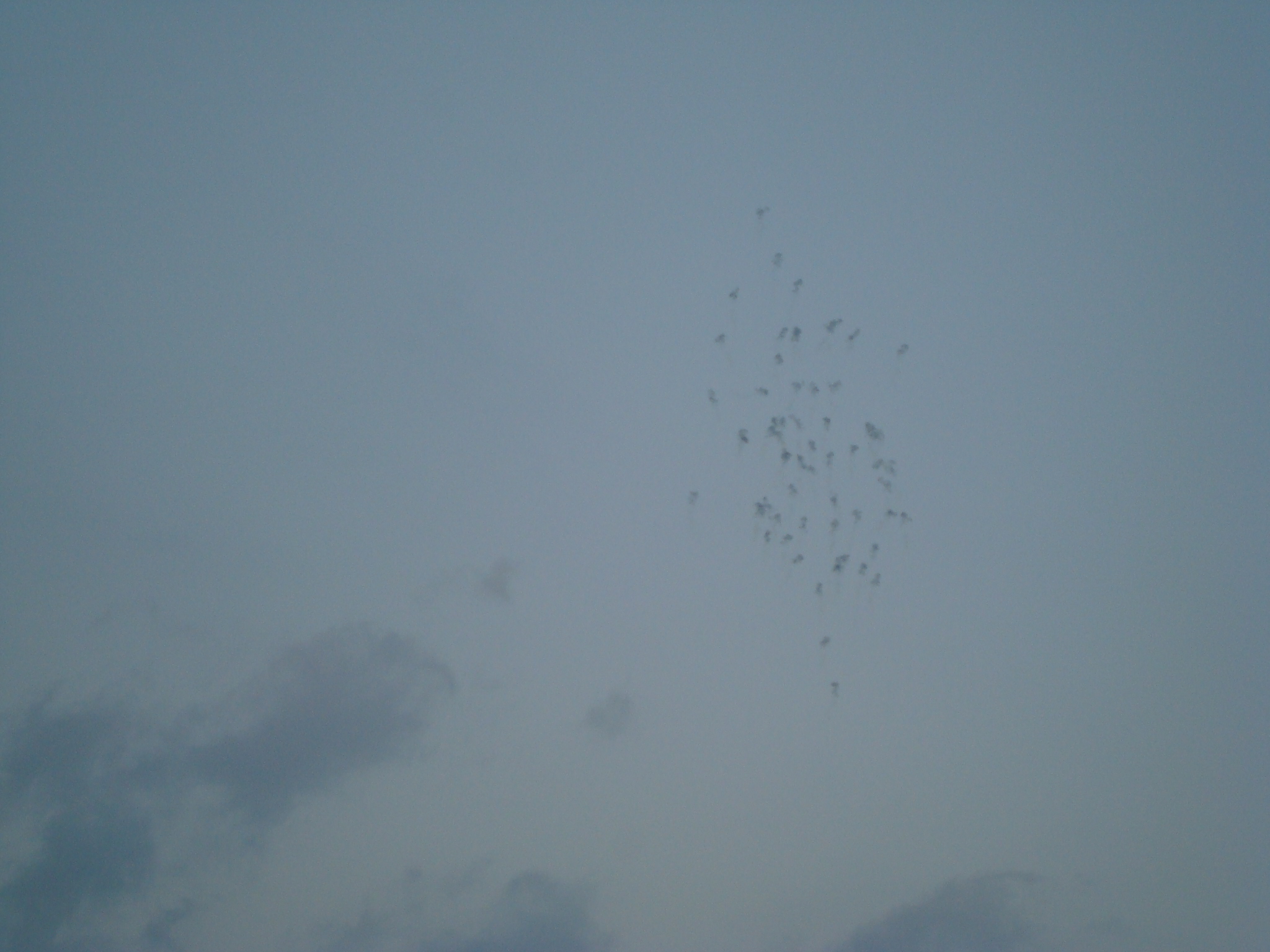 Photograph
from US State Department report of “characteristic cluster bomb smoke
cloud from a shelling on May 7 in Mullivaikkal".
More cluster bombs hit No Fire Zone
The Sri Lankan army launches cluster bombs inside the No Fire Zone, one of several such attacks in the last few months.
In the UN’s OISL report, witnesses “described the objects exploding in
mid-air and releasing many smaller objects in the air before impacting
the ground”.
Photograph
from US State Department report of “characteristic cluster bomb smoke
cloud from a shelling on May 7 in Mullivaikkal".
More cluster bombs hit No Fire Zone
The Sri Lankan army launches cluster bombs inside the No Fire Zone, one of several such attacks in the last few months.
In the UN’s OISL report, witnesses “described the objects exploding in
mid-air and releasing many smaller objects in the air before impacting
the ground”.
“Cluster munitions release
bomblets over a wide area above a target that explode on impact.
However, indirect fire munitions may also be configured to explode into
fragments overhead. OISL believes that given the persistent nature of
the allegations of cluster munitions, further investigation needs to be
carried out to determine whether or not they were used.”
Photographs leaked in 2016 appear to confirm the use of cluster bombs by
the Sri Lankan government. The photographs showed demining teams
excavating cluster munitions from Kilinochchi and Chalai in Mullaitivu,
sites of heavy bombardment by Sri Lankan forces.
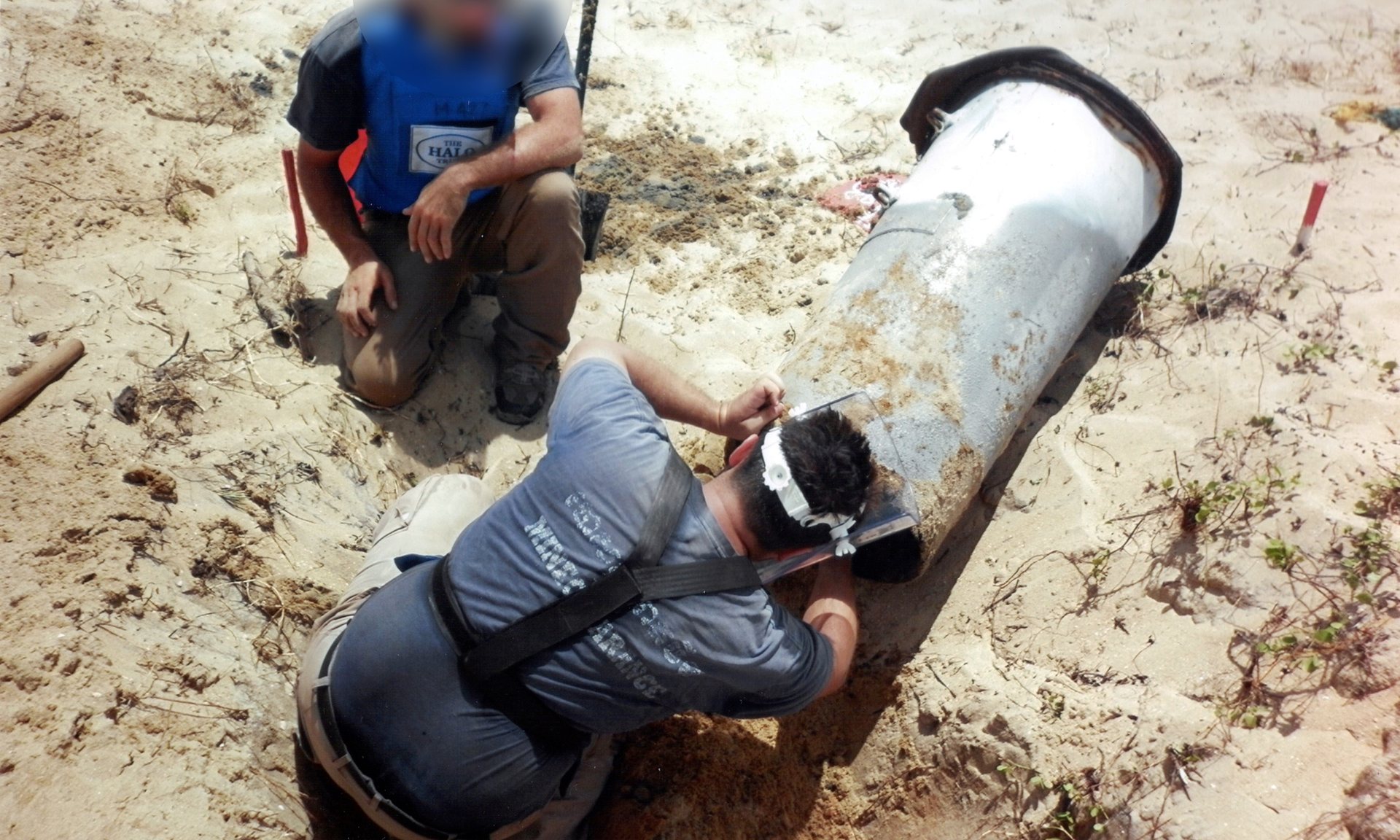 Deminers unearth an RBK-500 AO-2.5RT cluster bomb near Chalai. Photograph: The Guardian/Together Against Genocide
A former Mines Advisory Group (MAG) employee told the Guardian that
cluster bombs had been found in a “densely civilian-populated area” in
one of the ‘No Fire Zones’ near Puthukudiyiruppu.
Previously the Sri Lanka Campaign for Peace and Justice released a
series of witness stories from the final war zone, which included
testimony of a cluster bomb attack.
“The main bomb explodes in the
air and splits into many pieces,” the witness said. “One kind of cluster
bomb, used in Iranaipalai, produced colorful ribbons. Children were
attracted and picked pieces up; as they handled the pieces they
exploded.”
In a statement released weeks earlier, the Tamil National Alliance said,
Deminers unearth an RBK-500 AO-2.5RT cluster bomb near Chalai. Photograph: The Guardian/Together Against Genocide
A former Mines Advisory Group (MAG) employee told the Guardian that
cluster bombs had been found in a “densely civilian-populated area” in
one of the ‘No Fire Zones’ near Puthukudiyiruppu.
Previously the Sri Lanka Campaign for Peace and Justice released a
series of witness stories from the final war zone, which included
testimony of a cluster bomb attack.
“The main bomb explodes in the
air and splits into many pieces,” the witness said. “One kind of cluster
bomb, used in Iranaipalai, produced colorful ribbons. Children were
attracted and picked pieces up; as they handled the pieces they
exploded.”
In a statement released weeks earlier, the Tamil National Alliance said,
“The
use by the Sri Lankan State of internationally banned weapons, such as
cluster bombs and chemical weapons, has been a characteristic feature of
the current phase of the war being waged against the Tamil people.”
“The Tamil people in the island of Sri Lanka are clearly being subjected to Genocide.”
Also, see more in our feature: Leaked photos confirm cluster bomb use in Sri Lanka (19 Jun 2016)
LTTE commits to full support of ICRC
The LTTE released a letter from its Political Head Quarters, stating
that it “reiterates its full commitment and support to the International
Committee of the Red Cross (ICRC)”.
“We also wish to reiterate our organisation’s total commitment to the
safety and security of the members of the ICRC in carrying out its
humanitarian work and its other mandated activities,” it added. “Please
take this letter as the necessary security guarantees from the LTTE for
performing the work of the ICRC.”
“We are aware of the GOSL and its armed forces’ attempts at deliberately
launching military manoeuvres in LTTE controlled areas to thwart the
activities of the ICRC. We take this opportunity to express our deep
appreciation of all the invaluable work done by the ICRC with regards to
the immensely suffering Tamil civilian population due to the genocidal
war waged against the Tamil people by the Government of Sri Lanka
(GOSL).”
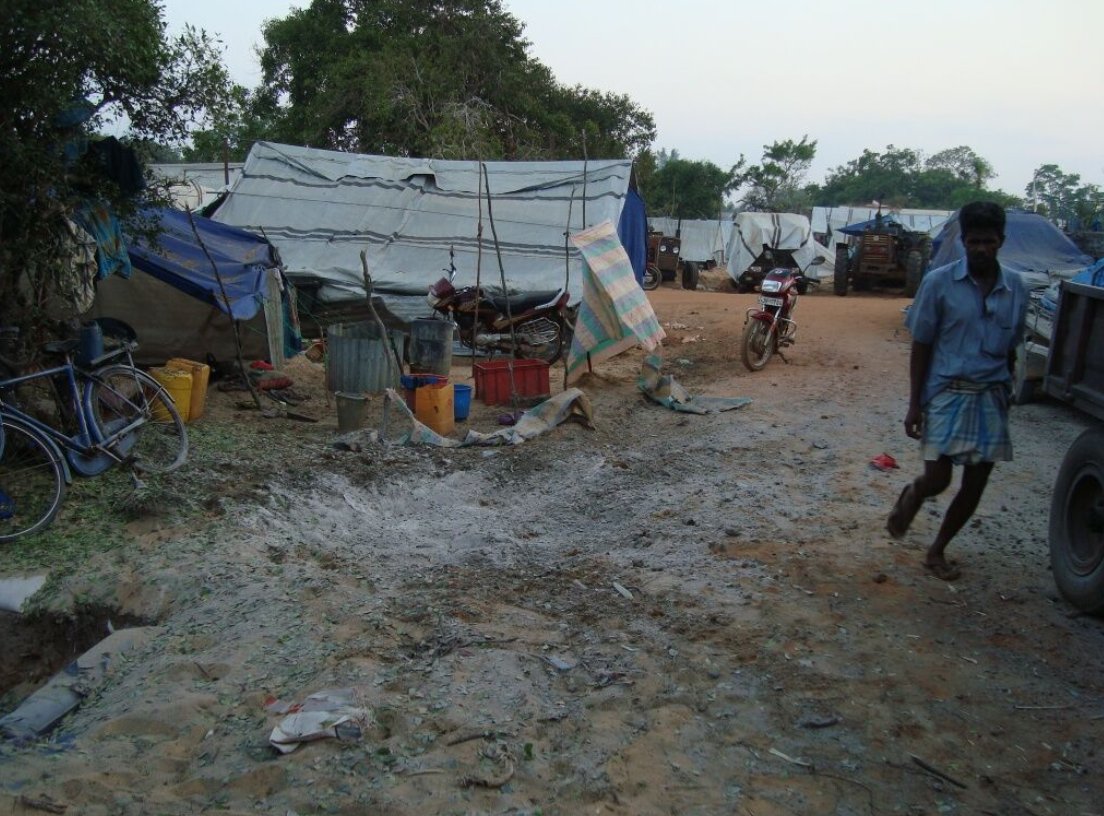 Photographs: A crater from a shell attack on May 8th 2009.
Small scale ICRC evacuations continue
Meanwhile, the ICRC said that
"heavy fighting is taking place near the medical assembly point at
Mullavaikkal, which puts the lives of patients, medical workers and ICRC
staff at great risk."
495 Tamils were evacuated from the final conflict zone by boat to Trincomalee and Pulmoddai.
Photographs: A crater from a shell attack on May 8th 2009.
Small scale ICRC evacuations continue
Meanwhile, the ICRC said that
"heavy fighting is taking place near the medical assembly point at
Mullavaikkal, which puts the lives of patients, medical workers and ICRC
staff at great risk."
495 Tamils were evacuated from the final conflict zone by boat to Trincomalee and Pulmoddai.
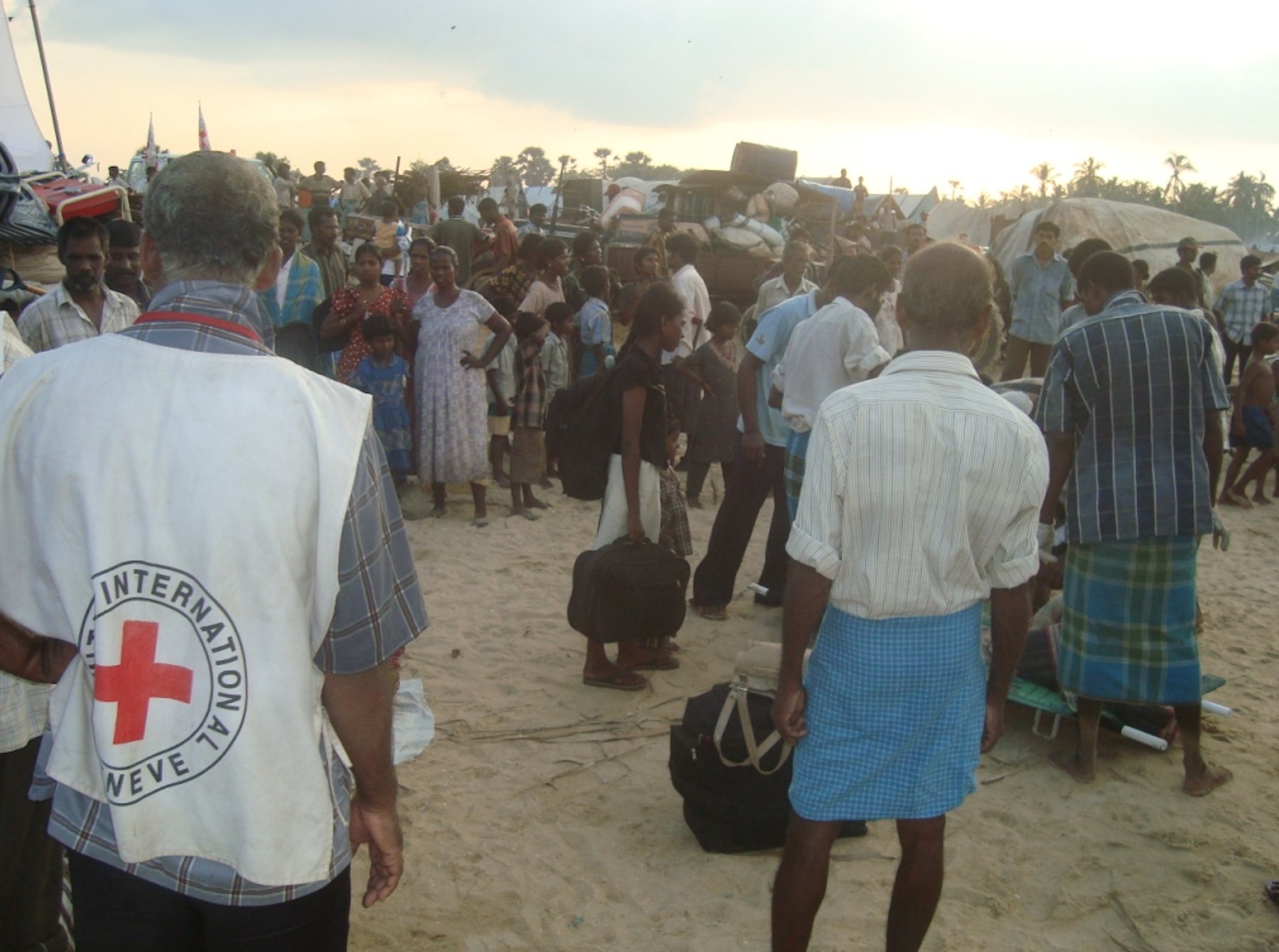 An ICRC evacuation taking place in April 2009.
Jacques de Maio, the ICRC head of operations for South Asia, in Geneva
said, "not all the wounded could be evacuated today, and it is of the
utmost importance that more evacuations take place over the coming
days".
An ICRC evacuation taking place in April 2009.
Jacques de Maio, the ICRC head of operations for South Asia, in Geneva
said, "not all the wounded could be evacuated today, and it is of the
utmost importance that more evacuations take place over the coming
days".
"The food and medical supplies that have been delivered remain insufficient to cover the basic needs of the people there."
Tamil human rights activist abducted in Colombo
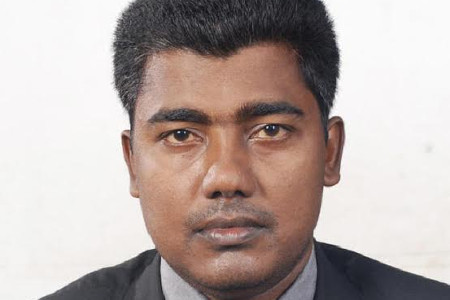 Stephen Sunthararaj was abducted by five men whilst travelling in his
lawyer’s car in the Sri Lankan capital, Colombo. Stephen, an activist
with the Centre for Human Rights and Development, is a father of three
children who were all under ten years of age when he was abducted.
Diaspora protests continue
Stephen Sunthararaj was abducted by five men whilst travelling in his
lawyer’s car in the Sri Lankan capital, Colombo. Stephen, an activist
with the Centre for Human Rights and Development, is a father of three
children who were all under ten years of age when he was abducted.
Diaspora protests continue
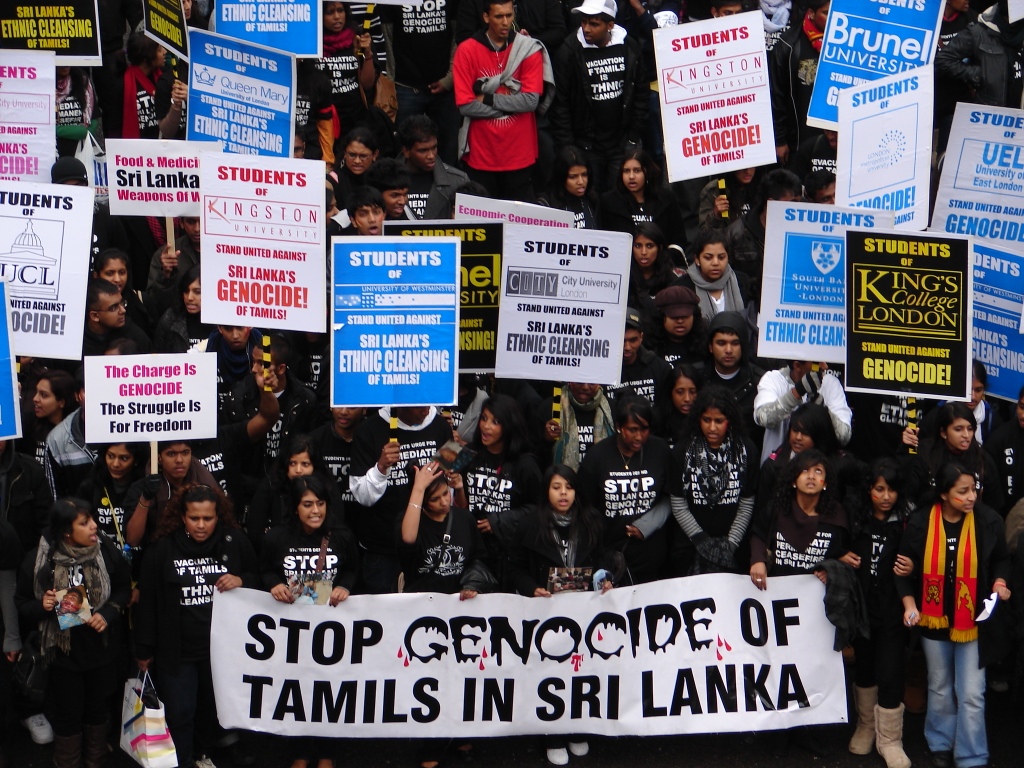 British Tamil students protest in London in 2009.
Meanwhile, protests in capitals across the world by the Tamil diaspora
continue. In London, a student protester Siva told TamilNet.
“The whole world is now well aware of the plight of the Tamils under the
chauvinistic Sinhala-dominated Sri Lankan state. Hundreds of Tamils
being massacred or starving to death each week, Sri Lanka’s slow
genocide has is accelerating. Yet the continued inaction by some
powerful states, while other states support Sri Lanka, is allowing this
to continue.”
British Tamil students added,
British Tamil students protest in London in 2009.
Meanwhile, protests in capitals across the world by the Tamil diaspora
continue. In London, a student protester Siva told TamilNet.
“The whole world is now well aware of the plight of the Tamils under the
chauvinistic Sinhala-dominated Sri Lankan state. Hundreds of Tamils
being massacred or starving to death each week, Sri Lanka’s slow
genocide has is accelerating. Yet the continued inaction by some
powerful states, while other states support Sri Lanka, is allowing this
to continue.”
British Tamil students added,
“what is needed right now is action by the international community, not merely words of sympathy.”
“Cluster munitions release
bomblets over a wide area above a target that explode on impact.
However, indirect fire munitions may also be configured to explode into
fragments overhead. OISL believes that given the persistent nature of
the allegations of cluster munitions, further investigation needs to be
carried out to determine whether or not they were used.”
“The
use by the Sri Lankan State of internationally banned weapons, such as
cluster bombs and chemical weapons, has been a characteristic feature of
the current phase of the war being waged against the Tamil people.”
“The Tamil people in the island of Sri Lanka are clearly being subjected to Genocide.”
"The food and medical supplies that have been delivered remain insufficient to cover the basic needs of the people there."
“what is needed right now is action by the international community, not merely words of sympathy.”
