Peace for the World World ! Your War Our Lives

The Dalai Lama
A Brief Colonial History Of Ceylon(SriLanka)
Sri Lanka: One Island Two Nations
A Brief Colonial History Of Ceylon(SriLanka)
Sri Lanka: One Island Two Nations
(Full Story)
Back to 500BC.

Friday, May 8, 2020
Israeli settler attacks on Palestinians increase under coronavirus lockdown
Human rights organisations say attacks have almost doubled since the start of the pandemic

Harbi Abdo is taken to hospital following a settler attack (MEE/Rasim Abdo)
 -7 May 2020
Rasim Abdo was sitting in his living room at his home in the Nablus-area
village of Beit Ibriya on Wednesday, 6 May, when he got a call from his
older brother Harbi.
"He was screaming and crying in pain and was telling me to get to the
mountain immediately," Rasim told Middle East Eye. "He said he had been
attacked by settlers and was badly hurt."
Harbi Abdo, 50, and his 26-year-old nephew had taken the family's flock
of 220 sheep to graze in the hills between Beit Ibriya and the village
of Burqa, when a group of 15 masked Israeli settlers, armed with guns,
descended upon them from a nearby hilltop.
"The settlers began hurling stones at Harbi and my nephew and attacking the flock," Abdo recounted.
"Then when they got closer, they began beating Harbi with large rocks on his head, chest, and legs."
By the time Rasim and a group of his cousins and neighbours ran up to
the mountain, his brother Harbi was lying on the ground, his leg broken.
A few hundred metres away, the group of settlers was attempting to
flee, and take the flock of sheep with it.
'I thought, who could do this to innocent animals? But these Israeli settlers clearly have no regard for human life, so why would they care about animals?'- Rasim Abdo
"We immediately split up into two groups: one group to tend to my
brother and nephew, and the other to run after the settlers and get our
animals back," Rasim told MEE.
The group was able to retrieve 200 sheep, but the settlers managed to run off with 20 animals.
"From the group of sheep that we brought back home, dozens of them were
injured, covered in blood, and some even had their legs broken by the
settlers," Rasim said.
"I thought, who could do this to innocent animals? But these Israeli
settlers clearly have no regard for human life, so why would they care
about animals?"
Attacks increase under Covid-19
The Abdo family, like thousands of other Palestinians living in rural
areas of the West Bank, are no strangers to settler violence, which
happens on a near daily basis.
Since the coronavirus outbreak, however, Rasim says he has seen a noticeable increase in settler attacks in the area.
"Just in the past week there have been two other attacks," he told MEE.
"A few days ago, I was walking near the main road and these settlers
were perched on a hill above and were throwing rocks at me and any
Palestinians passing by."
Days before that, Rasim said that settlers came and destroyed a roadside
kiosk owned by a neighbour, breaking down the stall and stealing its
engine.
"The settlers are using this pandemic to attack us
more... Most Palestinians are scared to confront them because we don’t
want to contract the virus from them," he said.
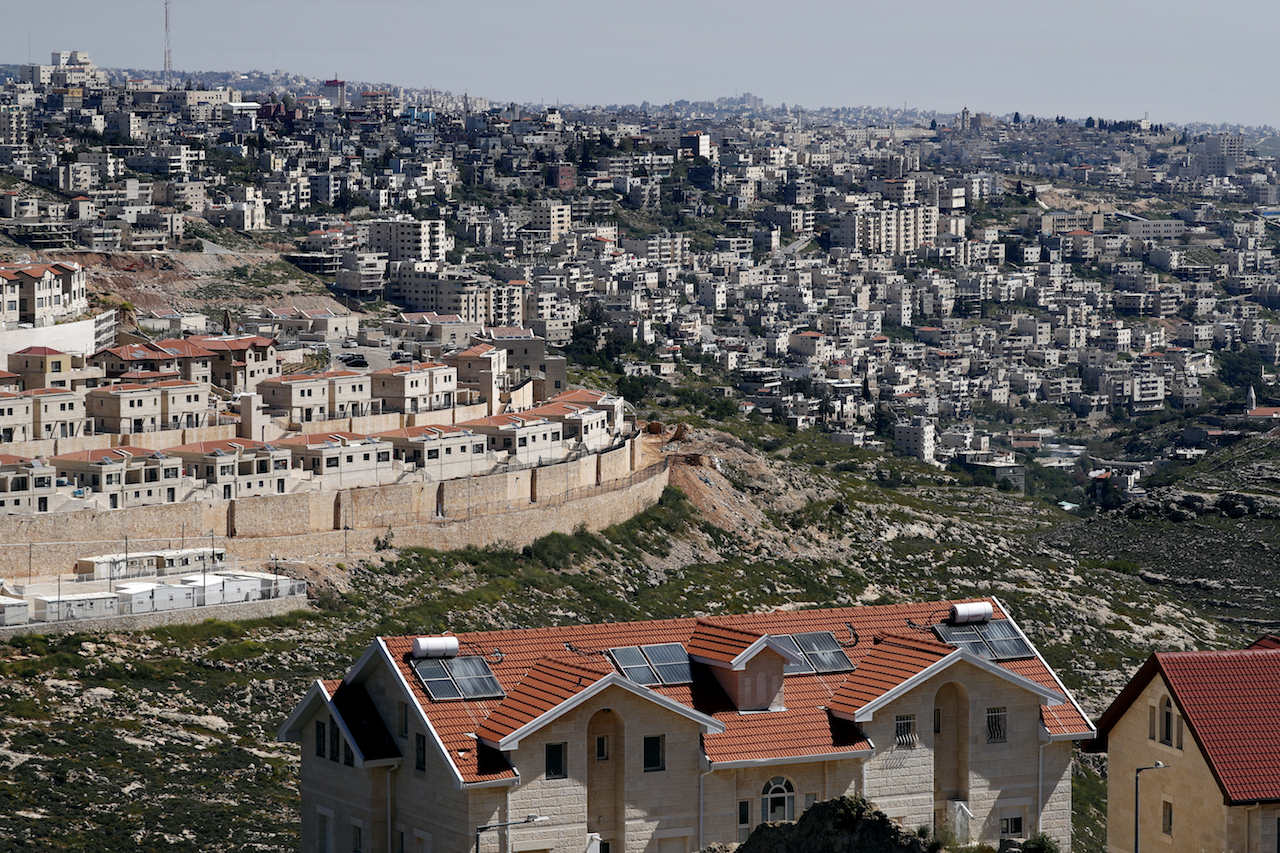
In the two months since the occupied Palestinian territory went under a
Covid-19 lockdown, activists and rights groups have recorded a sharp
increase in the number of settler attacks on Palestinians and their
property.
In an April report, Israeli human rights group B'Tselem recorded 23
settler attacks against Palestinians in the first three weeks of April
alone, and 23 attacks during March (11 of which occurred post-lockdown).
Meanwhile, there were 12 reported attacks in February, and 11 in
January.
"The attacks have increased despite the movement restrictions, lockdowns
and social distancing measures introduced to battle the
pandemic," B'Tselem said, adding that attacks have been physical or
involved the torching of Palestinian cars, theft of livestock, and
destruction of trees.
On Thursday morning, less than 24 hours after the attack on Harbi Abdo
and his flock of sheep, Israeli settlers in the southern West Bank
district of Bethlehem plowed down more than 40 grape trees in the
al-Khader village, near Efrat settlement.
"These actions are part of a joint strategy by the settlers and Israeli
authorities to systematically block Palestinian access to land... and
take effective control of it," B'Tselem said in its report.
"This way the state transfers the means of livelihood of Palestinians
into the hands of Israelis. Settler violence is the state’s unofficial,
privatized arm that serves to gradually achieve this goal."
No justice
Following the attack on his brother, Rasim and his family reached out to
the Palestinian liaison office so they can coordinate with Israeli
authorities to open an investigation into the attack.
It is part of a routine procedure in such instances, but Rasim said he doesn’t have much hope for a positive outcome.

"If any investigation is even opened, it is highly unlikely that we will
be compensated for the sheep that were stolen, and for the damage done
to my brother's leg," he said.
Harbi also underwent surgery on Thursday morning, during which time doctors had to insert a titanium plate in his leg.
Justice and accountability for the settler attack, Rasim says, is even further out of reach.
"Even if we were to go to court in Israel, we would not get justice.
This is why the settlers keep attacking us in this way, because there is
no accountability," he said.
"They have free rein to attack Palestinians without consequences."
"We are just shepherds trying to live our lives in peace and safety, but
the settlers and the occupation refuse to leave Palestinians in peace."
