Peace for the World World ! Your War Our Lives

The Dalai Lama
A Brief Colonial History Of Ceylon(SriLanka)
Sri Lanka: One Island Two Nations
A Brief Colonial History Of Ceylon(SriLanka)
Sri Lanka: One Island Two Nations
(Full Story)
Back to 500BC.

Thursday, May 7, 2020
Long walk to press freedom in Sri Lanka

A vigil organised last year to call for renewed probes on attacks experienced by journalists
 6 May 2020
Sri Lanka was ranked 127 of 180 countries in the World Press Freedom
Index 2020. Countries that topped the list included Norway, Finland and
Denmark where respective governments have ensured the safety of
journalists while promoting a free press. In Denmark for example, when
Swedish journalist Kim Wall was murdered near  Copenhagen,
the murderer was sentenced to life imprisonment. Meanwhile, the fight
for media freedom in Sri Lanka has been deadly. Many journalists have
been killed and attacked for their work. But the suspects of these
crimes either remain free or have been released on bail. With much
effort, Sri Lanka managed to pass the Right to Information Act. Freedom
of speech and expression is fundamental to any democracy. But in Sri
Lanka, limits have been placed on these freedoms through laws like the
International Covenant on Civil and Political Rights (ICCPR) Act, which
has been used to penalize writers and journalists.
Copenhagen,
the murderer was sentenced to life imprisonment. Meanwhile, the fight
for media freedom in Sri Lanka has been deadly. Many journalists have
been killed and attacked for their work. But the suspects of these
crimes either remain free or have been released on bail. With much
effort, Sri Lanka managed to pass the Right to Information Act. Freedom
of speech and expression is fundamental to any democracy. But in Sri
Lanka, limits have been placed on these freedoms through laws like the
International Covenant on Civil and Political Rights (ICCPR) Act, which
has been used to penalize writers and journalists.
Copenhagen,
the murderer was sentenced to life imprisonment. Meanwhile, the fight
for media freedom in Sri Lanka has been deadly. Many journalists have
been killed and attacked for their work. But the suspects of these
crimes either remain free or have been released on bail. With much
effort, Sri Lanka managed to pass the Right to Information Act. Freedom
of speech and expression is fundamental to any democracy. But in Sri
Lanka, limits have been placed on these freedoms through laws like the
International Covenant on Civil and Political Rights (ICCPR) Act, which
has been used to penalize writers and journalists. Curbing freedom of expression
In the wake of the COVID-19 outbreak in Sri Lanka, around 11 people were
arrested for posting alleged false content on social media. Legal
action was taken against them, while investigations are underway in 70
separate incidents for the alleged spread of false information across
social media platforms. However, the Human Rights Commission of Sri
Lanka (HRCSL) writing to the police chief noted any curbing of the
freedom of expression and other such democratic rights, even during an
emergency, should fall within legal limits. The HRCSL letter added that B
reports pertaining to the recent arrests cited several statutes
including the Penal Code, Computer Crimes Act, the Police Ordinance,
Quarantine Ordinance and the Disaster Management Act as the legal basis
for the arrests. “We wish to point out that the legal basis of the use
of the provisions of the Quarantine Ordinance and the Disaster
Management Act is questionable,” the letter noted. It added that one B
report did not specify the legal basis of the arrest.
"The media can also face challenges from authoritative regimes. Irrespective of whether a country is rich or poor, its media should be unbiased"
Commenting on the Police Media Division’s press release that legal
action would be taken against those who criticized public officials, the
HRCSL letter said the right to comment and criticize the performance of
public officials 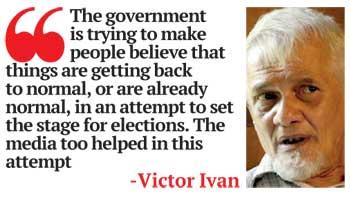 or
anyone else, or any policy, was fundamental to a democratic society.
“It is through criticism and commentary that we improve governance and
strengthen democracy,” the Commission said. Addressing arrests made
under the ICCPR Act, the letter noted the law should be invoked in a
non-discriminatory manner, providing protection to all communities. “Our
observations on arrests made thus far under the above provision do not
make it possible for us to come to a reasonable conclusion that the
provision has been invoked in a non-discriminatory manner.”
or
anyone else, or any policy, was fundamental to a democratic society.
“It is through criticism and commentary that we improve governance and
strengthen democracy,” the Commission said. Addressing arrests made
under the ICCPR Act, the letter noted the law should be invoked in a
non-discriminatory manner, providing protection to all communities. “Our
observations on arrests made thus far under the above provision do not
make it possible for us to come to a reasonable conclusion that the
provision has been invoked in a non-discriminatory manner.”
or
anyone else, or any policy, was fundamental to a democratic society.
“It is through criticism and commentary that we improve governance and
strengthen democracy,” the Commission said. Addressing arrests made
under the ICCPR Act, the letter noted the law should be invoked in a
non-discriminatory manner, providing protection to all communities. “Our
observations on arrests made thus far under the above provision do not
make it possible for us to come to a reasonable conclusion that the
provision has been invoked in a non-discriminatory manner.” Media ethics during COVID-19
Addressing a webinar held in relation to World Press Freedom Day, on May
3, media researcher and communications specialist Wijayananda Jayaweera
commented on media behaviour during the COVID-19 crisis. “When Dr. Lee
Wenliang from China warned about the emergence of a deadly virus, he was
called by medical officials and the police and was forced to sign a
statement denouncing his warning as an ‘unfounded and illegal rumour’.
But most global media platforms have earned the trust of their readers
by reporting in a critical sense. Both local and foreign reporters had
the opportunity to report on the existing crisis quite accurately.
Therefore, we were able to know of the shortage of N95 masks, the
frequency of PCR testing, the lack of ventilators in ICU units and so
forth. The number of deaths reported from China was less than its actual
figure, and it was corrected recently. Recently an editorial in an
Indian newspaper questioned the Indian media for its failure to question
Prime Minister Narendra Modi during press conferences. However, most
mainstream foreign media outlets have been able to report on the global
situation with regard to COVID-19,” Jayaweera said.
He added the media shouldn’t report on matters without checking the accuracy of facts. “There were rumours that certain traditional medicines could cure COVID-19. This is not to question the eligibility of traditional medical practitioners. But there’s no scientific proof as yet. Therefore, the media has to be careful when reporting on such matters. The media should uphold ethics, and in no way should it fan the flames of racial tension or assist in such attempts. During Hitler’s rule, he made sure none of the soldiers was criticized on the media. Therefore, the media can also face challenges from authoritative regimes. Irrespective of whether a country is rich or poor, its media should be unbiased,” he concluded.
He added the media shouldn’t report on matters without checking the accuracy of facts. “There were rumours that certain traditional medicines could cure COVID-19. This is not to question the eligibility of traditional medical practitioners. But there’s no scientific proof as yet. Therefore, the media has to be careful when reporting on such matters. The media should uphold ethics, and in no way should it fan the flames of racial tension or assist in such attempts. During Hitler’s rule, he made sure none of the soldiers was criticized on the media. Therefore, the media can also face challenges from authoritative regimes. Irrespective of whether a country is rich or poor, its media should be unbiased,” he concluded.
Industry in crisis
Several other concerns, like pay cuts to provincial journalists, falling
revenues from fewer advertisements, and the high cost of newsprint were
raised during the webinar. Since many journalists have been arrested
under the ICCPR Act and Penal Code, media persons were advised to be
responsible when posting content, especially on 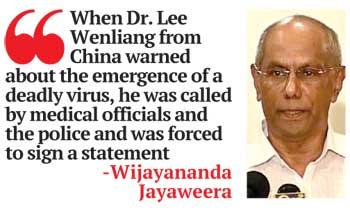 their
personal social media handles. However, the sudden explosion of fake
news, and most media outlets giving prominence to such news, have
largely undermined media freedom.
their
personal social media handles. However, the sudden explosion of fake
news, and most media outlets giving prominence to such news, have
largely undermined media freedom.
their
personal social media handles. However, the sudden explosion of fake
news, and most media outlets giving prominence to such news, have
largely undermined media freedom. COVID-19 worsened existing crisis
“I have doubts about certain facts that have been disclosed so far,”
veteran journalist and political commentator Victor Ivan said. “The
government is trying to make people believe that things are getting back
to normal, or are already normal, in an attempt to set the stage for
elections. The media too helped in this attempt. They have been trying
to do this since April 19. But if you remember, there were a higher
number of cases that day. Had there been no COVID-19 outbreak, the
present government could have won the Parliamentary Election with the
majority they expected. But it didn’t happen that way. The government
took the virus situation very lightly from the beginning. They tried to
bring in more tourists by promoting Sri Lanka as a safe destination. The
government was already facing an economic crisis and other matters
before COVID-19. With COVID-19, this crisis was further worsened.”
"The sudden explosion of fake news, and most media outlets giving prominence to such news, have largely undermined media freedom"
Ivan noted that when facing a crisis of this nature, it was important to
have internal harmony within governance structures. “However, rather
than appointing experts in the respective fields, we see many of the
President’s close associates being appointed to the top levels to fight
COVID-19. But I believe that virologists should be at the top, medical
officials in the second tier, followed by army, police and other law
enforcement officials.
However the tri-forces are being given more prominence than health officials. These officials have minimum facilities, but they are still working. If we continue to be in lockdown, many workers like masons and carpenters will be at risk of losing their jobs. We don’t have a surplus economy like in Europe. Therefore, I feel we are still not ready to face this crisis properly,” he said.
However the tri-forces are being given more prominence than health officials. These officials have minimum facilities, but they are still working. If we continue to be in lockdown, many workers like masons and carpenters will be at risk of losing their jobs. We don’t have a surplus economy like in Europe. Therefore, I feel we are still not ready to face this crisis properly,” he said.
