Peace for the World World ! Your War Our Lives

The Dalai Lama
A Brief Colonial History Of Ceylon(SriLanka)
Sri Lanka: One Island Two Nations
A Brief Colonial History Of Ceylon(SriLanka)
Sri Lanka: One Island Two Nations
(Full Story)
Back to 500BC.

Tuesday, May 5, 2020
Women workers starving themselves to feed their families : Union leader Yogeshwary
- Most women workers are unaware of their labour rights.
- Less than 20% of the plantation population are full-time estate workers.
- Despite Covid-19 many women work without masks, gloves and sanitizer.
- Women cannot discuss their issues fairly and openly with male TU leadership.
- Ground-level conditions must change to promote women as political leaders.
 5 May 2020
The Working
Women’s Front (WWF) is Sri Lanka’s first women-led Trade Union (TU) to
organise around labour and gender rights. Emerging from a
Community-Based Organisation in the tea plantations, WWF now organises
and campaigns for dignified working conditions for women across the
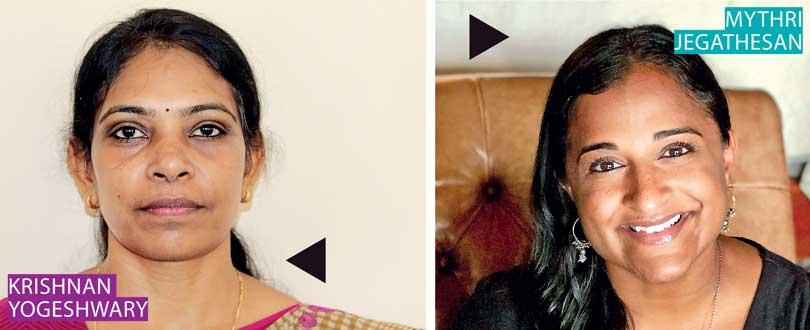
formal and informal sectors. Krishnan Yogeshwary is the WWF General
Secretary and Mythri Jegathesan is a teacher-scholar from Santa Clara
University who has worked closely with the union. Daily Mirror spoke to
them about the work of this unique and important labour organisation
in Sri Lanka.
 QHow and why was the Working Women’s Front (WWF) established?
 Yogeshwary:
WWF began in 1997 as a women’s organisation to mobilise vulnerable
women workers. It was started by a group of women working in the private
sector, including office and shop staff, welfare officers, pre-school
teachers, and apparel sector workers. The women were empowered by the
Kandy-based Institute of Social Development (ISD) under its Director P.
Muthulingam. It started as an advocacy and rights-based group to equip
workers with knowledge and experience,and to build a platform to
strengthen their collective bargaining rights.
Yogeshwary:
WWF began in 1997 as a women’s organisation to mobilise vulnerable
women workers. It was started by a group of women working in the private
sector, including office and shop staff, welfare officers, pre-school
teachers, and apparel sector workers. The women were empowered by the
Kandy-based Institute of Social Development (ISD) under its Director P.
Muthulingam. It started as an advocacy and rights-based group to equip
workers with knowledge and experience,and to build a platform to
strengthen their collective bargaining rights. Unorganised workers are entitled to labour rights under the ‘Shop and Office Employees Act’. But practically speaking, employers are unwilling to implement these rights. So they exploit workers and violate their labour rights. Globalisation saw all sectors becoming feminized.Women workers were hired for low pay, and the unskilled labour force grew in the private sector. Most workers are unaware of their labour rights. So there is a need to empower oppressed women workers.
Plantation Trade Unions (TUs) are also unlikely to mobilise unorganised
women workers. They don’t work in the same place continuously, unlike
workers in the organised estate sector. Organised-sector TUs can get
subscriptions through estate management payslips. But unorganised and
informal sector workers have no guarantees or voice against malpractices
and labour rights violations.
The WWF gradually realized the importance of registering the union based
on these day-to-day experiences and community issues. But we couldn’t
legally take up labour issues with public authorities. So we registered
as the first women’s TU in 2011 to gain recognition from authorities,
employers and other groups. After that, the Labour Department and other
authorities and employers responded officially to WWF’s requests and
demands. More recently, WWF was selected as a member TU of the District
Labour Advisory Committee in Kandy, from 2015-2017.
Political participation barriers in the plantation sector are inseparably linked to legacies of patriarchal leadership, not only in unions but also within plantation companies.
QWhat makes WWF distinct from other labour organisations, including plantation TUs?
Mythri: WWF is distinct in four ways. First, unlike larger unions like
the Ceylon Workers’ Congress (CWC), National Union of Workers (NUW),
Lanka Jathika Estate Workers Union (LJEWU), and Joint Plantation Trade
Union Centre (JPTUC), WWF is not aligned to any political party. It
appoints women workers to the Executive and General Council leadership
and office-bearing positions. Second, WWF’s monthly membership dues are
Rs.30. This is more than two-thirds less than the Rs.100 monthly dues
of plantation unions. So women working in the unorganised sector and
those unemployed or in the reserve labour force can maintain their
membership. Third, WWF supports women working outside the plantation
sector, and in fact across labour sectors. From mobilising domestic and
migrant workers, to workers in shops and offices, factories, and
self-employment settings, WWF acknowledges the reality that less than
20% of the plantation population are registered full-time estate
workers.
Yogeshwary: Any woman worker in the private sector can become a WWF member. Currently, we have 1650 members from the garment sector, shopping malls, small shops and tea plantations. Additionally, we have organised migrant workers, self-employed and reserve labour force members – that is women before they enter the job market or who are unemployed.
Yogeshwary: Any woman worker in the private sector can become a WWF member. Currently, we have 1650 members from the garment sector, shopping malls, small shops and tea plantations. Additionally, we have organised migrant workers, self-employed and reserve labour force members – that is women before they enter the job market or who are unemployed.
What are the economic and health concerns faced by women plantation workers due to the COVID-19 outbreak?
Yogeshwary: In the plantation sector, women engage in two areas. Some
work permanently in tea and rubber plantations, and others work in the
private sector outside plantations. Soon after the COVID-19 pandemic,
the Regional Plantation Companies (RPCs) stopped formal work. Likewise,
the private sector also closed their establishments. However, after two
weeks, RPCs recommenced work.But the private sector did not open up. And
many domestic workers continue to work without protective gear.
But although RPCs have work, the days are limited. Workers have lost
their daily wage, overtime, product incentives, attendance incentives
and other allowances. This has resulted in lower salaries. Less work
days and the non-availability of work is depriving them of a steady
income. Meanwhile, women outside plantations have not got their salary.
This has severely impacted plantation and non-plantation women workers’
income, increasing poverty levels, of which women more harshly bear the
brunt.
We have found that women have to care for their children and families
and are starving themselves. There’s more malnutrition and anaemia,
which was already higher among plantation women and girls before the
pandemic. Finally, although, working women are asked to work in the
field, most are not given protective equipment such as masks, gloves and
sanitizer.
QWhat is the status of plantation women workers’ economic rights?
Mythri: That depends on their securing a living wage. Current plantation
wage structures overlook the economic and social realities women
workers face. Debt, in the form of predatory loans and cash advances, is
unavoidable. And wages valuation does not account for allied and
domestic activities women do to survive and care for their families.
Yogeshwary: Plantation workers don’t have land and housing ownership.The
government must consider this as a problem. If they owned land they
could use it for additional income. Currently, if workers want to be
self-employed, they need approval from the estate manager and Grama
Niladhari, who often refuse permission. Estate managements must agree to
a living wage for workers. This should include the scientific study
outcome by economists and civil society organisations. Likewise, the
RPCs, the Sri Lanka State Plantations Corporation (SLSPC) and Janatha
Estates Development Board (JEDB) can devise wage mechanisms based on the
current situation.
QWhat barriers do women workers face with regard to political participation, especially in a male-dominated political climate?
Mythri: Women workers, and Malayaga (hill country) Tamil women workers
specifically, face structural and interpersonal barriers in political
participation. Structurally, centuries of caste, class and ethnic
discrimination of political and industrial leaderships have compounded
with gender inequities to marginalize Malayaga Tamil women. Political
participation barriers in the plantation sector are inseparably linked
to legacies of patriarchal leadership, not only in unions but also
within plantation companies. While women are often called the backbone
of the industry, they are not given leadership roles in management or
unions.
Yogeshwary: All plantation TUs are linked to political parties. So TU
leaders are the same leaders of political parties. Administrative and
implementing powers are male-dominated. Decision makers are males. Women
mainly follow traditional roles like organising meetings, arranging
welcoming functions for leaders, planning refreshments and cleaning.
Women are not in a position to discuss their issues fairly and openly
with the male leadership. Women’s units in TUs are indirectly and
directly controlled by male leaders. This trend of curtailment has
seeped into cultural practices of surveillance and political violence
that have persisted in Sri Lanka. Many male family members - fathers,
husbands, brothers, and uncles - prevent women from taking part in
political representation and organising.
More than half of Sri Lanka’s population are women. The majority of
voters are women. The majority of the labour force are women. The
majority of TU subscriptions are from women workers. The main
contributors towards national income earnings are women. But in
Parliament, women representation is below 5%. And there are no
plantation women representatives in Parliament. Women representation in
Local Government (LG) should be 25 %, but it is difficult to achieve
this within the existing culture of male dominance. Women should be
pushing for quotas in Provincial Councils and Parliament, and not just
be considered as vote banks and suppliers of dues and membership
numbers.
Furthermore, there are many Community-Based Organisations (CBOs) like
temple, funeral, and water committees, sports and youth clubs, rural
development societies and so on. But these too are male-dominated.
Officers are traditionally men appointed by the community. Women can be
members, but they have no real power to handle money and make decisions
for actual social change. Male leaders simply use women’s time and
labour for the work mentioned earlier. These ground-level conditions and
positions must change to promote women as political leaders.
If people are empowered to know their rights and entitlements -- labour, political, human, women’s, social and economic -- they will realize the realities they are facing.
QDo women plantation workers have proper access to health and education?
Mythri: While there have been improvements to health and education
access, women plantation workers face barriers that compound over time
due to intersecting challenges. I have documented accounts of women
workers suffering from what could be easily treatable medical
conditions. For example, while health education provides ways to prevent
leech bites, such as applying medications, salt or tobacco-based
solutions, constant rainfall, manual work conditions, long hours, and
demands for productivity and cash supplements, prevent these solutions
from staying on a worker’s skin. At the end of just one shift, a woman
worker could have between four or five bites. But by this time, she
cannot visit the estate clinic or doctor. Either the trip costs too
much, or the clinic is not accessible by bus or van and she cannot walk
the distance or she has household duties like care taking, cooking, and
cleaning. These leech bites then become more susceptible to infection,
and in many cases cause abscesses and fevers, and lead to more serious
health problems.
Women’s access to education also faces issues. While dropout rates
before O/Levels have decreased with compulsory education and having
schools within the estate sector, many young girls’ families lack
tuition fees for children to go on to A/Levels. If they do, they
struggle to pay private tuition fees, which is the norm in the current
education system.
Yogeshwary: Plantation hospitals were not recognized as national
hospitals and were not held to national standards. They were functioning
as dispensaries with less qualified doctors and improper equipment and
medicines. The government pledged to take over all estate dispensaries.
But that was swept under the carpet and became just a verbal promise.
Plantation settlements were excluded from Local Government authorities.
So plantation communities were excluded from Local Government services,
leading to poorer primary healthcare access.
After years of campaigning by ISD with other civil society groups in
2018, the ‘Pradeshiya Sabha Act’ (Section 33) was amended. However, the
long-term impact of these legal constraints continues to show in poor
primary healthcare indicators on estates like lack of proper water,
sanitation and child-care centres.
Plantation children still face education issues. Buildings, playgrounds,
and sport facilities are poor. There is a lack of Mathematics, English,
Science and IT teachers. Most students cannot pass Mathematics, English
and Science due to high transport costs to and from school and tuition
classes. Public transport should be increased based on their needs.
What is the WWF approach to addressing gender issues?
Yogeshwary: WWF conducts work on national, intermediary, and grassroots
levels. Through community-level discussions, WWF leaders identify gender
issues and forward these issues to relevant authorities through the
General Secretary or district leaders. WWF initially communicates with
employers and human resource officers, either by letter or telephone.
The District Labour Officer or Assistant Labour Commissioner handles
labour-related issues. Cases of sexual harassment or child or physical
abuse are forwarded to the Police Women and Child Desk or the Divisional
Secretariat.
Mythri: WWF accounts for gender alongside other intersecting issues.
Issues like class, caste, religion, ethnicity, location,family relations
and community support are all critical in mobilising women’s
empowerment for WWF. Their outreach methods and advocacy efforts reflect
this unique attention.
QWhat is the difference between faith-based and rights-based organising, and in your view which is more effective?
Yogeshwary: Rights-based organising and mobilisation creates sustainable
development. It will take a long time, but if people are empowered to
know their rights and entitlements - labour, political, human, women’s,
social and economic - they will realize the realities they are facing.
Then, they can create a voice and act against injustices and
discrimination. Ultimately, rights-based organising stimulates
marginalized and oppressed people to think and act for themselves,
especially women. It is not only effective for educating women and
creating positive changes from within their family and local
communities, but can also lead to national development and outcomes.
QFinally, what are the immediate and long-term challenges facing women plantation workers and the WWF?
Yogeshwary: The immediate challenge is safeguarding women workers’ health from the COVID-19 threat. If one worker is infected, it will spread to another like wildfire. Although the Labour Ministry has given guidelines, these are not properly practised. The majority of plantation workers are not wearing masks. Further, the work force was not given individual sanitizer and soap. Companies should provide gloves, boots and hats for workers. These lapses should be addressed immediately to protect and improve the health of workers.
QFinally, what are the immediate and long-term challenges facing women plantation workers and the WWF?
Yogeshwary: The immediate challenge is safeguarding women workers’ health from the COVID-19 threat. If one worker is infected, it will spread to another like wildfire. Although the Labour Ministry has given guidelines, these are not properly practised. The majority of plantation workers are not wearing masks. Further, the work force was not given individual sanitizer and soap. Companies should provide gloves, boots and hats for workers. These lapses should be addressed immediately to protect and improve the health of workers.
Mythri:The challenge for WWF and other labour movements in the current
COVID-19 pandemic is to push for more ethical ways of work that ensure
the safety, due recognition and rights of women workers. The social and
economic inequities of the plantation sector are not new. So many
thousands of plantation workers’ ancestors died from communicable
diseases during colonial rule, and at the expense of working in the tea
industry. This documented history of vulnerability and preventable
death, along with the present inequalities workers face, have been
reinforced by society’s longer and broader acceptance of unjust systems
of work.
That being said, women plantation workers have long strategized to
survive and care for their families amid long-standing oppression. In
the current pandemic, plantation companies, smallholders, and formal and
informal employers must first and foremost protect the health of women
workers and their families. They must practise compassion and solidarity
by resisting the desire to profit at the expense of workers’ health and
insecurity. Instead, they must embrace the socially-driven benefits of
building more ethical ways of work across sectors. In moments of global
and national crisis, labour organising efforts such as WWF must not be
cast aside in national debates on economic recovery and industrial
sustainability.
