Peace for the World World ! Your War Our Lives

The Dalai Lama
A Brief Colonial History Of Ceylon(SriLanka)
Sri Lanka: One Island Two Nations
A Brief Colonial History Of Ceylon(SriLanka)
Sri Lanka: One Island Two Nations
(Full Story)
Back to 500BC.

Saturday, February 16, 2013
A Comment On The Report For Promoting Reconciliation And Accountability In The Country


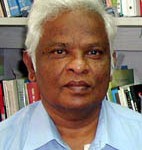
Basil Fernando
The
United Nations High Commissioner for Human Rights, Ms. Navanethem
Pillay, on February 11, 2013 issued the Report of the
Office of the United Nations High Commissioner for Human Rights on advice and
technical assistance for the Government of Sri Lanka on promoting reconciliation
and accountability in Sri Lanka. This report is in terms of
Resolution 19/2 of the Human Rights Council and in preparation for the debate on
the resolution which will take place in Geneva in March of this year. The Sri
Lankan government has virtually dismissed the report and yesterday (February 14)
the government spokesman, when answering a media question about the report said
that with regard to internal matters and matters relating to the Constitution
the government is not answerable to anybody.
Reviewing
the recommendations of the Lessons Learnt and Reconciliation Commission (LLRC)
the High Commissioner has highlighted the following areas of concern: The rule
of law and the administration of justice; credible investigations of widespread
allegations of extrajudicial killings and enforced disappearances; detention
policies; internal displacement and land issues; the right to freedom of opinion
and expression; demilitarization and reconciliation and reparation.
The
High Commissioner has rightly raised the rule of law and the administration of
justice as the first issues in her list of concerns. In her opening paragraph
Ms. Pillay states:
In its report, the Lessons Learnt and Reconciliation Commission stress that an independent judiciary, transparent legal process and strict adherence to the rule of law are essential for peace and stability.
This
statement alone suffices to sum up the lack of any prospect of a genuine or
fruitful dialogue between the High Commissioner’s Office as well as the Human Rights
Council by the Sri Lankan government. Quite simply, the problem of
the rule of law and the administration of justice are problems that arise from
the very nature and the structure of the political system of Sri Lanka. The
government of Sri Lanka relies completely on the system of governance which has
been developed as a system where the executive president has absolute power. To
question that is to question the very basis of the Mahinda
Rajapaksa regime. Naturally the regime will resist any kind of
challenge to the manner in which it rules Sri Lanka as interference into the
internal affairs of the country.
Thus,
the discourse on Resolution 19/2 begins in a deadlock. All the problems that the
High Commissioner has highlighted from the recommendations of the LLRC are
issues that challenge what the government has been doing on the basis of its
interpretation of the 1978
Constitution, which is further strengthened by the 18thAmendment to
that Constitution. The government’s express wish is to go even further and to
perfect the powers of the executive president as the absolute ruler. This
position is in direct conflict with the issues raised by the High Commissioner
as well as the movers of Resolution 19/2.
There
is no way to get around this fundamental conflict between the nature and the
structure of the Sri Lankan government and the fundamental issues raised by
Resolution 19/2. The Mahinda Rajapaksa regime operates on the basis that the
rule of law and the administration of justice are of no concern to the
government. Anyone who does not understand this fact simply has no grasp of the
operation of the political system in Sri Lanka at all.
The
government has illustrated its approach to the rule of law and the
administration of justice in the manner in which it acted and continues to act
in relation to the impeachment of the Chief Justice, Shirani
Bandaranayake, and the appointment of the new chief justice. To all
those who raised their concerns from among the local community, as well as from
all the authoritative international agencies, the government stated in plain
language, “Just go to hell”.
It
is quite logical for the government to take that position. It knows that the
style of rule it has developed in the country is incompatible with the basic
norms of the rule of law and the administration of justice. Internally, the
government has taken the position that it will ignore all these rules and
undermine the judicial institutions as much as is needed to safeguard its style
of rule.
In
yesterday’s briefing to the media the government spokesman said that the
government may be willing to discuss any specific issues raised but it will
certainly resist any discussion into matters which are internal affairs and
which are related to Constitutional matters.
The
problem with the LLRC was that it pointed out some very key issues which
undermine the rule of law and the administration of justice in Sri Lanka.
However, it did not go far enough to point out that all the problems it has
identified arise from the very nature of Sri Lanka’s Constitution itself. Of
course the LLRC perhaps could not go that far as its own mandate was derived
from the president and entering into a direct assault on the presidential system
itself was perhaps, not within its mandate. What the LLRC did was to make a
critique by way of implication. In local parlance this is called “Taking
medicine without the knowledge of the throat”.
This
is the very same problem that the movers of Resolution 19/2 and the High
Commissioner will be faced with. The problems enumerated by the High
Commissioner arise from the very operation of the Constitution itself. When the
government says that what it does is justifiable in terms of the Constitution it
is, in fact, telling the truth. It is using the best excuse it has by asking,
“Do you want us to act against our constitution”?
That
was also the question it asked from all those who criticised them about the
government’s approach to the removal of the chief justice of the country without
even affording her a decent inquiry. The government blatantly said that it was
not obliged to provide such a decent inquiry as the Constitution has allowed it
to act in any barbaric manner it wishes. “If the constitution was bad that is
not our fault”, was the government’s excuse.
Can
the movers of Resolution 19/2 and the High Commissioner face this argument by
the government openly and directly? That is the issue that anyone who is
seriously concerned about the rule of law and the administration of justice in
Sri Lanka should deal with and no other issue regarding human rights can be
dealt with unless this problem is addressed.
This
is also the issue that the Tamil Diaspora is unable to deal with. The Diaspora calls
on the government to provide justice for violations of the rights of the Tamil
people. However, dealing with justice for those wrongs cannot be done as long as
the Sri Lankan Constitution remains what it is. When the total structure of
governance is incompatible with the rule of law and the administration of
justice it is simply an illusion to demand justice on some issues under the same
constitution.
This
is also the issue that prevents the Sri Lankan opposition from coming together
with an effective political programme for ensuring the rule of law and the
administration of justice in Sri Lanka. The leading opposition party, the United
National Party (UNP),
refuses to take the issue of the Constitution head on. It says that if the
17th Amendment to the Constitution is restored it will be satisfied.
However, there is no way that a government which has gone so far as to establish
the 18th Amendment and wants to have even further amendments to make
its rule absolute, is going to reinvent the 17th Amendment.
As long as the UNP is unable to disown the 1978 Constitution and promise to do
all it can to see the abolition of this constitution altogether, it has no
honest political message for the country.
Thus,
the UN High Commissioner’s recommendations and the debate on Resolution 19/2
will only once again highlight the political deadlock that Sri Lanka is faced
with. All attempts to deny this deadlock will only further strengthen the
attacks of the Rajapaksa regime on the rule of law and the administration of
justice.
The
full report of the United Nations High Commissioner for Human Rights may be
found here
