Peace for the World World ! Your War Our Lives

The Dalai Lama
A Brief Colonial History Of Ceylon(SriLanka)
Sri Lanka: One Island Two Nations
A Brief Colonial History Of Ceylon(SriLanka)
Sri Lanka: One Island Two Nations
(Full Story)
Back to 500BC.

Monday, April 22, 2013
The Sinhala-Buddhists, The Cost Of The Army And The Tamil people
By R.M.B.
Senanayake -April 22, 2013
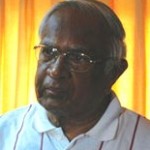
R.M.B
Senanayake
 The Government must win over the Tamil people to
preserve democracy and the territorial integrity of the State as one
nation.
The Government must win over the Tamil people to
preserve democracy and the territorial integrity of the State as one
nation.
In
a democracy the State must obtain the willing consent of the people. The people
include not only the majority religio-ethnic group however large such group is.
The Sinhala
Buddhists constitute 70% of the population but that leaves out 30%
who will be a permanent minority. Majority decision-making does not permit the
violation of the fundamental rights given to all citizens by the Constitution.
These are not alterable for they are not given by the State but are the inherent
rights of individuals irrespective of their affiliation to any race or
religion.
But
recent changes in the the law and the Constitution have meant the removal of
fundamental doctrines like the separation of powers, checks and balances,
independence of the Judiciary from the Executive and the Rule of Law which
requires the law to be enforced equally against all citizens- rich or poor,
politicians or citizens, soldiers or civilians. Without these institutional
safeguards there can be no protection for the fundamental rights of
citizens.
There
cannot be groups of people in a State who are permanently alienated or
estranged. The State is an abstraction and it is represented concretely in the
form of the ruling political party or parties. The present regime has been
co-opting the minority political parties by dispensing political patronage. But
the Tamil National Alliance which represents the majority of the Tamil people,
will not be co-opted for such considerations at least not until the rights of
their people are respected and upheld by the government. The Government has
mobilized a few Tamil politicians to bolster their claim of representing the
Tamils. But this farce will not go down with the International Community. The
Sri Lankan state can presently claim only the consent of the majority Sinhala
Buddhists. In fact other ethnic and religious minorities are also complaining.
The Tamils have complained for the last fifty years that they have been
discriminated against on language, education, jobs and civil liberties. They
allege discriminatory enforcement of the law against them. They fought a long
and bitter war for setting up a separate State for themselves in the North and
East. They did so after peaceful negotiations for devolution of power had failed
over a period of 30 years. Unfortunately their armed struggle was characterized
by terrorist acts against civilians including Buddhist monks and religious
places of worship. This helped the government to mobilize the majority community
behind it to wage a relentless war. It also helped to mobilize the support of
the Western countries which had subscribed to the UN Charter in 1945. So they
too assisted the government by banning the LTTE,
preventing them from collecting money from the expatriate Tamil community in
their countries and by providing war intelligence which effectively blocked the
LTTE from obtaining weapons from overseas. The LTTE was roundly defeated in May
2009 and the territorial integrity of the State was restored.
But
democracy requires that the consent of the Tamil people be obtained. It was
necessary to look into and remove the grievances of the Tamil people which drove
them to take to arms. So the Government appointed the LLRC which
looked into Tamil grievances and made recommendations. But the Government has
been dragging its feet in implementing these recommendations. Instead the
Government has concentrated on development- demining the area making it safe for
the internally displaced to return and spending money to restore the
infrastructure. The Government has shown distrust of the Tamil people and
deployed a large military in the north. Instead of winning the willing
co-operation of the Tamil people the Government has sought to suppress any
expression of political opinion by the Tamil people. The Army is accused of
supervising the civilian administration and monitoring the behavior of civilians
depriving them of the usual freedoms of expression permitted in a democracy. The
internally displaced complain that their original lands have been taken over by
the Armed Forces as Security Zones.
The
Army is accused of running a police state to control the Tamil people monitoring
civilian behavior and intruding into their private lives, presumably to oppose
what they consider as Tamil
nationalism. So the elected representatives of the Tamil people
complain that their party offices have been attacked and that they are being
harassed by ‘unknown’ assailants. The Tamil press has been vandalized. Whatever
the purpose of these acts of violence they will only nurture popular fears and
make both the Armed Forces, the government and the Sinhalese terribly unpopular
and strengthen opposition to the State. Man does not live by bread alone says
the Bible. The Tamil people want to be treated as equals and enjoy the
fundamental freedoms guaranteed in the Constitution. They want to live their
lives without harassment. It is the duty of the State to provide them security
and any State that fails to provide such security for life and limb and the
fundamental freedoms of a free people loses its moral right to exact obedience
from its subjects. History seems to be repeating. In 1956 the Tamil ‘Satygrahis
were attacked with impunity on the Galle Face Green and later outside the Jaffna
Kachcheri. Several attempts to win Tamil rights through non-violent means such
as ‘satyagraha’
were treated with contempt by the majority Sinhala Buddhists. Successive
agreements entered into with the Tamil political parties by Sinhalese political
leaders were reneged.
The
UN recognizes that all people must be treated equally by the State irrespective
of ethnicity or religion. The UN even recognizes the right of a “nation” to self
determination with sovereignty and territorial integrity although there is no
agreement on either what constitutes a nation or how self determination should
be exercised- whether by independence, federation, protection (Kurdistan) or
some form of autonomy. Whether Tamils constitute a nation or not the right to
some form of devolution of power has been accepted and incorporated in the
Constitution under the 13th Amendment.
The Government will have to win over the consent of the Tamil people by allowing them to elect their representatives freely and fairly and allow the Provincial Council of the North to function without undue interference from the Army. The Army would have to be confined to barracks and law and order enforced by the Police. The local Police would have to be accountable to the Provincial Council at least for the normal police functions of crime prevention and investigation although some role for the national police need not be excluded as in a federal state. Otherwise the demand for self determination will echo and re-echo across the Palk Strait until it is given ear to by the UN. The unification of the territory through war has to be accompanied by unification of the hearts and minds of the people of the North with the rest of the country. We cannot afford to run a large army as the economic cost is too high. Time will show that the financial burden of the Army cannot be carried by a State running a massive budget deficit. It is difficult to increase government tax revenue and expenditure affecting public welfare cannot be cut. The cost of the Army can be reduced if there is reconciliation with the Tamil community.
The Government will have to win over the consent of the Tamil people by allowing them to elect their representatives freely and fairly and allow the Provincial Council of the North to function without undue interference from the Army. The Army would have to be confined to barracks and law and order enforced by the Police. The local Police would have to be accountable to the Provincial Council at least for the normal police functions of crime prevention and investigation although some role for the national police need not be excluded as in a federal state. Otherwise the demand for self determination will echo and re-echo across the Palk Strait until it is given ear to by the UN. The unification of the territory through war has to be accompanied by unification of the hearts and minds of the people of the North with the rest of the country. We cannot afford to run a large army as the economic cost is too high. Time will show that the financial burden of the Army cannot be carried by a State running a massive budget deficit. It is difficult to increase government tax revenue and expenditure affecting public welfare cannot be cut. The cost of the Army can be reduced if there is reconciliation with the Tamil community.
