Peace for the World World ! Your War Our Lives

The Dalai Lama
A Brief Colonial History Of Ceylon(SriLanka)
Sri Lanka: One Island Two Nations
A Brief Colonial History Of Ceylon(SriLanka)
Sri Lanka: One Island Two Nations
(Full Story)
Back to 500BC.

Friday, January 10, 2014
God In The Buddha
By Kapila Abhayawansa -January 10, 2014
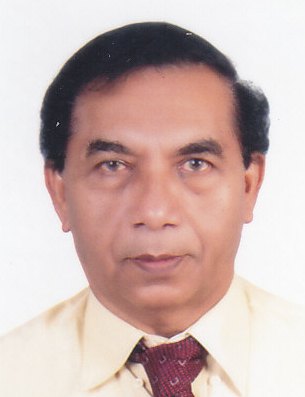
Prof Kapila Abhayawansa
 Articles “God In Buddhism?” and “From Siddhartha Gautama to God”
written respectively by Mr. Shyamon Jayasinghe and Dr. Jagath Asoka
appeared in Colombo Telegraph gave me the idea to write something
revealing the true nature of popular Buddhist practices.
It seems to me that not only both writers but also many amongst us who
criticize popular Buddhist activities fail to understand the complex
nature, different dispositions and the levels of the understanding of
the masses in the world. We cannot put all the people in one category
due to diverse mental capacity of the people. There is no one single
medicine for all the ailments. The Buddha has understood this situation
of the world. He made use of different skillful means to take all the
people onto one platform. Once, the Buddha proclaimed:
“I do not say that one can win the final knowledge at the very
beginning. It is had from a gradual discipline, a gradual mode of action
and conduct”. (na āyatkeneva aññārādhanam vadāmi. Apica anupubba-sikkhā anupubba-kiriyā anupubba-patipadā aññārādhanam hoti.-M.I.479).
Articles “God In Buddhism?” and “From Siddhartha Gautama to God”
written respectively by Mr. Shyamon Jayasinghe and Dr. Jagath Asoka
appeared in Colombo Telegraph gave me the idea to write something
revealing the true nature of popular Buddhist practices.
It seems to me that not only both writers but also many amongst us who
criticize popular Buddhist activities fail to understand the complex
nature, different dispositions and the levels of the understanding of
the masses in the world. We cannot put all the people in one category
due to diverse mental capacity of the people. There is no one single
medicine for all the ailments. The Buddha has understood this situation
of the world. He made use of different skillful means to take all the
people onto one platform. Once, the Buddha proclaimed:
“I do not say that one can win the final knowledge at the very
beginning. It is had from a gradual discipline, a gradual mode of action
and conduct”. (na āyatkeneva aññārādhanam vadāmi. Apica anupubba-sikkhā anupubba-kiriyā anupubba-patipadā aññārādhanam hoti.-M.I.479).
Most of the Buddhists not only in Sri lanka but also in all the Buddhist
countries irrespective of their traditions such as Theravada, Mahayana
and Tantrayana perform popular religious activities in their day to day
life. We cannot say that all such activities are based on wrong beliefs.
It is true that people practice them with the blind faith without
understanding their true values. Originally, such popular practices were
introduced to the ordinary people by the Buddhist monks in order to
keep them away from the unrighteous and bad activities which are harmful
to both themselves and others (pāpā nivārenti) and to encourage them to
cultivate Buddhist virtues such as liberality, generosity, gratitude,
unity, collective responsibility, respect to the worthy ones and so on
(kalyāne nivesenti). Usually, ordinary people are unable to grasp
anything without an object or a symbol. Direct lessens of ethics or
philosophy wouldn’t be fruitful on them. Moral sense can be implanted in
their mind through the symbols. For an example, statue of the Buddha
has been taken as an object for veneration as a means to be mindful on
the virtues of the Buddha. It should be mentioned that early Buddhism
recognizes mindfulness on the virtues of the Buddha (buddhānussati) as
one of the meditation subjects. We have to understand original
implications of all those activities although most of the people make
use of them in the wrong way. I do not find anything wrong there if the
people practice them grasping the virtues involved with them as a
preparatory measure to reach the subsequent step on the path of wisdom
acknowledged by the Buddha.
