Peace for the World World ! Your War Our Lives

The Dalai Lama
A Brief Colonial History Of Ceylon(SriLanka)
Sri Lanka: One Island Two Nations
A Brief Colonial History Of Ceylon(SriLanka)
Sri Lanka: One Island Two Nations
(Full Story)
Back to 500BC.

Saturday, April 5, 2014
UNHRC Resolution – What The Voting And The Pattern Signify
By S. Sivathasan -April 5, 2014
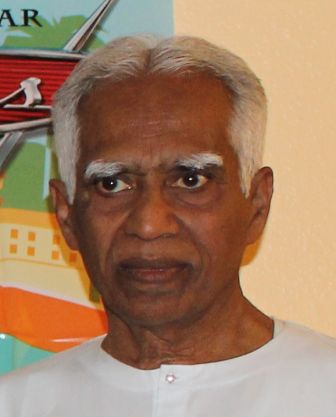
S. Sivathasan
 Introduction
To foster peace the UNO was founded. It established a Commission on
Human Rights (CHR) in 1946, which drafted the Universal Declaration of
Human Rights. In the period 1947 to 1967 the Commission concentrated on
sovereignty in keeping with the spate of decolonization in Asia and
Africa. After the mid-sixties when violations increased, emphasis
shifted by 1967 to action on violators and a policy of interventionism
came about. It implied that investigation and report were assuming
weightage in the CHR. As the tasks of the Commission took on a different
orientation and a new dimension, the UNCHR was superseded by the United
Nations Human Rights Council (UNHRC) in 2006.
Sri Lanka’s Opportunities
Like most emergent countries which embarked on nation building, Ceylon
too had her opportunity. When no problems blocked her way, she created
them beginning with partial ethnic cleansing. It took the iniquitous
form of Citizenship Laws to repatriate nearly half the Tamils of recent
Indian origin. The remaining Tamils of Indian origin were deprived of
their franchise and denied representation in Parliament and other civic
institutions. The Sinhala Only Act followed
to marginalize the Tamils. Since then acts of state terrorism were set
afoot for no less than 30 years forcing a third of the Tamils to
expatriate themselves in pursuit of life and liberty. Sri Lanka’s
creation was an infuriated Diaspora instead of a contented multi-ethnic
nation.
The end of the war in 2009 provided an occasion for a Kalinga, a
penitent Asoka and a prosperous Singapore. An opportunity arose to build
afresh by putting the past behind. But it was not to be and the path of
Zimbabwe was chosen as the ‘best practice’. Value was placed on
internecine warfare and a programme was drawn up to lay the country to
waste. The malpractices caught the attention of UNHRC in 2009 in just
three years of its creation.
From 2009 – 14, the Council has methodically gone through the motions
providing opportunities for Sri Lanka to change the Human Rights
situation in the island for the better. However disdaining to do
anything and engaging in denial and defiance were the mode of reaction.
The wrath of the UN body was invited by Sri Lanka and as of March this
year, a due process stands initiated.
The attention of the UN continues to
remain riveted with little letting up and no escape route. A quarrel
between two ethnic entities in an island nation has travelled to the
League of Nations building, to the glare of the world. Enmity with the
world entails root and branch destruction, goes a Tamil saying. Yet the
Tamil side eschewed it and paid a heavy price. The contesting side takes
the same course to pay a heavier price.Read More
