Peace for the World World ! Your War Our Lives

The Dalai Lama
A Brief Colonial History Of Ceylon(SriLanka)
Sri Lanka: One Island Two Nations
A Brief Colonial History Of Ceylon(SriLanka)
Sri Lanka: One Island Two Nations
(Full Story)
Back to 500BC.

Friday, April 24, 2015
Scientists genetically modify human embryos in controversial world first
New
procedure used to modify disease-causing gene, but raises questions
over whether restrictions should be placed on new wave of genetic
techniques
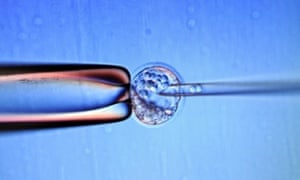
Many
scientists believe that modifying human embryos in this way crosses an
ethical line. Photograph: Anne-Christine Poujoulat/AFP/Getty Images
Ian Sample, science editor-Thursday 23 April 2015

The work raises fresh questions over whether restrictions should be
placed on a new wave of genetic techniques that are rapidly gaining
ground in labs across the world.
The Chinese group used a genome editing procedure called Crispr to
modify an aberrant gene that causes beta-thalassaemia, a
life-threatening blood disorder, in faulty IVF embryos obtained from
local fertility clinics.
The embryos used for their experiments were abnormal and incapable of
developing into healthy babies and would have been destroyed by the
clinics. They were not implanted into women once the modifications were
made.
The team, led by Junjiu Huang at Sun Yat-sen University in Guangzhou, is
the first to publish such work, confirming rumours that have been
circulating for months that human embryos had been modifed in China. The
work is described in the journal Protein and Cell.
Two prominent journals, Nature and Science, rejected the paper citing ethical objections, Huang said.
Many scientists believe that genetically modifying human embryos crosses
an ethical line and should remain taboo. But the capability is becoming
ever more likely. Scientists have recently developed a host of genome
editing procedures. And while they are incredibly powerful and simple to
use, how safe they are, and how they should be used, is not yet clear.
Last month, researchers writing in Nature called for a global moratorium on
the genetic modification of human embryos, citing “grave concerns” over
the ethics and safety. They added that any therapeutic benefits were
tenuous.
Genetic modification of the DNA in human embryos would not only affect
the individual but their children and their children’s children and so
on down the generations. Advocates argue that could halt the inheritance
of genetic diseases that run in families, but it could also pass on
unforeseen medical problems that the procedures may cause.
The Chinese team attempted to correct the faulty gene that causes
beta-thalassaemia in 86 human embryos. The procedure worked properly in
only a tiny portion of those tested. “If you want to do it in normal
embryos, you need to be close to 100%,” Huang told the journal Nature. “That’s why we stopped. We still think it’s too immature.”
One of the main safety concerns with genome editing is the risk of
changes being made to healthy genes by accident. These so-called
“off-target” edits happened far more than expected in Huang’s study,
suggesting that the procedure they used is far from safe.
“What the paper really emphasises is that we are far away from using
genomic editing because it’s not safe. The idea of using this for
designer babies is very far-fetched. The technology is too far off,”
said Dusko Ilic, a stem cell researcher at King’s College, London.
But Ilic said that research on genome editing, and its potential uses in
humans, would continue unabated. “You cannot stop science. No matter
what moratorium is proposed, you cannot stop this work continuing around
the world,” he said.
He added that the Chinese work was not unethical. “These embryos had
been fertilised by two sperm. They would have been discarded by any IVF
clinic in any country in the world. There is no ethical objection you
can bring.”
Doctors at IVF clinics can already test embryos for genetic diseases and
pick the healthiest ones to implant into women. If genome editing was
safe and effective, it could potentially be used to correct genetic
faults in embryos instead of picking those that happen to be healthy.
Currently, under UK law, genetically modified embryos cannot be
transferred to women.
One UK geneticist who did not wish to be named because the work was so
contentious, told the Guardian that the Chinese study had long been
expected : “It was clear to everyone that these techniques were going to
work in humans and that it would be done at some point,” they said.
“It’s a bit sensationalist.”
“You can argue that it could be hugely beneficial to correct genetic
diseases, but on the other hand we don’t know it’s safe and it’s a
slippery slope. How long will it be before people try to alter eye and
hair colour, and height and intelligence?”
Huang now hopes to improve the safety and efficiency of the procedure in experiments that use human tissues and animals.
