Peace for the World World ! Your War Our Lives

The Dalai Lama
A Brief Colonial History Of Ceylon(SriLanka)
Sri Lanka: One Island Two Nations
A Brief Colonial History Of Ceylon(SriLanka)
Sri Lanka: One Island Two Nations
(Full Story)
Back to 500BC.

Friday, May 8, 2015
A Government’s Nightmare – The Free Media

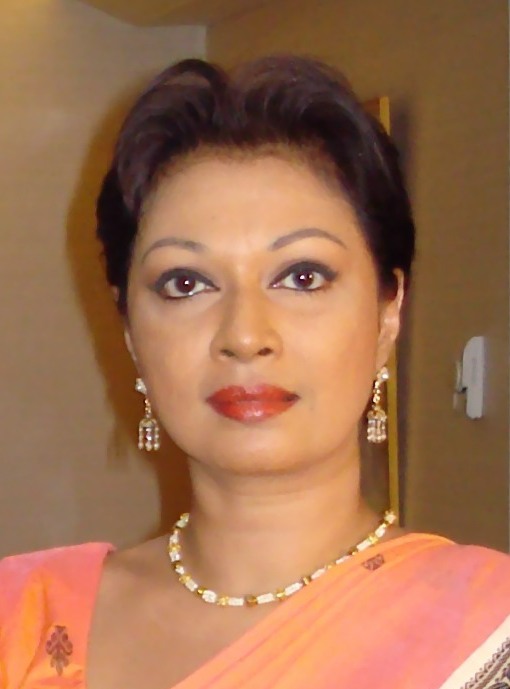
Sharmini Serasinghe
The media in Sri Lanka never had it easy, but the period 2006 – 2014, was its worst.
In 2009, the government revived legislation that vests the Sri Lanka
Press Council, a statutory body, with broad powers to restrict the
media and punish offending journalists and publishers with fines and
imprisonment.
The law was first enacted in 1973, by the coalition government of
Prime Minister Sirimavo Bandaranaike, amid a deep economic crisis and
widespread social discontent.
The Press Council continued to function as a mechanism, to
intimidate the media under successive governments until 2002, when it
was rendered inoperative through a bipartisan resolution in parliament.
——————————-
Isn’t it strange that when a political party is in the opposition, the media is its friend, and howls on its behalf, when an injustice is deemed, done. But the moment it comes to power, the exact opposite happens!
——————————-
Isn’t it strange that when a political party is in the opposition, the media is its friend, and howls on its behalf, when an injustice is deemed, done. But the moment it comes to power, the exact opposite happens!
Although Sri Lanka’s constitution guarantees ‘freedom of expression’
in theory, in practice this is usually not the case. There are various
‘laws’ and ‘regulations’ in place, to limit this ‘freedom’.
One such is the 1978 Prevention of Terrorism Act (PTA),
which contains extremely broad constraints, on ‘freedom of expression’.
Hence Journalists are subject to all types of legal harassment and
physical intimidation.
In 2006, under the leadership of President Mahinda Rajapaksa,
an unofficial censorship on issues relating to ‘national security and
defense’ was imposed by the government. It then went on to set up, what
was called the ‘Media Center for National Security’, to disseminate all
‘information’ related to ‘sensitive issues’, to the media and public, as
they deemed fit.
Then, in 2009, the government announced that it was reviving a law that
had not been enforced, in more than a decade; the draconian 1973 Press
Council Act. This law was enacted, during the SLFP regime, under the
premiership of Sirimavo Bandaranaike. During her tenure in office, the
Lake House Group of newspapers was nationalised, and the Gunasena
newspaper group, sealed.
During the Rajapaksa regime, and at the
height of the civil war, Sri Lanka was described, as one of the most
dangerous places in the world, for journalists. Read More
