Peace for the World World ! Your War Our Lives

The Dalai Lama
A Brief Colonial History Of Ceylon(SriLanka)
Sri Lanka: One Island Two Nations
A Brief Colonial History Of Ceylon(SriLanka)
Sri Lanka: One Island Two Nations
(Full Story)
Back to 500BC.

Wednesday, August 24, 2016
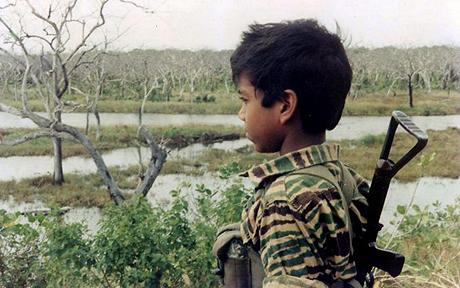
The LTTE’s Forced Recruitment Of Children In Armed Combat

By Pitasanna Shanmugathas –August 23, 2016

Pitasanna Shanmugathas
During the ceasefire between the Liberation Tigers of Tamil Eelam (LTTE)
and the Sri Lankan government, Human Rights Watch researchers went to
Batticaloa, Trincomalee, and Kilinochchi to document the LTTE’s use of
children in armed combat.
Human Rights Watch, in its report, documented instances where the LTTE
forcibly recruited children through intimidation and torture, utilized
acts of collective punishment against child soldiers, forcibly recruited
more than one child per family, and re-recruited children who
previously served. During the ceasefire, the LTTE continued to recruit
large numbers of children. What is arguably most significant is that the
LTTE’s forced recruitment of children further exacerbated the
educational decline of Tamil youth. Now that the war is over, Tamil
children may get a chance to further their level of education.
I interviewed Jo Becker, advocacy director of the children’s rights division at Human Rights Watch, and writer of the “Living in Fear” human rights report documenting the LTTE’s use of children in armed combat.
 Jo
Becker discussed tactics utilized by the LTTE to force children into
joining the rebel group. Despite resistance from Tamil parents, Becker
stated, the LTTE would make repeated visits to the family, if a child is
not given voluntarily, the LTTE would take one by force—for example, by
abducting children.
Jo
Becker discussed tactics utilized by the LTTE to force children into
joining the rebel group. Despite resistance from Tamil parents, Becker
stated, the LTTE would make repeated visits to the family, if a child is
not given voluntarily, the LTTE would take one by force—for example, by
abducting children.
Becker recalled a specific instance where a girl, due to persistent
pressure and threats by the LTTE, decided to unwillingly join the LTTE
in fear that “if she did not go they might take her younger sister.”
Another tactic utilized by the LTTE to recruit children, Becker
recalled, was by forcing principals and teachers in schools to allow
LTTE representatives to give “time in front of classrooms to talk about
martyrs to the cause and talk about the responsibility of children to
join.”
For instance, according to the Trincomalee Senior Superintendent of
Police, the LTTE in July 2004 provided area teachers and principals with
exams on the history of the LTTE.
An international worker in Trincomalee said, “The LTTE calls these
history lessons. We call them propaganda campaigns. The LTTE says it’s
not recruitment, and if individuals choose to join afterwards, so be it.
Principals don’t have a choice. The LTTE doesn’t ask permission, they
just go.”
In some places, Becker stated, “there were street theatre or public meetings where people were encouraged to join.”
Becker also disclosed stories from children she met who voluntarily
joined due to government abuses by soldiers, for example, “maybe their
mother had been killed or their father had been killed and [the
children] held the government responsible.” “In many cases, these
children joined the LTTE to get revenge. They weren’t pressured or
coerced,” Becker stated.
A 1993 study of adolescents in Vaddukoddai in the North found that one
quarter of the children studied had witnessed violence personally. In
response, many children joined the LTTE, seeking to protect their
families or to avenge real or perceived abuses.
However, Becker reiterated that “a majority of cases we documented, there was definitely some coercion of threat involved.”
I asked Jo Becker about the common misconception that the LTTE only
recruited one child per family. As documented in the Human Rights Watch
report, there were several instances where more than one child per
family was recruited.
