Peace for the World World ! Your War Our Lives

The Dalai Lama
A Brief Colonial History Of Ceylon(SriLanka)
Sri Lanka: One Island Two Nations
A Brief Colonial History Of Ceylon(SriLanka)
Sri Lanka: One Island Two Nations
(Full Story)
Back to 500BC.

Wednesday, November 23, 2016
Scientists to 'reset' blood proteins in attempt to slow ageing process
Trial will attempt to change levels of proteins in older blood, believed to hamper growth and maintenance of healthy tissues
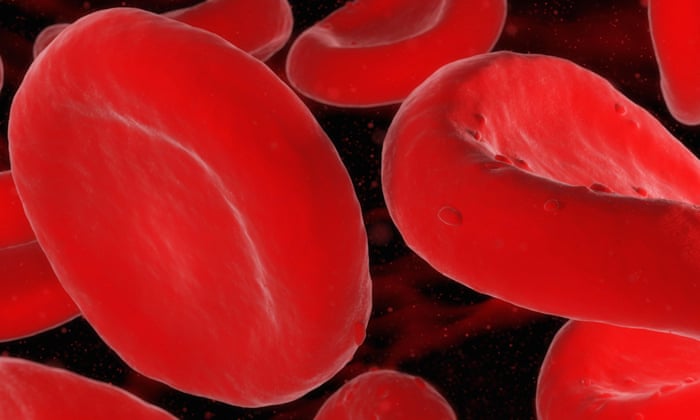
Red
blood cells. Researchers found evidence that infusions of young blood
could speed up muscle repair in older animals. Photograph: Ikon
Images/REX Shutterstock
 In
what could be a fresh chapter in the never-ending story of the search
for eternal youth, scientists are to tinker with people’s blood in the
hope of slowing down the ageing process and preventing age-related
diseases.
In
what could be a fresh chapter in the never-ending story of the search
for eternal youth, scientists are to tinker with people’s blood in the
hope of slowing down the ageing process and preventing age-related
diseases.
Researchers in California plan to launch a clinical trial of the radical
– and highly experimental – approach in the next six months, after a
small study in mice found the treatment had promise.
People who take part in the trial will have their blood passed through a
machine that resets abnormal levels of proteins seen in older blood.
The scientists believe these high levels of certain proteins can hamper
the growth and maintenance of healthy body tissues, and so contribute to
their deterioration in old age.
Plans for the trial emerged as scientists announced the results of the animal study, which was part-funded by Calico,
Google’s life extension company. The study showed that infusions of old
blood reduced the growth of fresh liver and brain cells in young mice
and impaired their performance in a strength test.
The same series of experiments found evidence that infusions of young
blood could speed up muscle repair in older animals. But Irina Conboy,
who led the work at the University of California, Berkeley, said the
improvement could be due the dilution of old blood in the animals,
rather than the young blood having rejuvenating properties itself.
The work is the latest in a string of studies to
show that molecules in blood may shift the apparent pace of ageing in
various bodily tissues. But while much of the previous work has focused
on the rejuvenating effects of proteins lurking in young blood, the
Berkeley team conclude that abnormal levels of proteins in old blood are
more important.
“These proteins are made by all the tissues in your body every day,”
Conboy told the Guardian. “When they are present at low levels, they are
important, and you cannot live without them. But with ageing their
levels become skewed. Some of them go up, and some go down. So the
rational approach is not to give people young blood, but to normalise
the levels of these key molecules.”
Asked about her hopes for a treatment, Conboy said, “If you can prevent
Alzheimer’s disease, Parkinson’s disease and type 2 diabetes, you pretty
much provide many more decades of healthy active life to everybody.”
One scientist who read the study was not convinced by the findings. Tony
Wyss-Coray at Stanford University has set up a clinical trial to
investigate whether injections of young blood plasma can help people
with early stage Alzheimer’s disease. He said he doubted the results
because of the statistics the team use, and the fact that the studies
draw on only four pairs of mice for each experiment.
In the past, scientists have investigated what happens when blood is
swapped between old and young animals by conjoining them in a surgical
operation known as parabiosis. Because the animals share a blood supply,
the procedure allows scientists to look for effects of young blood on
old animals and vice versa. But mice that are conjoined in this way
share more than a blood supply. For example, an older mouse attached to a
younger one benefits from the latter’s more youthful organs too.
In the latest study, reported in Nature Communications,
Conboy’s team came up with a new way to transfer blood between animals
without conjoining them. Instead of surgically attaching the animals,
their blood is drawn through a tube by a computer-controlled pump and
directly transfused into the recipient animal.
The Berkeley team is now working on a device that can filter out high
levels of proteins from old human blood and so reset them to more
youthful levels. “If you can remove key inhibitor molecules from the
blood of an old person and then return that blood into them, that could
be immediately therapeutic,” Conboy said.
“We are developing ideas for clinical trials to see what happens if you
normalise levels of one key protein we think is inhibitory,” she added.
“We hope to start in six months and have results in three years.
“Right now our health declines after about seven decades. We are pretty
much hoping to extend the productive plateau, where you’re not
necessarily the world champion in swimming or running marathons, but you
can continue for a few more decades without any critical illnesses.”
