Peace for the World World ! Your War Our Lives

The Dalai Lama
A Brief Colonial History Of Ceylon(SriLanka)
Sri Lanka: One Island Two Nations
A Brief Colonial History Of Ceylon(SriLanka)
Sri Lanka: One Island Two Nations
(Full Story)
Back to 500BC.

Saturday, January 7, 2017
SRI LANKA: The job of a judge is to do justice, regardless of nationality
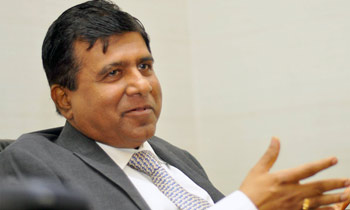
Justice Minister Wijeyadasa Rajapakshe


 by Basil Fernando-January 6, 2017
Concerns have been raised about the preliminary report of the
Consultation Task Force (CTF), particularly about hybrid courts and
foreign judges.
It should be remembered that this report and its recommendations have
not been finalized. Additionally, at the very beginning of the report,
the CTF write that they are not making extensive recommendations
themselves, but that this is merely a collection of ideas from various
people to whom they have listened.
This whole discussion that has created some controversies about hybrid courts should, I think, require a little bit of thinking.
First and foremost, this issue must be looked at from the point of view
of law and justice. After all, the idea of the court is to mete out
justice at the end. If it fails, then all this talk is worth nothing. A
court can deliver justice only if its judges meet the requirements in
terms of their experience, education and, above all, their integrity and
their being commitment to justice and not to anything else. The motto
should be: let the heavens fall, but justice will prevail.
If we can find such judges in Sri Lanka, let’s find them. There is no
special requirement to bring anybody from outside. But if we can’t find
them, or we can’t find enough of them here, then we should either bring
them from somewhere else or we should not engage in the exercise at all,
because there are only two types of courts: courts of justice, or
kangaroo courts.
What we don’t want to have are kangaroo courts. That is what we have to
avoid. In order to do that, we need to advertise the required qualities
and get people from wherever. This is not about genes. This is not about
colour or about what country you come from. A judge, acting in their
professional capacity, has no nationality. A judge has nothing else but
justice. That is why Lady Justice is blindfolded. Once you sit as a
judge, you don’t belong to normal categories. It doesn’t matter whether
you are Indian, Sri Lankan or from elsewhere. There are many courts all
over the world where there are mixture of people. For example, in Hong
Kong, as a matter of practice, you always have judges from developed
jurisdictions working with Hong Kong judges in the Court of Final
Appeal. The goal is to maintain quality.
What we should have is justice of a quality that no one can challenge
it. It will not listen to governments, it will not fear any
repercussions; it will just be justice. If justice cannot be done, the
judges would say that they cannot do justice here, and that they cannot
do something false.
We can again reach global standards. This is happening in many other
fields. See how many engineers are in this country who are foreigners.
Suppose you say that no engineers should come from abroad: what would
happen to all their enterprises? See medical teams. This is happening
all the time in every field.
Suppose we one day say that all foreigners are banned from participating
in anything at all. What would become of us? In the world today, it is
not like that anywhere. There is some absurdity in this whole
discussion.
The second thing is that nothing is of greater value by being called
‘hybrid’. The mere fact that you add a foreign judge to a team of others
does not make it a good court. The best example is where I used to
work, in Cambodia, where there was an experiment with a so-called hybrid
court. It was a complete failure.
The issue is the ensure quality. If the quality can be ensured by the
talent we have, so much the better. Otherwise, open it up like any other
employment opportunity and ensure that those people abide by quality.
If there is a fear that some foreigner may try to bring an agenda into
this, it should be remembered that judges do no have agendas: judges do
not have nationalities.
Many courts in the world have foreign judges. Many developing countries
have in the past deliberately brought them in so as to raise their
quality. Some of our judges, people from our system, are in other
courts, such as in Fiji. There are so many of our judges there,
including sitting judges. We have also sent prosecutors and judges to
the International Court of Justice.
Sri Lankans have played their parts in other courts, and other people
can also do the same thing here. The idea that any foreigner would be
someone who is biased is, I think, a very false notion.
Of course, on the one hand there is the substantial issue, and on the
other there is the political issue. Politically, the opposition tries to
say that foreign judges will try to put our national heroes into jail,
and other such allegations.
The government is then put in an embarrassing position, so they say they
won’t have the judges. That’s a political debate, but these are not
issues that politicians can decide purely on political terms. The
judiciary is not something that should be decided on political terms.
The independence of the judiciary does not require that only local
judges can sit at a court. Local and international does not apply. The
reason for the blindfolded image is that they simply don’t have
nationalities, their genes don’t matter, they go by certain qualities.
This is the only profession of that type, where we don’t give any
priority to anything but justice. Let the heavens fall, but justice must
be done. They cannot say that they think in a particular way, that
their ancestry guides them, or astrology or anything else.
In terms of the CTF objectives, it is essential to start with the issue
of investigations. We cannot find the truth without investigations.
Before we talk about judges, we should emphasize the need for proper and
impartial investigations because, whenever a crime is reported, it is
an absolute obligation to begin investigations immediately. The crimes
reported include one of the most heinous crimes: enforced
disappearances. People have already complained. The obligation of the
government is to begin investigations. If the investigations bring out
the truth, whether in favour or against the complaint, that determines
what happens next. We should therefore concentrate all our efforts into
that first step, which we simply cannot avoid: the issue of
investigations.
This issue must be addressed step-by-step. Our experts, even those
involved in transitional justice, look at books, but they don’t look at
the contextual issue. What is missing here in this country? What is
wrong? Not only regarding crimes related to the civil war, but in normal
crimes? Our investigative system is in a serious crisis. In a normal
murder or rape case, making a complaint doesn’t mean that there will be
an investigation. Sometimes there are. In many cases, it doesn’t happen.
There is something wrong in our basic criminal justice system. Making
use of this larger issue, we should deal with our basic system.
Correcting this is in everybody’s interest. If something happens to me
today, it is in my interest that there is a system where a complaint can
be made and where complaints will be investigated.
This is not a matter for speculation. We don’t speculate about crimes. We investigate crimes. It is a serious art and science.
Rather than borrowing some terms from elsewhere and putting it into a
report, we should look at the local situation and see what is wrong with
it. A critique should be made of the local situation. If someone is not
happy with the local judiciary being able to do this job, make a proper
critique of that and explain why.
Politicians may raise obstacles to foreign judges, but no question is
being asked about what the people want. Would the people want justice or
a farce? Some kind of bluff, followed by conviction or acquittal? We
don’t want courts that are committed to convicting or acquitting people
without due process. It should be according to justice. So do you want a
court of justice, or some kind of bluff? This is a matter for the
people, primarily, and if the people begin to demand this, all these
parties will have to listen. Political parties should listen to the
people. Here we have it the other way: we borrow our ideas from
political parties. The whole nature of democracy is to get the people to
say what they want to the political parties. That should not be turned
the other way.
In the Sri Lankan mentality there is almost an inability to go beyond
surface politics and into the realities of how things happen. Everything
is just for the newspaper or the media, for talk, and not about how to
get things done. Justice is done by people involved in justice. That is,
investigators, prosecutors, judges; these people do justice.
Politicians don’t do justice. In fact, fighting against injustices done
by politicians was how the justice project came about. In England, you
had to fight against the King, to the point that one of first heads of
states to be killed was in England, in search of justice. Justice will
never come from the hands of politicians alone.
If the whole country can only be run by politicians, then we don’t need
any other kind of professions. We wouldn’t need accountants or doctors,
only politicians.
People must be able to rely on justice institutions. That brings out the
real question: Do we want anarchy to prevail in this country?
Lawlessness? Or do we want the rule of law back? That is kind of issue
that should be central issue in these reports. The core question should
be: what is happening to the rule of law? Will this court, whichever
court it is, be respected within the framework of the rule of law? Will
they help to stabilize this country? Will they make it a country that is
safe for everybody, where it is safe for people speak out and
participate? Will that happen or will it just be people living in fear?
The greatest assault on the dignity of a victim or their family is to
deny the truth of what happened to the victim. We can’t resolve that by
any other means, including giving facilities, though that is indeed
necessary. Nobody disagrees on the fact that infrastructure and other
necessities should be provided. But that does not restore dignity to a
person. If my brother was killed and I don’t know what happened, if he
was arrested and then disappeared, I would suffer all my life with that
idea, asking what happened. That would go to the very depth of my
dignity.
Justice is more important to a nation than anything else, and that is
what we are rapidly forgetting. We had that idea up until the 1978
Constitution. We believed that justice was fundamental. Without justice,
we will not have a sense of dignity at all. Today, the whole nation
suffers from the fact that we are unable to have a system of justice
that we can look at and say: even if everything fails, if politicians
fail, at least in the sacred vicinity of a court of justice, we get
justice.
