Peace for the World World ! Your War Our Lives

The Dalai Lama
A Brief Colonial History Of Ceylon(SriLanka)
Sri Lanka: One Island Two Nations
A Brief Colonial History Of Ceylon(SriLanka)
Sri Lanka: One Island Two Nations
(Full Story)
Back to 500BC.

Thursday, August 9, 2018
Rajapaksa Apologists & The Impending Implosion Of The Cabal
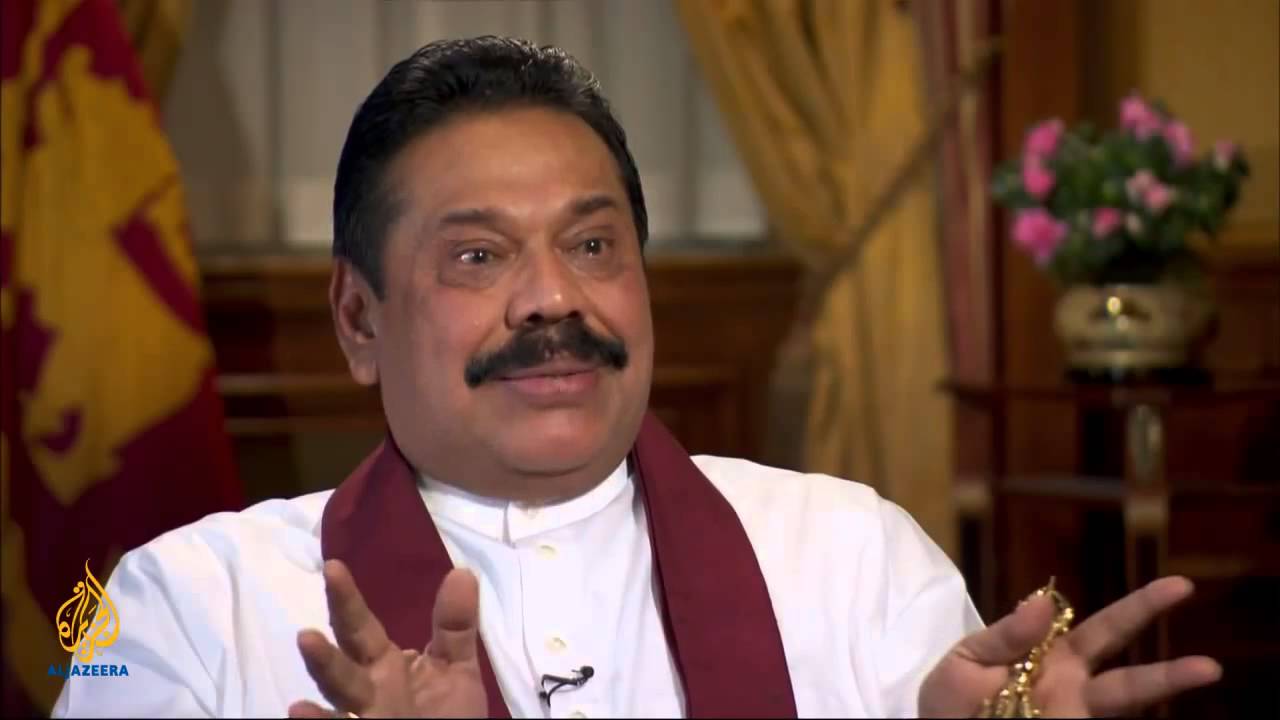
“When a political organization loses contact with its origin, it declines and risks implosion.” ~Robert Esposito
 Some
writers whose political insensitivities and bare naiveté have been
mistaken for objective analysis are still defending the indefensible
atrocities of the Rajapaksa era. Their insensitivities have taken them
from being mere Rajapaksa supporters to the fringe politics of
post-Independent Sri Lanka. Ceylon, as it was called then, has undergone
unrecognizable changes; she has embraced nihilist aspects of political
evolution; ethnic violence has erupted multiple times and led to a
thirty-year old war that ended in the decimation of a terrorist army
that was never seen in Ceylon in the last half of the millennium. That
war has enlarged the gulf between the two peoples. Tamils are being
perceived as the ‘enemy’ of the glorious past of Sinhalese Buddhists, as
enunciated in the Great Chronicle (Mahawansa).
Some
writers whose political insensitivities and bare naiveté have been
mistaken for objective analysis are still defending the indefensible
atrocities of the Rajapaksa era. Their insensitivities have taken them
from being mere Rajapaksa supporters to the fringe politics of
post-Independent Sri Lanka. Ceylon, as it was called then, has undergone
unrecognizable changes; she has embraced nihilist aspects of political
evolution; ethnic violence has erupted multiple times and led to a
thirty-year old war that ended in the decimation of a terrorist army
that was never seen in Ceylon in the last half of the millennium. That
war has enlarged the gulf between the two peoples. Tamils are being
perceived as the ‘enemy’ of the glorious past of Sinhalese Buddhists, as
enunciated in the Great Chronicle (Mahawansa).
The peak of this evolutionary thought, as promulgated by the modern day patriots of the land, the race and the faith,
spearheaded by an insane but utterly focused movement led by
saffron-garbed political gangsters, was in the Rajapaksa era: from 2005
to 2104. During this maddeningly chaotic period, these pundits and Chinthanaya demagogues
would most conveniently forget to write about or even make a cursory
mention on the alleged exchange of huge amounts of cash between the
candidate Rajapaksa and Prabhakaran, the leader of the Liberation Tigers
of Tamil Elam (LTTE). Prabhakaran got the cash and Mahinda Rajapaksa
got the Tamils in the North to stay at their homes on the D-day,
Presidential Election day, thereby preventing an assured bloc of votes
for Ranil Wickremesinghe, the UNP candidate that would have been
sufficient to overwhelm the votes received by Mahinda in 2005.
Yet those who bartered the country’s conscience for cash then clothed
themselves with a glorious-looking attire of patriotism, while those
soldiers of the ilk of General Sarath Fonseka were disgraced as
traitors. This grave injustice caused to the sublime emotions of a
nation struggling to rise from the ashes of a terrorist war is
unpardonable. Desecration of man’s strongly held belief in himself and
his family was accepted by the henchmen and women of the ruling cabal as
a patriotic act for the wild emotions raised and inflamed by empty
rhetoric and resounding slogans overtook the wiser senses of man. The
decay that followed in our cultural values and social measures began
showing their external manifestations, not gradually but rather rapidly
and uncontrollably.
At the base of all these processes of rotting away and social oozing was
a politician. Politician controlled not only the country’s coffers; he
controlled the hearts and minds of the general population; thereby they
controlled the mindset of a great number of people, in fact a majority
of Sinhalese Buddhists. The so-called pundits and pseudo intellectuals
of the Chinthanaya-trash
were at the very core of this repugnant movement. Construction of
beautiful slogans that would easily mesmerize the gullible and plainly
vacant minds of a majority which has already been hoodwinked by wickedly
attired thugs misrepresenting the Order of Maha Sanga, the clergy of Buddhist preaching, gave way for insightful thinking and wise decision making.
Sharpening the television portraits to misrepresent the vile and
inscrutably dangerous political philosophy, which was already bordering
on Nazism and Stalinism, became a priority of highest order for those
who occupied the uppermost seats of power. The resultant mindset of the
Rajapaksa cabal that became more and more hallucinated and intoxicated
with power produced the most undemocratic constitutional amendment thus
far. The Eighteenth Amendment to our already sullied Constitution not
only assured the Rajapaksas a mirage of ‘permanent power’, it also
carried a latent message to the hereunto placid population and civil
organizations a weapon to use and use repeatedly to prove that the path
the Rajapaksas have chosen is not good for the country. In other words,
the Eighteenth Amendment carried within itself a double edged knife, one
edge for the Rajapaksas to continue their supremacy forever and the
other as an eye-opener for the docile public that the intentions of the
cabal are not so voter-friendly.
In order to bury the ugly Sri Lankan that dwelled within the Rajapaksa
ruling cabal and their numerous castrations of human rights, decent life
and honest livelihoods of the average man and woman, holding on to
power was a prerequisite. This same argument was made in 1988 when J R
Jayewardene, the very creator of the Presidential constitution and then
its government, was getting ready to hand over the reins of power to the
next one who would be elected. At that time J R Jayewardene had a two
thirds majority in the House of Parliament. The passage of an amendment
on lines of the Eighteenth Amendment would have been reasonably easy.
Yet J R decided otherwise. Wiser minds prevailed.
When the siblings started tasting the sweetness of power, when they
began reaping the harvests of hard working men and women in Sri Lanka,
the alluring enigma of power took control of these siblings. They let
themselves go. And the subject people suffered. Resulting daylight
murder of Lasantha Wickrematunge, assault on other journalists, killing
of Tamil journalists in Jaffna, intimidation and abduction of Prageeth
Ekneligoda, Rathupaswela shooting and obliteration of those who took
part in the infamous prison riots were all a direct and unmistakable
results of the mindset that controlled the country after the passage of
the Eighteenth Amendment.
The Presidential Elections held in 2015 changed all that, hopefully
forever. Revocation of the Eighteenth Amendment and replacing it with
the Nineteenth Amendment, in combination with many a legal and judicial
investigation into the many misdeeds of the former first family gave
them jitters. The provision of proportional representation (PR system)
has ensured that it is practically impossible for any single party to
gain a two thirds majority in Parliament. One party might be able to
command a two thirds majority after ensuring the support of some other
fringe parties to form a temporary two thirds for a specific purpose,
but such temporary collusions are hardly worthy of mention in the
context of a bitterly fought out election campaign which would result in
a hung-parliament. Consequently, seeing Mahinda Rajapaksa again on the
throne of Presidency is a non-event.
Read More
