Peace for the World World ! Your War Our Lives

The Dalai Lama
A Brief Colonial History Of Ceylon(SriLanka)
Sri Lanka: One Island Two Nations
A Brief Colonial History Of Ceylon(SriLanka)
Sri Lanka: One Island Two Nations
(Full Story)
Back to 500BC.

Sunday, September 16, 2018
Some Misplaced Criticisms Of The Tamil Political Trajectory
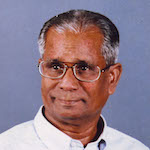
Vallipuram Thirunavukkarasu
 First
of all, let me touch on the Northern Provincial Council. Elected on the
TNA ticket by an overwhelming majority in 2013 and, having assumed office as Chief Minister, C.V. Wigneswaran had
occasion to remark sometime that he would concentrate on running the
Provincial Administration, leaving political issues to be tackled by the
Parliamentarians. However,
with the passage of time, he stepped into the political arena as well,
slowly but surely distancing himself from the TNA, while joining hands
with forces opposed to the TNA, viz., the Tamil People’s National Front
(TPNF), led by Gajendrakumar Ponnambalam, as well as the EPRLF led by
Suresh Premachandran, both former TNA Parliamentarians.
First
of all, let me touch on the Northern Provincial Council. Elected on the
TNA ticket by an overwhelming majority in 2013 and, having assumed office as Chief Minister, C.V. Wigneswaran had
occasion to remark sometime that he would concentrate on running the
Provincial Administration, leaving political issues to be tackled by the
Parliamentarians. However,
with the passage of time, he stepped into the political arena as well,
slowly but surely distancing himself from the TNA, while joining hands
with forces opposed to the TNA, viz., the Tamil People’s National Front
(TPNF), led by Gajendrakumar Ponnambalam, as well as the EPRLF led by
Suresh Premachandran, both former TNA Parliamentarians.
Then, a forum called the Tamil People’s Council (TPC) was also formed,
comprising some political groups and some intellectuals with Wigneswaran
playing a conspicuously leading role, formally
as a Vice-President. It is still not clear as to whether Wigneswaran
wants to form a new political party, or to build up the TPC as a strong
mass movement so as to reach whatever the goal he aspires to reach. Of
course, people will judge him by the achievements he has made, or failed
to make, thus far as the Chief Minister.
Wigneswaran’s quest has been for a political solution to the Tamil
National Question via a Federal arrangement in keeping with the goal of
the founder of the Federal Party, S.J.V . Chelvanayakam. But, as is well known, Federalism has invariably been anathema to the southern Sinhala constituency, since it used to be relentlessly misrepresented by Sinhala leaders as a demand for a separate State. It
was only recently that the Supreme Court gave ruling to say that the
concept of Federalism does not connote establishment of a separate
State.
Well, the fundamental question involved is one of legitimate,
substantive power-sharing, based on shared sovereignty, repeatedly
stressed by the TNA hierarchy as an arrangement to be in place within an
“undivided, indivisible and united Sri Lanka.” Even
so, the Sri Lanka Podujana Peramuna/Joint Opposition would unabashedly
campaign in the South that Eelam will be conceded through the new
Constitution, as was seen also during the recent “Janabalaya Kolombata”
campaign conducted by the SLPP/JO, also taking umbrage that the post of
Leader of the Opposition was not given to them, violating Constitutional
provisions.
Early Call For National Unity & Full Independence
In the 1920s, the Jaffna Youth Congress (JYC), a progressive organization, came into existence, pioneered by the redoubtable educationist, Handy Perinpanayagam, supported by distinguished educationists, C. Subramaniam (Orator), Swami Vipulanandnda, K. Nesiah et al, and Left-oriented leaders, P. Nagalingam, (a former Senator) and Jeyam Tharmakulasingham et al. The
JYC stood for full Independence from British rule, for complete
National Unity, for bi-lingualism in schools, and for the eradication of
caste barriers.
The JYC proved to be popular in the South as well, so much so that leaders such as Dr. N.M. Perera, George E de Silva, T.B Jayah, P de S Kularatne of Ananda College fame, and like-minded others participated in one or more Annual Sessions of the JYC. Kularatne
was a more regular participant in the JYC Annual Sessions, so that he
was conferred the distinct honour of presiding over one of the Annual
Sessions. Here are some eulogies found in the report of the Annual Sessions” of 1925 and 1926:-
“P de S Kularatne was then formally proposed to the Chair by C. Subramaniam. It was reported that Kularatne kept the visionary youth spellbound with his speech for more than an hour. He underlined the 3 aims of the Congress – (1) to revive the National Art, (2) to make Ceylon economically independent and (3) To train the youth for national service. These 3 aims had virtually become the creed of the Congress, and participants at these Sessions had to subscribe to these aims. Kularatne was held in high regard by the people of Jaffna, because of his commitment to all-Island nationalism.”
Post-Independence Scenario
As Independence dawned in 1948, as is well-known, one of the first acts of the D.S Senanayake
Government, was the stripping of the citizenship rights of the Tamil
workers in the Plantation sector. This was followed, on the eve of the
1956 General Elections, by the Kotelawela Government unveiling its intent to make Sinhala the sole official language. And then,
S.W.R.D . Bandaranaike instantly reneged on his solemn pledge made in
1951 to make both Sinhala and Tamil Official Languages when he founded
the SLFP. As is well-known,he outdid the UNP, pledging
“to make Sinhala the one Official language within 24 hours.” Having won
the elections held in April 1956, he had the Sinhala Only Act enacted
in June, 1956 brushing aside all grim warnings from the Opposition
benches as to the horrendous consequences that were inherently in store
for the country.
Read More
