Peace for the World World ! Your War Our Lives

The Dalai Lama
A Brief Colonial History Of Ceylon(SriLanka)
Sri Lanka: One Island Two Nations
A Brief Colonial History Of Ceylon(SriLanka)
Sri Lanka: One Island Two Nations
(Full Story)
Back to 500BC.

Tuesday, May 14, 2019
Wahhabism and radicalization of local Muslims Fix it For Good
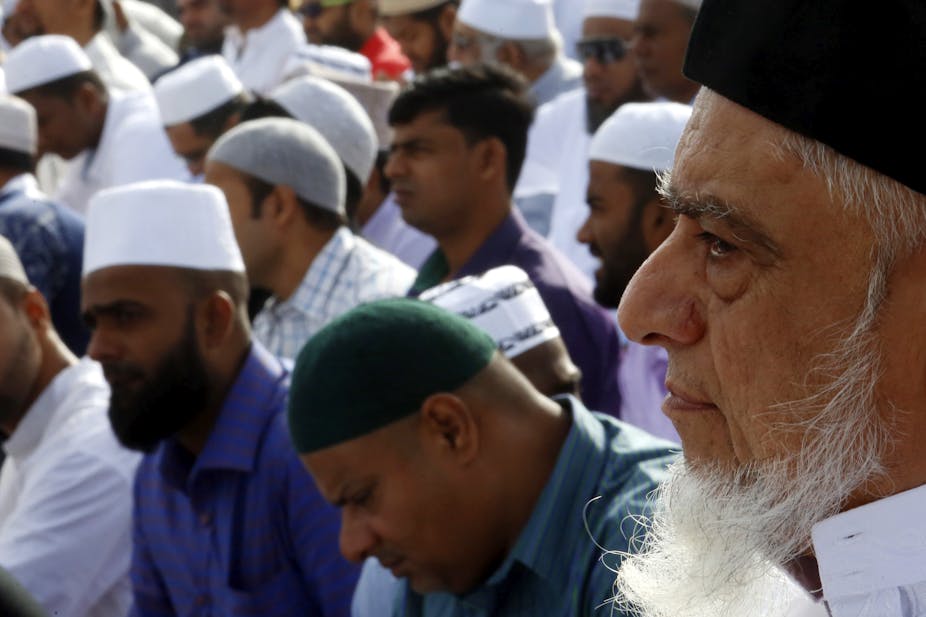
Many Muslim political leaders viewed Arabization and Wahhabism as tools of political legitimization
Intelligence-driven
kinetic means can only do so much. The acid test would be to prevent
the recurrence of the monstrosity that surfaced on the Easter Sunday. A
good part of that responsibility lies with the local Muslim community.
Their contribution to the success of intelligence operations has so far
been crucial. However, confronting the ideology that is at the heart of
Islamic terrorism needs greater perseverance and introspection, because
of all things, nihilistic Islamic terrorism is only a stone’s throw away
from Wahhabism, an austere doctrinaire version of Islam.

14 May 2019
Wahhabism is the ideological fountainhead of global Salafi Jihad. Local
Muslim leaders have been silent observers, tacit supporters and active
apologists of Wahhabism’s growing sway within their communities. Can
they fight back the ideology which they have tolerated all too long is
the big question.
In this second article of the two-part series, I argue the role of
Muslims in countering extremism begins with renouncing the hold of
Wahhabism in their communities.
Then he pleaded with them that the travel advisory on Sri Lanka be
lifted. A well-intentioned, yet rather a premature request at a time as
the locals themselves avoiding public places and sending their kids to
schools
In another meeting with Muslim community leaders at his residence, the
President vowed that “A few extremists cannot destroy peace and national
harmony and vow to defeat them. (He also urged the public not to
victimize the Muslim community for sins of a few)
There are competing claims as to how long it would take to defeat
Islamic extremism. War winning former Army Commander Field Marshal
Fonseka says it would take two years of concerted national strategy.
However, the President on his part is not being overly optimistic. The
violent manifestation of Islamic extremism in Sri Lanka is still
disorganized and has few willing stakeholders, and it is not a patch on
the sophisticated terrorism of the LTTE that Sri Lankan security forces
defeated conclusively. Sri Lanka can and will defeat and dismantle
violent terrorist cells in the coming months.
However, that would solve only a part, though still the most pressing part, of the problem.
The bigger problem is the radicalization and Arabization of local
Muslims through Wahhabism and Salafism, the austere and doctrinaire
version of Islam based on the literal interpretation of the Quran and
Hadith.
It aims to build a medieval Islamic Caliphate and spews contempt and
hate at the followers of other religions. Wahhabism’s spread in Sri
Lanka is accompanied by suffocating Arabized cultural and social norms
which have resulted in the gradual alienation of local Muslims from the
mainstream.
All that has been justified and propagated in the name of ‘True Islam’.
Muslims who self -alienated this way, planted date trees dotting the
highways to make it look like the desert Kingdom of Saudi Arabia, send
their Children to Wahhabi Madrasas (Instead of public schools) and
called the attendees of moderate Sufi mosques as infidels. Their women
retreated into Burkas. Their mosques, especially in the Muslim majority
areas the East and Puttalam, openly preached hatred towards Jews, the
West and India.
The violence that resurfaced on Easter Sunday is a product of an ideology that was tolerated by the Muslim elders and leaders, because, many would argue in private with their co-religionists, that it is ‘Real Islam’
Some of these activities were monitored by the intelligence apparatus
and reported to the government. But, all of them shrugged these warning
signs as ‘not our problem’ as long as hatred is not directed at home.
Such complacency was proved to be a fatal miscalculation.
Religious, social, and State bodies that cater to Muslims were
encroached by Wahhabis and apologists. Institutions such as the All
Ceylon Jamiyyathul Ulama (ACJU), the foremost religious body of Islamic
theologians are now dominated by Wahhabis. So is Department of Islamic
Affairs, which has given approval for 190 new, mainly Wahhabi mosques in
2015, 50 in 2016, and 80 in 2017. That is, in addition to many hundreds
of unregistered Wahhabi mosques.
All Ceylon Thawheed Jama’ath, its splinter group Sri Lanka Thawheed
Jama’ath, and later National Thawheed Jama’ath are torchbearers of
Wahhabi ideology.
They were all well financed by the Gulf countries, mainly by Qatar and
Saudi Arabia, both of which are engaged in a State sanctioned project to
spread Wahhabism globally.
Financial heft also allowed local Wahhabi groups to buy influence. Effectively, the Wahhabi narrative came to dominate and reshape the normative traditions of Sri Lankan Muslims.
Also, many Muslim political leaders viewed Arabization and Wahhabism as tools of political legitimization. The so-called Sharia Universities are the product of that understanding.
Tightening grasp of Wahhabism also made reforms exceedingly difficult. Take for instance the stalled efforts to reform discriminatory Muslim Marriage and Divorce Act.
A Report by a committee headed by Justice Saleem Marsoof on reforming the MMDA was handed over to the Ministry of Justice in January last year. Since then, All Ceylon Jamiyyathul Ulama, have opposed the reforms.
Financial heft also allowed local Wahhabi groups to buy influence. Effectively, the Wahhabi narrative came to dominate and reshape the normative traditions of Sri Lankan Muslims.
Also, many Muslim political leaders viewed Arabization and Wahhabism as tools of political legitimization. The so-called Sharia Universities are the product of that understanding.
Tightening grasp of Wahhabism also made reforms exceedingly difficult. Take for instance the stalled efforts to reform discriminatory Muslim Marriage and Divorce Act.
A Report by a committee headed by Justice Saleem Marsoof on reforming the MMDA was handed over to the Ministry of Justice in January last year. Since then, All Ceylon Jamiyyathul Ulama, have opposed the reforms.
The Muslim political leadership sided with the ACJU. Reforms were effectively halted.
Another bizarre example would explain the ideological pathways of the
type of people who dominate the social /cultural narrative of the local
Muslims.
Last year, Muslim community representatives including members of the All
Ceylon Jamiyyathul Ulama, All Ceylon YMMA Conference, Centre for
Islamic Studies and United Religions asked the Government to legalize
Female Genital Mutilation (FGM).
In their representation to the Parliamentary Committee on Women and Gender, the joint Muslim group observed:
“We wish to categorically state that the practice of female circumcision
is an obligatory Islamic duty, that it confers numerous benefits” and
urged no action is taken to ban FGM.
In short, the status quo in the Muslim society prior to the Easter Sunday attacks favoured Wahhabism at the expense of moderate Sufi Islam.
In short, the status quo in the Muslim society prior to the Easter Sunday attacks favoured Wahhabism at the expense of moderate Sufi Islam.
The extent of Wahhabi takeover is such that a substantial number of
local Muslims renounced Sufi Islam of their forefathers and decried
worship of Sufi Shrines.
It was that radicalizing impetus within the community that created
monsters. It is politically convenient to blame Islamic State for
ideological inspiration or claim ourselves as the victim of ‘global
terrorism’.
But, in reality, much of this extremism is homegrown. A few locals who
were inculcated with homegrown extremism graduated to become suicide
bombers.
Then they shared the infamy of their mass murder with the Islamic State.
Suicide terrorism was just a stone’s throw away from the virulent home
bred extremism of Wahhabism.
Muslim elders, organizations and most of the so-called liberal elites
lived in a state of denial all the while this extremism is making
inroads and reshaping lives of local Muslims.
Most of them defended the growing spread of Wahhabism. Over -hyped claims of Islamophobia also made it hard to discuss the real threat and implications of Islamization/radicalization in a sensible way.
Most of them defended the growing spread of Wahhabism. Over -hyped claims of Islamophobia also made it hard to discuss the real threat and implications of Islamization/radicalization in a sensible way.
Several Muslim community organizations, including Muslim Council of Sri
Lanka, Sufi Muslims of Kaththankudi and All Ceylon Jamiyyathul Ulama
reportedly alerted the Government Intelligence agencies and the Defence
Secretary on violent preaching of terrorist ring leader Mohammed Zaharan
Hashim.
They should be applauded for their contribution. However, how many of
them have genuinely acted to counter the spread of Wahhabism and
assorted non-violent extremism. (Probably the Muslim Council of Sri
Lanka tried to be a moderating influence, but what about the ACJU and
the Muslim political leadership?)
The violence that resurfaced on Easter Sunday is a product of an
ideology that was tolerated by the Muslim elders and leaders, because,
many would argue in private with their co-religionists, that it is ‘Real
Islam’.
It is this ideological narrative that Muslim leaders should confront and
defeat. Most of them were silent observers, tacit supporters or active
apologists of Wahhabism.
They should now rally to reverse its hold, confront its ideological
narrative, and expose and evict the holders of high offices, who have
nurtured Wahhabism’s spread in the country. They should also restore the
primacy of moderate Sri Lankan Islam.
They have helped the security forces arrest Islamic terrorists and are
actively cooperating in the on-going military/intelligence operations.
Still, they can better contribute to national security and communal
harmony by tackling the monstrosity of an alien ideology that inspired
terrorists. Only the local Muslim community can do that. All we can do
is to rely on them.
