Peace for the World World ! Your War Our Lives

The Dalai Lama
A Brief Colonial History Of Ceylon(SriLanka)
Sri Lanka: One Island Two Nations
A Brief Colonial History Of Ceylon(SriLanka)
Sri Lanka: One Island Two Nations
(Full Story)
Back to 500BC.

Saturday, May 2, 2020
Coronavirus and invasion of privacy
 1 May 2020
With the number of COVID-19 patients in Sri Lanka relatively fast
mounting, the behaviour of local media during the coverage of the
pandemic has also increasingly drawing flack from the defence and health
authorities. This media behaviour is under scrutiny again especially
after hundreds of Navy personnel fell victim to coronavirus, as  the
media coverage of the situation has started to reflect adversely on
them as well as on the activities of the armed forces who are engaged in
combating the pandemic.
the
media coverage of the situation has started to reflect adversely on
them as well as on the activities of the armed forces who are engaged in
combating the pandemic.
Three statements had been issued this week on the unethical behaviour of some media personnel and institutions that cover the COVID-19 situation and it is noteworthy that it was particularly the problems faced by the sailors and the authorities that had prompted all those statements.
The latest statement against the unethical behaviour of media has been made by Defence Secretary retired Major General Kamal Gunaratne on Wednesday. Although his statement had no direct reference to the media he was, in fact, dealing with an adverse effect on the lives of navy personnel and their families which has caused by the media.
the
media coverage of the situation has started to reflect adversely on
them as well as on the activities of the armed forces who are engaged in
combating the pandemic. Three statements had been issued this week on the unethical behaviour of some media personnel and institutions that cover the COVID-19 situation and it is noteworthy that it was particularly the problems faced by the sailors and the authorities that had prompted all those statements.
The latest statement against the unethical behaviour of media has been made by Defence Secretary retired Major General Kamal Gunaratne on Wednesday. Although his statement had no direct reference to the media he was, in fact, dealing with an adverse effect on the lives of navy personnel and their families which has caused by the media.
He had made a request to the public in his statement not to stigmatise
armed forces personnel, especially the sailors of the Sri Lanka Navy,
who had been infected while fighting to contain the spread of the virus,
and their families. “A number of sailors at the SLN Naval Base in
Welisara has been contracted with the virus. They have been exposed to
the virus while they were supporting the health authorities to find
people, who were suspected to be infected with the virus in Suduwella,
Ja-Ela. But, it is very unfortunate to see how people, whom they tried
to protect, have complained against them when some sailors had gone home
on leave,” he had lamented.
The extent to which the authorities have been hurt by the situation is well manifested by a remark by the Defence Secretary in his statement. He had said “these people have forgotten that the Tri-Forces personnel had saved them from terrorism, disasters like floods, landslides, tsunami and also man-made disasters risking their lives. But when they had fallen victim of this disaster people are going against them.”
The extent to which the authorities have been hurt by the situation is well manifested by a remark by the Defence Secretary in his statement. He had said “these people have forgotten that the Tri-Forces personnel had saved them from terrorism, disasters like floods, landslides, tsunami and also man-made disasters risking their lives. But when they had fallen victim of this disaster people are going against them.”
Another statement had been issued by the Defence Ministry on April 27
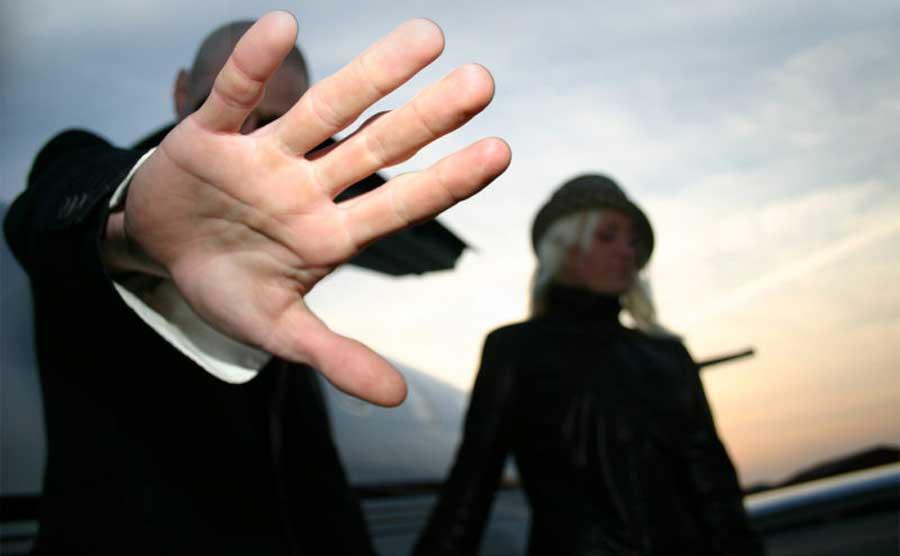
directly requesting “print and electronic media to respect the privacy
of coronavirus infected patients and refrain from shooting their places
of living and the scenes when the health authorities check their
houses.” It added “it has been a practice by some TV channels to show
the events of tracing corona suspects and issuing them health guidance
by Public Health Inspectors (PHIs) and Police officials during news
telecasts, other news- related programmes, in news and feature articles
in newspapers.”
"In most cases, blaming only the journalists alone is unfair by them, as it is the relevant health or police officials who invite journalists to accompany them when they venture out for tracking down contact persons of COVID-19 patients"
While stating that the Ministry is of the view that covering such events
would also cause inconvenience to health officials on duty, the
statement quoted the Defence Secretary as saying that protecting
patients’ privacy is important to encourage patients to come forward for
testing. In that statement too, he had requested media institutions to
educate respective journalists to refrain from moving together with
health officials in tracking coronavirus suspected persons or videoing
such events for their own health and also to respect the privacy of
patients and people who are being directed to quarantine centres.
The Third statement had been issued by the Centre for Journalism and
Education (CJE) on April 28 which said “it was unethical for camera
crews to forcefully film families of Sri Lanka Navy personnel being
quarantined by the Department of Health and urged all media institutions
and personnel to respect the privacy of individuals suspected of having
contracted COVID-19 when reporting on the pandemic. The CJE said that
certain media personnel had filmed the families of navy personnel
without their consent. They too had pointed out that these were families
of individuals fighting the pandemic on the frontlines, risking their
lives even without adequate protection to keep the rest of the country
safe.
However, these statements might create a wrong impression among the
people that journalist must protect the privacy of only the COVID-19
patients or would-be patients who are protecting people and hence
invading privacy of others could be tolerated. The impression might be
vindicated as some media personnel and institutions have been continuing
their behaviour that had been referred to in these statements, for a
long time. Besides, when some media outlets similarly invaded the
privacy of persons who had tested positive for noval coronavirus while
identifying their races as well, it was received a favourable response
from the society.
In most cases, blaming only the journalists alone is unfair by them, as it is the relevant health or police officials who invite journalists to accompany them when they venture out for tracking down contact persons of COVID-19 patients. Thus, ethics is violated unabated or unhindered, under the nose of the officials and thus far it was not viewed as something unacceptable.
In most cases, blaming only the journalists alone is unfair by them, as it is the relevant health or police officials who invite journalists to accompany them when they venture out for tracking down contact persons of COVID-19 patients. Thus, ethics is violated unabated or unhindered, under the nose of the officials and thus far it was not viewed as something unacceptable.
"The guidelines also suggested blurring the videos when showing footage of sensitive nature taken at funerals of those who died due to COVID-19. Yet, it is well known as to how much these guidelines were adhered to"
The problem had earlier prompted the Health Ministry as well to issue a
statement. In the wake of a controversy over the disposal of bodies of
persons who had died of COVID-19, the Ministry had issued a statement on
April 3 with guidelines to be adhered to by the media when reporting on
the novel coronavirus or COVID-19. Accordingly, journalists and media
institutions were required to refrain from mentioning race or religion
of persons infected with COVID-19 or of those who die of it, publishing
photographs or showing videos of those infected with COVID-19 without
their permission and reporting in a manner that causes hatred among
people, among others.
The guidelines also suggested blurring the videos when showing footage of sensitive nature taken at funerals of those who died due to COVID-19. Yet, it is well known as to how much these guidelines were adhered to.
This happens as waves, corresponding to the explosive or controversial situations occurring occasionally. The situation after the Easter Sunday Attacks was a case in point during which media was blamed even for the anti-Muslim riots in Northwestern Province and Minuwangoda.
The guidelines also suggested blurring the videos when showing footage of sensitive nature taken at funerals of those who died due to COVID-19. Yet, it is well known as to how much these guidelines were adhered to.
This happens as waves, corresponding to the explosive or controversial situations occurring occasionally. The situation after the Easter Sunday Attacks was a case in point during which media was blamed even for the anti-Muslim riots in Northwestern Province and Minuwangoda.
In fact, there is an argument among some journalists that identifying
persons who had contracted the virus and their houses would help others
to keep away from them. On the other hand, it is not the ignorance of
ethics that prompts some journalists to invade the privacy of others and
generalising the disease to a community which a patient belongs to, as
indicated by a recent inadvertent telecast of a scene at an interval of a
televised discussion. During a recent discussion on media ethics at the
Sri Lanka Foundation, a prominent journalist of a leading electronic
media station very proudly said that his organisation is not concerned
about ethics, as they do not want to curtail their freedom.
Media ethics is nothing but discipline of the profession. And hence it cannot be considered as a curtailment of media freedom since freedom is not a phenomenon without limits. It is also not something that has to be adhered to only on certain occasions, according to one’s likings or prejudices. It is an eternal process subject to public interest.
Media ethics is nothing but discipline of the profession. And hence it cannot be considered as a curtailment of media freedom since freedom is not a phenomenon without limits. It is also not something that has to be adhered to only on certain occasions, according to one’s likings or prejudices. It is an eternal process subject to public interest.
