Peace for the World World ! Your War Our Lives

The Dalai Lama
A Brief Colonial History Of Ceylon(SriLanka)
Sri Lanka: One Island Two Nations
A Brief Colonial History Of Ceylon(SriLanka)
Sri Lanka: One Island Two Nations
(Full Story)
Back to 500BC.

Wednesday, August 1, 2012
Chinese presence in Lanka threat to national security: Karuna
Wednesday, Aug 1, 2012 Agency: PTI

Terming reports of Chinese presence in Sri Lanka a threat to India’s national security, DMK chief M Karunanidhi today said the August 12 conference of the pro-Eelam body TESO would discuss it among other things and bring it to the attention of the Centre.
Citing reports in a section of the vernacular media, he alleged that Sri Lanka was setting up a “temporary camp,” with the assistance of the Chinese Navy in international waters near Dhanushkodi.
“Should not such issues, a threat to India’s security, be discussed and taken up with the Centre for a solution? We are holding TESO (Tamil Ealam Supporters’ Organisation) meeting for this purpose only (among others),” he said in a letter to party workers.
Explaining the rationale behind the first meet of the defunct organisation he founded in the 1980s and recently revived by him, Karunanidhi said the conference was an attempt at healing the “wounds sustained by Tamils,” due to the ethnic clash in Sri Lanka.
Union Ministers Sharad Pawar and Farooq Abdullah and JD (U) leader Sharad Yadav among a gamut of national and international leaders besides Tamil diaspora will participate in the meet, he added

Gota attempts to encroach on websites

 The Defence Ministry has undertaken a project to encroach into the websites that operate from overseas that have become a headache to the administration, reliable sources said.
Wednesday, 01 August 2012
The Defence Ministry has undertaken a project to encroach into the websites that operate from overseas that have become a headache to the administration, reliable sources said.
The programme that is being launched under the supervision of the Defence Secretary and would create URL web addressed similar to the sites that are operating overseas and when viewers try to access the websites operating from overseas, they would be directed to the duplicate website.
The project has already been successfully checked with the help of the Chinese government. The Defence Ministry has got down 12 Chinese technicians for this purpose. It is reliably learnt that these technicians are now engaged in establishing duplicate URL addresses.
However, the parties engaged in this endeavor are now at loggerheads and the attempt would be futile since the stories published in the websites that operate from overseas are instantly uploaded in social media networks like facebook and twitter.
The person who gave us the information said this project was likely to turn out to be another white elephant project of the government.
Wednesday 1 of August 2012
 (Lanka-e-News -31.July.2012, 11.55PM) Due to the supply of inferior quality fuel by the MaRa govt. , the Railways Dept . had incurred monumental losses as many of its railway engines have got damaged while the cranes in the Ports too have gone out of commission, according to reports. The trains which ran on the inferior fuel , had not been able to travel at the expected speed and had stalled on the tracks causing train delays to the detriment of all , specially the train commuters.
All the S10 and S11 trains driven by the Colombo electric power supply had ground to a total halt owing to this inferior quality fuel . In addition two railway engines driven by Maradana Loco electric power had also failed to perform.
By this afternoon (31) , over 15 engines have suffered damage .
In a functioning engine , there is one filter by the name of Sepa , and two ordinary filters. When one new filter is installed the train can run for about 300 hours. In most cases it is one filter that has to be discarded. But due to the inferior quality fuel, all the filters had to be replaced even before a 10 hour run. For each filter , the railways dept. has to spend Rs. 50,000/- of the people’s funds.
Due to the use of inferior fuel on power generating sets and two railway engines, they are in a state of repair and cannot be used. To purchase new filters for them , a huge sum of money has to be spent. Moreover , when a filter is being discarded , a large quantity of oil also goes waste – All these are waste of people’s monies.
To compound the confusion , the Ceylon petroleum Corp .(CPC) has received about 150 complaints from vehicle users charging that due to the use of inferior fuel their vehicles have suffered damage. 40 vehicles of the Govt.’s own health Ministry have also been damaged . The private bus operators association claims there are complaints that , over 50 buses had been adversely affected due to the usThe MaRa regime which drove the country into despair on a grave fuel crisis previously too by importing inferior quality fuel , has this time made no announcements because it is guilty of importing this inferior fuel from the same supplier who cheated the country in many millions by supplying inferior fuel.
In the circumstances , it is being questioned widely by the suffering people who have to pay for all the sins of the reckless rulers who are playing ducks and drakes with public funds whether the supplier is cheating or the supplier and the Govt. are getting together and cheating on the country.e of inferior fuel.
India blackouts affect half the country
Grids fail in northeast, leaving hundreds of millions in the dark
CBC News Jul 31, 2012


 World’s biggest blackout3:02
India’s energy crisis cascaded over half the country Tuesday when three of its regional grids collapsed, leaving hundreds of millions of people without government-supplied electricity in one of the world’s biggest-ever blackouts.
The outages left about 620 million people in the dark in about 20 states, though the Times of India newspaper reported that by 7:30 p.m. local time, around 75 per cent of the power had been restored in northern areas and about 40 per cent of eastern India was back to normal.
Hundreds of trains were stalled across the country and traffic lights went out, causing widespread traffic jams in New Delhi. Electric crematoria stopped operating, some with bodies half burnt, power officials said. Emergency workers rushed generators to coal mines to rescue miners trapped underground.
The Times of India reported that about 200 miners in the northeast were rescued in West Bengal in the evening, while another rescue operation was underway at Jharkhand to help 65 others trapped in a coal mine.
 Commuters wait for buses outside a Metro station after Delhi Metro rail services were disrupted following power outage in New Delhi on Tuesday. (Rajesh Kumar Singh/Associated Press)
The massive power failure — a day after a similar, but smaller power failure — has raised serious concerns about India’s outdated infrastructure and the government’s inability to meet its huge appetite for energy as the country aspires to become a regional economic superpower.
Power Minister Sushil Kumar Shinde blamed the new crisis on states taking more than their allotted share of electricity.
IMF urges Sri Lanka to look to India, China for exports
Wed Aug 1, 2012
 Aug 1 (Reuters) - The International Monetary Fund has urged Sri Lanka to focus more on sales to India and China to boost its faltering exports and support economic growth.
Sri Lanka’s exports accounted for 17.8 percent of gross domestic product last year, slumping from 33 percent in 2001, though export revenue has risen by 69 percent to $8.1 billion in absolute terms.
Koshy Mathai, the IMF resident representative for Sri Lanka and Maldives, said the exchange rate, high electricity prices and rigid labour laws could all account for the slowdown in export growth.
“We are not going to have economic success if we continue having exports declining relative to the size of economy. It is only with export growth, that the Sri Lankan economy is going to go forward,” Mathai told an exporter forum in Colombo late on Tuesday.
Despite its proximity to India, the United States and Europe still account for 60 percent of the the country’s exports, and economic slowdowns in those regions have resulted in a 5.4 percent fall in exports during the first five months of the year compared to the same period last year.
Sri Lanka’s May exports fell 15.1 percent year-on-year.
India accounted for just 4.9 percent of Sri Lanka’s total exports in 2011, led by machinery and equipment, animal fodder, spices and garments, while China accounted for only around 1 percent.
“Failing to take advantage of the opportunities provided by the economic growth by those areas (in China and India) today would be ashamed, would definitely be giving up an opportunity for Sri Lanka to go forward,” Mathai said.
The International Monetary Fund, which has just fully disbursed a $2.6 billion loan to Sri Lanka, said last month that it has begun talking with authorities in Colombo about arranging a new credit called an extended fund facility. (Reporting by Shihar Aneez)
(Lanka-e-News- 01.Aug.2012, 6.00PM) It has come to light now that the inferior diesel imported by the Ceylon petroleum Corporation (CPC) is from Whittall Co. of Singapore from whom inferior quality diesel was purchased on the earlier occasion too. Import from this Co. was banned three years ago, and a fine also had to be paid by it on account of supplying inferior diesel.Even before the Whittall Co. had paid the fine , diesel had again been imported from the very same Co. by the CPC.
The Gen. Secretary of the Jathika sevaka sangamaya (JSS) of the CPC , Ananda Palitha says, since this controversial inferior diesel import has been made a second time , the defense advanced that there was residue in the tanks is rendered untenable.
The Minister for petroleum , the notorious bluffer cum duffer Susil Premajayantha as on the previous occasion , in order to suppress the frauds , corruption and inefficiency in which this transaction is steeped has appointed a three member committee to inquire into this ,and has supposedly sent a sample of the inferior diesel to a foreign country for testing.
But what is most vexatious and perturbing from the point of view of the people who have to pay for the sins of the moronic Ministers and Govt. of Rajapakse is , why is the sample being sent for testing after the import , shouldn’t that have been done before ? they question. What prompted the Minister , Govt. and his officials to import this inferior diesel without testing the quality ahead , without ruining so many vehicles and equipments , let alone the colossal waste of public funds ?
The answer is obvious vis a vis the sordid and unscrupulous background of the MaRa regime.
The answer is obvious vis a vis the sordid and unscrupulous background of the MaRa regime.
Thilanga unhappy after being reprimanded by the President
Wednesday, 01 August 2012

The private members’ motion presented by Sumathipala states that the budget should be decided by a parliamentary select committee comprising representatives from all political parties in the House.
Sources said the President is angry due to the belief that Sumathipala has presented the motion as part of a conspiracy between the opposition political parties and a few governing party members to curtail the unlimited powers over public funds vested with him as the Finance Minister.
The President had called Sumathipala a conspirator and accused him of carrying out a “UNP contract.”
It is further learnt that Sumathipala is unhappy since his newspaper organization; Sumathi Publishers have taken extra precautions to ensure that stories against the President and his family are not published.
 Involve Civil Society In Implementing LLRC Action Plan


By making its response to the LLRC known in the form of an action plan, the government can be said to have finally clarified its position on the issue. Previously different members of the government spoke with different voices regarding the government’s attitude towards the LLRC. The government now can also be credited with coming up with an action plan that spells out in summary fashion what it intends to do and how to measure that progress. This opens the possibility of monitoring the government’s progress.
However, the National Peace Council is concerned that the contents of the action plan still remain beyond the reach of the masses of the people as the LLRC report itself is still not translated into the Sinhala and Tamil languages despite the passage of over 8 months since the report was released in the English language. Neither has the LLRC action plan itself been prepared in a manner that is easily comprehensible by the general public or been translated into the two official languages.
We believe that the LLRC report is a document that could serve as a blueprint for Sri Lanka’s renewal as a success story of post-war development, democracy and reconciliation. We call on the government to further develop the action plan in consultation with civil society and other sections of the polity and to make it a people-friendly document and one that is accessible to the people. NPC is willing to take the action plan to the grass roots level, Inform grass root communities of the plan and its process and assist the government to monitor how it is being carried out
Governing Council
 The National Peace Council is an independent and non partisan organization that works towards a negotiated political solution to the ethnic conflict in Sri Lanka. It has a vision of a peaceful and prosperous Sri Lanka in which the freedom, human rights and democratic rights of all the communities are respected. The policy of the National Peace Council is determined by its Governing Council of 20 members who are drawn from diverse walks of life and belong to all the main ethnic and religious communities in the country.
Burma: Government Forces Targeting Rohingya Muslims
 Abuses Follow Horrific June Violence Between Arakan Buddhists and Rohingya
AUGUST 1, 2012
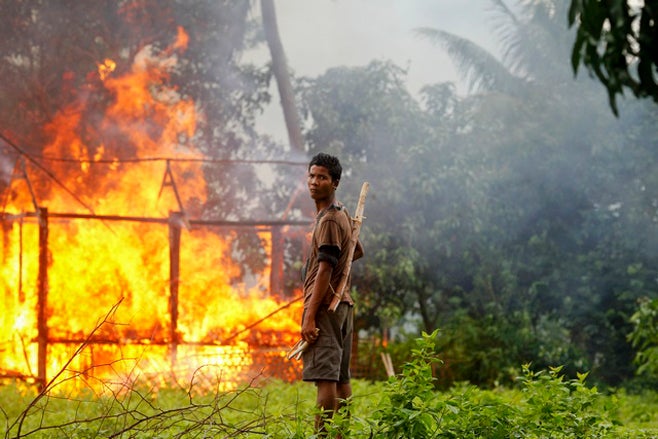
- An Arakan man holds homemade weapons in front of a house that was burned during fighting between Arakan Buddhist and Rohingya Muslim (and non-Rohingya Muslim) communities in Sittwe on June 10, 2012.© 2012 Reuters
RELATED MATERIALS:

Burmese security forces failed to protect the Arakan and Rohingya from each other and then unleashed a campaign of violence and mass roundups against the Rohingya. The government claims it is committed to ending ethnic strife and abuse, but recent events in Arakan State demonstrate that state-sponsored persecution and discrimination persist.
Brad Adams, Asia director
(Bangkok) – Burmese security forces committed killings, rape, and mass arrests against Rohingya Muslims after failing to protect both them and Arakan Buddhists during deadly sectarian violence in western Burma in June 2012. Government restrictions on humanitarian access to the Rohingya community have left many of the over 100,000 people displaced and in dire need of food, shelter, and medical care.
The 56-page report, “‘The Government Could Have Stopped This’: Sectarian Violence and Ensuing Abuses in Burma’s Arakan State,” describes how the Burmese authorities failed to take adequate measures to stem rising tensions and the outbreak of sectarian violence in Arakan State. Though the army eventually contained the mob violence in the state capital, Sittwe, both Arakan and Rohingya witnesses told Human Rights Watch that government forces stood by while members from each community attacked the other, razing villages and committing an unknown number of killings.
“Burmese security forces failed to protect the Arakan and Rohingya from each other and then unleashed a campaign of violence and mass roundups against the Rohingya,” said Brad Adams, Asia director at Human Rights Watch. “The government claims it is committed to ending ethnic strife and abuse, but recent events in Arakan State demonstrate that state-sponsored persecution and discrimination persist.”
“Burmese security forces failed to protect the Arakan and Rohingya from each other and then unleashed a campaign of violence and mass roundups against the Rohingya,” said Brad Adams, Asia director at Human Rights Watch. “The government claims it is committed to ending ethnic strife and abuse, but recent events in Arakan State demonstrate that state-sponsored persecution and discrimination persist.”
The Burmese government should take urgent measures to end abuses by their forces, ensure humanitarian access, and permit independent international monitors to visit affected areas and investigate abuses, Human Rights Watch said.
The “Government Could Have Stopped This,” is based on 57 interviews conducted in June and July with affected Arakan, Rohingya, and others in Burma and in Bangladesh, where Rohingya have sought refuge from the violence and abuses.
The violence erupted in early June after reports circulated that on May 28 an Arakan Buddhist woman was raped and killed in the town of Ramri by three Muslim men. Details of the crime were circulated locally in an incendiary pamphlet, and on June 3 a large group of Arakan villagers in Toungop stopped a bus and brutally killed 10 Muslims on board. Human Rights Watch confirmed that nearby local police and army stood by and watched but did not intervene. In retaliation, on June 8 thousands of Rohingya rioted in Maungdaw town after Friday prayers, killed an unknown number of Arakan, and destroyed considerable Arakan property. Violence between Rohingya and Arakan then swept through Sittwe and surrounding areas.
The violence erupted in early June after reports circulated that on May 28 an Arakan Buddhist woman was raped and killed in the town of Ramri by three Muslim men. Details of the crime were circulated locally in an incendiary pamphlet, and on June 3 a large group of Arakan villagers in Toungop stopped a bus and brutally killed 10 Muslims on board. Human Rights Watch confirmed that nearby local police and army stood by and watched but did not intervene. In retaliation, on June 8 thousands of Rohingya rioted in Maungdaw town after Friday prayers, killed an unknown number of Arakan, and destroyed considerable Arakan property. Violence between Rohingya and Arakan then swept through Sittwe and surrounding areas.
Marauding mobs from both Arakan and Rohingya communities stormed unsuspecting villages and neighborhoods, brutally killed residents, and destroyed and burned homes, shops, and houses of worship. With little to no government security present to stop the violence, people armed themselves with swords, spears, sticks, iron rods, knives, and other basic weaponry. Inflammatory anti-Muslim media accounts and local propaganda fanned the violence. Numerous Arakan and Rohingya who spoke to Human Rights Watch reached the conclusion that the authorities could have prevented the violence and the ensuing abuses could have been avoided. Full Story»>
Tuesday, July 31, 2012
Ganesan
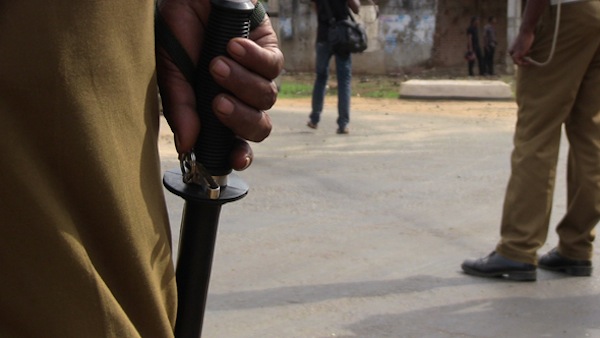
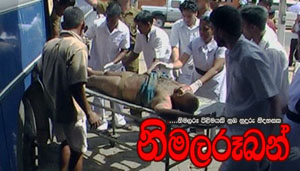
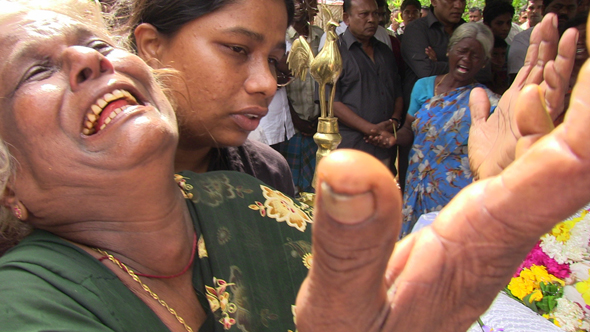
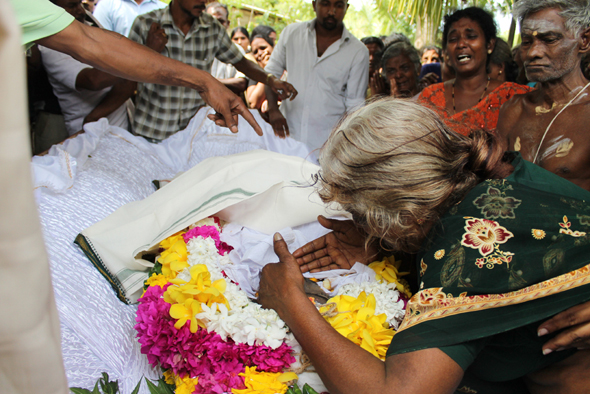
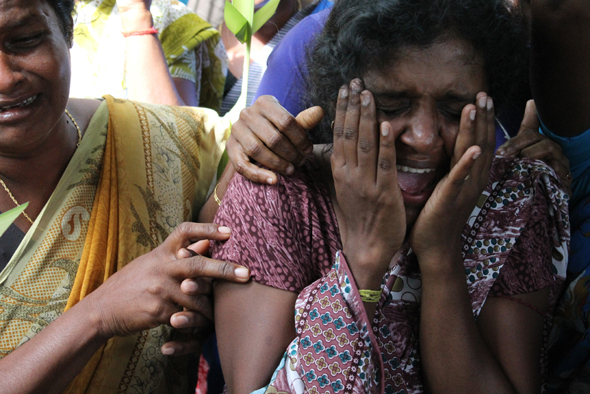
Nimalaruban: A damning murder, funeral and silence



It
is very likely readers of Sinhala mainstream print media have no clue who Ganesan Nimalaruban was, or exactly how he died. A simple
Google news or general web search suffices to highlight how poor even English
mainstream media coverage has been over the controversy surrounding his
death.
Vikalpa was present at the
funeral of Nimalaruban. They note that aside from a few provincial journalists
(whose news reports don’t make it to the actual print editions on the best of
days) there were no other seasoned journalists from any mainstream newspaper
present. Recall that the courts didn’t want
Nimalaruban’s body to be released to his parents, citing that,
Before
his body was released, in an open letter to the President, senior Tamil politicians and
civil society activists noted,
An
account of how he came to be killed can be read here. The
government and Police deny he was subject to torture. The Tamil National Alliance in early July “vowed it will take the
issue of the Tamil detainee who was assaulted to death by prison officials, and
the subsequent refusal to hand over the body to the family to the international
fora”. After Nimalaruban’s parents filed a Fundamental Rights violation
application and in a complete reversal of the government’s stand on the issue,
the Attorney-General informed the Supreme Court that Nimalaruban’s body would
be handed over to his parents on the 23rd of July.
Nimalaruban
was laid to rest on the 24th of July. Vikalpa‘s moving photos and video tell
their own story.
At
around 3 minutes into the video, there’s an incredibly powerful, and deeply
moving segment. The mother of the deceased has this to say in Tamil (translated
from here),

We
tweeted soon after Vikalpa published
the story of Nimalaruban’s funeral,
If
this is the first time you are reading the details of this story, seeing this
video footage and photos and realising the full horror of what the government
has tried to cover up, ask yourself whether this is a peace, three years after
the end of war, we can really be proud
of.
????????????????????????????????????????????????????????????????????
????????????????????????????????????????????????????????????????????


‘‘ඉදි ආප්ප කවපු මේ අතින් මම අද උඹට ‘වායික්කරිසි’ දානවා’’ අවසානයේ ගනේෂන් නිමලරුබන් නික්ම ගියේ ය.
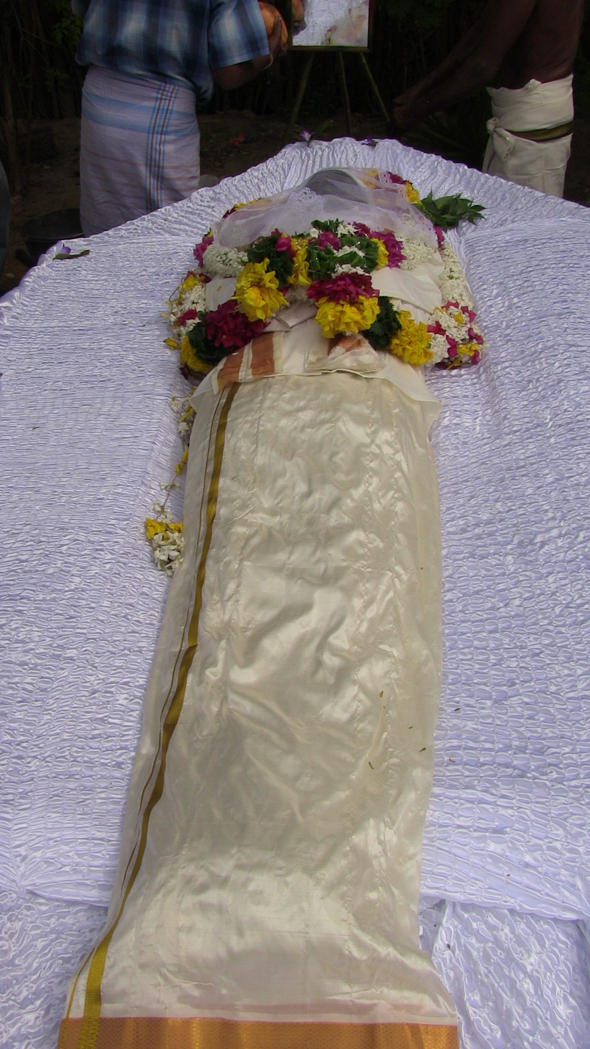
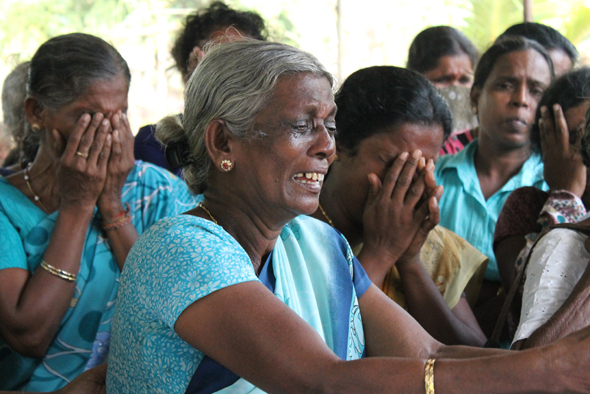
Brutally murdered Nimalruban was buried, finally...
Subscribe to:
Posts (Atom)