Peace for the World World ! Your War Our Lives

The Dalai Lama
A Brief Colonial History Of Ceylon(SriLanka)
Sri Lanka: One Island Two Nations
A Brief Colonial History Of Ceylon(SriLanka)
Sri Lanka: One Island Two Nations
(Full Story)
Back to 500BC.

Thursday, August 2, 2012
Sri Lanka: The Rise Of The Security Apparatus And The Decline Of The Criminal Justice System
By Sajeeva Samaranayake -August 1, 2012

Sajeeva Samaranayake
 It seems to me that the depth of our concern about children being abused is equally matched by the depth of our stupidity in responding to this problem. By stupid I mean that we are following a beaten track, like sincere pigs, without looking left or right. It seems to me that the depth of our concern about children being abused is equally matched by the depth of our stupidity in responding to this problem. By stupid I mean that we are following a beaten track, like sincere pigs, without looking left or right.
As ignorant adults we neglected these helpless children before they were abused. When there is a hue and cry about abuse we rush in with the police and drag the child into a criminal process which the child and his or her close relatives have no control over and cannot really understand. Sometimes the police themselves are not sure whether they should protect the child or the suspect. It all depends on the influence possessed by the suspect. In such cases (and they are not rare) there is a lot of confusion and disorder inside the police station because such suspects and their supporters are much more comfortable inside the station than innocent people.
If the suspect has no influence the law proceeds on its long course. Statements are recorded, JMO’s are harassed for medical reports and the file ends in the Attorney General’s Department to join thousands of similar companions pending disposal. By this time the child is forgotten again. Many other victims join the child in this state of misery. Starting with the child’s family and loved ones, the police officers, doctors, state counsel and finally magistrates and judges find themselves locked into a system where there are too many cases and too little time to finish their work. It is a baton relay that never ends – and this is no fun to run. The whole process has moved far away from the child – the original cause. Sensitive officials may suffer thinking of the seeming irrelevance of what they do. Mercifully none of them get to see too much of the child. There is simply no time for that.
I am not saying that the criminal process is irrelevant. It has been made irrelevant by a lack of independence, courage and a sense of direction by those at the helm.
When I referred to our ignorance above I was being neither derogatory nor Buddhist. Ignorance is our normal state until we start speaking to the avowed subject of our concern. When our interactions with the child are defined and shaped by the criminal process we give ourselves very little space and time to have a dialogue with the child. Having a video interview is good, but that is also in the service of the criminal process which has embarked on a long journey to punish the offender. Who is paying attention to the child whether s/he has injuries, whether s/he is hungry or thirsty, whether s/he is scared and lonely and wants to have a loved one with them? Many sympathetic police officers, doctors and magistrates do this – but they do this because they are sympathetic human beings; not because they are directed to do it by any law or procedure. Ultimately they can only do very little – because the child is NOT a case; the child is a human being.
After being abused the child and all the very important and powerful people (VIP’s) who have to do this and that with regard to the case come to a junction. One road is our beaten track that leads to the Police Station, JMO, Magistrate’s Court, Attorney General’s Office and finally the High Court. I must remind those who have forgotten that we took this road in 1995 by amending the Penal Code. The NCPA established in 1998 set up a dedicated Police Unit and made a great effort to stop the tide. It is honourable to try and fail. But it is dishonourable to take the same road again. The children suffered enough in the last 17 years as the adults bungled with their game of ‘justice.’
The road less travelled is of course the road taken by the child, most of the time ALONE. This may be to a Remand Home, a Children’s Home or to the child’s own home. Wherever the child is placed possibilities of further abuse and attempts to change the child’s version of the story can be made. There are many, many other issues to be looked into relating to the child’s health, schooling and future. Family members have to be advised to stay in touch and support the child. Most of this is very ordinary, human and social work. And it is not newsworthy for the press or the big institutions set up spending millions to ‘protect’ children. It will only become so if there is another allegation of abuse in the Home and then we will have the ‘child protection people’ coming in with their guns blazing, arresting and remanding people, getting their pictures into the press and going through that largely meaningless charade again.
We have to ask the children what they think of all this….
The real heroes of course are those who befriend these children in their time of dire need. The people who need our support are those simple officers and individuals who spend their time, day in and day out doing things to help the child. This work needs a lot of patience, kindness and thoughtfulness. It is a different way of being ‘tough’ on child abuse.
It is quite understandable for governments to show criminals who the boss is in this country. Governments have been trying to discipline people for centuries but they will never come across a better way of doing this than setting a personal example of good behaviour to others. If, and only if this standard of exemplary behaviour can be achieved by all the law enforcers and their god fathers the criminal law can be a serious exercise in our society. Not until then. So we will have to continue to struggle to keep the abusers away from children and struggle to help individual children in the future as well. My point is that if we cannot punish the offender or we have to wait years to do that we can still help the child TODAY.
In most of the ‘big’ cases which made the headlines recently if you take the road less travelled you will find that the child is still alone, still sad and neglected. Not only that; you will find that the poor man’s services like probation and social services are fighting a lone battle to help children with very little resources. The Probation service has to be re-organized. Some officers have too much work and some have too little. They are paid a travelling allowance of Rs. 2000 a month to visit families and carry out social inquiries. Like the midwives do today most of them simply get the children and families to come to them.
One day I was passing the Mirihana Police Ground to see about 50 nice blue Indian jeeps waiting to be sent to the police stations. We have more police officers today in the country than we have ever had. We must ask the children if they feel better protected.
This is the way to invest in suffering. The Ministry of Finance must ask itself what its role and function is in a society struggling to close the chapter of hatred and conflict. All forms of development that ignore children and families are suspect. A society cannot move one step forward without adults disciplining themselves to provide an example to all children. Till then our adults will remain children and children as a result will have to grow up much faster. Very soon they will be on the streets.
Recently when I spoke to a group of young adults they were very clear that the solution lies in better education to address our hearts and minds. They suggested that the best medium to use is the arts. We must keep talking to them because we have so little time left to live and they have so much more. It is their world we are destroying.
Going a little deeper into our ignorance we still believe that water flows from top to bottom. This is so in ignorant societies. In a society that starts learning the water goes from the bottom to the top; from children to adults; from the weak to the strong. When we start investing in learning about each other in this way this society will move away from all forms of violence.
* Sajeeva Samaranayake :Attorney at Law, LLB (Hons), LLM (Family Justice Studies – Merit) East Anglia; State Counsel 1994 – 2003; Child Protection Specialist – unicef Sri Lanka 2003 – 2008; Independent Consultant on Law and Child Protection 2009 onwards.
|

SRI LANKA: Will the Bar Association seriously defend the survival of the legal profession and judicial independence
August 2, 2012
The Sunday Times reported that the Bar Association of Sri Lanka (BASL) has decided to intervene in the contempt of court case filed by seven senior lawyers against Minister Rishad Bathuideen over the threats he is alleged to have made to the Mannar magistrate. Earlier these seven lawyers, Geoffrey Alagaratnam PC, Sunil Cooray, Lal Wijeyanayake, Chanrapala Kumarage, E.C. Feldano, Nalini Kamalika Manatunga and A.S.M. Perera initiated the contempt of court proceedings against the minister in the Court of Appeal. The Court of Appeal Judge, W.L. Ranjith Silva on Thursday issued a rule on Minister Bathuideen to appear in court on September 5 to show cause as to why he should not be punished for contempt of court for allegedly threatening the Mannar magistrate.The Asian Human Rights Commission welcomes the intervention of the BASL and at the same time repeats the call it has made on several occasions in previous years for the BASL to lead the fight against the virtual collapse of the rule of law in Sri Lanka and the threat this poses to the judiciary as well as to the very survival of the legal profession. There have been no arrests following the attack on the Mannar courts. Nor has the government taken any action to deal with the minister who is alleged to have been behind the threat to the Magistrate and the attack on the courts. The lawyers and judges who boycotted all the courts in protest against these attacks have demonstrated the utter frustration felt by all of them as well as the people of Sri Lanka over the serious crisis of law which affects every aspect of their lives as well as their properties. The basic rights that the Magna Carta assured for the people, the right to protection of personal liberties and property has been under threat in Sri Lanka for several years now. This is perhaps the first occasion on which the judges and the lawyers have spontaneously reacted by way of a boycott of courts. In fact, this should have happened quite a long time ago. It is reported that when, under the UNP regime stones were thrown at the Supreme Court judges, judges of the lower courts discussed the issue of boycotting courts in protest. Unfortunately that was prevented due to ill advice. However, had the judges and lawyers acted strongly at that stage the present impasse would not have happened. For years there have been many occasions when much more decisive intervention by the judges and lawyers to defend their own independence required a serious understanding of the situation and a well thought out strategy to retaliate against this threat to their very existence. Perhaps the former Chief Justice, Neville Samarakoon, who did realise how his former friend, President J.R. Jayewardene was undermining him and the whole judiciary may have done better by resigning or taking some dramatic stance than merely confining his protest to some strong words. In the period that followed much more leadership ability to defend the very system of the judiciary should have come from the country's senior judges. In India the Supreme Court clearly comprehended the authoritarian ambitions of Indira Gandhi and played a decisive role in defeating her schemes, thus protecting the country's rule of law and democratic system. The Supreme Court of India also defeated the attempt by the right wing BJP government in their attempt to reform the basic structure of the Indian Constitution. The court bravely held that no government has the authority to undermine the basic structure of democracy as enshrined in the Indian Constitution. In Sri Lanka President Jayewardene did undermine the basic structure of the country's democracy through the 1978 Constitution. What became of Sri Lanka thereafter has its ultimate root in this altering of the country's basic constitutional structure and replacing it with a basic structure that is undemocratic and which undermines the rule of law. There were times when even the Chief Justices collaborated with the executive presidents to further undermine the very basis of the existence of the law in Sri Lanka. The dark period under the former Chief Justice, Sarath Silva, who acted to fulfill the ambitions of the then executive president, Chandrika Kumaratunga has left insurmountable obstacles for the recovery of the system of the rule of law and democracy. His fallout with incumbent executive president did not contribute in any way to undo the enormous damage that was done to the basic structure of the Sri Lankan democratic system. The deformation of the country's basic structure was brought to even higher levels with the adoption of the 18th Amendment to the Constitution by the government of Mahinda Rajapakse. So many actions have thereafter been taken to complete the course of erasing whatever might remain of the democratic tradition. The virtual subordination of the country to a public security system with no respect for personal liberties or property rights of the citizens has advanced in recent years. Throughout all these crises the attempt by the judiciary as well as the legal profession under the leadership of the BASL has no proud moment to record. Perhaps the only light at the end of the tunnel was this boycott which came as a reaction to the attacks on the Mannar Courts. Perhaps the prevalence of an overall situation of the conflict between the Sri Lankan government and the LTTE has provided a useful background for the governments in power to allow curtailment of the serious resistance of democratic forces against the authoritarian course they are taking. Some may say that things have gone too far and now it is too late for any attempts at reversal. No doubt there is considerable truth in such perceptions. However, the very survival of the judiciary and the legal profession are at stake. Particularly the younger generations entering these professions can see quite clearly as to how they are trapped and how their future is threatened. There is the example of the lawyers in Pakistan who fought a successful fight against the subjugation of the judiciary and the legal profession under several military regimes. There is much to be learned from their brave and courageous struggle. The lawyers and judges in Sri Lanka must face their own destinies with seriousness; will they be doomed to an existence of subjugation under an authoritarian system or will they fight back to regain the basic structure of democracy and the rule of law that has been severely undermined. |
Wednesday, August 1, 2012
Sri Lanka Tourism

Invitation for a Discussion
Rev. Bishop, Rev. Father, Rev. Sister, Brother, Sister,
Fisher people in many areas in the northern province are facing serious difficulties on their living, livelihoods, and occupations due to various issues pertaining to them. At the same time the situation become further deteriorated due to the Indian trawlers which are poaching in to the SL waters mainly in the northern sea of the SL exclusive economic zone.
National Fisheries Solidarity Movement(NAFSO) has been involving to find a solution on this issue with promoting people to people dialogue between SL fishermen and Indian fishermen since 2002. The struggles of northern province fishermen through the alliance of northern province fisher people have become a standstill as their voice is not heard the policy makers and fisheries governing bodies. Situation became further deteriorated as newly elected Tamil Nadu government consider the SL-India fisheries issue as a political leverage to pressure SL government. So, there is a serious need for an intervention as concern citizens both north and south together.
In this context, we as NAFSO want to implement a dialogue between the North and South people who are concerned the situation of people in the war affected areas.
We have organized a meeting to discuss about the plans on above purpose at 10 am on 21st of July 2012 in NAFSO office, Negombo.
You are cordially invite to attend thus meeting.
Thank you,
Anthony Jesudasan
Coordinator-People to People Dialogue,
NAFSO
The struggle to go home in post war Sri Lanka: The story of Mullikulam


In 2011, a young Advanced Level student from Mullikulam in the district of Mannar, living as an Internally Displaced Person (IDP) in a camp in Thalvupadu, Mannar, shared with me an assignment she had done about her village and effects of displacement. She proudly described the richness of her hometown in terms of natural resources, culture and traditions. But soon, her mood turned to one of despair as she asked me and a priest who was accompanying me, when they could go home.


Ruki-1 Aug, 2012
Photo courtesy National Fisheries Solidarity Movement

Groundviews
In 2011, a young Advanced Level student from Mullikulam in the district of Mannar, living as an Internally Displaced Person (IDP) in a camp in Thalvupadu, Mannar, shared with me an assignment she had done about her village and effects of displacement. She proudly described the richness of her hometown in terms of natural resources, culture and traditions. But soon, her mood turned to one of despair as she asked me and a priest who was accompanying me, when they could go home.
Neither of us had an answer for her. We were both aware that Mullikulam had been under military occupation since September 2007. We have been visiting the people of Mullikulam on a regular basis since the time they were forcibly evicted from their village by the military, having being given very little hope of returning.
But inspired by the loving manner in which the villagers spoke about their village, and the teenager’s efforts to document the rich history of the village, the priest and I thought we could perhaps assist these villagers to write the story of their village. Both, the villagers and the Bishop of Mannar welcomed the idea, and pledged their continued support. I was working with Law & Society Trust (LST) at that time, and so approached two trusted and committed friends to join my team at LST, in carrying out hands-on research and writing. They assisted with documenting the story of the village, working closely with the villagers and Church leaders. In the process, we became friends and became involved in their struggle to return home.
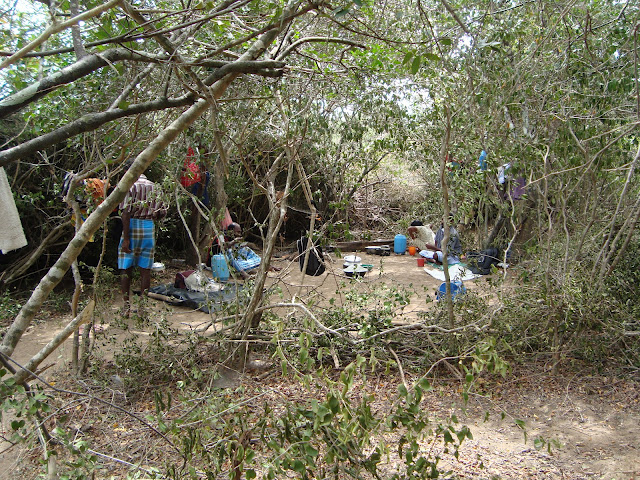
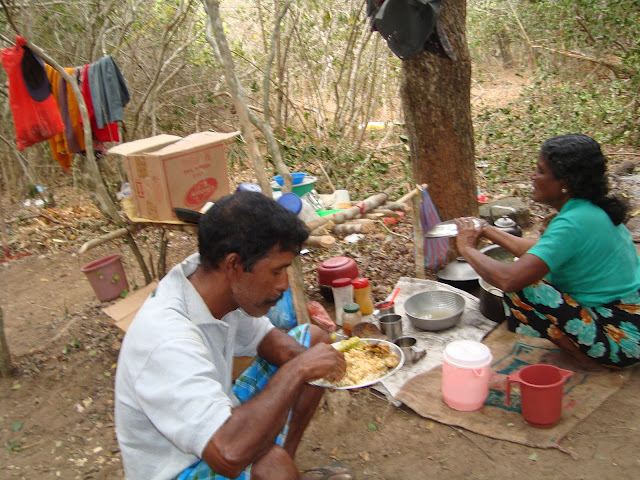
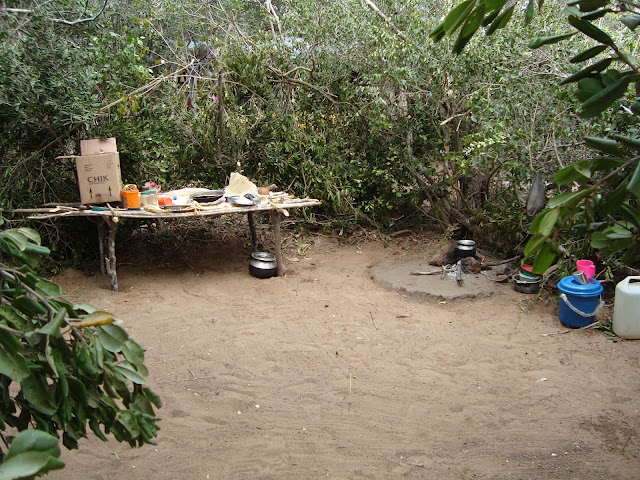
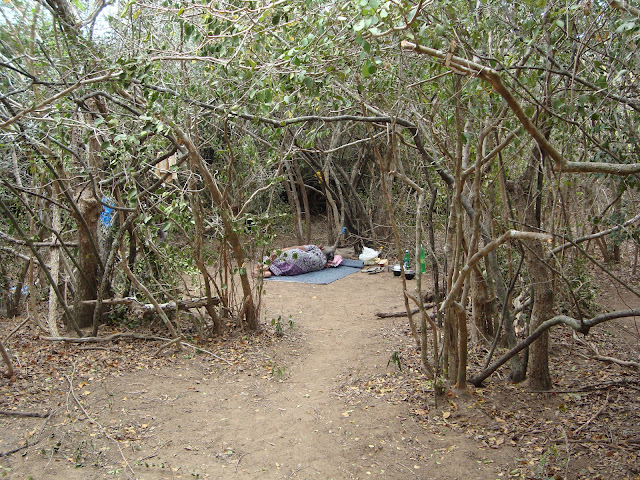
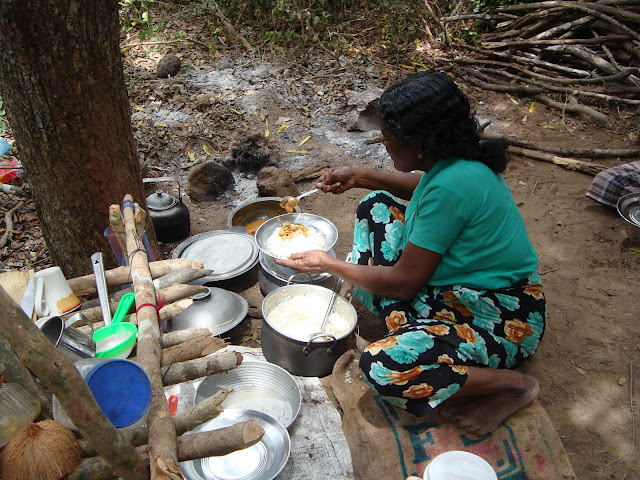


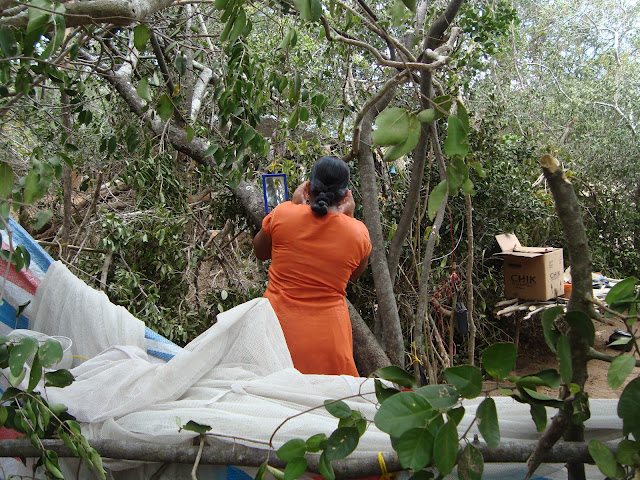
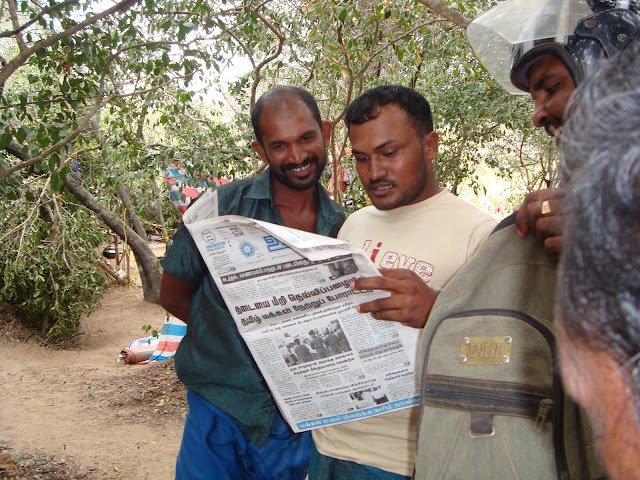
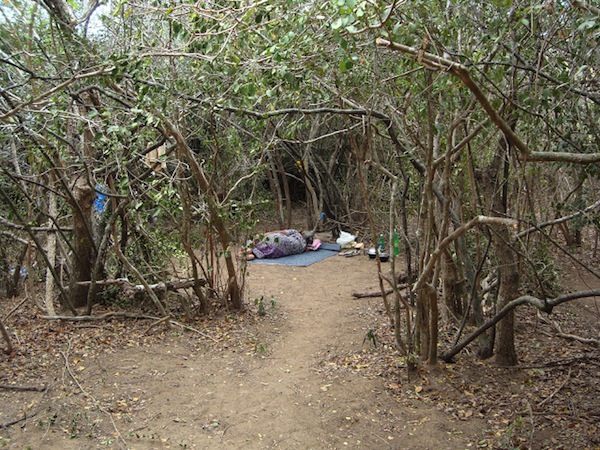
Photo courtesy National Fisheries Solidarity Movement
GTF Says Mistrust Among Communities Growing
Tuesday, July 31, 2012 The Global Tamil Forum (GTF), an organization representing the Tamil Diaspora, says the mistrust between the communities in Sri Lanka is growing as a result of a few incidents reported in the country recently.
GTF has over the past few years had meetings on Sri Lanka with key figures of international governments including US Assistant Secretary for South and Central Asian Affairs Robert Blake, British Labour and Conservative party members including some ministers and Norwegian government officials.
“Straight after the end of the armed conflict in 2009, sections of the Diaspora successfully conducted a democratic referendum in many countries where the Tamil Diaspora has a large presence, calling to re-mandate the ‘1976 Vaddukoddai Resolution’ which called for separation. Unless the Government of Sri Lanka finds an acceptable political solution to the long lasting Tamil question and grievances in that island, the call for such a state will grow from strength to strength,” GTF spokesperson Suren Surendiran said.
Surendiran says the Tamils in Sri Lanka should be made to feel free to speak and feel safe to raise their children without fear, their democratic rights must be restored without any restrictions including constitutional restrictions, there should be an end to army occupation of the north and east and the Prevention of Terrorism Act (PTA) should be revoked.
“Tamils in Sri Lanka have experienced 64 years of discrimination and oppression by successive governments of all shades. Deriving a political solution requires leadership, political will and courage. Three years since the end of the war has past, there has been no significant steps taken by the Rajapaksa Regime to come up with a political solution. Successive Sinhala Leaders and governments since independence like President Rajapaksa and his government has mislead, missed opportunities and not demonstrated sincerity in resolving this national question for the past 64 years,” he said.
He says none of the past leaders ever had the courage or wisdom to explain properly to the people of all communities that finding a practical, feasible and acceptable solution to the genuine Tamil grievances will benefit all communities and perhaps give a decent chance for all people to prosper and live peacefully as friendly neighbors.
“Instead every leader and government since independence without exception has abused the situation and circumstances to their own advantage. I would like to acknowledge that at different times in the past, Tamils and Tamil leaders too could have dealt with matters differently. It is now up to the people of all communities of that island living inside or outside to come together to act responsibly rather than believing or expecting people like Rajapaksa or others to resolve these fundamental issues before it’s too late,” he said. The GTF called on the government to reveal the names of several people who were arrested during and soon after the war under emergency regulations and are being held without proper legal process and for them to have access to legal counsel, their families and humanitarian agencies.
Surendiran said those people should either be charged under the law of the land or be released forthwith. He also said that the government must stop sponsored colonisation including “land grabbing” which is being reported in the North and East of the island.
Surendiran said that the government must also disarm paramilitary groups and bring law and order to the whole of the island, the people must have their lands and homes back and they should be resettled where they originally lived, there should be structured and well funded rehabilitation and resettlement programmes implemented without too much government interference or corruption and reconstruction programmes must be implemented in the war affected areas.
“We want the disparity in development between the regions of the island to be minimised, basic priorities of all people (e.g. education, health, employment etc.) to be treated as priorities and dealt without corruption. We want justice for all the wrongs that were done to our people in the name of the war against terrorism. Probe allegations of war crimes and crimes against humanity against both parties to the armed conflict by an independent international body. Just as we accept that there is a Sinhala Nation, accept that there is a Tamil Nation too in that island,” he said.
He also said that a credible and genuine political process should be initiated with international sponsorship, unlike the ones that the government introduces when pressure mounts to seek a durable political settlement to resolve the long standing genuine grievances of the Tamil people and all people.
“We want all of the above to be a part of the process that will lay the foundations for a long lasting reconciliation process that will enable people to live side by side, as friendly neighbours. Above all, we do not want the Sinhala people to feel that they are outcasts for the colossal mistakes and wrongdoings of a few in the government and the military,” he said.
Meanwhile Surendiran dismissed the idea that Sri Lanka’s biggest neighbour India was not exerting pressure on the government to address Tamil concerns.
“Remember, India voted in favour of the US and forty other countries sponsored the UN Resolution at the UNHRC in March 2012. India could have easily abstained or even voted against,” he said.
Surendiran also dismissed allegations that the Global Tamil Forum was one sided and focused only on allegations against the government.
“In every single one of GTF’s formal statements to any media, international governments and non-governmental institutions, we have maintained the call for an international independent investigation into alleged war crimes, breaches of international laws and international humanitarian laws by both sides,” he said. Surendiran also warned that eventually those guilty of committing alleged war crimes in Sri Lanka will be held accountable by the international community.
“It is not about whether but when? – It’s just a matter of time. When international laws and Geneva conventions are breached, these matters do go through due process to its legal conclusions. To maintain law and order and to maintain international governance there are mechanisms, processes and systems in place which will eventually catch up with the perpetrators. Charles Taylor and Slobodan Milošević are a few recent examples of similar cases,” he said. (ER)
MaRa’s alternative united opposition – Ali baba’s thieves planted in opposition exposed
Wednesday 1 of August 2012

 (Lanka-e-News -31.July.2012, 8.00PM) The MaRa regime and a group of evil conspirators within the opposition who are adding fuel to the hell fire that is being kindled by MaRa are these days devoting full time to their efforts to create an alternative all party opposition against the currently existing all party opposition comprising six parties which includes the UNP and the TNA, according to reports.
Because the MaRa regime is aware that winning the upcoming PC elections is no easy task contrary to what the MaRa regime thought , and there are signals of defeat , the regime in desperation is accelerating the creation of the alternative joint opposition .
By now has become abundantly clear that the MaRa regime is not surviving because of its efficient administration but on dividing the opposition parties by subtle means and subterfuges. This is a long term conspiracy of the MaRa regime to infiltrate the opposition. Every time there is a political storm brewing within the Govt. , the regime activates the pro MaRa satans within the opposition and tides over its crises.
Last December 19th when the UNP successfully got down over 25000 supporters for the release of Fonseka , the following day , the MaRa regime succeeded in getting Grero into its camp . This clearly illustrated how well the pro MaRa satans within the UNP can be made to dance like puppets to the tune of Mara.
These are deadly satans that are more contagious than the rotten rambuttans notorious for spreading diseases.
One of the UNP M .P.s who was nursed and nurtured in this pro MaRa satanic traditions for some time , is solemnly vowing that he will not somersault into the MaRa camp.
But according to reports reaching Lanka e news, this bloke who had been dancing the devil to the detriment of the UNP for sometime after acquiring the satanic traits promoted by MaRa , had refused to accept the monitoring M P post offered by MaRa who had declined anything better for this satan who had promised to switch loyalties. This bloke had asked for a Minister post. ‘Even after attacking yourself , your family and Gotabaya so much , can I know what is the monitoring MP post you are going to give?’ this MaRa’s satan had questioned. z
It is evident from this , the pro MaRa satan MPs created by the regime within the UNP are enacting a spurious drama when attacking the MaRa regime.
In any case , since no decision was reached on this sordid deal between Ali Baba and one of his thieves , MaRa has plotted to have this thief planted in the opposition among Ranil, Sambanthan , Mano, Siritunge,Nava Sihala urumaya who have formed the joint opposition , and entrusted him with the task of sabotaging their actions via hole and corner methods.
Accordingly , another alternative opposition is to be formed by MaRa himself . All those puppets planted by MaRa within the opposition will have a role to play in that show. In such an event their double acting talents developed this long will stand them in good stead.
Wednesday 1 of August 2012
 (Lanka-e-News -31.July.2012, 8.00PM) The MaRa regime and a group of evil conspirators within the opposition who are adding fuel to the hell fire that is being kindled by MaRa are these days devoting full time to their efforts to create an alternative all party opposition against the currently existing all party opposition comprising six parties which includes the UNP and the TNA, according to reports.
Because the MaRa regime is aware that winning the upcoming PC elections is no easy task contrary to what the MaRa regime thought , and there are signals of defeat , the regime in desperation is accelerating the creation of the alternative joint opposition .
By now has become abundantly clear that the MaRa regime is not surviving because of its efficient administration but on dividing the opposition parties by subtle means and subterfuges. This is a long term conspiracy of the MaRa regime to infiltrate the opposition. Every time there is a political storm brewing within the Govt. , the regime activates the pro MaRa satans within the opposition and tides over its crises.
Last December 19th when the UNP successfully got down over 25000 supporters for the release of Fonseka , the following day , the MaRa regime succeeded in getting Grero into its camp . This clearly illustrated how well the pro MaRa satans within the UNP can be made to dance like puppets to the tune of Mara.
These are deadly satans that are more contagious than the rotten rambuttans notorious for spreading diseases.
One of the UNP M .P.s who was nursed and nurtured in this pro MaRa satanic traditions for some time , is solemnly vowing that he will not somersault into the MaRa camp.
But according to reports reaching Lanka e news, this bloke who had been dancing the devil to the detriment of the UNP for sometime after acquiring the satanic traits promoted by MaRa , had refused to accept the monitoring M P post offered by MaRa who had declined anything better for this satan who had promised to switch loyalties. This bloke had asked for a Minister post. ‘Even after attacking yourself , your family and Gotabaya so much , can I know what is the monitoring MP post you are going to give?’ this MaRa’s satan had questioned. z
It is evident from this , the pro MaRa satan MPs created by the regime within the UNP are enacting a spurious drama when attacking the MaRa regime.
In any case , since no decision was reached on this sordid deal between Ali Baba and one of his thieves , MaRa has plotted to have this thief planted in the opposition among Ranil, Sambanthan , Mano, Siritunge,Nava Sihala urumaya who have formed the joint opposition , and entrusted him with the task of sabotaging their actions via hole and corner methods.
Accordingly , another alternative opposition is to be formed by MaRa himself . All those puppets planted by MaRa within the opposition will have a role to play in that show. In such an event their double acting talents developed this long will stand them in good stead.
Killing of Pattani Razeek
Sri Lanka’s Release of Key Suspect in the killing of Human Rights Defender Pattani Razeek Questionable
A Statement issued by the FORUM ASIA

 (August 01, 2012, Bangkok, Sri Lanka Guardian)Asian Forum for Human Rights and Development (FORUM-ASIA) is deeply concerned over the news of the release of Nawshaad, one of the key suspects of the abduction and killing of human rights defender Mr. Pattani Razeek in Sri Lanka.
“We fear that the release of the key suspect may lead to interference of the evidence and witnesses, especially since the police have not made public the investigation results,” said the Bangkok based regional human rights group. It is widely speculated that Nawshaad may have been released due to influence from Minister Rishard Bathiudeen, with whom Nawshaad had admitted to be closely associated.
P. Razeek was disappeared on 11 February 2010. After much delay in the police investigation, his body was only found and exhumed on 29 July 2011 by the police in Kavathamunai, Oddamavadi, Valaichenai. P. Razeek was the Managing Trustee of the Community Trust Fund (CTF) and represented the CTF in the executive committee of FORUM-ASIA.
“This development is frustrating news on the eve of the first anniversary of the discovery of Razeek’s body,” said Yap Swee Seng, executive director of FORUM-ASIA.”While the only identified suspects are at large, Razeek’s family and lawyer have not been given access to the post-mortem report and DNA test report that have vital information on the truth behind his murder,” he added.
Razeek’s body was sent to Batticaloa Hospital on 28 July 2011 for post-mortem. The post-mortem was completed on 2 August 2011 with the body released to the family on the same day. Samples of Mr. Razeek’s teeth, skin, hair etc were taken by the Colombo Crimes Division and sent to the Gene Tech Lab for DNA testing on 4 August 2001. Mr. Razeek’s son, Riskhan supplied blood to the Gene Tech Lab on 8 August 2011. Stomach samples from Mr. Razeek’s body were sent to the Government Analyst on 5 August 2011.
“There have been continuous demands from Razeek’s family and human rights groups inside and outside Sri Lanka for the arrest and interrogation of others who are linked to this heinous abduction and killing. Instead, both key suspects have now been released, which reflects badly on the commitment of the Sri Lankan authorities to tackle impunity in serious human rights abuses especially when it is politically-linked,” said Yap.
Human rights groups demand more to be called in for the investigation in the case. “The police should also investigate Irshard, the Parliamentary Secretary to Minister Rishard Bathiudeen, who stated publicly in October 2010 that Razeek was held by the Defence Ministry, the persons travelling in the vehicle with another key suspect Musdeen, in which Razeek was abducted, and the persons travelling with suspect Nowshaadh, who admitted to meeting with Razeek in Polonnaruwa on the day that he disappeared.”
Human rights groups also urge the police to investigate the possible involvement of Minister Bathiudeen as the key suspect Nowshaadh had revealed that on the day that he met Razeek before his disappearance, he was travelling together with several others in a vehicle belonging to the Resettlement Ministry, of which Bathiudeen was the Minister of Resettlement during the time Razeek was abducted.
25 Years On, IPKF Awaits A Fitting Tribute Back Home
By Ashok Mehta -
 This day, 25 years ago, the India-Sri Lanka Accord (ISLA) was signed by then Prime Minister Rajiv Gandhi and President Junius Jayawardene to end the ethnic conflict in Sri Lanka peacefully. India willy-nilly became the guarantor for the Indian Peace Keeping Force (IPKF) disarming the LTTE in lieu of Sri Lanka devolving power to the minority Tamils.

By Ashok Mehta -
This day, 25 years ago, the India-Sri Lanka Accord (ISLA) was signed by then Prime Minister Rajiv Gandhi and President Junius Jayawardene to end the ethnic conflict in Sri Lanka peacefully. India willy-nilly became the guarantor for the Indian Peace Keeping Force (IPKF) disarming the LTTE in lieu of Sri Lanka devolving power to the minority Tamils.
India-Sri Lanka Accord (ISLA) was signed by then Prime Minister Rajiv Gandhi and President Junius Jayawardene
Invited by Sri Lanka, IPKF became the instrument for implementing ISLA. Two and a half years after the accord, with 1200 soldiers lost and nearly 2500 wounded, the IPKF was unceremoniously withdrawn with ISLA in tatters. Then Tamil Nadu CM M Karunanidhi renamed the IPKF as ITKF — Indian Tamil Killing Force. That is the residual public perception of India’s first out-of-area military intervention and coercive diplomacy.
Three years ago, with India’s passive and active help, Sri Lanka finally disarmed the LTTE through a comprehensive military defeat but the ethnic question, the rationale for ISLA and IPKF, remains unresolved. In a letter written to the author after the military victory, a serving Sri Lanka army commander wrote: “The work started by you has been finished by us.” Lt Gen Hamilton Wanasinghe, the Sri Lanka artillery (SLA) chief during the IPKF days, had earlier written in a letter that “were India to leave us alone, Sri Lanka would sort out the LTTE.”
Not without its inherent shortcomings, especially with one hand tied at the back, the IPKF was made the scapegoat for the failure of India’s coercive diplomacy. New Delhi’s decision to intervene in Sri Lanka was triggered by overarching strategic reasons: the presence of foreign military and intelligence agencies inimical to India; domestic politics in Tamil Nadu; the dangerous internal security situation likely to arise in south India from the Sri Lankan army operations against the LTTE; and generally not mentioned — deflecting attention from the Bofors scam.
The ISLA ceremony in Colombo was marked by the assault on Gandhi by a Sri Lankan sailor of the Honour Guard. Dissent within the United National Party government over ISLA was suppressed. Both Jayewardene and LTTE supremo Prabhakaran were inveigled into accepting the accord, though some claim it was the other way round. India was drawn into a trap to do Colombo’s dirty work.
The ISLA was signed in great haste with India becoming not only the signatory but also its guarantor. President Jayewardene was strangely nominated CinC of IPKF which was dispatched with equal haste, lack of preparedness and abysmal intelligence. The flawed assessment claimed that the LTTE would surrender their arms whereas it waged a well-planned insurgency which completely surprised the IPKF.
Lacking forethought, a clear mandate, proper contingency planning, a decisive chain of command and an exit policy, the IPKF arrived with much fanfare in Jaffna. Absence of a political consensus and popular support at home were to compound its problems. For example, no one had factored in that ‘friend’ LTTE would turn foe and that elections in both countries in 1989 would result in change of governments. Conscientous objector, Ranasinghe Premadasabecame president and soon did a deal with Prabhakaran to evict the IPKF. As CinC, he ordered it to withdraw— or face the SLA.
Despite these enormous hurdles, IPKF did a commendable job: prevented Eelam and the breakup of Sri Lanka, with India underwriting its sovereignty and territorial integrity; restored the democratic process and institutions in the Tamil north and east, illustrated by holding of three elections; maintained the merger of the north and east through ISLA enabled the 13th amendment and formation of the northeast provincial council which gave Tamils the first taste of self governance. And, most of all, while IPKF weakened the LTTE, it allowed the SLA to defeat the Janatha Vimukthi Peramuna urban insurgency in the south.
The month-long conventional battle of Jaffna and the 20-month short counter-insurgency campaign produced tactical lessons for the Indian Army, especially from LTTE’s brilliant use of IEDs which were responsible for 70% of IPKF casualties. The Indian government blundered over its political calculations on time and resources required to alter the behaviour of the LTTE. Lack of a cohesive policy at the apex level and inadequate coordination at the operational level robbed the IPKF of greater success in its mission. Unfortunately, the lessons of the expeditionary campaign, like previous military encounters, lie buried in government closets.
Protesting Buddhist monks outside the Indian high commission in Colombo have demonstrated Lanka’s prescient India policy: after the deal with Prabhakaran in 1989, their placards read ‘IPKF go back’; following the catastrophic defeat of SLA at Elephant Pass in 2000 it was ‘IPKF come back’. And during the military rout of the LTTE in 2009, ‘IPKF stay out’. Still, Sri Lanka has constructed a memorial to the IPKF in the heart of Colombo. India not doing the same is the ultimate ignominy for the IPKF.
The author is a retired major general of the Indian Army, a former GOC IPKF South and founder member of Defence Planning Staff
The Times of India
Sri Lanka briefs diplomats on LLRC action plan
 Lesson Plan
Sri Lanka has nearly completed the resettlement of people displaced by the war, de-mining the former war zone, and rehabilitating former Tamil Tiger combatants including children within three years of the end of hostilities.
Sri Lanka faces a universal periodic review at the UN Human Rights Council in Geneva this November where the island’s human rights record and good governance will be evaluated.
 Lesson Plan
31 Jul, 2012 23:06:09
July 31, 2012 (LBO) – Sri Lanka Tuesday briefed diplomats on the implementation of recommendations of a post war commission that looked into the root causes of the island’s ethnic conflict, ahead of a key UN human rights review later this year.
External Affairs minister G.L. Peiris and secretary to the president Lalith Weeratunga has met Colombo’s diplomatic community for a ‘comprehensive briefing’ on the work carried out to implement the proposals of the Lessons Learnt and Reconciliation Commission (LLRC), the ministry of external affairs releasing a statement said.
Sri Lanka’s LLRC has come up with a number of proposals to increase the liberties of all citizens, justice and rule of law, some of which may involve deep rooted changes to the structure of the state.
Weeratunga told reporters last Thursday that some of the complex recommendations like land and police powers needed a political consideration but there were many other recommendations that could be easily implemented.
Sri Lanka’s national action plan headed by Weeratunga will monitor key measures taken under international humanitarian law issues, human rights, land return and resettlement and restitution and compensatory relief.
The action plan approved by the cabinet of ministers will monitor the implementation of LLRC recommendations with assessment tools to measure performance, and time frames to achieve goals.
“The detailed matrix, including priorities, the institutions entrusted with responsibility, key performance indicators and time frames, was explained to the diplomatic community,” the statement said.
In March this year the UN Human Rights Council passed a US led resolution backed by the island’s closest neighbor India demanding Sri Lanka to probe alleged rights violations by government forces and the Tamil Tigers.
Sri Lanka’s LLRC has come up with a number of proposals to increase the liberties of all citizens, justice and rule of law, some of which may involve deep rooted changes to the structure of the state.
Weeratunga told reporters last Thursday that some of the complex recommendations like land and police powers needed a political consideration but there were many other recommendations that could be easily implemented.
Sri Lanka’s national action plan headed by Weeratunga will monitor key measures taken under international humanitarian law issues, human rights, land return and resettlement and restitution and compensatory relief.
The action plan approved by the cabinet of ministers will monitor the implementation of LLRC recommendations with assessment tools to measure performance, and time frames to achieve goals.
“The detailed matrix, including priorities, the institutions entrusted with responsibility, key performance indicators and time frames, was explained to the diplomatic community,” the statement said.
In March this year the UN Human Rights Council passed a US led resolution backed by the island’s closest neighbor India demanding Sri Lanka to probe alleged rights violations by government forces and the Tamil Tigers.
Sri Lanka has been under persistent pressure to implement the recommendations of the island’s own commission appointed by President Mahinda Rajapaksa to probe the 30-year war which ended in 2009 and suggest measures for reconciliation and accountability.
Sri Lanka has nearly completed the resettlement of people displaced by the war, de-mining the former war zone, and rehabilitating former Tamil Tiger combatants including children within three years of the end of hostilities.
Sri Lanka faces a universal periodic review at the UN Human Rights Council in Geneva this November where the island’s human rights record and good governance will be evaluated.
Chinese presence in Lanka threat to national security: Karuna
Wednesday, Aug 1, 2012 Agency: PTI

Terming reports of Chinese presence in Sri Lanka a threat to India’s national security, DMK chief M Karunanidhi today said the August 12 conference of the pro-Eelam body TESO would discuss it among other things and bring it to the attention of the Centre.
Citing reports in a section of the vernacular media, he alleged that Sri Lanka was setting up a “temporary camp,” with the assistance of the Chinese Navy in international waters near Dhanushkodi.
“Should not such issues, a threat to India’s security, be discussed and taken up with the Centre for a solution? We are holding TESO (Tamil Ealam Supporters’ Organisation) meeting for this purpose only (among others),” he said in a letter to party workers.
Explaining the rationale behind the first meet of the defunct organisation he founded in the 1980s and recently revived by him, Karunanidhi said the conference was an attempt at healing the “wounds sustained by Tamils,” due to the ethnic clash in Sri Lanka.
Union Ministers Sharad Pawar and Farooq Abdullah and JD (U) leader Sharad Yadav among a gamut of national and international leaders besides Tamil diaspora will participate in the meet, he added
Subscribe to:
Posts (Atom)