Peace for the World World ! Your War Our Lives

The Dalai Lama
A Brief Colonial History Of Ceylon(SriLanka)
Sri Lanka: One Island Two Nations
A Brief Colonial History Of Ceylon(SriLanka)
Sri Lanka: One Island Two Nations
(Full Story)
Back to 500BC.

Friday, November 1, 2013

 (Lanka-e-News-01.Nov.2013, 3.30PM) The International Federation
of Journalists condemns the detention of Asia-Pacific Director Jacqui
Park and Asia-Pacific Deputy Director Jane Worthington in Sri Lanka. The
two have recently been allowed to leave after being detained without
charge since Wednesday October 30.
(Lanka-e-News-01.Nov.2013, 3.30PM) The International Federation
of Journalists condemns the detention of Asia-Pacific Director Jacqui
Park and Asia-Pacific Deputy Director Jane Worthington in Sri Lanka. The
two have recently been allowed to leave after being detained without
charge since Wednesday October 30. Ms Park and Ms Worthington were detained at a press freedom meeting in Colombo on Wednesday and were held in their hotel and subjected to lengthy interrogation by defence and immigration officials and the Criminal Investigation Department all Thursday.
They were taken from the meeting to their hotel against their wishes. Their passports were confiscated and they were not allowed to leave to board their planned flight at 2.45pm on October 31. A device was inserted into Ms Park's laptop and interrogating officers appeared to download files.
They have not been charged with any crime and cooperated fully with authorities at every stage of the lengthy questioning process. They have not been physically harmed.
Media reports have suggested the Sri Lankan government was alleging Ms Park and Ms Worthington had conducted journalistic activities without obtaining media accreditation.
According to the Sri Lankan Government-operated Electronic Travel Authorisation system website, attending workshops is not prohibited under the conditions of the Sri Lankan tourist visa. The IFJ is adamant that no breaches of visa conditions have occurred.
AFP and local media have reported that Ms Park and Ms Worthington were accused by Sri Lankan Minister of Mass Media and Information Mr Keheliya Rambukwella of engaging in "anti-government activism" in breach of their visa conditions. The IFJ unequivocally denies this has occurred.
At the beginning of the questioning by Sri Lankan officials, Ms Park was confronted with an extensive dossier covering in detail her 17 visits to Sri Lanka over 15 years. She has been subjected to lengthy interrogations of up to nine hours focusing on her movements in Sri Lanka and her associations with local media personnel.
The IFJ believes this move by Sri Lankan officials is an attempt to intimidate and harass journalists inside and outside Sri Lanka to prevent reporting on the realities of life in Sri Lanka in the lead-up to the Commonwealth Heads of Government Meeting, CHOGM, which begins in Colombo on November 15.
Canadian Prime Minister Stephen Harper has declined to attend CHOGM due to concerns about human rights abuses under the Rajapaksa regime.
The IFJ has been working in Sri Lanka for almost 20 years to protect media rights and promote and foster a culture of ethical, independent, public service journalism.
The IFJ has grave concerns about the safety of media personnel inside Sri Lanka arising from this incident. The IFJ is also deeply concerned about the safety of media personnel in Sri Lanka over the long term, most immediately once international leaders leave the country after the CHOGM meeting ends on November 17.

The Press Freedom watch dog of Sri Lanka
Friday, November 1, 2013
 Press release/01.11.2013
 Open
appeal to CHOGM: Ensure that the Commonwealth values on Freedom of
Expression respected in Sri Lanka; Ensure unhindered access to media
Open
appeal to CHOGM: Ensure that the Commonwealth values on Freedom of
Expression respected in Sri Lanka; Ensure unhindered access to media
The Free Media Movement of Sri Lanka makes these open appeals the
Commonwealth Heads of Government Meeting (CHOGM) to be held in Sri Lanka
next month in the hope that the meeting will be an opportunity to re
emphasis importance the democratic governance and human rights including
the freedom of expression rights in Sri Lanka.
Bitter War In The IFJ: Park’s Perk Man Blames IFJ President For Arrest And Says IFJ Rigs Elections
 November 1, 2013
The detention, questioning and deporting of the two International Federation of Journalists’ paid workers in
Sri Lanka last Wednesday is evidently a part of a broader game plan by
the IFJ president Jim Boumelha to destabilising IFJ activities in Sri
Lanka a leaked email claims.
November 1, 2013
The detention, questioning and deporting of the two International Federation of Journalists’ paid workers in
Sri Lanka last Wednesday is evidently a part of a broader game plan by
the IFJ president Jim Boumelha to destabilising IFJ activities in Sri
Lanka a leaked email claims.
 Sukumar Muralidharan
Jacquline Park, a paid worker of the International Federation of
Journalists (IFJ) was detained and questioned along with another paid
staff member,for conducting workshops while on a tourist visa.
A close confident of Jacqueline Park, another paid worker, IFJ’s South Asia Project Manager Sukumar Muralidharan in
an email sent on November 30, 2013 to IFJ secretary Beth Costa and its
Sri Lankan affiliates squarely places the blame for this turn of events
on the IFJ president.
He said; “It is deeply shocking to learn of IFJ colleagues being taken
in for interrogation by the Colombo city police.I must say however, that
it comes as no surprise, considering the trail of correspondence that
precedes this mail of mine. I was trying with great difficulty to keep
out of this thread of correspondence, but it seems time now to break the
silence.”
Muralidran goes on to accuse an Indian journalist who is also an
Executive Committee member of the IFJ (whose name we have to withhold
for legal reasons): “Full details can be revealed at some future time
and there is a long history behind this, of which this particular thread
of correspondence is only the most recent event.”
Naming the Indian Journalist he said the journalist “has been operating
with the active support of two disgruntled elements within the IFJ
affiliate structure in Sri Lanka.” Read More
Sukumar Muralidharan
Jacquline Park, a paid worker of the International Federation of
Journalists (IFJ) was detained and questioned along with another paid
staff member,for conducting workshops while on a tourist visa.
A close confident of Jacqueline Park, another paid worker, IFJ’s South Asia Project Manager Sukumar Muralidharan in
an email sent on November 30, 2013 to IFJ secretary Beth Costa and its
Sri Lankan affiliates squarely places the blame for this turn of events
on the IFJ president.
He said; “It is deeply shocking to learn of IFJ colleagues being taken
in for interrogation by the Colombo city police.I must say however, that
it comes as no surprise, considering the trail of correspondence that
precedes this mail of mine. I was trying with great difficulty to keep
out of this thread of correspondence, but it seems time now to break the
silence.”
Muralidran goes on to accuse an Indian journalist who is also an
Executive Committee member of the IFJ (whose name we have to withhold
for legal reasons): “Full details can be revealed at some future time
and there is a long history behind this, of which this particular thread
of correspondence is only the most recent event.”
Naming the Indian Journalist he said the journalist “has been operating
with the active support of two disgruntled elements within the IFJ
affiliate structure in Sri Lanka.” Read More
 November 1, 2013
Sukumar Muralidharan
Chandra Wants Answers On Casino Bill
November 1, 2013
Good governance activist Chandra Jayaratne has
written to the Minister of Investment Promotion requesting
clarifications on the controversial casino bill that the Government was
proposing to present to parliament but subsequently withdrew for
amendment in the face of strong opposition.
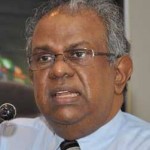
Chandra Jayaratne
Referring to the Gazette Notices Issued under Strategic Development
Projects Act No.14 of 2008 on 23rd September 2013 Jayaratne asks the
Minister to be transparent about the scope of the tax concessions to the
resorts operating in the proposed casino zones and the revenue loss to
the state from the proposed tax breaks to casinos that will operate
under the Strategic Development Act. Jayaratne demands answers from the
Minister on 10 key points in the public interest.
His letter to the Minister in full is found below:
28th October 2013
Hon. Minister of Investment Promotion
Ministry of Investment Promotion,
Levels 25 & 26, West Tower,
World Trade Center,
Echelon Square,
Colombo 1.
Dear Mr. Minister,
Clarifications Re; Gazette Notices Issued under Strategic Development Projects Act No.14 of 2008 on 23rd September 2013
VIDEO: HARSHA TELLS LAKSHMAN YAPA TO STOP ‘HIDING’ AND COME DEBATE
November 1, 2013

 The
United National Party (UNP) today alleged that the government is not
attempting to pass a bill in Parliament to legalize casinos but to
provides tax breaks for James Packer’s “illegal casino”.
The
United National Party (UNP) today alleged that the government is not
attempting to pass a bill in Parliament to legalize casinos but to
provides tax breaks for James Packer’s “illegal casino”.A false conception has been created in the country that the government is attempting to pass a casino bill in Parliament. The government is currently attempting no such thing, UNP MP Dr. Harsha de Silva said.
He stated that the casino bill was passed in Parliament on November 10, 2010.
He also said that government Ministers and MPs including the Minister and Deputy Minister of Buddha Sasana and Religious Affairs, Minister Patali Champaka Ranawaka, Ellawala Medhananda Thero and Athuraliye Rathana Thero did not vote against the bill.
For the first time in the history of Sri Lanka a bill for legalizing casinos was presented to Parliament, he said.
Harsha stated that many inaccurate interpretations are now being made regarding casinos in the country and that the government is attempting to say that a bill was brought in 1988 to legalize casinos.
“I would like to say, with complete responsibility, that no such thing ever happened. A UNP government has never legalized casinos,” he told reporters in Colombo.
The MP and economist stated that the only time legislations were prepared to legalize casinos was in 2010, under the Mahinda Rajapaksa government and it is called the ‘Casino Business Regulation Act No. 17 of 2010’.
He stated that the police are raiding illegal cockfights in villages and arresting large number of people while nothing is being done about the large scale casinos operating in the city without licenses. “Not one of these casinos have a license, why are they not closing them down?”
He also said that Australian gaming tycoon James Packer, addressing the annual conference of his Crown Casino in Australia, had said that the Parliament of Sri Lanka will approve tax benefits for him.
There is a big difference between the parliament may give him tax breaks versus the parliament will give him tax breaks, Harsha pointed out.
“That means the Sri Lanka Parliament is not being controlled by the Mahinda Rajapaksa government but by the Casino King in Australia, James Packer.”
“By inviting people like that to the country they are attempting to create another government within the existing government,” he charged, adding, that in the end the country will be controlled by that government.
President Mahinda Rajapaksa has told the Buddhist clergy and the people that he will not give licenses for casinos. We expect him to keep his word, he said.
However, government ministers such as Lakshman Yapa Abeywardena and Keheliya Rambukwella are now saying that that casinos already exist in the country and that they have licenses and that two such existing casinos will be shut down and shifted to these multistoried casinos, he said.
Alleging that these statements are false, Harsha asked Minister Lakshman Yapa Abeywardena to “not be afraid” and take part in an open debate with him for the entire country to see.
The government is not attempting to table a casino bill in parliament and pass it, it is attempting to pass a bill providing tax breaks for an illegal casino, he said.
He asked the government to present the bill to parliament before the Commonwealth Heads of Government Meeting so that the entire country will be able to see who will vote in favor of the bill.
He also claimed that the true intention behind the government holding CHOGM is to attract Packer’s casino to the country.
Govt. Spends 15 Million For CHOGM Website Just A Rehash Of Perth 2011: Harsha
November 1, 2013 |
The
CHOGM 2013 website that the Government claims costed Rs. 15 million is
nothing more than a rehashed version of the website created by the same
Australian software firm that designed the website for the Commonwealth
meeting in Perth, the Opposition charged yesterday.
Dr. Harsha de Silva
UNP MP Harsha De SIlva said the CHOGM 2013 website was designed by Australian firm Centium Software at a whopping and unprecedented cost.
“All they have done is to change the Perth pictures to Sri Lankan
pictures and changed the photographs of the business leaders and
officials – and it’s the same thing,” de Silva told reporters earlier
today.
It was surreal that the Government had spent this kind of money on a
website De Silva said, adding that the proposed Media Centre for the
summit had also cost Rs. 800 million.
“The Government is in debt to hotels in Colombo after the infamous IIFA.
It spent Rs. 8 billion for its failed bid to host the Commonwealth
Games in 2018 in Hambantota,” he charged.
He recalled that senior Government officials who were part of that
delegation had danced in a chain at St. Kitts, having a rolicking time
at the public’s expense.
“We wonder how much the cost of this show will be,” De Silva said,
adding that the Government is yet to reveal anything about expenditure
for the Summit in Parliament.
Animal Sacrifice, Leather Products, Liquor And Casinos

Hameed Abdul Karim
What
instantly came to my mind when I read Shenali Waduge’s article on
animal sacrifice was a scene from an old movie where we had the fascist
Adolf Hitler furiously slamming his desk with his fist, his face as
hideous contorted as you can imagine, saying ‘It is NOT right’. Those
words happened to be the title of Waduge’s latest anti Islam tirade in
the Daily News (Thursday 17 October, 2013). Not surprisingly the article
was timed to coincide with the Muslim festival of Eid ul Adha when
Muslims sacrifice cattle or goats to commemorate the selfless act of
obedience of the Prophet Abraham (peace be on him) who was asked by God
almighty to sacrifice his son Ishmael as a sign of his obedience to Him.
When Abraham was about to carry out the command, God almighty, in His
mercy, placed a sheep in Ishmael’s place and thus Ishmael was spared and
the practice of animal sacrifice to remember the messenger Abraham’s
(pboh) obedience began on that day and continues to this day. This
practice shall continue till the end of time, God willing….or in
sha-Allah, as we Muslims say. The flesh of the animal sacrificed or
slaughtered is distributed among the poor and kith and kin, but mostly
among the poor.
Now I know animal sacrifice and slaughter is disliked by some among us
and I have no problems with that. I can live with it. Problems crop up
when people want to enforce their wish and will on others who toe a
different line. This is unbridled fascism and in a multicultural society
like Sri Lanka the authorities must ensure that nobody encroaches on
each other’s faith and beliefs.
I disagree with Ms. Shenali Waduge, as
will all sensible people from all communities in Sri Lanka, when she
makes a spurious and xenophobic claim that ‘the so called One Sri Lanka
will remain a pipe dream if we suppress the fundamental values of the
original indigenous culture….’ She has forgotten that Muslims are also a
part of the indigenous culture. We had been here for centuries as
history records as I, along other writers, had pointed out in our
previous discussions on the halaal issue. There is no point in going
over those matters again. Is it Ms. Waduge’s wish that we take a giant
leap backwards and go back centuries where we can find that nobody other
that the indigenous people the Vedhas lived? If I remember right it was
the Buddha who said ‘nothing is permanent’.
Read More
Attempt by chief trustee to sell Mahabodhi India property!
- Friday, 01 November 2013

 The Mahabodhi Society of India has
fallen to such low depths in its administration that as the 150th birth
anniversary of its founder, Anagarika Dharmapala, is being marked, the
Buddhist institution’s chief trustee has attempted to sell its property
to settle a court dispute involving him, sources at the institution say.
The Mahabodhi Society of India has
fallen to such low depths in its administration that as the 150th birth
anniversary of its founder, Anagarika Dharmapala, is being marked, the
Buddhist institution’s chief trustee has attempted to sell its property
to settle a court dispute involving him, sources at the institution say.
An Indian court had ordered chief trustee of the Society, Revatha Thera,
to pay Indian Rs. 60 million after finding him guilty in a financial
fraud. The Thera has told the court to acquire the money by selling the
property owned by Mahabodhi Society, saying that he cannot pay the sum
personally. However, he cannot act at his will since the property is
being administered by a board of trustees.
Revatha Thera was severely condemned some time ago by both the Buddhist
clergy and the laity after he had kissed and embraced a female follower.
Ministry up in arms!
Ministry up in arms!

 Friday, 01 Nov 2013
Members
of the Bodu Bala Sena walking towards the heavily- guarded Ministry of
Buddha Sasana, to hand over a petition protesting the lack of enthusiasm
and to take action against those who engage in harming and degrading
Buddhism. Pix by Sanka Vidanagama

Thu, Oct 31, 2013, 10:55 am SL Time, ColomboPage News Desk, Sri Lanka.

 Oct
31, Colombo: Sri Lanka's main opposition United National Party (UNP)
says the government should look at improving the country's image before
the international community.
UNP spokesperson, parliamentarian Gayantha Karunathilaka said the
government was paying much emphasis to the hosting of the Commonwealth
Heads of Government Meeting (CHOGM) in Colombo next month but the real
necessity was for the government to work towards building confidence
among members of the international community and to improve the
country's image in the international arena.
Addressing a media briefing at the party headquarters on Wednesday,
Karunathilaka said that it is the government's failures that have
resulted in the Canadian Prime Minister announcing he would not
participate in the summit.
According to Karunathilaka, the government is also using the CHOGM summit to ignore the real issues faced by the country.
He accused the government of spending public money to stage mega events
like Deyata Kirula and Asian Film Festival and to bloat the image of the
politicians.
Oct
31, Colombo: Sri Lanka's main opposition United National Party (UNP)
says the government should look at improving the country's image before
the international community.
UNP spokesperson, parliamentarian Gayantha Karunathilaka said the
government was paying much emphasis to the hosting of the Commonwealth
Heads of Government Meeting (CHOGM) in Colombo next month but the real
necessity was for the government to work towards building confidence
among members of the international community and to improve the
country's image in the international arena.
Addressing a media briefing at the party headquarters on Wednesday,
Karunathilaka said that it is the government's failures that have
resulted in the Canadian Prime Minister announcing he would not
participate in the summit.
According to Karunathilaka, the government is also using the CHOGM summit to ignore the real issues faced by the country.
He accused the government of spending public money to stage mega events
like Deyata Kirula and Asian Film Festival and to bloat the image of the
politicians.
Thu, Oct 31, 2013, 10:55 am SL Time, ColomboPage News Desk, Sri Lanka.
 Oct
31, Colombo: Sri Lanka's main opposition United National Party (UNP)
says the government should look at improving the country's image before
the international community.
Oct
31, Colombo: Sri Lanka's main opposition United National Party (UNP)
says the government should look at improving the country's image before
the international community.POLICE ARREST GANG INVOLVED IN 12 ARMED ROBBERIES
 November 1, 2013Four
suspects have been arrested over 12 recent large scale armed robberies
including the theft of Rs 7.5 million from a garment factory owner in Ja
Ela and Rs 35 million in foreign currency and gold in Pettah.
November 1, 2013Four
suspects have been arrested over 12 recent large scale armed robberies
including the theft of Rs 7.5 million from a garment factory owner in Ja
Ela and Rs 35 million in foreign currency and gold in Pettah.The suspects, Weerasinghe Suneetha, Susil Silva, Prasanna Sanjeewa Kumara and Sanjeewa Mandanayake, were arrested by a team of officers from the Terrorist Investigation Division (TID).
The armed robberies carried out by the gang of robbers include the robbery of Rs 7.5 million from the owner of Polytex Garment in Ja Ela on May 28.
The businessman was returning to the factory with the cash from a private bank when the armed men had stopped him near the factory and stolen the money after threatening him.
They were also involved in robbing foreign currency and gold worth Rs 35 million from a jewelry store in Sea Street, Pettah on August 06. The suspects had used two T56 rifles and a pistol to carry out the robbery, police said.
The suspects are being detained and further interrogated, police said.
45,000 health workers on strike


Over 45,000 employees in the health sector are on a 24-hour token strike
today, claiming that numerous demands pertaining to salary anomalies,
increments and allowances have not been addressed by the Ministry of
Health, the Health Services Trade Union Alliance (HSTUA) said.
President of the HSTUA, Saman Ratnapriya, maintained that the unionists
were compelled to launch the strike as they are left with no other
alternative. Despite the Health Ministry agreeing with the unionists’
demands and accepting that they indeed do have problems, which ought to
be resolved, something tangible is yet to be done to resolve the issues.
The unionists met with the Health Ministry authorities on 14 and 28 October, to no avail, Rathnapriya noted.He also said the demands ranged from inadequacies and discrepancies of salary increments to various allowances like communication allowances, transport allowances and overtime payments.
The unionists met with the Health Ministry authorities on 14 and 28 October, to no avail, Rathnapriya noted.He also said the demands ranged from inadequacies and discrepancies of salary increments to various allowances like communication allowances, transport allowances and overtime payments.
“On 14 October, the Ministry Secretary asked us for a two-week time
period to resolve our issues. On 28 October, the Health Minister asked
us for an additional two weeks. We refused this request because they
can’t keep asking for extensions like that and also because the
Secretary has done absolutely nothing over the two-week time period he
had asked for,” Rathnapriya said.
Don’t take verbal orders from politicos
Supreme Court tells public servants:
by S. Venkat Narayan
Our Special Correspondent-October 31, 2013, 12:00 pm
Our Special Correspondent-October 31, 2013, 12:00 pm
 NEW
DELHI, October 31: In a path-breaking verdict expected to liberate
civil servants in democracies, the Indian Supreme Court said on Thursday
civil servants should not act on verbal orders given by political bosses.
NEW
DELHI, October 31: In a path-breaking verdict expected to liberate
civil servants in democracies, the Indian Supreme Court said on Thursday
civil servants should not act on verbal orders given by political bosses.
 NEW
DELHI, October 31: In a path-breaking verdict expected to liberate
civil servants in democracies, the Indian Supreme Court said on Thursday
civil servants should not act on verbal orders given by political bosses.
NEW
DELHI, October 31: In a path-breaking verdict expected to liberate
civil servants in democracies, the Indian Supreme Court said on Thursday
civil servants should not act on verbal orders given by political bosses.A welcome judgment
Editorial-October 31, 2013
In
what may be described as a bold move to deliver a troubled bureaucracy
from the clutches of unscrupulous politicians, the Indian Supreme Court
(SC) has asked public officers not to carry out verbal orders given by
their political bosses. Our special correspondent in New Delhi says, in
his report, quoting analysts that ‘the apex court of the world's largest
democracy is seeking to put an end to frequent transfers of upright
civil servants by wily politicians’. Three hearty cheers!
In
what may be described as a bold move to deliver a troubled bureaucracy
from the clutches of unscrupulous politicians, the Indian Supreme Court
(SC) has asked public officers not to carry out verbal orders given by
their political bosses. Our special correspondent in New Delhi says, in
his report, quoting analysts that ‘the apex court of the world's largest
democracy is seeking to put an end to frequent transfers of upright
civil servants by wily politicians’. Three hearty cheers!
Fate of Tamil propagandist - new evidence from Sri Lanka


New footage obtained by Channel 4 news shows Tamil journalist Isaipriya alive and held by the Sri Lankan Army, contrary to earlier government reports.
JONATHAN MILLER Foreign Affairs Correspondent-THURSDAY 31 OCTOBER 2013
New
video showing the fate of a Tamil propagandist & TV presenter is a
stark reminder of Sri Lankan government cruelty. Until now they insisted
Is Aipriya died in combat. Warning: distressing images.
Thursday, October 31, 2013
Credible Sri Lankan War Crimes Investigation on the Horizon

Karunyan Arulanantham
10/30/2013
 At
the United Nations General Assembly's (UNGA) 68th session in late
September, a major stipulation was laid out by UN High Commissioner on
Human Rights, Navi Pillay, in reference to the shocking slaughtering of
tens of thousands of Sri Lankan Tamil civilians in the spring of 2009.
At
the United Nations General Assembly's (UNGA) 68th session in late
September, a major stipulation was laid out by UN High Commissioner on
Human Rights, Navi Pillay, in reference to the shocking slaughtering of
tens of thousands of Sri Lankan Tamil civilians in the spring of 2009.
Given strong evidence that
Tamil civilians were killed primarily by government forces -- many in
schools, hospitals and government-declared safe zones -- the High Commissioner called upon Sri Lanka to
"use the time between now (September 2013) and March 2014 to engage in a
credible national process with tangible results, including the
successful prosecution of individual perpetrators, in the absence of
which [the High Commissioner] believes the international community will
have a duty to establish its own inquiry."
Such a strong statement that includes a concrete deadline has been
sorely needed, because Sri Lanka has already received more than enough
time to address the war crimes allegations through its own internal
processes. In May 2009, soon after the fighting ceased, the Government
of Sri Lanka and the UN Secretary-General, Ban Ki-moon, issued a joint statement underlining
the importance of an accountability process. But after a full year, the
government had failed to keep this commitment. In the face of this
inaction, the Secretary-General appointed a Panel of Experts to examine
Sri Lanka's compliance. The Panelconcluded the following year there
was "credible evidence" that the Government of Sri Lanka (as well as
its opponent during the armed conflict, the Liberation Tigers of Tamil
Eelam, or LTTE) had committed breaches of international humanitarian and
human rights laws "some of which would amount to war crimes and crimes
against humanity."
Now, more than two years after the Panel's report, the High Commissioner
visited Sri Lanka for a week this past August and found,
unsurprisingly, that nothing had changed.
The Sri Lankan government has held no one accountable for the mass
atrocities committed over four years ago. This, of course, only stands
to reason since the current regime -- headed by President Mahinda
Rajapaka and his brothers -- is among the accused for committing the
2009 atrocities.
Would anyone credibly ask Syrian President Assad to investigate his own army's use of chemical weapons? Of course not.
As the last four years have shown, repeated pronouncements by U.S. and
numerous other officials recommending that Sri Lanka take proper action
have done nothing to bring even the slightest measure of justice for the
horrific crimes of 2009. Furthermore, the government continues to
harass and kill journalists, allow Christian and Muslim religious
communities to be attacked with impunity, confiscate land owned by
Tamils, and maintain a massive military presence in Tamil areas,
particularly in Sri Lanka's Northern Province. That, in turn, gives rise
to sexual assaults, disappearances, and other crimes.
The High Commissioner's latest statement offers, at long last, much more than another request for action that is sure to fall on deaf ears. If the Sri Lankan government fails to act within the next six months, she says, the international community must do what the Sri Lankan government has not and establish an international accountability mechanism for the atrocities that occurred over four years ago.
Such a step would not only help to slow, or even reverse, Sri Lanka's descent into authoritarianism, but more importantly, it would vindicate the basic human rights principles that the international community purports to hold in the highest regard. The Secretary General's Panel of Experts observed that "the conduct of war represented a grave assault on the entire regime of international law designed to protect individual dignity during both war and peace." The international community cannot credibly condemn the mass killings in Syria, the Congo, and elsewhere while it continues to turn a blind eye to Sri Lanka's own atrocities of 2009. The High Commissioner's statement, and in particular, her fixed timeline, represent an important step in the right direction. Now the international community must prepare to follow through and show the world that its commitment to accountability for massive human rights violations is more than empty rhetoric.
The High Commissioner's latest statement offers, at long last, much more than another request for action that is sure to fall on deaf ears. If the Sri Lankan government fails to act within the next six months, she says, the international community must do what the Sri Lankan government has not and establish an international accountability mechanism for the atrocities that occurred over four years ago.
Such a step would not only help to slow, or even reverse, Sri Lanka's descent into authoritarianism, but more importantly, it would vindicate the basic human rights principles that the international community purports to hold in the highest regard. The Secretary General's Panel of Experts observed that "the conduct of war represented a grave assault on the entire regime of international law designed to protect individual dignity during both war and peace." The international community cannot credibly condemn the mass killings in Syria, the Congo, and elsewhere while it continues to turn a blind eye to Sri Lanka's own atrocities of 2009. The High Commissioner's statement, and in particular, her fixed timeline, represent an important step in the right direction. Now the international community must prepare to follow through and show the world that its commitment to accountability for massive human rights violations is more than empty rhetoric.
Subscribe to:
Posts (Atom)