Peace for the World World ! Your War Our Lives

The Dalai Lama
A Brief Colonial History Of Ceylon(SriLanka)
Sri Lanka: One Island Two Nations
A Brief Colonial History Of Ceylon(SriLanka)
Sri Lanka: One Island Two Nations
(Full Story)
Back to 500BC.

Sunday, December 1, 2013
Heroes Day in homeland, Diaspora, Tamil Nadu gains more significance than previous years
[TamilNet, Saturday, 30 November 2013, 16:22 GMT] The
Indian prejudice and the global injustice, committed on the nation of
Eezham Tamils by the various powers, enabled the Sri Lankan State to
wage its genocidal war on Eezham Tamils to its end. But, the Tamil
Heroes together with their steadfast people, who had no support from any
State party in the world, achieved a superior moral victory. This is a
unique case in modern human civilisation. This year, the remembrance of
Tamil Heroes gained far more significance than the previous years after
2009, as Eezham Tamils in their homeland defied the ‘gag order’ by the
occupying SL military, Diaspora Tamils marked the day without giving
room for divisions engineered by the intelligence outfits of the
Establishments and in Tamil Nadu, the Tamil national grassroots and
political movements marked both LTTE leader Pirapaharan's birthday on 26
November and Maaveerar Day on 27 November.
The
Indian prejudice and the global injustice, committed on the nation of
Eezham Tamils by the various powers, enabled the Sri Lankan State to
wage its genocidal war on Eezham Tamils to its end. But, the Tamil
Heroes together with their steadfast people, who had no support from any
State party in the world, achieved a superior moral victory. This is a
unique case in modern human civilisation. This year, the remembrance of
Tamil Heroes gained far more significance than the previous years after
2009, as Eezham Tamils in their homeland defied the ‘gag order’ by the
occupying SL military, Diaspora Tamils marked the day without giving
room for divisions engineered by the intelligence outfits of the
Establishments and in Tamil Nadu, the Tamil national grassroots and
political movements marked both LTTE leader Pirapaharan's birthday on 26
November and Maaveerar Day on 27 November. Tamil Nadu activists gave expression to the significance of the philosophical emancipation represented by the supreme sacrifice of thousands of Eezham Tamils. For the Tamils who have faces oppression for several decades, the political emancipation for the future liberation stems from the philosophical understanding of the sacrifices made in the Eezham struggle.
It is the national question of Eezham Tamils that would be the defining factor of Tamil Nadu's continued commitment to the Indian sovereignty, was the message coming from Tamil Nadu.
The most symbolic message touching the emotions of Tamils across the world came this year from Mullaiththeevu in Vanni, from an elected member of the Northern Provincial Council, Mr Thurairasa Ravikaran: “The waves of thoughts by Maaveerar are still highly prevalent in this Universe. We as a people would always be attracted to these thoughts. Our people are inseparable from their Heroes,” he said.
Eezham Tamils masses paid their tribute to Tamil Heroes in unified events organised in the cities and towns of various countries. In London alone, more than 30,000 Tamils attended the Maaveerar Day event. There was no factional division causing confusion among the Tamil diaspora this year in marking Heroes Day. A sharp message has been delivered to the intelligence outfits of different Establishments.
The Tamil diaspora has proved the need for UN referendum by democratically expressing the aspiration of Eezham Tamils as the independence of a sovereign state of Tamil Eelam.
Eezham Tamils expressed this in the self-organised, independently monitored, referendums held in 10 countries in the Diaspora, in 2009 and 2010.
Tamil Nadu has fully backed the demand for UN referendum and the demand has been democratically established since 2013 Assembly Resolution in Tamil Nadu State Assembly.
Having demonstrated the democratic aspiration of Eezham Tamils to those Establishments that rejected the claim, the Tamils have been firm in demanding remedial justice for the genocide committed upon them and continue to voice against the structural genocide taking place in their occupied country.
Even the attempt by the International Community of Establishments to showcase a different ‘demand’ through Sampanthan-Sumanthiran-Wigneswaran trio stands exposed.
The reality is that the people on the ground formulate their mandate themselves. An artificial manifesto cannot be thrust upon them through a Colombo centric elite. The people on the ground have conveyed the message that nobody can attempt to artificially de-legitimise the Tamil claim, to the ICE on this Heroes Day.
Manipulating the elitists groups in the Tamil Diaspora or manipulating the ranks of the Tamil polity in the Tamil homeland is not going to ‘change the Tamil claim’ in the geopolitical game of ‘changing the regime’.
Kumaratungas, Fonsekas, Wickramasinghes and Rajapaksas will stand rejected in the Tamil homeland until they are prepared to concede the nationhood of Eezham Tamils in its truest sense.
Likewise will be the ‘engagement’ of Eezham Tamils towards the Establishments of Washington, London, New Delhi and Beijing.
“In our Universe, the rules are different. If you want to continue to play the geopolitical game anymore, be prepared for a genuine engagement without deceptions,” is the message to the ICE by the global Tamils in 2013, when the Tamil geopolitics is becoming a reality, four years after the genocidal onslaught in 2009.
The immediate message to the ICE from Eezham Tamils is that it cannot achieve anything by keeping the matter under the carpet of Human Rights Council in Geneva anymore.
The question of Eezham Tamils nationhood, the burning matter of territorial integrity of Eezham Tamil homeland vis-à-vis the continued global guarantee of the territorial integrity of the Sri Lankan State sovereignty, are the matters that need to be reassessed in their moral sense by those seeking engagement with the Tamils.
Talking about freedom of expression in the island is a sham if those wishing to ‘engage Sri Lanka’ refrain from talking against the 6th Amendment of the Sri Lankan Constitution.

North CM on War Path With Sri Lankan Government
 By
By Gota and Khurshid in key talks
November 30, 2013

 In
an extremely low-profile visit, defence secretary Gotabaya Rajapaksa
was in Delhi for a short visit this week, which was largely kept under
wraps by the two governments, the New Indian Express reported.
In
an extremely low-profile visit, defence secretary Gotabaya Rajapaksa
was in Delhi for a short visit this week, which was largely kept under
wraps by the two governments, the New Indian Express reported.
Gotabaya Rajapaksa called on Minister of External Affairs Salman
Khurshid yesterday, before he left for Colombo at the end of his trip.
He met with his defence ministry counterparts on Thursday.
This was a significant visit, as it was the first high-level bilateral
meeting following the Commonwealth Summit, which Prime Minister Manmohan
Singh did not attend due to pressure from Tamil Nadu over the lack of
accountability for war crimes towards the ends of the civil war in the
island nation, the New Indian Express reported.
As a very influential member of the Lankan government, Gotabaya is one
of the key voices calling for dilution of the powers of the provincial
councils, as stipulated under the Indo-Lanka accord and enacted through
the 13th amendment.
India had managed to stave off such efforts before the commonwealth
summit, but there are fears that the parliamentary select committee to
look into ways to amend the constitution to dilute 13A may be revived,
now that the international scrutiny has been removed.
‘Anti-13 A’ And ‘Anti-Indian’ Gota’s India Visit Kept Under Wraps By Both Governments
 December 1, 2013
Secretary to the Ministry of Defence Gotabaya Rajapaksa who has repeatedly criticised India over its responsibility in the Sri Lankan war and the 13th Amendment, is in India again.
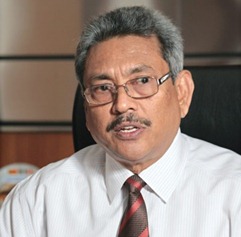
Gotabaya
In an extremely low-profile visit, Sri Lankan defence secretary Gotabaya
Rajapaksa, brother of Lankan President Mahinda Rajapaksa was in Delhi
for a short visit this week, which was largely kept under wraps by the
two governments, an Indian media report says.
The News Indian Express last night said; Gotabaya Rajapaksa called on Minister of External Affairs Salman Khurshid on
Friday morning, before he left for Colombo at the end of his trip. He
met with his defence ministry counterparts on Thursday.
The newspaper said; “This was a significant visit, as it was the first high-level bilateral meeting following the Commonwealth Summit, which Prime MinisterManmohan Singh did
not attend due to pressure from Tamil Nadu over the lack of
accountability for war crimes towards the ends of the civil war in the
island nation.
“As a very influential member of the Lankan government, Gotabaya is one
of the key voices calling for dilution of the powers of the provincial
councils, as stipulated under the Indo-Lanka accord and enacted through the13th amendment.
India had managed to stave off such efforts before the commonwealth
summit, but there are fears that the parliamentary select committee to
look into ways to amend the constitution to dilute 13A may be revived,
now that the international scrutiny has been removed.”
Before leaving to India, he said; “India Is Our Largest Neighbour And The Most Important Country In The Region”
Murali Is Transparent, Accountable And Reconciled
By Malinda Seneviratne -December 1, 2013 |
Malinda Seneviratne
It was the 22nd day of the month of July in the year 2010.
Galle was the venue of the first test between Sri Lanka and India.
India had avoided innings defeat but was ahead only marginally with 9
wickets down. For fifteen overs and 2 deliveries, much of the cricketing
world waited and watched with rising anticipation. Muttiah Muralitharan had
already taken 799 test wickets. It was his last test. He had one shot
at achieving the numerically satisfying ‘800’ to end an illustrious
test cricket career.
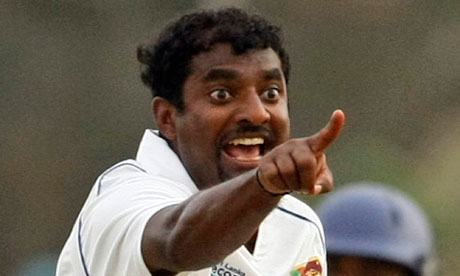
Murali
Few who watched would forget the 4th delivery of the 116th over.
This is how it was described by the cricinfo commentator: ‘Muralitharan
to Ojha, OUT, 800 it is! The wait and the tension is finally over!
Tossed up outside off and the four men around the bat wait in
anticipation! Ojha lunges forward, edges it and Mahela falls to his left
and takes the catch at first slip! No need to look anywhere for
confirmation, straightforward and Murali is ecstatic.’Read More
A lacklustre budget debate
Editorial-November 30, 2013, 4:43 pm
 Given
the government’s comfortable parliamentary majority, the passage of the
second reading of the 2014 budget on Friday after a lackluster debate
surprised nobody. There is no doubt that the Mahinda Rajapaksa
government, with Treasury Secretary P.B. Jayasundera responsible for all
its budgets since 2005, has retained policy consistency. Massive
infrastructure expenditure continues despite unanswered questions on
whether the country is getting the best prices for such projects as well
as whether some deserve the priority that have been accorded to them.
The Economist Intelligence Unit has seen the budget as a ``mix of
small-scale concessions to key voters’’ including the rural majority and
the bloated public sector. UNP MP Eran Wickremaratne was not wrong when
he said in the course of the debate that the government’s solution to
unemployment is providing state sector jobs for its supporters and
`exporting’ citizen to work abroad.
Given
the government’s comfortable parliamentary majority, the passage of the
second reading of the 2014 budget on Friday after a lackluster debate
surprised nobody. There is no doubt that the Mahinda Rajapaksa
government, with Treasury Secretary P.B. Jayasundera responsible for all
its budgets since 2005, has retained policy consistency. Massive
infrastructure expenditure continues despite unanswered questions on
whether the country is getting the best prices for such projects as well
as whether some deserve the priority that have been accorded to them.
The Economist Intelligence Unit has seen the budget as a ``mix of
small-scale concessions to key voters’’ including the rural majority and
the bloated public sector. UNP MP Eran Wickremaratne was not wrong when
he said in the course of the debate that the government’s solution to
unemployment is providing state sector jobs for its supporters and
`exporting’ citizen to work abroad.
There is no serious argument that the state sector is over crowded and
many of those paid from the public purse are not doing any productive
work. In a country with a population of about 20 million, there are 1.4
million government employees according to Wickremaratne’s count. About a
third of them are with the police and the security services, he said in
his budget speech. There was an expectation that the armed services
will be downsized after the end of the war; but that has not happened
possibly for good reason. Demobilizing men trained to fight without
suitable alternative employment can obviously lead to problems such as
those Bangladesh faced after its liberation war. Here in Sri Lanka too
we have seen military deserters who have stolen service weapons engaging
in criminal activity. There has been a serious effort to deploy
servicemen for civilian duties facilitated in part by the Ministries of
Defence and Urban Development being brought together. Whether this has
resulted in a cost: benefit advantage to the taxpayer has not been
demonstrated.
The size of the cabinet and the multiplicity of ministries have resulted
in weakened parliamentary control of public expenditure. Quite apart
from too little notice being taken to COPE and PAC reports, for the
first time in our post-Independence history we saw the government
adopting a device of getting a clutch of ministries to have their votes
discussed and approved by an all-party standing committee rather than
parliament itself as has been hitherto done. Parliament will merely
debate the report of this standing committee. Given the number of
ministries loaded on the backs of the taxpayer to accommodate UNP
defectors and UPFA loyalists, there was insufficient parliamentary time
for the budget debate to be concluded in the usual manner. It is a pity
that the opposition permitted this to happen without audible protest.
Now that the precedent has been set, the chances are that succeeding
governments of whatever political complexion will continue to follow the
bad example of jumbo cabinets and multiplicity of ministries. CHOGM
possibly ate into some parliamentary time this year compelling resort to
the standing committee device. But the opposition, as far as we are
aware, did not demand or obtain an assurance that this would not be
regular practice.
Sri Lanka’s present ranking as a middle income country has shut the door
to concessional funding it received in the past for development
purposes. This compelled the government to resort to expensive
commercial borrowing abroad and this has naturally raised concern in
recent years with many critics regarding foreign debt levels
particularly as way too high. Servicing and repaying such debt require
further borrowing at higher rates of interest. These rollovers, as they
are termed, inevitably become progressively more expensive as we have
seen. In fact, the question has been raised why our banks pay only a
fraction of the interest paid on dollar bonds to local holdings of
foreign exchange in resident and non-resident foreign currency accounts
(NRFCs and RFCs) in Sri Lankan banks. The answer to that question is
fairly obvious. NRFC and RFC account holders are captive lenders whose
interest payments are determined at rates fixed through limited
competition between local banks. Attractive rates, far higher than those
prevailing in overseas markets, must be offered to sell our dollar
bonds. This has been done and the various bond issues have been
comfortably subscribed. We have thankfully never defaulted on our debt
obligations, either local or foreign, and the government’s intention of
raising a further USD 1.5 billion overseas was announced in the budget.
Ideally export earnings should generate a substantial proportion of our
foreign debt service and repayment obligations. This, unfortunately, has
not been happening in recent years.
It is doubtful that the opposition collectively, and the UNP in
particular, has the gumption to undermine the government even on issues
such as the lack of good governance, financial profligacy and its
various acts of omission and commission. As Minister Basil Rajapaksa was
to say in his speech winding-up the second reading debate on Friday, in
2007 the government risked being toppled on the budget but ``thanks to
some UNP MPs’’ (read defectors rewarded with cabinet office), that was
not to be. The country is very well aware that President Mahinda
Rajapaksa and his brothers, Economic Development Minister Basil
Rajapaksa and Defence Secretary Gotabhaya Rajapaksa controls nearly 50
percent of the budget. This has been repeated often enough but not
evoked the kind of angry response among ordinary people that the
opposition would hope to provoke. The man in the street concerned about
making ends meet in the context of the ever rising cost of living does
not bother about familial rule and who controls budgeted expenditure.
He’s more concerned about the price of dried haalmessas (sprats) and
parippu that MP Sudharshini Fernandopulle (Mrs. Jeyaraj) spoke about
from the government benches. She appealed for relief from price
increases for these essential protein providers for the poor man. The
UNP’s Rosy Senanayake pointedly raised the question of increasing the
price of sanitary napkins while reducing the duty (why oh why?) on men’s
neckties.
While making dhal more expensive was probably to support an import
substitution strategy by encouraging people to switch to alternatives
like locally grown cowpea, green gram and other pulses, sprats are
another matter. Local production would never match demand and the
chances are that people will perforce have to switch to another imported
product – canned fish. Hiking duty on imported sanitary napkins would
also have been intended to give a fillip to local manufacturers. With
Christmas round the corner, it is likely that a consumer concession on
dhal and sprats will probably be announced in the third reading stage of
the budget debate same way duty on imported potatoes and onions were
reduced pre-budget. But these are hardly concessions that would enable
the poor to eat better.
Fearless Jaffna daily 'Uthayan' wins prestigious press freedom award
- 29 NOVEMBER 2013
- BY ATHULA WITHANAGE

 Well-known
for its courageous journalism, Jaffna-based Tamil tabloid daily,
Uthayan, has won the prestigious international Press Freedom Award for
2013 from the France-based Reporters Without Borders (RSF). Uthayan
Editor Vallipuram Kaanamylnaathan and its proprietor Eswarapatham
Saravanapavan received the award from the RSF at the award ceremony held
in Strasbourg, France on Wednesday (Nov 27).
Well-known
for its courageous journalism, Jaffna-based Tamil tabloid daily,
Uthayan, has won the prestigious international Press Freedom Award for
2013 from the France-based Reporters Without Borders (RSF). Uthayan
Editor Vallipuram Kaanamylnaathan and its proprietor Eswarapatham
Saravanapavan received the award from the RSF at the award ceremony held
in Strasbourg, France on Wednesday (Nov 27).
Uzbek journalist Muhammad Bekjanov, who is imprisoned for 14-long years,
was announced as the joint winner of the award. Notably, Sri Lanka is
ranked 162nd while Uzbekistan is ranked 164th out of 179 countries in
the RSF press freedom index.
Uthayan newspaper coincidentally received this international award on its 28th birthday. The newspaper has faced 37 brutal attacks by
pro-government paramilitary and other government forces during its
historic journey. At least half a dozen of journalists and other staff
had been killed during these attacks, while several journalists and
editors have been forced to leave the country to safety. The
perpetrators, however, still remain at large under the prevailing
culture of impunity.
Standing tall for reporting matters that are usually shunned by other
news organisations elsewhere in the country despite threats and attacks,
Uthayan is the only Tamil newspaper which has not ceased publication in
the war-ravaged northern Jaffna peninsula during the three-decade long
bloody civil war.
War on Uthayan not over yet
Speaking at the award ceremony, Director-General of the RSF Christophe
Deloire said that the war “in Sri Lanka is not yet over for Uthayan”,
highlighting the ongoing threat, intimidations and harassment on
journalists and media workers in the Northern Jaffna peninsula.

“If this newspaper were to succumb to the constant harassment to which
it is exposed to, the abuses by the security forces against the
population in the north would continue with complete impunity, without
being brought to the attention of Sri Lankans and the international
community. The courage and persistence of Uthayan’s staff in reporting
what happens in this embattled country demands our respect and our full
solidarity,” he said.
Receiving the award Uthayan Editor, Kanamylnathan said although the
government of Sri Lanka has officially declared the end of the war,
“nothing has changed as far as the media is concerned”.
“Each and every journalist has to toe the government line, regardless of
their political beliefs and convictions. Apart from the fear factor
that compels them to do so, there is a material aspect as well. If you
play by the rules set by the authorities, you will not only be spared,
but will also be rewarded. In Jaffna, Media Resource And Training Centre
is involved in training new journalists, but there is no environment to
practise what you learn,” the Uthayan Editor said.

People’s plight keeps us going
“Uthayan has won at least 10 awards so far. Many journalists, media
workers attached to Uthayan have been murdered, abducted, assaulted and intimidated. Our office was attacked and printing machines were
destroyed. There is nothing on the ground that encourages us to do our
job, except the plight of our people. Therefore, in moments like this,
we feel happy and proud, because such moments convince us that we have
done our job properly,” he said.
Coming hard on the Colombo-based mainstream media for grossly ignoring
the plight of the war-ravaged Tamils in the Northern peninsula, Uthayan
proprietor Saravanapavan said that his newspaper often came under the
‘vicious attack’ of the state-run and pro-government media outfits for
bravely reporting on the happenings in Jaffna.

“In Tamil areas, people cannot move freely, without being stopped,
questioned and searched at check points unless they have political or
diplomatic privileges. The military intelligence personnel roam
everywhere and keep an eye on everyone. The prevailing situation is
extremely scary. Uthayan has paid a huge price for exposing what is
happening in Jaffna,” Mr. Saravanapavan, who is also a parliamentarian
of the Tamil National Alliance, said.
RSF in a statement said that it has been awarding an international prize
to a journalist and a news organization every year since 1992. In
partnership with Le Monde and TV5Monde, its aim is to encourage, support
and publicize the work of journalists and media that have contributed
significantly to the defence or promotion of media freedom.
“More than 30 men, women, news organizations and NGOs have received this
prize in the past 20 years. Some who were in jail at the time
subsequently recovered their freedom. Others who were in danger received
a form of protection as a result of this international recognition,”
the RSF statement said.
by A Special correspondent
 ( November 30, 2013, Colombo, Sri Lanka Guardian) This
article is written objectively in the national interest of Sri Lanka. I
do not endorse any regionalism or village-mania at all. All regions in
Sri Lanka should be equally developed and equally treated with fair
development projects and programmes. That is the true expression of
national patriotism. Developing one region at the expense of other
regions is not the true expression of national patriotism rather such
attitudes and mindsets are pure expression of regionalism. When
politicians with excessive executive powers engage in such activities of
regionalism that would deprive all other regions and what exactly
happening in Sri Lanka is President and His Brothers are keen to develop
their place of birth than any other part of the country. All recent
development programmes are mostly concentrated in this district of
Hambantota. Why is this favouritism to this district? Is it this
President and his family hail from a remote village in this part Island?
Consider for example how many mega projects have been constructed in
Hambantota alone in recent time.
( November 30, 2013, Colombo, Sri Lanka Guardian) This
article is written objectively in the national interest of Sri Lanka. I
do not endorse any regionalism or village-mania at all. All regions in
Sri Lanka should be equally developed and equally treated with fair
development projects and programmes. That is the true expression of
national patriotism. Developing one region at the expense of other
regions is not the true expression of national patriotism rather such
attitudes and mindsets are pure expression of regionalism. When
politicians with excessive executive powers engage in such activities of
regionalism that would deprive all other regions and what exactly
happening in Sri Lanka is President and His Brothers are keen to develop
their place of birth than any other part of the country. All recent
development programmes are mostly concentrated in this district of
Hambantota. Why is this favouritism to this district? Is it this
President and his family hail from a remote village in this part Island?
Consider for example how many mega projects have been constructed in
Hambantota alone in recent time.
Hambantota Harbour, Mattala Air port, International Convention Centre,
Newly built Cricket ground, a number of hotels complexes and many more
projects are constructed recently in this distinct alone. All these mega
projects are constructed as if Hambantota is the new capital of Sri
Lanka. As if millions of Sri Lankans live in this remote part of Sri
Lanka. I would argue that money barrowed with high interest rates for
these projects would unquestionably put Sri Lanka into unimaginable
economic crises. If these projects are not successful it would be an
economic suicidal for Sri Lanka. It is not MR and his Brothers who are
going to repay loans borrowed for these projects rather it is Sri Lankan
public bear the burden of repaying all loans with high interests.
I wonder why opposition parties cannot object these political blunders.
These are not mere mistakes rather these are deliberately and
intentionally done political incorrectness. These are mere abuse of
political powers and these are mere politics of arrogance. Even a child
with a Credit in Economics would know the economic consequences of these
unviable and unsustainable projects. It is true that Anura Dissanayake
of JVP did try to expose some of these political blunders. I think that
it is moral duty of politicians to expose all these political mistakes
of this government.
Hambantota is situated in a remote part of Sri Lanka and it is believed
Hambantota is one of the less populated districts of Sri Lanka. It is a
humble postulate of this essay to argue that Public money spent in all
mega projects in this part of Sri Lanka could have been wisely and
appropriately spent in many viable projects. Sri Lanka may need some of
these projects and yet to construct these mega projects in this part of
Island is not commercially wise and appropriate. These projects may have
been constructed in appropriate places with maximum national benefits.
Some of the projects should have been built as and when necessary with
the phase of development and progress. Public money spent on these
projects should have been used in many more useful projects.
It is a natural instinct that everyone loves their place of birth. Yet,
Sri Lankan President MR has got special love and attachment to his birth
place at the expense of billion rupees of public money. He has taken
every step to make his birth place a future capital of Sri Lanka. Why on
earth this remote district of Sri Lanka gets a special provision? Why
most of developments of projects are done in this remote district of Sri
Lanka at the expense of all other districts? Look how mega development
projects have been constructed at this district alone in with last 9
years of MR presidency? This is done at the expense of billions of
public money in Sri Lanka? Some of these developments are done with
loans borrowed in high interest rates. Who is going to pay back all
these loans? It is the hardworking people of this country will bear
brunt of these long term loans?
It is well known fact that Hambantota is one of less populated districts
in SL. It is situated geographically in a remote part of Sri Lanka and
most of parts of geographical landscape of this district is forest and
only suitable for agriculture and wildlife. Changing the landscape of
this district would be an ecological and environmental disaster for Sri
Lanka in long terms and yet, with the political powers MR and Brothers
ventured into these mega developments without any second thought on
ecological and economic consequences of these projects. No doubt like
all other countries Sri Lanka needs some mega development projects and
yet, these should be sustainable developments projects. These
developments projects should be done in appreciate time and appropriate
regions with professional advice of all stakeholders. Public should have
been consulted in all these projects and properly these issues should
have been debated in the parliament as well.
A cursory look at some of recent mega development projects in his birth
place would reveal some shocking statistics. Recently, an artificial
port was developed in Hambantota at the expense of billions and yet,
what return Sri Lanka expects from this port? What are the economic
benefits of such port? It is reported even some international shipping
companies do not want to come near to this Harbour for fear of ship
wreckage? What a waste of public money is this? What an economic
disaster is this? Who take responsibility for this political blunder? If
this disaster is not enough then comes Air port project. Mattala Air
port is one more political blunder of MR and co.
Sri Lanka is a small island. Sri Lanka is not a Singapore. Only a
limited numbers of flights are landing in Sri Lanka daily. During night
one fight lands every one hour or less than that? Why do we need one
more Air port in this remote corner of Sri Lanka at this time? What are
the economic benefits of such air port? Do you think people from the
other part of Island will be willing to travel through this airport in
their air travel journeys? It was reported that this Air port is built
is unsuitable and unfitting geographical location for many reasons. It
was an ecological and environmental disaster as well. It has destroyed a
large numbers of wildlife. It was reported that elephants and snakes
are coming to near sides of the air port.
Air ports mainly depend on flight arrivals for their financial
survivals. The more flights land the more profits Air ports make.
Otherwise, government will have to spend a lot of money for day to day
expenses of air port as well as wages for its employees. It is reported
that only a few flights are landing in this air port right now. How long
government could spend money to maintain Mattala Air port if enough
flight arrivals are not materialised in coming years? Consider for
instance if this Air port is built and developed in Jaffa or any part of
Northern Province, it would have been commercially more profitable and
more appropriate.
Why do I say this? Because today more 2 Million Tamils live abroad and
most of them live in European countries. They would love to come to Sri
Lanka if there is an Air Port in the Northern Province. It would make
their travel back home easy and convenient. Moreover, it could have
attracted more tourists from India particularly from Tamil Nadu. More
inter-connections would have been made between such an Air port in
Northern Province and South Indian Air port. It is physiological fear of
Singhalese politicians that does not permit them to develop any mega
projects in North. They all fear that if they develop Jaffna that would
pave the way for Tamil EELAM.
I think that Singhalese should think broadly and diplomatically on the
subject of Northern development programmes. It is a undeniable reality
that Sri Lankan Tamil community have got money and they are ready to
invest in the northern part of Island. Government should encourage them
to invest in Jaffna for that government should expedite some mega
development programmes in Jaffna. Constructing an international Air port
in Jaffna would have been more appropriate than Hambantota from this
perspective. Constructing Northern Express way into Jaffna would have
been more profitable than Southern Express way to Hambantota. …. (To be
continued)
President’s expenditure increased this year
- Saturday, 30 November 2013
 President
Mahinda Rajapaksa has directed for the allocation for more funds for
his expenditure this year by presenting a supplementary estimate of
Rs.2,034,122,460 for the period between January and September.
President
Mahinda Rajapaksa has directed for the allocation for more funds for
his expenditure this year by presenting a supplementary estimate of
Rs.2,034,122,460 for the period between January and September.
The estimate is in addition to the Rs. 7,405,940,000 that was allocated for the President in the 2013 Budget.
The supplementary estimate was presented claiming the funds allocated in the budget were insufficient.
Therefore, the total amount allocated for the President for this has increased to Rs. 9,441,062,460.
Therefore, the total amount allocated for the President for this has increased to Rs. 9,441,062,460.
The President has been allocated a sum of Rs. 8,567,700,000 in the 2014 Budget.
By Devan Daniel-Sunday, 01 Dec 2013

 The
government has extended the field for offshore oil and gas exploration,
earlier limited to the Gulf of Mannar, after a second international
bidding round for oil exploration licences closed this week.
International bidding for oil exploration licences closed last Friday
with only two companies from India and Canada submitting bids for three
of the 13 blocks on offer, industry sources said.
The
government has extended the field for offshore oil and gas exploration,
earlier limited to the Gulf of Mannar, after a second international
bidding round for oil exploration licences closed this week.
International bidding for oil exploration licences closed last Friday
with only two companies from India and Canada submitting bids for three
of the 13 blocks on offer, industry sources said.
The exploration is now almost certain to extend to the Cauvery Basin
north of the Jaffna Peninsula, as the bids that were made by the two
companies included at least one for that region, sources said.
Cairn India and Canada’s Bonavista Energy Corporation submitted bids, sources said.
Sri Lanka has expanded the field of off-shore oil and gas exploration in
this second round international bidding. This would kick start oil
exploration activities in the North.
Cairn India already has a five-year head-start and is pushing for an
early production date. It is in discussions with authorities to monetize
hydro carbon discoveries in the Mannar Basin, off Sri Lanka’s
northwestern coast.
Several other blocks in the waters off Sri Lanka’s eastern and southern coasts were on offer for joint studies as well.
Some of the world’s top oil exploration companies had shown interest in
Sri Lanka, especially after two encouraging discoveries by Cairn India
in the Mannar Basin. Exxon Mobil and Total had purchased Sri Lanka’s
seismic data set, and ENI, BP, OVL, PVEP, and several other
international majors had discussions with the government on potential
future operations in Sri Lanka.
When contacted by Ceylon Today, Petroleum Resources Development
Secretariat Director General, Saliya Wickramasuriya, declined to
comment, but said the government would make an official announcement
next week.
R.I.T. Alles: Founding Principal of Post-Independent Sri Lanka’s only Trilingual post-Secondary School
 29 November 2013, 3:24 pm
R.I.T. Alles, Former Principal of D.S. Senanayake College Passes Away
By K. Thirukumaran
Founding principal of D.S. Senanayake College (DSSC), Colombo 7, Sri Lanka R.I.T. Alles passed away on Nov 28.

Uploaded on Oct 6, 2010
BANGLADESH: Attorney General's Office Supersedes High Court
November 29, 2013
 The
Asian Human Rights Commission has learned that direct intervention from
the Attorney General's Office of Bangladesh is preventing the release
of ASM Nasiruddin Elan, Director of Odhikar, a Bangladesh based human
rights organisations, despite the High Court having granted bail to the
prominent human rights defender. That the Attorney General’s Office can
impede a high court order so easily, is a telling example of the rule of
lawlessness in Bangladesh.
The
Asian Human Rights Commission has learned that direct intervention from
the Attorney General's Office of Bangladesh is preventing the release
of ASM Nasiruddin Elan, Director of Odhikar, a Bangladesh based human
rights organisations, despite the High Court having granted bail to the
prominent human rights defender. That the Attorney General’s Office can
impede a high court order so easily, is a telling example of the rule of
lawlessness in Bangladesh.
A Division Bench comprising Justice Borhanuddin and Justice K.M. Kamrul
Kader of the High Court Division granted six months' interim bail to
Elan on 24 November 2013 after hearing a writ petition filed on his
behalf. A team from Odhikar were told by Mr. Amanullah, a Deputy Jailor
of the Kashimpur Jail-2 in Gazipur, that Elan could not be released as
there were instructions from the Attorney General’s Office not to
release him.
 Elan's
lawyer, Mr. Mohammad Ruhul Ahim Bhuiyan, has informed the AHRC that he
called Mr. Amanullah, Deputy Jailor of Kashimpur Jail-2, on the latter's
cell phone (+8801717292501) today to check on developments related to
Elan’s release. The Deputy Jailor told the lawyer that the High Court
bail order has indeed been received at Kashipur Jail. When Elan’s lawyer
asked when his client was going to be released, the Deputy Jailor said
that Mr. Elan could not be released from jail as jail authorities have
also received 'instruction' from the Attorney General's Office not to
release him. The Deputy Jailor said, with regret, that until 'further
instructions' were received asking Jail authorities to release him, Elan
will have to remain in detention.
Elan's
lawyer, Mr. Mohammad Ruhul Ahim Bhuiyan, has informed the AHRC that he
called Mr. Amanullah, Deputy Jailor of Kashimpur Jail-2, on the latter's
cell phone (+8801717292501) today to check on developments related to
Elan’s release. The Deputy Jailor told the lawyer that the High Court
bail order has indeed been received at Kashipur Jail. When Elan’s lawyer
asked when his client was going to be released, the Deputy Jailor said
that Mr. Elan could not be released from jail as jail authorities have
also received 'instruction' from the Attorney General's Office not to
release him. The Deputy Jailor said, with regret, that until 'further
instructions' were received asking Jail authorities to release him, Elan
will have to remain in detention.
After learning about the same from Mr. Elan's lawyer, the Asian Human
Rights Commission called Deputy Jailor Amanullah on his cell phone
number at 2:37 p.m. Hong Kong local time. Mr. Amanullah confirmed his
official position during the two minute conversation that en-sued. When
the AHRC Staff Member asked about the status of Mr. Elan's release in
compli-ance with the High Court order, Mr. Amanullah expressed himself
in colourful abusive lan-guage and before ending the conversation.
This is not the first time Bangladesh's Attorney General's Office has
prevented the release of a detainee via illegal instruction. The AHRC
has learned from detainees, that in numerous cases in the last five
years, the Attorney General's Office has sent telephonic or fax
instructions to different jails to make a mockery of court orders. All
law officers of the State have a funda-mental obligation to assist the
courts to uphold the rule of law. Such routine actions of the
Bangladesh's Attorney General and his team rubbish the basic principles
of justice.
The AHRC demands an investigation by a High Court Judge regarding
interventions from the Office of Attorney General to undermine the High
Court order. The interventions preventing the release of any detainee,
superseding a judicial order, violates all fundamental norms of human
rights. Instructing jail authorities to prolong any person's detention,
despite the highest judicial order to release the detainee, is not only a
clear violation of the High Court order but also an utter negation of
the very existence of a judiciary in the country.
Such instructions amount to contempt of court, for which the Supreme Court of Bangladesh, obliged to safeguard fundamental rights of citizens in compliance with the Constitution of Bangladesh, as per Chapter IV of the said Constitution, should immediately hold accountable the entire group of attorneys work under the Office of the Attorney General.
Such instructions amount to contempt of court, for which the Supreme Court of Bangladesh, obliged to safeguard fundamental rights of citizens in compliance with the Constitution of Bangladesh, as per Chapter IV of the said Constitution, should immediately hold accountable the entire group of attorneys work under the Office of the Attorney General.
If the Supreme Court of Bangladesh fails to hold the Attorney General
accountable for such unconstitutional and lawless actions, the integrity
and independence of the judiciary and the dignity of the judges will be
deemed non-existent. Failure of the Supreme Court, and the Chief
Justice of the Supreme Court, to hold the Attorney General answerable
will only provoke others to take law into their own hands and ignore
judicial institutions of the country.
For further details, in Hong Kong, please contact: Mr. Md. Ashrafuzzaman; +852-60732807 (telephone) or write to: zaman@ahrc.asia
‘I Am’ – A Project That Aims To Capture Disappearing Narratives Of Sri Lanka

Shashika Bandara
‘I Am’ - A project that aims to capture disappearing narratives of Sri Lanka to understand our divisions better
I was told ‘we have been so many years in Ceylon. No one has studied
Buddhism. Would you be able to do it?’ I said well, I will try” recalled
Father Vito Perniola, one-hundred-year old Italian Jesuit priest who
came to Ceylon in 1936. Fr. Perniola went onto teach Pali to Buddhist
monks and nuns, and also published the standard textbook on Pali grammar
in English. On the other side of Sri Lanka, Byron Ummani the Veddah
elder from Batticaloa, reflected on the development of his people, but
also expressed his sadness at how the younger generation are abandoning
their native language.
Capturing these unique and disappearing narratives of elders, Kannan Arunasalam,
an award-winning filmmaker, and narrative journalist explains that his
journey began with a single question: ‘Was there a time when people in
Sri Lanka didn’t describe themselves as Sinhala, Tamil, Muslim or
Burgher?’ (http://iam.lk/about)
He set off to meet a generation of elders who could shed light on the
many facets that make up the Sri Lankan identity and tell us why
people’s perception of identity became increasingly ethnicised and
polarised.
Read MoreTraumatic Brain Injury Among The Sri Lankan Combat Veterans

Dr Ruwan M Jayatunge MD
A
significant number of Sri Lankan soldiers sustained head injuries
during the Eelam War that lasted from 1983 to 2009. These head injuries
mainly occurred due to gunshot wounds, mortar blast injuries, grenade
explosions and artillery blasts. Traumatic Brain Injuries increased High
morbidity and mortality rates among the Sri Lankan combatants.
Traumatic Brain Injury (TBI) had been one of the signature injuries of
the Eelam War.
Traumatic brain injury has short and long term consequences. It affects
the physical, social, psychological and occupational aspects of
combatant’s life. The combatants with severe TBI have permanent
neurobiological damage with profound psychosocial problems. TBI has been
identified as one of the disabling conditions among the combatants.
Traumatic brain injury (TBI) refers to a physiologically significant
disruption of brain function resulting from the application of external
physical force, including acceleration/deceleration forces (Silver et
al, 2009). The victims experience emotional liability, sensory
impairments, neuro- cognitive deficits and spasticity following
traumatic brain injuries.
Traumatic brain injury is a common cause of neurological damage and
disability among civilians and servicemen (Auxéméry, 2012). Schneider
and colleagues (2009) elucidate that behaviorally the military
population in general is considered to be a high risk group for
TBI. According to Scherer et al., (2013) within the last decade, more
than 220,000 service members have sustained traumatic brain injury (TBI)
in support of military operations in Iraq and Afghanistan.
In Sri Lanka from 1983 to 2009 over 200,000 military personal were
deployed in the operational areas and considerable numbers sustained
mild to severe head injuries following enemy attacks. In a convenience
sample of 824 Sri Lankan Army servicemen who were referred to the
Psychiatric ward Military Hospital Colombo during August 2002 to March
2006 time period 29 combatants (3.51%) were diagnosed with TBI. These
diagnoses were based on International Classification of Diseases- Tenth
Revision (ICD-10) criteria and done by the Consultant Psychiatrist of
the Sri Lanka Army.
Subscribe to:
Posts (Atom)