Monday, December 1, 2014

GTF will take President Rajapaksa to ICJ – Suren Surendiran


By Sulochana Ramiah Mohan- 2014-11-30
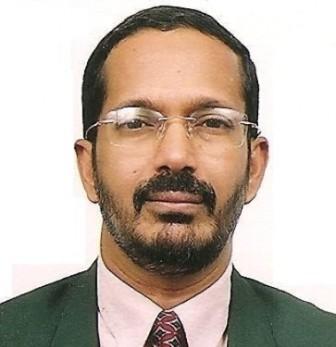
Spokesman for Global Tamil Forum (GTF), Suren Surendiran, told Aljazeera TV Channel that President Mahinda Rajapaksa, if beaten at the presidential polls, will be charged for war crimes and will be taken to the International Court of Justice (ICJ). Speaking to Ceylon Today, he reconfirmed that President Rajapaksa will be charged under accepted systems and mechanisms, for breaking international laws.

President Rajapaksa Admits To Committing War Crimes


Colombo Telegraph

December 1, 2014
An irked President Rajapaksa has indirectly admitted today that he is in fact guilty of the war crimes allegations that are being levelled against him.

Mahinda_Rajapaksa4_1Speaking at an event held in Matara last afternoon, President Rajapaksa has heavily criticised the ongoing UN HRC inquiry against Sri Lanka on allegations of war crimesand had stated that a certain group within the country is attempting to take him before the International Criminal Courts in Hague.
However, he had said he is not at all worried of such attempts.
“I am not worried at all because I wouldn’t build houses in a cemetary if I was afraid of the devil (මම යකාට බය නම් සොහොනේ ගෙවල් හදන්නේ නැහැ),” he had said. In other words, President Rajapaksa has dissed the international mechanisms attempting to bring justice to victims of war crimes, while admitting he is in fact guilty of the war crimes charges that are being levelled against him.
He had also gone on to state that it will not be easy to defeat him at the upcoming Presidential elections, no matter who is fielded by the Opposition to contest against him.
“Certain foreign influences are interested in appointing an individual who would remain a puppet in their hands. But people recognize such attempts and always oppose them. Defeating me will be extremely tough,” he had added.

Can Maithri Be An ‘Attlee’ In The Making?


Colombo Telegraph
By Lukman Harees -December 1, 2014
Lukman Harees
Lukman Harees
“We should be long past applauding politicians of any hue: they got us into this mess. The best deserve a probationary opportunity to prove themselves, the worst should be in jail.” Gerald Warner
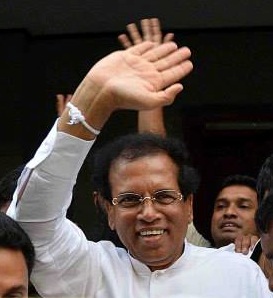
Maithri
In Britain in 1945, an event occurred which still causes shocked questions from around the world.
Clement Attlee was elected Britain’s new prime minister after Labour won a sweeping victory in the 1945 General Election, defeating great wartime leader Winston Churchill. This came as a major shock to the Conservatives following Mr Churchill’s hugely successful term as Britain’s war-time coalition leader, during which he mobilised and inspired courage in an entire nation. People voted for Atlee, in spite of admiring Churchill as a Hero. His wife told him that it might be a ‘blessing in disguise’. Winston Churchill is said to have replied that it was ‘very well disguised’. The Daily Mirror described the Tory’s shock as being ‘reminiscent of the funeral of a millionaire at which all the mourners have just learned that they were left out of the will’.Read More

Gender and the executive suite


December 2, 2014
The four main Nordic countries – Denmark, Finland, Norway and Sweden (the Vikings) – lead the world in social indicators on factors such as global ranking in happiness, competitiveness, the best place to be a woman and even the best place to be born. These achievements are admired the world over, especially the Vikings’ ability to remain competitive on a global scale and sustain a generous social welfare system.

How a well-intentioned U.S. law left Congolese miners jobless

A Congolese miner works in a tin mine near the village of Nzibira in the Democratic Republic of Congo. Critics say the U.S. Dodd-Frank Act has played a role in mine closures and low mineral prices, depriving millions of Congolese miners and their families of an adequate living. (Sudarsan Raghavan/The Washington Post)

Russia says NATO destabilises Baltics, plans war games

Portuguese Air Force fighter F-16 (R) and Canadian Air Force fighter CF-18 Hornet patrol over Baltics air space, from the Zokniai air base near Siauliai November 20, 2014. REUTERS/Ints KalninsPortuguese Air Force fighter F-16 (R) and Canadian Air Force fighter CF-18 Hornet patrol over Baltics air space, from the Zokniai air base near Siauliai November 20, 2014.
BY GABRIELA BACZYNSKA-MOSCOW Tue Dec 2, 2014
Reuters(Reuters) - Russia accused NATO on Monday of destabilising northern Europe and the Baltics by carrying out drills there and announced new military exercises of its own, increasing tension over the Ukraine crisis.
NATO responded by blaming Moscow for instability in the region and accused it of violating a ceasefire agreement in eastern Ukraine by sending in large deliveries of advanced weapons to pro-Russian separatists.
The recriminations deepened the worst standoff between Russia and the West since the Cold War as the death toll mounts in a conflict that has killed more than 4,300 people.
"They are trying to destabilise the most stable region in the world - northern Europe," Deputy Foreign Minister Alexei Meshkov said of NATO in an interview with the Russian news agency Interfax.
"The endless military exercises, transferring aircraft capable of carrying nuclear arms to the Baltic states. This reality is extremely negative."
Moscow is sensitive to any NATO manoeuvres, especially in countries that were once part of the Soviet Union, and Meshkov said Russia would take "every step" to protect its security.
In a move likely to be seen abroad as more flexing of muscles, Russian announced it would hold more military exercises in 2015 than this year - including one in the Central military district that includes Moscow and another involving Belarus.
Military drills by both Russia and NATO have contributed to the deterioration in relations since the overthrow of a Moscow-backed leader in Ukraine in February, after which Russia annexed Crimea and backed the separatists in east Ukraine.
BALTIC STATES CONCERNED
Asked to comment, the U.S. ambassador to NATO said additional measures taken by the alliance were defensive and meant to demonstrate members' commitment to mutual self-defence.
"If you look at the scale of Russian activities in Crimea, first in Crimea and now in southeastern Ukraine, it's quite evident that they are destabilising," the envoy, Douglas Lute, told a news conference in Brussels.
Lithuanian Foreign Minister Linas Linkevicius told Reuters Russia was to blame for instability by "carrying out aggression against its own neighbour" in Ukraine, and the Latvian and Estonian defence ministries expressed concern about Russia's "increased activity in the Baltic Sea region".
Moscow says NATO threatens Russia's security by offering membership to countries once in the Soviet Union, but NATO says Russia has increased air activity around Europe. [ID:nL6N0TA520]
"We see a significant military buildup in and around Ukraine," NATO Secretary-General Jens Stoltenberg added in Brussels. "Large transfers of Russian advanced weapons, equipment and military personnel to violent separatists."
Ukraine said on Sunday a convoy of 106 vehicles had entered its eastern territory from Russia without Kiev's permission and accused Moscow of send arms to the separatists.
A Ukrainian military spokesman, Andriy Lysenko, said on Monday Russian special forces were now taking part in attacks on Donetsk airport in the east. Moscow denies sending in troops.
Foreign Minister Pavlo Klimkin said in an interview that Europe and the United States should begin supplying arms to his country, as this would deter the rebels. [ID:nL6N0TK0N8]

(Additional reporting by Alexei Anishchuk and Ludmila Danilova in Moscow, Adrian Croft in Brussels, Andrius Sytas in Vilnius, Dabiel Flynn in Dakar and Pavel Polityuk in Kiev; Writing by Gabriela Baczynska and Timothy Heritage; Editing by Sophie Walker)

Thailand’s police purge: Patronage and pay-outs

THAILAND-CRIME-POLITICS-ROYALS : News Photo
Asian CorrespondentBy Jack Radcliffe-By  Dec 01, 2014 
Powerful and well-connected people in Thailand are almost never publicly held accountable for acts of deceit, manipulation and corruption. For this reason, the ongoing anomaly of the ‘Police Purge’ has been a recent source of major intrigue.
The man at the centre of the story is former Central Investigation Bureau (CIB) chief Pongpat Chayapan, who has been accused of, “receiving bribes in exchange for transferring or promoting police officers, demanding money from oil smuggling gangs, making money from gambling businesses, laundering money, and citing the monarchy as a way to gain benefits.”
Chayapan is reported to have accumulated riches amounting to 10 billion baht (US$304 million), including cash, gold and land deeds, plus valuable Buddhist amulets and antiques. Other alleged co-conspirators include former marine police commander Pol Maj-Gen Boonsueb Praituen, Pol Col Wuthichat Luensukan, and Pol Col Akarawut, who are alleged to have collectively demanded 3.5 million baht from police officers to ensure prestigious positions and postings.
One of the accused, Pol Col Akarawut Limrat, recently fell to his death from a building in an apparent suicide. Limarat was hastily cremated, foregoing the usual Buddhist funeral rites. Normally at least three days of rituals take place before a body is cremated. No official reason has been given for the urgency of the cremation.
The ‘Police Purge’ is being led by Pol General Somyot Poompanmoung and has been sanctioned by the junta who “ordered soldiers to jointly conduct searches with the police in 15 locations owned by and involved with the former CIB commissioner“. One of the reasons proposed for making such a public display out of this case is to “weaken and control the Royal Thai Police, seen to be a bastion of pro-Thaksinism”.
The crackdown on corruption certainly fits into General Prayuth’s proposed reform agenda of cleaning up Thai politics; the need to cleanse and purge is presumably one of the reasons that indefinite martial law is required and that elections have been delayed until at least 2016.
Nonetheless, much public scepticism still exists and there is a widely held belief that the upper echelons of the police/military are often the beneficiaries of extra-curricular finances as a result of complex patronage networks operating behind the scenes. For example, theasset declaration recently made by the junta government showed that many of these public servants have amassed incredible wealth while earning public servants’ salaries.
Over the years there have been numerous examples of well-connected people avoiding the consequences of their actions due to their proximity to wealth and power, obvious cases include: The Red Bull HeirChalerm’s Son and Mu Ham. The major pitfall of being the beneficiary of patronage is that should the protection of the patron be removed, one is left heavily exposed. Thankfully for these people, their relationships endured.
However, Chayapan appears to have fallen from grace as both he and three of his cohorts had previously been granted Royally-given surnames as relations of Princess Sirasmi. These names have now been outlawed in light of the allegations, which include lèse majesté.
The office of Crown Prince Maha Vajiralongkorn, 62, issued a statement on Friday ordering the Interior Ministry to strip the family of Princess Srirasmi, 42, of the royal-appointed surname Akharaphongpreecha.
“Individuals using the royal-appointed last name must change back to their old family name,” the office said in the statement.
It seems that major changes are in motion in Thai society and we may see new and unlikely alliances forming. The junta government’s sincerity in eradicating corruption is evident in this case of and it can only be good news that returning happiness to the Thai people is going to include the seeking out of ill-gotten gains wherever they may be and, presumably, we will be seeing more revelations akin to those of Chayapan.
However, as these stories develop we may not always get as much information as we have been privy to this time around. Due to martial law, and other laws which restrict free expression on sensitive matters, we may often have to put the pieces of a story together ourselves as much of the information that it is important to know to fully understand the Thai political context can only ever be insinuated.
About the author:
Jack Radcliffe is a Bangkok-based anthropologist focusing on contemporary Thailand.

The End Of The Anti-War 

Movement?

war-good-for-fewBy Joseph Thomas-October 30, 2014
I have to wonder what’s up when only about 100 people turn out to meet and greet the President of The United States at an alleged anti-war rally in downtown San Francisco. There was at least five days advance notice, and Vice President Biden was in town earlier in the week, so it’s not like it was a surprise visit. No, in fact it was a $25,000 per plate (no seconds) fundraiser at the W Hotel in San Francisco. The plethora of stop-the-war, environmental, and workers rights organizations that have sprung up over the last few decades don’t seem to see the connection between their organizations mission statement, and other issues that are related to their cause. In most cases these issues are joined at the hip.

There have been several disappointing turnouts at protests this year. Most of them have been organized by well established NGO’s. There was supposed to be a big anti-war protest in front of U.S. Senator Diane Feinstein’s office this Spring that never materialized. Only about 50 people showed up at Congresswoman Nancy Pelosi’s office to protest the genocide in Gaza this past August. And the Occupy S.F. Third Convergence in September was just…sad.

The events that drew the biggest crowds recently in the San Francisco Bay Area were organized by groups like the Arab Resource Organizing Committee and the Arab Youth Organization. Thousands of people of all ages and ethnicities marched to the Port of Oakland to block the unloading of the ZIM ship from Israel. Earlier in the year, there was a large rally and march in downtown San Francisco to protest the ongoing genocide in Palestine, and several smaller demonstrations as well. While these rallies drew thousands of people, could the numbers reflect that many people were on spring break or summer vacation? In any event, the rogue state of Israel goes about business as usual.

If the first casualty of war is the truth, the second is the environment. The March Against Monsanto protesters must also be there to march for Gaza. The anti-war movement must realize that the U.S.military is the largest consumer of oil on the planet; we are fighting wars in order to be able to fight wars. The anti- pipeline and fracking cadre has to realize that Roundup and other Big Ag chemicals are also major sources of pollution, both in their production and application. Workers rights organizations also have to fight to end the wars that are killing their family members. The money the healthcare, housing, and education NGO’s are clamoring for is currently being given to war profiteers, rogue states, and autocrats. The people’s money.

Part of the problem is that many protests are driven by emotion, rather than logic. Protests tend to be large at the beginning of events like Gaza or Keystone, but then the energy dissipates. There is no end game for what is going to be accomplished, consequently there is no plan of action to get there. Demonstrations becomes social networking events, which is a good thing, and a bad thing. The good is that people actually get off their buttisimos, walk in the fresh air and sunshine, and interact with other humans. The bad is that you feel like you’ve actually done accomplished something. Having been part of a movement that actually ended a war (Vietnam), I can tell you uh, no, you haven’t. As far as I can tell it’s business as usual for the U.S. of A.

And when was the last time there was an anti-nuke protest? I recorded this Fukushima “Die-In” at the Japanese Consulate, but who is protesting the irradiated fish and other animals showing up on the West Coast? The depleted uranium still being used in Iraq and Afghanistan? The displacement of indigenous communities through resource extraction? Contamination of aquifers, soils, and the atmosphere by uranium minining? The growing stockpiles, sophistication, and horror of modern nuclear weapons? Or of weapons in general, especially the “gun in every home” mentality afflicting this country?

Living as I do two blocks from Twitter headquarters, I keep asking: “Will they ever turn a profit?” No, seriously, what I have been asking for lo these many years is: “When will there be a ‘Twitter Revolution’ in this country?” When will the millions of disenfranchised citizens tweeter each other and say: “I’m mad as Hell, and I’m not going to take it anymore!?”

Twitter is really more like a entertainment medium than a communication tool; a great way to sell advertising and burn up cellular credits, or whatever the telecoms do to make the billions they make. There’s just too much “stuff” on Twitter, or MyFace, or SpaceBook. Maybe a simple email, text, chat, VoIP call would be more effective in mobilizing people? How about a community potluck? With pinata’s! Food, music, and children always bring people together. Advertising? Not so much.

Perhaps it’s time the “anti-war movement” died. Protests are a relic of the 19th and 20th centuries. Maybe it’s time for a solutions-oriented strategy that demands “the government” perform the function it was created for. If it is incapable of meeting the needs of the people, it is obligated to dissolve itself, as called for in the constitution.

A “Pro Human Rights” movement would demand an immediate cessation of hostilities, universal healthcare and education, abolition of student debt, the complete overhaul of the “criminal justice” industrial complex, starting with local police departments, food and housing subsidies for everyone, reparations for indigenous people and the descendants of slaves, decommissioning all nuclear power plants, an immediate halt to fossil fuel extraction, and the end of animal exploitation, beginning with “pets,” zoo’s, and “theme parks.” For starters.

Quanah Brightman of United Native Americans told me that some of the tribes get together for a monthly “Bear” meeting. Maybe the thousands of sometimes redundant and competing NGO’s can adopt this indigenous tradition, like the founding fathers “adopted” the Iroquois constitution, or Great Law of Peace (obviously, they left something out). Currently, the powers that be have “the movement” divided and conquered. The only way anything will be accomplished is if organizations and individuals work together for a common purpose. Ending “wars and rumors of wars” is the first step to social justice for all.
Joseph Thomas is a San Francisco writer, photographer, and digital media producer.


Joshua Wong, two other HK student protesters on hunger strike

 Reuters
BY CLARE BALDWIN AND JAMES POMFRET-Mon Dec 1, 2014

(Reuters) - Thousands of Hong Kong pro-democracy activists forced the temporary closure of government headquarters on Monday after clashing with police, defying orders to retreat after more than two months of sustained protests in the Chinese-controlled city.

Hong Kong leader Leung Chun-ying said police had been tolerant but would now take "resolute action", suggesting that patience may have finally run out.
Speaking on a stage on Monday night in the heart of the Admiralty protest site next to government headquarters, student leader Joshua Wong said he and two others, including a secondary school student, would start a hunger strike to pressure Beijing to grant Hong Kong full democracy.
"Today, we have decided to do this because we feel have no other road to take," said 18-year-old Wong, to loud applause and chants of support from hundreds of protesters gathered in the rain.
He was speaking after chaos erupted as commuters made their way to work, with hundreds of protesters surrounding Admiralty Centre, which houses offices and retail outlets, in a stand-off with police. The central government offices and the legislature were forced to close in the morning, as were scores of shops.
The latest flare-up, during which police charged protesters with batons and pepper spray, showed the frustration of protesters at Beijing's refusal to budge on electoral reforms and grant greater democracy to the former British colony.
"Some people have mistaken the police's tolerance for weakness," Leung told reporters. "I call for students who are planning to return to the occupation sites tonight not to do so."
He did not respond when asked if police would clear the sites on Monday.
Hong Kong Federation of Students leader Alex Chow said the protesters had intended to paralyse government headquarters.
"The plan was a failure on the whole, given that even if some places were occupied, they were cleared by the police immediately," Chow said.
The democracy movement represents one of the biggest threats for China's Communist Party leadership since Beijing's 1989 crackdown on pro-democracy student protests in and around Tiananmen Square.
Financial Secretary John Tsang said the protests had damaged Hong Kong's international image and hurt investor confidence, adding the city's economic growth could be lower than the government's forecast of 2.2 percent. The territory also reported a slowdown in monthly retail sales. [ID:nL3N0TL1R3]
Hundreds of riot police scattered the crowds in several rounds of heated clashes overnight, forcing protesters back with pepper spray and batons.
Scores of volunteer medics attended to numerous injured, some of whom lay unconscious and others with blood streaming from head gashes. Police said at least 40 arrests were made.
The unrest took place as British lawmakers said they had been told by the Chinese Embassy they would not be allowed to enter Hong Kong as part of an inquiry into Britain's relations with its former colony and progress towards democracy. [ID:nL6N0TL17C]
Hong Kong returned to Chinese rule in 1997 under a "one country, two systems" formula that gave it some autonomy from the mainland and an undated promise of universal suffrage.
The protesters are demanding free elections for the city's next leader in 2017 rather than the vote between screened candidates that Beijing has said it would allow.
The Hong Kong rallies drew more than 100,000 on to the streets at their peak. Numbers have since dwindled and public support for the movement has waned.
(Additional reporting by Diana Chan, Kinling Lo, Clare Jim, Michelle Chen and Ben Blanchard in BEIJING; Editing by Anne Marie Roantree and Angus MacSwan)

1.7m Syrian refugees face food crisis as UN funds dry up

World Food Programme forced to suspend food voucher scheme to refugees in Jordan, Lebanon, Turkey, Iraq and Egypt

Syrian refugees eating at a refugee camp in Marj
A photo from June 2014 of Syrian refugees breaking their fast outside their tent at a refugee camp in the town of Marj in Lebanon. Photograph: Bilal Hussein/AP
Monday 1 December 2014 
The Guardian homeMore than 1.7 million Syrian refugees in Jordan, Lebanon, Turkey, Iraq and Egypt are facing a disastrous and hungry winter after a funding crisis forced the UN’s World Food Programme to suspend food vouchers to hundreds of thousands forced into exile by the conflict.
Since the war began in March 2011, the WFP has brought food to millions of Syrians inside the country, and has used the voucher scheme – which allows refugees to buy food in local shops – to inject about $800m (£500m) into the economies of those countries hosting them.
But after finding itself unable to secure the $64m it needs to support Syrian refugees in December, the WFP announced on Monday that it was halting the scheme. Severe funding shortfalls have already led the UN body to reduce rations within Syria, where it is trying to help 4.25 million people.
Its executive director, Ertharin Cousin, issued a blunt and urgent appeal to donors, asking them to honour their commitments and warning that the suspension would have a devastating effect on the lives of more than one-and-a-half million people. She said: “[It] will endanger the health and safety of these refugees and will potentially cause further tensions, instability and insecurity in the neighbouring host countries. The suspension of WFP food assistance will be disastrous for many already suffering families.”
She added that Syrian refugees in camps and informal settlements throughout the region were ill-prepared for another difficult winter, especially in Lebanon and Jordan where tents are drenched in mud, hygiene conditions are poor and many children lack shoes and warm clothes.
Muhannad Hadi, WFP regional emergency coordinator for the Syria crisis, echoed the warnings, saying the consequences for both Syrian refugees and host nations could be devastating.
“We are very concerned about the negative impact these cuts will have on the refugees as well as the countries which host them,” he said. “These countries have shouldered a heavy burden throughout this crisis.”
Greg Barrow, spokesman for the WFP’s London office, said the precise effects of the suspension would be hard to gauge because refugees’ circumstances varied from country to country.
As many of the refugees were living outside camps, he said, there would be opportunities for them to look for informal work that would enable them to earn money for food. Others, in big camps such as Zaatari and Azraq in Jordan, are still receiving rations.
He added: “Often members of local communities and, in some cases, local authorities, provide some assistance – but the WFP is by far and away the biggest provider of food assistance and there are no other organisations that have the scale and reach to cover the food needs of the more than 1.7 million who have been affected by this suspension.”
Like many other international agencies, the organisation is having to contend with five simultaneous level-3 emergencies – the UN’s most serious crisis designation – in Syria, Iraq, South Sudan, Central African Republic and those west African countries caught up in the Ebola outbreak.
Despite the competing demands, said Barrow, the WFP could not simply divert money from one crisis to another at will.
“Because many donations are allocated to specific programmes and cannot be used elsewhere, there is a lack of flexibility in the system,” he said. “This has been exacerbated by the high number of complex emergencies we are facing and some programmes such as those for refugees are underfunded.”
The WFP’s decision to suspend the programme comes nearly three months after it first warned it was running out of money and weeks after it warned it had reached a “critical point” in its efforts to help Syrian refugees because of a 89% shortfall in funding.
“For the next six months, the WFP requires $412.6m to support almost 3 million Syrian refugees in the neighbouring countries,” the organisation said in an operational resourcing update in November.
“Any reductions or halt in WFP assistance are likely to cause widespread food insecurity and further population movement and increased protection concerns.”
In the same bulletin, it warned that the first “critical pipeline break” in its Syrian operations was expected in January 2015, adding: “Considering commodity lead times, additional resources must be secured by early November to ensure procurement and arrival of supplies in time for January distributions.”
Despite Monday’s announcement, the WFP said it would be able to resume the electronic voucher scheme immediately – if December’s funding were to come through in time.
Syria’s three-and-a-half year civil war has killed more than 200,000 people, displaced 6.5 million within the country and forced more than 3 million to seek refuge beyond its borders.

Paedophile doctor jailed for abusing young cancer patients

NewsChannel 4 News
MONDAY 01 DECEMBER 2014
NewsChildren's doctor Myles Bradbury is jailed for 22 years after admitting to the abuse of 18 boys in his care and taking thousands of pictures of gravely ill children on his spy pen.