Peace for the World World ! Your War Our Lives

The Dalai Lama
A Brief Colonial History Of Ceylon(SriLanka)
Sri Lanka: One Island Two Nations
A Brief Colonial History Of Ceylon(SriLanka)
Sri Lanka: One Island Two Nations
(Full Story)
Back to 500BC.

Monday, December 1, 2014
Open Letter to Pope Francis: Sri Lankan President’s Efforts to Use Your Holiness to Prolong Authoritarianism
Open Letter to Pope Francis: Sri Lankan President’s Efforts to Use Your Holiness to Prolong Authoritarianism
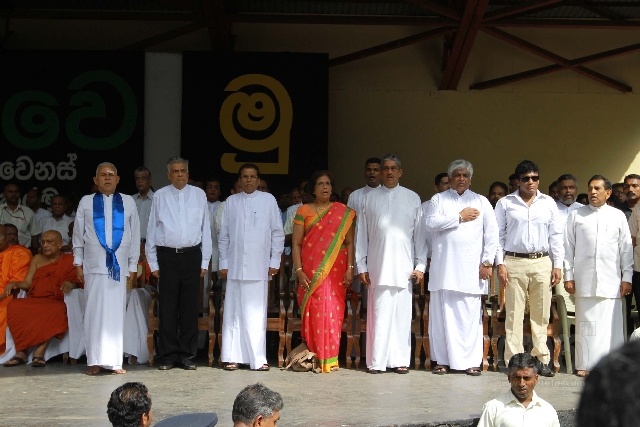
[ You have become a political symbol supporting authoritarian regime]
By Sunanda Deshapriya-
By Sunanda Deshapriya-
 I
write this open letter to you as a Sri Lankan journalist and human
rights defender in self-exile, pained by the fact that Your Holiness has
knowing or unwilling contributed to restrict the democratic rights of
Sri Lankan people, to challenge an emerging dictatorship at a most
critical time in our country’s history. I’m just one of the more than a
hundred human rights defenders, journalists and other Sri Lankans who
had to leave the country to save our lives during the Rajapakse
presidency. Several Catholic priests were also compelled to leave for
similar reasons.
I
write this open letter to you as a Sri Lankan journalist and human
rights defender in self-exile, pained by the fact that Your Holiness has
knowing or unwilling contributed to restrict the democratic rights of
Sri Lankan people, to challenge an emerging dictatorship at a most
critical time in our country’s history. I’m just one of the more than a
hundred human rights defenders, journalists and other Sri Lankans who
had to leave the country to save our lives during the Rajapakse
presidency. Several Catholic priests were also compelled to leave for
similar reasons.Open Letter to Pope Francis Sri Lankan President’s Efforts to Use Your Holiness to Prolong Authoritarianism... by Thavam Ratna

The Way Ahead May Be Tortuous

By R.M.B Senanayake - December 1, 2014 |
R.M.B. Senanayake
The President has called for an election two years before the end of his
term. His rival was unexpected and is a person from his own party- the
Sri Lanka Freedom Party. The Common Opposition candidate talks about the
violation of democracy and points out that with the passing of the 18th Amendment an
elected dictatorship has been established and that the prospect of a
free and fair election are remote judging by the conduct of other recent
elections. The President’s large posters and cut-outs even if not
illegal are certainly not moral, say the people who are concerned about
the need for a free and fair election. The MPs who have defected and
those others of the JHU and the SLFP voted for the 18th Amendment and
even for the arbitrary impeachment of the former Chief Justice Shirani Bandaranayake.
Why did they do so? Were they so ignorant about the perils of
entrusting absolute power to one individual? Were they men without any
moral conscience? How has their conscience changed or has it really
changed?
Lack of understanding of human nature
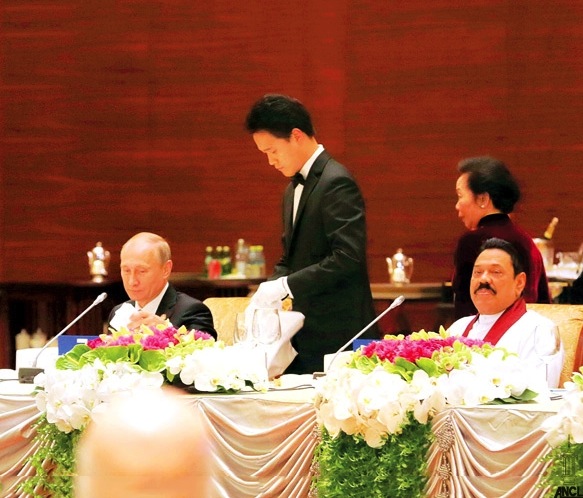 Had
they read political science or studied world history they would have
been aware of the nature of political power. As “The Federalist of the
Founding fathers of the American Constitution wrote “what is government
itself but the greatest of all reflections on human nature? If men were
angels no government would be necessary. If angels were to govern men,
neither external nor internal controls on government would be necessary.
The great security against a gradual concentration of the several
powers in the same department consists in giving to those who administer
each department the necessary constitutional means and personal motives
to resist encroachments of the others”. The Papers argued the necessity
for ‘checks and balances’ on the exercise of power by each organ of
government- : the Legislature, the Executive and the Judiciary. What
happened by the 18th Amendment was to remove all such checks and
balances. The Constitution had provided already for the absolute
immunity of the President unlike in the U.S and French Constitutions
where it was limited to matters arising from the exercise of executive
power and not to any private criminal acts of the President. As it is
the President can get away even with murder for he has absolute
immunity. This absolute immunity removes the President’s accountability
to the Judiciary for any crime or violation of law. The Romans raised
the question” who is to guard the guardians? The political scientists
and statesman’s answer was the system of checks and balances..Read More
Had
they read political science or studied world history they would have
been aware of the nature of political power. As “The Federalist of the
Founding fathers of the American Constitution wrote “what is government
itself but the greatest of all reflections on human nature? If men were
angels no government would be necessary. If angels were to govern men,
neither external nor internal controls on government would be necessary.
The great security against a gradual concentration of the several
powers in the same department consists in giving to those who administer
each department the necessary constitutional means and personal motives
to resist encroachments of the others”. The Papers argued the necessity
for ‘checks and balances’ on the exercise of power by each organ of
government- : the Legislature, the Executive and the Judiciary. What
happened by the 18th Amendment was to remove all such checks and
balances. The Constitution had provided already for the absolute
immunity of the President unlike in the U.S and French Constitutions
where it was limited to matters arising from the exercise of executive
power and not to any private criminal acts of the President. As it is
the President can get away even with murder for he has absolute
immunity. This absolute immunity removes the President’s accountability
to the Judiciary for any crime or violation of law. The Romans raised
the question” who is to guard the guardians? The political scientists
and statesman’s answer was the system of checks and balances..Read More
Common cry!


- UNP, SLFP members and 36 oppositionparties and groups sign MoU to scrap Executive Presidency
- I pledge to protect the trust the people have placed in me. I promise to fulfill this commitment – Maithirpala
- Time to end the Rajapaksa journey: Ranil
- ‘Will not be spectators after election – will agitate until promises are kept’: Sobitha Thero tells Common Candidate
- ‘Maithripala is a man with political vision’: CBK
By Dharisha Bastians
Common Candidate Maithripala Sirisena yesterday formally pledged to abolish the executive presidential system by signing a Memorandum of Understanding with major opposition parties across the ideological spectrum to lock in their support for his election bid.
Common Candidate Maithripala Sirisena yesterday formally pledged to abolish the executive presidential system by signing a Memorandum of Understanding with major opposition parties across the ideological spectrum to lock in their support for his election bid.
Rs 450 Million per Govt MP and Opposition MPs Who Cross Over

[ Desperate to hold on to power huge amounts being allocated]
30/11/2014
The Sri Lanka Government is to allocate funding for over 150 special
development projects using the carry forward allocations of the earlier
2014 budget, top government sources said.
High level government authorities have issued a directive to immediately
allocate Rs.450 million per head as development funds to selected
parliamentarians. The sources, who declined to be named, said that the
allocation (Rs. 450 million each) would also apply to MPs who cross over
to government ranks.
While this emergency allocation is part of the 2014 budget’s unutilised
money for around 80 expenditure proposals, the money allocated for these
projects have been already utilised for other urgent work and may now
have to come from a subsequent, supplementary vote in Parliament next
year. Tax revenue has also fallen short of targets adding problems to
the 2014 budget allocations.
The sources said that the authorities have been informed to be
‘flexible’ in deciding the special projects in which MPs will use these
funds.
According to the Finance Ministry budget progress report, out of 112
proposals made in the (ongoing) 2014 budget, only 32 have been fully
implemented so far. 80 proposals are yet to be implemented.
These 80 proposals (and funds allocated) will be carried forward for
next year along with 77 new proposals made in the 2015 budget, a senior
government official said, adding that under these circumstances
allocating money for over 150 special development projects will not be
an easy task.
In the 2014 budget a sum of Rs. 96,950 million had been allocated for 59
new projects and now a part of this money could be diverted to
implement the proposed development projects that would be devised on the
lines of the “Eka Gamakata Eka Vedak” one infrastructure development
per village programme being implemented by the Economic Development
Ministry.
Treasury officials are grappling with the preparations of 2015 budget
circulars, gazette notifications, closing of cash books for the year
2014 and settlement of accounts in accordance with the operations
circular as the budget estimates and financial allocations for 27
proposals had been amended during the budget debate in Parliament.
Better Times And Worst Of Fears
By S. Sivathasan -December 1, 2014
S. Sivathasan
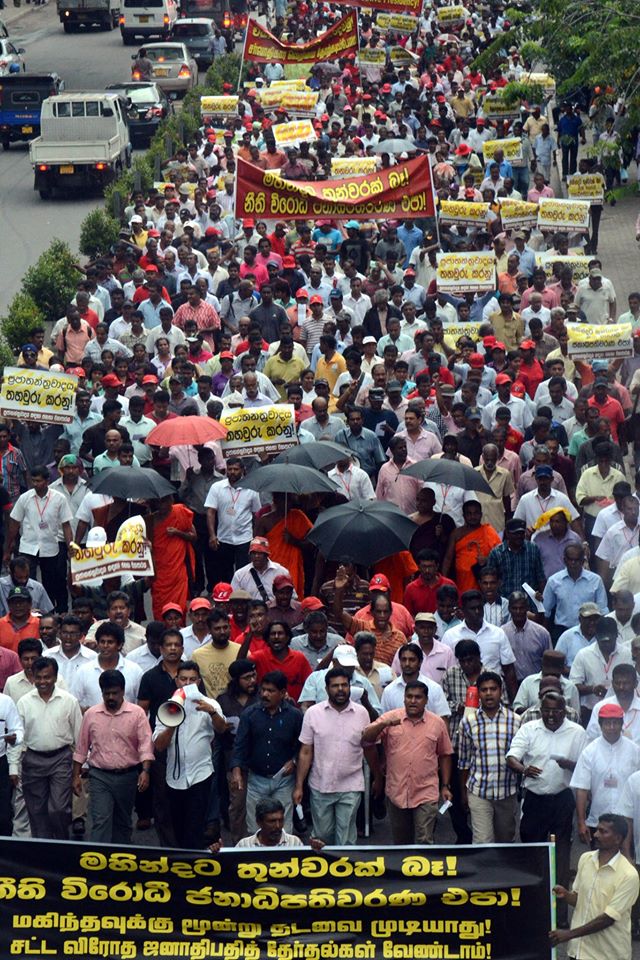
Can hopes of better times and thoughts of the worst subsist? Prospects
for a good life were wished for and openly expressed in Sri Lanka. But
ever since a good consensual opposition candidate was announced fears
that were latent among the powers that be, surfaced and stalked the
land. They have now reached desperate proportions. What sparked them?
The possibility of a regime change becoming more real after a winnable
candidate in Maithripala Sirisena came
to the fore. With multi party endorsement he is on the threshold of
victory. A realignment of forces is seen as spelling disaster to those
entrenched for long.
Office is an Opportunity
 In
a healthy democracy an electoral victory is an opportunity for serving
the country. A second win was a doubling of opportunity for the
incumbent President. Retirement thereafter was what the framers of the
constitution in their wisdom prescribed. The limitation after the second
was to save the people from having more of the same or worse in the
third. This limitation in the US remains untouched over the centuries.
Chile has laid down a single term for the President. In Sri Lanka the
first term was uneventful as the national question was never resolved.
Destruction unlimited visited upon one ethnic entity pleased the other.
In the wake of that pleasure and accompanying euphoria a second term
came the President’s way. How did the need for a third term arise?
In
a healthy democracy an electoral victory is an opportunity for serving
the country. A second win was a doubling of opportunity for the
incumbent President. Retirement thereafter was what the framers of the
constitution in their wisdom prescribed. The limitation after the second
was to save the people from having more of the same or worse in the
third. This limitation in the US remains untouched over the centuries.
Chile has laid down a single term for the President. In Sri Lanka the
first term was uneventful as the national question was never resolved.
Destruction unlimited visited upon one ethnic entity pleased the other.
In the wake of that pleasure and accompanying euphoria a second term
came the President’s way. How did the need for a third term arise?
In the two terms making nine years, the people in their mass have
encountered and experienced everything unbecoming of a President. Voters
of every political hue and from all ethnicities were and are resolved
on regime change. Growing disillusionment in the first term has turned
into uncompromising antipathy. Complete alienation of Tamils in the
first instance, now pervades the whole of the polity. What originated
years back has escalated to illimitable proportions. When a rule becomes
unrighteous it takes tyrannical forms. In this country it has assumed
all the features of a well riveted sordid hand. Hence the people’s
resolve to overthrow it. But the UPFA seeks asininely to entrench itself
further.
Give Tamils equal rights, Venkaiah tells Sri Lanka

M. Venkaiah Naidu

December 1, 2014
Union Minister for Urban Development and Parliamentary Affairs M.
Venkaiah Naidu said on Sunday that the Sri Lankan government should give
equal rights and opportunities to the Tamils by establishing a
constitutional mechanism.
At the launch of a State-level membership drive of the BJP here, he said
those faulting India’s policy towards Sri Lanka should remember that
the island nation, or for that matter other neighbours such as China,
could not be antagonised.
Mr. Naidu said it was welcome that after the intervention of Prime
Minister Narendra Modi, Sri Lanka unconditionally released five Indian
fishermen sentenced to death, and the spirit had to be continued.
He said a system for speedy release of fishermen detained by the navy of
either country for allegedly crossing the maritime boundaries, by
accident or deliberately, would help to establish lasting relations
between the two countries.
Keywords:
Rajapaksa’s Patriotism Vs. Citizens’ Patriotism
By Hema Senanayake -December 1, 2014

Hema Senanayake
The
Citizens’ Power (Purawasi Balaya) is an organization of artistes,
academics and civil society activists. They will be holding a public
rally on December 02nd at Hyde Park in Colombo. Among speakers there
will be Maduluwawe Sobitha Thero, Common Opposition Candidate Maithripala Sirisena,
Opposition Leader Ranil Wickremesinghe, former President Chandrika
Kumaratunga, JVP Leader Anura Kumara Dissanayake, TNA National List
Parliamentarian M.A. Sumanthiran, Democratic Party Leader and former
Army Commander Sarath Fonseka, Mano Ganeshan of the Democratic Peoples’
Front and a host of other academics and activists. I felt writing
something brief about a good citizen.
 A
good citizen is a patriot. As Theodore Roosevelt defined that
patriotism means to stand by the country; it does not mean to stand by
the president; it is patriotic to support him insofar as he efficiently
serves the country; it is unpatriotic not to oppose him to the exact
extent that by inefficiency or otherwise he fails in his duty to stand
by the country; in either event, it is unpatriotic not to tell the
truth, whether about the president or anyone else.
A
good citizen is a patriot. As Theodore Roosevelt defined that
patriotism means to stand by the country; it does not mean to stand by
the president; it is patriotic to support him insofar as he efficiently
serves the country; it is unpatriotic not to oppose him to the exact
extent that by inefficiency or otherwise he fails in his duty to stand
by the country; in either event, it is unpatriotic not to tell the
truth, whether about the president or anyone else.
By this definition, in this moment of history one might feel that it is unpatriotic not to oppose the President as
he fails in his duty to stand by the country and its democratic values
and laws by enacting 18th amendment to the constitution.
As one of former U.S. presidents intimated you are a good citizen if you
do your job well. If you love your children you are a good citizen. If
you feel that you want to raise your children good, you are a good
citizen. If you love your parents and take care of them when needed,
then you are a good citizen. If you feel happy when our cricketers do
well in the World Cup and other matches you are a good citizen. If you
feel proud when our scientists do well here and abroad you are a good
citizen. If you are concerned with environment, you are a good citizen.
If you feel bad when injustices are done to others, you are a good
citizen. Put all these traits together then you become a wonderfully
good citizen. Still you have one more thing to do in order to be a good
citizen. That is to participate actively and wisely in the electoral
process. It is your civic duty. In other words you should willingly and
enthusiastically exercise your citizen’s power, the power of franchise.Read More
Restraining divisiveness of forthcoming polls
By Jehan Perera-December 1, 2014,

+(2).jpg) The
continuing defection of government members away from President Mahinda
Rajapaksa's election campaign is an indicator of the formidable nature
of the challenge faced by the government. The President has a reputation
for being able to take on any challenge. However, what he is seeking to
do is unprecedented. No President in the past had the opportunity to
contest the elections a third time. The Sri Lankan voter has had an
earlier tradition of not returning an incumbent government to power at
elections. This only changed with the presidential system that
concentrated power in the hands of the President and enabled ruling
parties to muscle themselves back to power.
The
continuing defection of government members away from President Mahinda
Rajapaksa's election campaign is an indicator of the formidable nature
of the challenge faced by the government. The President has a reputation
for being able to take on any challenge. However, what he is seeking to
do is unprecedented. No President in the past had the opportunity to
contest the elections a third time. The Sri Lankan voter has had an
earlier tradition of not returning an incumbent government to power at
elections. This only changed with the presidential system that
concentrated power in the hands of the President and enabled ruling
parties to muscle themselves back to power.
Constitutional Reforms are meaningless unless opposing views are tolerated
 December 1, 2014
 Wear the same tie as the boss but don’t agree to his unlawful orders
 Bank
of Ceylon’s retired General Manager Sarath de Silva, addressing the Sri
Jayewardenepura University’s Public Administration Alumni Association
last week, left an important piece of advice with his audience. He said
that public servants should wear the same V-cut tie as their boss but
should learn not to blindly agree to everything which the boss says if
they have reasons to disagree on ethical or legal grounds.
Bank
of Ceylon’s retired General Manager Sarath de Silva, addressing the Sri
Jayewardenepura University’s Public Administration Alumni Association
last week, left an important piece of advice with his audience. He said
that public servants should wear the same V-cut tie as their boss but
should learn not to blindly agree to everything which the boss says if
they have reasons to disagree on ethical or legal grounds.
Sri Lankan General To Be Arrested In South Africa For Crimes Against Humanity
December 1, 2014
A retired Sri Lankan army general allegedly responsible for a spate of
extrajudicial killings in the Tamil dominated Northern Province in the
mid-1990′s has come under the scrutiny of activists and international
lawyers in South Africa, Colombo Telegraph reliably learns.

Gen. Srilal Weerasooriya
General Srilal Weerasooriya is
believed to have arrived in South Africa on November 30, 2014 to attend
a conference hosted by the Association of Military Christian
Fellowships, in which Weerasooriya is leading organiser.
Lawyers and activists are particularly concerned over Weerasooriya’s involvement in the Chemmani mass graves – a mass grave in which victims of a spate of killings by the military targeting Tamil civilians were dumped.
A recent decision by the Constitutional Court of South Africa affirmed
the responsibility of the state in prosecuting crimes against humanity
in Zimbabwe, under South Africa’s universal jurisdiction laws. A team of
lawyers and activists are believed to be pressing for the arrest and
trial of Weerasooriya in South Africa for alleged crimes against
humanity. The move comes in the aftermath of an informal fact-finding
process that lasted over two years, in which evidence linking
Weerasooriya to the Chemmani mass murders was systematically documented
by activists and lawyers.
Related story
30 October, 2014
Johannesburg – In a ground-breaking judgment, the South African
Constitutional Court has unanimously ruled that the South African Police
Service (SAPS) must investigate crimes against humanity perpetrated in
Zimbabwe in 2007.
The so-called ‘Zimbabwe torture case’ was brought by the Southern Africa
Litigation Centre (SALC) and the Zimbabwean Exiles Forum (ZEF) to
compel South Africa to abide by its domestic and international legal
obligations to investigate and prosecute high level Zimbabwean officials
accused of crimes against humanity.
“South Africa’s highest court has set an important precedent: South
Africa will not be a safe haven for perpetrators of the world’s worst
crimes” said Nicole Fritz, SALC’s executive director. “The judgment
represents a clear appreciation for the role of international criminal
law and its importance to our domestic justice system.”
In 2008, ZEF and SALC submitted a dossier of evidence to the South
African National Prosecuting Authority (NPA) and SAPS, which detailed
state-sanctioned torture in Zimbabwe. SALC and ZEF hoped the authorities
would initiate investigations but turned to the courts after SAPS and
the NPA refused to investigate.
In May 2012, the North Gauteng High Court set aside the decision of the
NPA and the SAPS not to initiate an investigation into state-sanctioned
torture in Zimbabwe. The High Court ruled that the South African
authorities had not acted in compliance with their obligations and held
that the decision was unlawful and unconstitutional.
On appeal, at the Supreme Court of Appeal in November 2013, the Court
agreed with SALC and ZEF and ordered the authorities to investigate the
crimes against humanity detailed in the dossier. SAPS alone launched an
appeal at the Constitutional Court which ruled that investigations must
be initiated.
“After eight years of legal wrangling, we are thrilled that victims of
torture in Zimbabwe now have some prospect of seeing justice served,”
said Gabriel Shumba, ZEF Chairperson, “But the case doesn’t just hold
out promise for victims of torture in Zimbabwe. Should it be reasonable
and practicable for South African authorities to investigate
international crimes committed elsewhere – for instance, the Democratic
Republic of Congo – potentially the victims of those crimes might
approach South Africa’s investigating authorities for assistance.”
Having exhausted all legal appeals, all eyes will turn to the SAPS who have been ordered to commence investigations.
SALC and ZEF were represented by Lawyers for Human Rights (LHR), Wim Trengove, Gilbert Marcus and Max du Plessis.
For more information:
Nicole Fritz, Executive Director SALC, Office + 27 10 596 8538; Cell +27 82 600 1082; NicoleF@salc.org.za
Angela Mudukuti, SALC International Criminal Justice Project Lawyer,
Office + 27 10 596 8538; Cell +27 76 762 3869;AngelaM@salc.org.za
Gabriel Shumba, ZEF Chairperson: Cell +27 84 664 9798
Subscribe to:
Posts (Atom)