Peace for the World World ! Your War Our Lives

The Dalai Lama
A Brief Colonial History Of Ceylon(SriLanka)
Sri Lanka: One Island Two Nations
A Brief Colonial History Of Ceylon(SriLanka)
Sri Lanka: One Island Two Nations
(Full Story)
Back to 500BC.

Friday, May 1, 2015
Medamulana hooligans abuse Dr. Nirmal in raw filth ‘you are the bas….d who chased away our Mahinda mahathaya’, and attack brutally

 (Lanka-e-News-
01.MAy.2015, 11.00PM) Some supporters of ex president Mahinda Rajapakse
who by now has become the most infamously famous corrupt barbaric
president who ruled Sri Lanka attacked Dr. Nirmal Ranjith Dewasiri, the
media spokesman of the University Dons federation, and another
University Don (who did not wish to reveal his name ), while accusing
him and scolding in raw filth, “you are the bas……d who chased away our
‘Mahinda mahathaya’ “
(Lanka-e-News-
01.MAy.2015, 11.00PM) Some supporters of ex president Mahinda Rajapakse
who by now has become the most infamously famous corrupt barbaric
president who ruled Sri Lanka attacked Dr. Nirmal Ranjith Dewasiri, the
media spokesman of the University Dons federation, and another
University Don (who did not wish to reveal his name ), while accusing
him and scolding in raw filth, “you are the bas……d who chased away our
‘Mahinda mahathaya’ “
This brutal attack was launched while the Rajapakse villainous slaves at
their May day rally (today) held at Kirulapone. Both the victims are
now being treated at the accident ward of the Colombo general hospital.
Dr. Nirmal’s neck had been injured.
Dr. Nirmal and his friend have attended the rally and while they were
among the crowd like others , the Rajapakse slavish hooligans have
started moving hither and thither looking at them. The victims have
realized they were in for trouble. However they had stood back to
listen to what Wimal Weerawansa was saying in his speech at that moment.
At that stage , the Rajapakse slavish goons have suddenly set upon Dr.
Nirmal and attacked him shouting ‘you are the bas…..d who chased away
our Mahinda Mahathaya.’ When Dr. Nirmal fell down , the group had begun
fiercely assaulting him. The other Don who was with him had tried to
rescue his friend when these Rajapakse slavish goons who are never in
short supply had attacked him also.
The police officers who were in the vicinity had intervened and taken
Dr. Nirmal into their jeep ,when these Rajapakse nursed and nurtured
slavish goons have assaulted the police and damaged the police jeep,
while shouting, ‘set fire to the jeep with that fellow inside ‘ However
the police had managed to take the victims to the Colombo general
hospital. Dr. Nirmal was admitted to the accident unit.
When a complaint was made to the Kirilapone police , and when it was
being recorded , the notorious political turncoat and people’s discard
Vasudeva Nanayakkara the decrepit , noted for crapping everywhere he
goes despite being a lawyer had visited the police station and has
sought to save the assailants. Vasudeva told the police that one of
those involved in the attack informed him , thereby betraying that he
knows the assailants.
Mahinda Rajapakse who while in power stoked violence , murder and mayhem
and became a byword for brutality , after being booted out is now
clearly manifesting his true image and bestial colors to the people.
When Mahinda Rajapakse met his waterloo in January and went to
Medamulana, his supporters asked ‘why did n’t you cling on to power even
by killing ?’ The present violent and hooligan behavior only bears
testimony to the fact that Rajapakse and his supporters are in the
ready to again plunge the country into chaos, commotion and confusion
come what may
---------------------------
by (2015-05-01 19:24:04)
by (2015-05-01 19:24:04)

Abuse Of ‘Sports Law’ May Ruin Rugby


Marlon Dale Ferreira
The entire Sri Lanka Rugby Football Union barring Group Captain
Hon.Secretary Nalin De Silva were served letters that they cannot
contest the up coming Annual General Meeting by K.D.S.Ruwanchandra the
Deputy General of the Ministry of Sports in a letter dated the 25th of
April 2015.The President of the SLRFU Asanga Seneviratne speaking
to this columnist went on to reveal that all the hard work done to
uplift the sport of rugby may now be in jeopardy with this decision that
perhaps the Sports Minister should consider in reviewing.
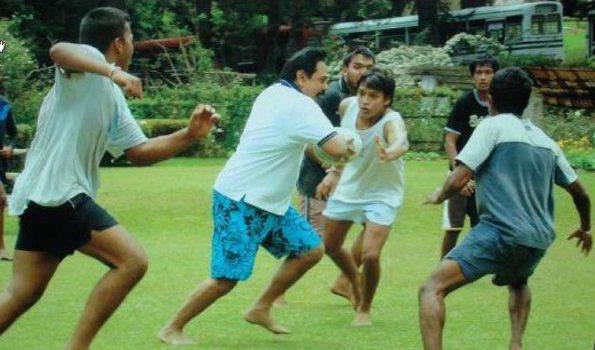 The
only exception made to this Sports Ministry decision is where Group
Captain Nalin De Silva the current Hon. Secretary of the SLRFU is the
only one who has been granted permission to contest. De Silva has
already served 3 years as Secretary of the SLRFU as has Asanga
Seneviratne as President and Lasitha Gunaratne as Vice President.
Allowing De Silva to contest and not Seneviratne and Gunaratne could be
viewed as the epitome of discrimination!
The
only exception made to this Sports Ministry decision is where Group
Captain Nalin De Silva the current Hon. Secretary of the SLRFU is the
only one who has been granted permission to contest. De Silva has
already served 3 years as Secretary of the SLRFU as has Asanga
Seneviratne as President and Lasitha Gunaratne as Vice President.
Allowing De Silva to contest and not Seneviratne and Gunaratne could be
viewed as the epitome of discrimination!Sri Lanka Rugby Football Union: Is Sports Minister Navin On A “Rajapaksa” Witch Hunt ?7
May 1, 2015
K.D.S. Ruwanchandra the Deputy General of the Ministry of Sports has
officially served a letters to the Executive Committee of the Sri Lanka
Rugby Football Union(SLRFU) headed by Asanga Seneviratneinforming
almost all of them that they cannot contest the scheduled ‘Annual
General Meeting’ which is due to be held shortly. “Surprisingly no
reason has been given for the disqualification!” Seneviratne told ‘Colombo Telegraph”.

Asanga Seneviratne with Mahinda Rajapaksa
“This letter comes from a directive given by the Minister of SportNavin Dissanayake who
now appears to be more on a sporting ‘witch hunt’ going on to do
whatever it takes to wipe out anyone who was deemed to have any close
ties with the former Rajapaksa regime, even if it means that the now
experienced steady growth of rugby football both locally and
internationally is to be stopped dead in its tracks. If this is not
truly an example of one ‘cutting his nose to spite his face’ then that
idiom may have to find another definition.” said a former rugby player
who did not wish to be identified.
It is well known fact that Asanga Seneviratne is a close associate of the Rajapaksa family.
The only exception made here is where
Group Captain Nalin De Silva the current Secretary of the SLRFU is the
only one who has been granted permission to contest. De Silva has
already served 3 years as Secretary of the SLRFU as has Seneviratne as
President and Gunaratne as Vice President. “Allowing De Silva to contest
and not Seneviratne and Gunaratne is the epitome of discrimination” the
former rugby player further said. Read More
Thousands still missing after Nepal quake
 KATHMANDU |
 (Reuters) - Thousands of people were still missing in Nepal on Friday as food and help began to trickle through to those stranded in remote areas after last week's earthquake which killed 6,250.
Up to 1,000 Europeans are still unaccounted for, mostly around popular
trekking routes, the head of the European Union (EU) delegation in Nepal
said.
"We don't know where they are, or they could be," Ambassador Rensje
Teerink told reporters. Officials said it was hard to trace the missing
because many backpackers do not register with their embassies.
"It does not mean that they are buried. They could have left the country
without telling anyone before the earthquake struck," Teerink said
Reuters.
Nepal's home ministry said it had not been informed that the number of
EU citizens missing after Saturday's earthquake could be as high as
1,000.
"If that is the case then why are the embassies not informing us? Why
have they not contacted the Nepal government?" home ministry spokesman
Laxmi Prasad Dhakal told Reuters.
The number of people unaccounted for from France, Italy, Spain and the
Netherlands is 371 according to checks Reuters made with their
governments, while all Irish citizens, Croatians and Romanians have been
traced. Other European nations are yet to provide an updated figure on
how many of their citizens are unaccounted for.
Bodies are still being pulled from the debris of ruined buildings, while
rescue workers have not been able to reach some remote areas.
The government put the number of injured at more than 14,350.
In the capital Kathmandu, many unclaimed bodies were being quickly
cremated because of the need to avert disease and reduce the stench of
corpses in areas where buildings had collapsed.
Many of the dead could be migrant workers from neighboring India, local officials said.
"Morgues are full beyond capacity and we have been given instructions to
incinerate bodies immediately after they are pulled out," said Raman
Lal, an Indian paramilitary force official working in coordination with
Nepali forces.
Aid was slowly reaching remote towns and villages nestled in the
Himalayan mountains and foothills of the impoverished nation. But
government officials said efforts to step up the pace of delivery were
frustrated by a shortage of supply trucks and drivers, many of whom had
returned to their villages to help their families.
"Our granaries are full and we have ample food stock, but we are not
able to transport supplies at a faster pace," said Shrimani Raj Khanal, a
manager at the Nepal Food Corp.
Army helicopters have air-dropped instant noodles and biscuits to remote
communities but people need rice and other ingredients to cook a proper
meal, he said.
Many Nepalis have been sleeping in the open since the 7.8 magnitude
quake, with survivors afraid to return to their homes because of
powerful aftershocks. According to the United Nations, 600,000 houses
have been destroyed or damaged.
Information Minister Minendra Rijal said the government would provide
$1,000 in immediate assistance to the families of those killed, as well
as $400 for cremation or burial.
The U.N. said 8 million of Nepal's 28 million people were affected, with
at least 2 million needing tents, water, food and medicines over the
next three months.
UNPRECEDENTED DAMAGE
Finance Minister Ram Sharan Mahat said Nepal would need at least $2
billion to rebuild homes, hospitals, government offices and historic
buildings and appealed for international backing.
"This is just an initial estimate and it will take time to assess the
extent of damage and calculate the cost of rebuilding," Mahat told
Reuters.
Prime Minister Sushil Koirala told Reuters earlier this week the death toll from the quake could reach 10,000.
That would surpass the 8,500 who died in a 1934 earthquake, the last
disaster on this scale to hit the nation sandwiched between India and
China.
Home ministry spokesman Dhakal said that though the 1934 quake was more
powerful, fewer people lived in the Kathmandu valley then.
"The scale of reconstruction will be unprecedented," Dhakal said.
While international aid has poured in, some Nepalis have accused the government of being too slow to distribute it.
"There have been cases where villages have pelted stones on trucks
carrying aid and food supplies. They must have been really hungry and
angry to do so," said Purna Shanker, who works at the government's
commodity trading office.
In Sundarkhula, a village close to the quake's epicenter west of
Kathmandu, villagers said they were searching their destroyed homes for
food.
Bharat Regmi, 28, said he jumped out of the first floor as the quake
lifted his house from its foundations. When he went back a few days
later, he and two of his friends found a bag of potatoes in the rubble.
"We are living on water and whatever we can dig out from the house," he
said, standing under steady rain near the highway to Kathmandu. Later,
he crept back under a thin orange sheet, shared with about a dozen other
villagers.
Tensions have also flared between foreigners and Nepalis desperate to be evacuated.
In the Himalayas, climbing is set to reopen on Mount Everest next week
after damage caused by avalanches is repaired, although many have
abandoned their ascents.
An avalanche killed 18 climbers and sherpa mountain guides at the Everest base camp.
(Additional reporting by Andrew MacAskill and Tommy Wilkes in New Delhi;
Gopal Sharma, Ross Adkin, Frank Jack Daniel, Andrew Marshall, Adnan
Abidi and Christophe Van Der Perre in Nepal; Editing by Raju
Gopalakrishnan/Ruth Pitchford)
Six Baltimore officers charged in Gray’s death
State’s Attorney Marilyn J. Mosby said Friday that a medical examiner had ruled Gray’s death a homicide.

 BALTIMORE
—Six Baltimore police officers have been charged with several counts,
including one who was charged with second-degree murder, in the
high-profile death of Freddie Gray, who died from injuries suffered in
police custody, State’s Attorney Marilyn J. Mosby said Friday.
BALTIMORE
—Six Baltimore police officers have been charged with several counts,
including one who was charged with second-degree murder, in the
high-profile death of Freddie Gray, who died from injuries suffered in
police custody, State’s Attorney Marilyn J. Mosby said Friday.
Mosby said warrants have been issued for the arrest of the officers,
including a lieutenant and a sergeant. Gray suffered a spinal injury
after he was arrested April 12 and died after riding in a police
transport van that made several stops.
Marilyn Mosby Baltimore City state’s attorney, says city police officers involved in the arrest of Freddie Gray will face criminal charges, including homicide. (Reuters)
Rohingya deaths: String of mass graves stretches from Burma to Thailand
Rohingya refugees sit in a boat as they are intercepted by Thai
authorities. Many of those fleeing from Burma never make it ashore. Pic:
AP


A buried skeleton, uncovered at the Thai border jungle camp today
Photo by Maikom Sadao Rescue

The discovery of dozens of Rohingya bodies at
a human trafficking camp in southern Thailand serves as a reminder that
along the nearly 1,000-kilometer refugee passage from western Burma to
southern Thailand lies a string of mass graves, both onshore and
offshore, occupied by a single ethnic group. In its coverage of the
discovery today, the Phuketwan newspaper carried
testimony of a 15-year-old boy who, aboard a smugglers’ boat somewhere
off the coast of Thailand or Malaysia, watched 34 trafficked Rohingya
being thrown overboard. That sort of story is repeated countless times
elsewhere—of mass drownings, of thecasual dispensing of refugees by traffickers.
Before the Thailand government moves to condemn the brutalization of
smuggled Rohingya, it’s worth remembering how its own officials have aided and profited from a trade suspected to be worth up to $250 million annually.
With the rising profits has also come a greater sophistication in the
trade: the boy who watched fellow travelers being pitched into the ocean
said he only managed to survive because his boat had a desalination
plant that supplied fresh water to his and other vessels carrying
trafficked Rohingya. As Phuketwan notes,
the clampdowns on onshore trafficking sites have moved the industry
further “offshore”, and onto floating camps where the smugglers’ bounty
is held until the next link in the trafficking chain running from Burma
(Myanmar) to Thailand is ready to take them. Until demand is curtailed,
traffickers will keep coming up with new ways to ensure the industry
stays afloat.
It’s a depressing illustration of how a people who were dehumanised at
home decided to flee, only to become, along the route, commoditized, and
when their profitability waned, were rendered dispensable. One man kept
in a jungle camp in southern Thailand had an $1,800 price tag placed on
him. “As the smugglers beat Sabur in their jungle hide-out, they kept a
phone line open so that his relatives could hear his screams and speed
up payment of $1,800 to secure his release,” Reuters reported in 2013.
When they can no longer be bought—perhaps because prolonged torture by
traffickers in camps means they are unable to work—they become a burden,
and will most likely be killed. For traffickers, the moral inhibitions
that would guard against cruel treatment diminish every time new
articles of trade come ashore. The complicity of Thai officials makes
this practice appear, in their eyes, all the more “okay”.
At every stage in the trade there exists a facilitating mechanism that
keeps Rohingya crossing the ocean. In western Burma, the government and
local Rakhine community makes their lives simply untenable, so they
flee, thus making the Burmese government a key player in the supply end
of the chain. Perhaps they’ll go to Bangladesh, where only around 27,000
can live in official UN accommodation, and the other 300,000 or so in
squalid camps. So they may flee again, lured by the smugglers’ promises
of work in Malaysia—a Muslim majority country where they believe they’ll
find sanctuary. It may be only several days into the crossing that, as
fellow travelers fall ill and are pitched overboard, they begin to
realize the duplicity that underpins the trade, and which illustrates
that wherever they go—home or abroad—they are essentially expendable.
The demand side—from the fishing trawlers where many end up in
indentured labour, to wealthy husbands looking for a bride—feeds
directly off their persecution in Burma. For them, and for the third
parties in Thai officialdom, Rohingya disenfranchisement is highly
profitable, and will continue to be so. As long as this remains the
case, the mass graves will grow.
French soldiers accused of raping CAR children
President Hollande vows to show "no mercy" if troops are found guilty of abusing children they were sent to protect.
"The children were saying that they were hungry and they thought that
they could get some food from the soldiers. The answer was 'if you do
this, then I will give you food'."
Paula Donovan, AIDS-Free World
|
 30 Apr 2015
France is investigating allegations that its peacekeepers sexually abused children in the Central African Republic after a leaked UN report said victims as young as eight were raped in exchange for food and money.
The French government "was made aware at the end of July 2014 by the
UN's high commissioner for human rights of accusations by children that
they had been sexually abused by French soldiers", the defence ministry
said in a statement on Wednesday.
An investigation was opened shortly after by Paris prosecutors, it said.
French President Francois Hollande vowed to "show no mercy" if the troops were found guilty.
"If some soldiers have behaved badly, I will show no mercy," he told reporters.
The abuse was alleged by around 10 children, the ministry said, and
reportedly took place at a centre for displaced people near the airport
of the capital Bangui between December 2013 and June 2014.
UN spokesman Farhan Haq confirmed that UN rights investigators had
conducted a probe last year following "serious allegations" of child
abuse and sexual exploitation by French troops, and had suspended a
staff member for leaking the report in July.
The report was given to Britain's The Guardian newspaper by the US-based
advocacy group AIDS-Free World, which is calling for a commission of
inquiry to be set up on sexual misconduct by peacekeepers.
Al Jazeera's Diplomatic Editor James Bays, reporting from the UN
headquarters in New York, said that even though the French military said
an investigation was under way on their behalf, the incident is
potentially embarrassing for the UN.
"Until now, the one person who has been punished for anything is that UN human rights official who raised the alarm," he said.
Children searching for food
Paula Donovan, co-director of AIDS-Free World, said the report detailed
interviews with six children, aged eight to 15, who approached the
French soldiers to ask for food.
"The children were saying that they were hungry and they thought that
they could get some food from the soldiers. The answer was 'if you do
this, then I will give you food'," Donovan told AFP news agency.
"Different kids used different language."
The report by the UN human rights office was commissioned amid fears of
sexual abuse against children last year as tens of thousands were
displaced by fighting and unrest in the country.
The UN employee accused of the leak, Swedish national Anders Kompass, is
based in Geneva and turned the report over to French authorities
because his bosses had failed to take action, The Guardian reported.
He has been suspended and faces dismissal for breaching protocol, the paper said.
But UN officials said Kompass passed on the confidential document before
it was presented to senior officials in the Office of the High
Commissioner for Human Rights, suggesting that senior UN officials were
not even aware of the report's findings when it was leaked.
"This constitutes a serious breach of protocol, which, as is well known
to all OHCHR officials, requires redaction of any information that could
endanger victims, witnesses and investigators," said Haq.
While the UN did not identify the source of the leak, it asserted that "such conduct does not constitute whistleblowing".

Afghan delegation heads to Qatar for talks with the Taliban
Scheduled
meeting also involves representatives from Pakistan and would mark
significant step towards opening formal talks to ending conflict in
Afghanistan
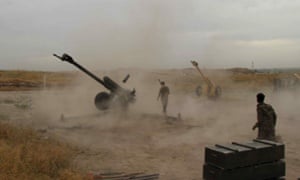

Afghan
soldiers fire artillery during a battle with Taliban insurgents in
Kunduz, north Afghanistan, on Wednesday. Photograph: Reuters
Reuters in Kabul-Friday 1 May 2015 15

An Afghan government delegation is heading to Qatar for “open discussions” with representatives of the Taliban aimed at ending Afghanistan’s long war, officials have said.
The scheduled meeting would mark a significant step towards opening
formal talks to ending the conflict, but it is unclear whether the
insurgents’ supreme leader, Mullah Omar, has approved them.
Pakistan’s army chief told the Afghan president, Ashraf Ghani, in
February that senior Taliban figures were open to direct talks with
Kabul but until now there had been little sign of progress.
The 20-member Afghan delegation will attend preliminary talks scheduled
for Sunday and Monday, said Attaullah Ludin, deputy chief of the Afghanistan High Peace Council.
“There will be representatives from Afghanistan, Pakistan, the Taliban and some other organisations,” he said on Friday.
Ludin added that council members would be meeting the Taliban as wells
two representatives of Hizb-i-Islami, another militant group fighting
the US-backed Afghan government that also has a political wing.
A senior Taliban official in Qatar confirmed
that a meeting was set for the next few days and that Hizb-i-Islami
would participate. “It’s top secret so far,” said the official, speaking
on condition of anonymity.
At Ethnic Summit, UWSA Backs Rebels in Conflict With Govt
 Aung
Myint, a United Wa State Army spokesman, delivers opening remarks at an
ethnic summit in Panghsang, Wa Special Region, on Friday. (Photo:
JPaing / The Irrawaddy)
Aung
Myint, a United Wa State Army spokesman, delivers opening remarks at an
ethnic summit in Panghsang, Wa Special Region, on Friday. (Photo:
JPaing / The Irrawaddy)
PANGHSANG, Wa Special Region — The United Wa State Army (UWSA) has a
relationship akin to “a jaw and its teeth” with a trio of ethnic armed
groups engaged in active hostilities with the Burma Army, its leadership
said at the opening of a conference of ethnic leaders here on Friday.
The solidarity pledge between the UWSA and the three other ethnic
groups, who are attending the summit against the government’s wishes,
illustrated just how far Burma may be from a nationwide ceasefire
agreement that Naypyidaw has said is on the horizon.
Palaung, Arakanese and Kokang armed rebels have continued to clash with
government troops in recent weeks, even as momentum has appeared to
build toward the signing of a nationwide peace accord. The 16-member
Nationwide Ceasefire Coordinating Team (NCCT) that has negotiated that
agreement does not include the UWSA, which made clear on Friday that it
would not abide a selectively applied definition of peace in Burma.
“We invited to this meeting our brotherhood of ethnic armed groups who
are in ongoing fighting [with the Burma Army]. We are like a jaw and its
teeth, which cannot be divided,” said Aung Myint, a spokesman who was
reading a statement on behalf of UWSA chairman Bao Youxiang.
Only a complete cessation of hostilities between the Burma Army and
ethnic rebel groups would legitimize the government’s long-sought
nationwide ceasefire agreement, Aung Myint said.
“Unless fighting stops in the whole of the country, a nationwide peace agreement is just a piece of paper.”
The UWSA, Burma’s largest ethnic armed group with a fighting force
estimated at 20,000 soldiers, reached a ceasefire with the government in
1989 and renewed the accord in September 2011 as President Thein Sein
jumpstarted peace negotiations with ethnic armed groups nationwide.
At what he termed a “confusing” time in Burma’s reform process, the
chairman called on all of the nation’s ethnic rebel groups to choose
their own future by asserting their political rights. Saying ethnic
armed groups had been “fighting for a long time for our rights” against
an “oppressive” Burmese government, Aung Myint said the goal of the
Panghsang summit was “to produce one peace paper agreement.”
“There will be disagreement from our discussion, but let us keep tolerance and seek agreement,” Aung Myint said.
The Ta’ang National Liberation Army (TNLA), Arakan Army and Myanmar
National Democratic Alliance Army (MNDAA) have all clashed with the
government in recent weeks, with fighting in northeast Burma some of the
deadliest in years. In February, the government said Wa rebels and
“Chinese mercenaries” were among those backing MNDAA insurgents in the
Kokang Special Region.
Against this backdrop, the government and the NCCT came to a tentative agreement on
a nationwide ceasefire accord on March 30, with ethnic representatives
pledging to convene a meeting to discuss the deal before committing to a
final accord. Following the agreement, the UWSA—which skipped the talks,
citing in part the government’s accusation of Wa involvement in the
Kokang conflict—invited ethnic leaders to its Panghsang headquarters to
discuss its terms.
The summit began on Friday and is expected to run through May 6.
Twelve ethnic armed groups joined the meeting on Friday, with many key
leaders of Burma’s biggest ethnic armies attending. About 50 ethnic
leaders have traveled to Panghsang, many of whom serve as chairmen or
deputy chairmen of their respective ethnic armed groups and will be key
voices in the debate over whether to sign the nationwide ceasefire
accord.
Representatives of the dozen ethnic groups began arriving a day earlier,
checking in to hotels where a tightened security presence awaited.
At a press conference on Thursday, San Khun from the UWSA’s Foreign
Department said the Wa rebels had only invited eight media outlets to
the conference, citing concerns about the ability of many news
organizations to report in an unbiased manner. He added, however, that
the cost of opening the conference up to all press would have been
prohibitive.
Asked by The Irrawaddy if reports were true that the UWSA had acquired
shoulder-fired surface-to-air rockets capable of repelling an aerial
assault, he told assembled media not to ask about military-related
issues at the conference. He added that journalists were not to attempt
to visit the UWSA’s military installations.
He did not directly respond to The Irrawaddy’s question, offering no
explicit rejection of the reports’ veracity. Details on the powerful Wa
army’s arsenal have always been difficult to ascertain, but the group is
believed to possess sophisticated Chinese-supplied weaponry, with reports that it has purchased a
“large number” of anti-aircraft hardware, helicopter gunships
and—rather inexplicably, given the land-locked geography of the Wa
region—a submarine.
San Khun told journalists that he would be happy to instead field
questions about the economic development that the autonomous region has
seen since the signing of a ceasefire with the government more than 25
years ago.
Situated on the Sino-Burmese border, Panghsang is a former headquarters
of the Burma Communist Party (CPB). The UWSA was founded in the Wa
Special Region, home to about 600,000 people, out of the ashes of the
now-defunct CPB.
Ending India’s Agrarian Nightmare

Roughly 600 million Indians are farmers -- the majority of whom would happily give it up for another job. So why is the Congress party so determined to keep them as peasants?

In 1991, the Congress-led government of Indian Prime Minister P.V.
Narasimha Rao passed a series of groundbreaking reforms that unshackled
the economy from its tight state controls, transforming it into a
market-oriented, globalized giant. Those reforms unleashed India’s
growth miracle and lifted millions of people out of poverty.
Today, India once again finds itself at a crossroads as its political
left and right go to war over the country’s future. Hanging in the
balance is the fate of its farmers and rural poor.
Although the reforms of 24 years ago liberalized the market for products
and services, casting off the excesses of an industrial licensing
system that required a government permit to do virtually anything
associated with business or trade, they left untouched the markets for
factors of production: land, labor, and capital. That led to a lopsided
pattern of development that focused growth on high-tech industry and
services and largely bypassed India’s large pool of unskilled labor,
most of whose members were still working the land. After 10 years of a
left-of-center, Congress-led government that consistently shelved
reforms in favor of large entitlement-based welfare schemes, Prime
Minister Narendra Modi’s right-of-center Bharatiya Janata Party
(BJP)-led government is finally attempting them.
Of the three factors of production, land market reform has proved the
most controversial. It is also the reform on which the BJP has expended
the most political capital. Until 2013, land acquisition was governed by
a colonial-era law dating back to 1894 that essentially allowed the
government to expropriate any land it wanted without receiving consent
from those whose land was acquired, paying them little or no
compensation in the process — a nasty form of eminent domain. In the
long period after independence when India was largely under the rule of
the Congress party, this law was used and misusedextensively.
The government often acquired land from farmers on the cheap and turned
it over to crony capitalists, with politicians and their friends
reaping the benefits.
Many agreed that the colonial-era law needed to be reformed, a task the
government finally undertook in 2013. But the Congress-led government
tilted to the other extreme, enacting a law so
stringent that it became nearly impossible for the government to
acquire land for infrastructure, defense, or other public purposes. This
is because the reform was crafted by
the left-of-center social activists and academics who constituted
Congress party leader Sonia Gandhi’s National Advisory Council.
The Modi government recognized that this law would stifle its
development agenda and needed to be changed. In late 2014, his
government introduced an amendment that
would exempt certain key areas, such as infrastructure and defense,
from the onerous, time-consuming, and costly consent and
social-assessment requirements of the 2013 law. But the government
didn’t have the numbers in the upper house of Parliament, forcing Modi
to use his executive power to push the law through as an ordinance in
December 2014 after the parliamentary session concluded. The ordinance,
which has a term of six months, was renewed in April and is once again expected to be brought before Parliament for approval later this session.
The stakes couldn’t be higher. For the Modi government, backing down
would be nothing short of a disaster, signaling that it doesn’t have the
stomach for a fight, despite sailing to victory last year on a massive
mandate for development. For India’s political left, it’s an existential
moment, as it tries to reassert its relevance by claiming that the
government’s land reform is anti-farmer and anti-poor. Leading the
charge is the Congress party, which, since losing badly last year, haslurched even further to the left, portraying itself as the champion of the poor and attempting to cast the Modi government as in the pocket of big business.
Joining the political left are a motley group of far-left communist
parties whose vote shares have shrunk drastically over the years and
that are trying to stave off political extinction by beating the drum that
the Modi government is working in the interests of large corporations
rather than ordinary people. It’s ironic that while the Chinese
Communist Party has ditched the ideology of Marx, Lenin, and Mao,
preserving only its political control, Indian leftists continue to
oppose economic reforms that have lifted millions out of poverty, a goal
they should presumably share.
The left-of-center coalition allied against the government’s land reform
includes the populist, far-left, Aam Aadmi Party (AAP), which swept to
power in Delhi’s Legislative Assembly election this year and whose
leader, Arvind Kejriwal, has theatrically and provocatively referred to
himself as ananarchist. At an April 22 rally organized by the AAP against the land bill, Gajendra Singh, an individual the party originally claimed was
a farmer, allegedly hanged himself in plain view of Kejriwal, who has
claimed the alleged suicide was an act of protest against the land bill.
The actual circumstances of Singh’s death — even whether he was
actually a distressedfarmer — are in dispute and currently under police investigation. Thelatest reports from the Delhi police claim that AAP volunteers goaded on Singh, leading to his accidental suicide.
But none of the murkiness surrounding Singh’s death has stopped the bill’sopponents from
prematurely linking the tragedy to the government’s land reform. In
their campaign against the land bill, they have also attempted to invoke
well-known, long-standing problems in the agricultural sector, such as
the suicide of debt-laden farmers and crop failures owing to droughts or
unseasonal rains. (In fact, official data shows
that farmer suicides as a percentage of total suicides hovered around
15 to 16 percent for about a decade, before dropping to their current
level of 8.7 percent,a percentage far below farmers’ share of the total
population.)
Ironically, it is the very unviability of small-scale farming that is
the best argument in favor of the government’s bill. To improve their
lives, farmers need a way out of agriculture and into the manufacturing
or services sector. In fact, polls show that most small-scale farmers
would happily sell their land, if only they could.
A survey of
some 5,350 farmers across country conducted in late 2013 and early 2014
by the Centre for the Study of Developing Societies, a nonpartisan
Delhi-based think tank, suggests a dubious future for Indian
agriculture. Twenty eight percent of those surveyed said they did not
like being farmers. But of the 72 percent who said they did, fully 60
percent claimed they were farmers only because it was a traditional
occupation, while only 10 percent said that farming actually led to a
good livelihood. Sixty two percent of the respondents said they would
give up farming if they could find a better alternative in the city. And
tellingly, a whopping 76 percent of farmers’ children said they would
like to get out of farming. India’s farmers, present and future, feel
trapped.
Another key statistic: Nearly half of India’s population works in
agriculture, but produces only 14 to 18 percent of India’s GDP. By
comparison, in advanced economies like the United States, farmers
constitute around 1 to 2 percent of the workforce and represent an
approximately equal share of GDP. Indian agriculture is highly
unproductive and inefficient. Indeed, data showsthat
the 65 percent of farm households that own less than one hectare of
land cannot break even, sending them spiraling into debt. They’re only
kept afloat by government schemes that funnel money to them and by
periodic waivers of farm loans.
The only people who seem to want beleaguered farmers to be shackled to
an unproductive lifestyle are the ideologues of the left. Their ideology
is politically useful for the Congress and other parties struggling to
remain relevant. It’s noteworthy that Rahul Gandhi, Congress vice
president and fifth-generation political dynast, has held rallies
attacking the land bill and drawing a spurious — though, for some,
emotionally stirring — connection with agrarian issues. But he has
failed to critique the unglamorous and very real problems impacting
farmers, such their lack of awareness of crop insurance and the
imperfect rollout of bank accounts needed to receive compensation
payments. The more basic point is that Gandhi’s approach essentially
freezes farming and farmers as a static identity, forcing them into a
lifelong vocation rather than an activity they might or might not
choose, depending on the economic incentives.
While populist Indian politicians are trying to turn private enterprise
into a dirty word among the intelligentsia, the poor have no such
ideological hang-ups. In the 2014 general election, they came out in droves to
vote for Modi’s pro-development, pro-growth agenda. They are seeking
better opportunities for employment and entrepreneurship, and Modi’s
reform agenda is a crucial first step.
If Modi blinks first, it’ll be a huge defeat not just for him and his
party, but for the prospects of real economic opportunity for millions
of farmers seeking to be liberated from living on the land. And with
that, India can also bid farewell to Modi’s dream of turning India into a
manufacturing powerhouse and offering gainful employment to the 13 million new workers who’ll be coming on stream every year — for years to come.
Photo credit: Chandan Khanna / AFP
5 Vaccines To Never Give A Child
 February 20, 2013 by DAVE MIHALOVIC
 All
vaccines should be avoided, but for those on the fence and still
deciding whether to vaccinate your child, please review the following
information on these 5 vaccines before blindly following the advice of
any medical doctor. Knowledge is power and when you understand the
uselessness of specific vaccines, the decision to vaccinate or not
becomes a very easy one.
All
vaccines should be avoided, but for those on the fence and still
deciding whether to vaccinate your child, please review the following
information on these 5 vaccines before blindly following the advice of
any medical doctor. Knowledge is power and when you understand the
uselessness of specific vaccines, the decision to vaccinate or not
becomes a very easy one.
 February 20, 2013 by DAVE MIHALOVICAll
vaccines should be avoided, but for those on the fence and still
deciding whether to vaccinate your child, please review the following
information on these 5 vaccines before blindly following the advice of
any medical doctor. Knowledge is power and when you understand the
uselessness of specific vaccines, the decision to vaccinate or not
becomes a very easy one.
February 20, 2013 by DAVE MIHALOVICAll
vaccines should be avoided, but for those on the fence and still
deciding whether to vaccinate your child, please review the following
information on these 5 vaccines before blindly following the advice of
any medical doctor. Knowledge is power and when you understand the
uselessness of specific vaccines, the decision to vaccinate or not
becomes a very easy one.
When it comes to vaccines, there are three levels of understanding: 1)
The first group understands that all vaccines are useless; 2) The second
group is still partially affected by medical propaganda from the last century and
insists there are at least some "good" vaccines; and 3) The last group
has a total blind loyalty to what has been erroneously declared as
"vaccine science" and will defend all vaccines regardless of any
resources or evidence that presents the contrary.
Subscribe to:
Posts (Atom)