Peace for the World World ! Your War Our Lives

The Dalai Lama
A Brief Colonial History Of Ceylon(SriLanka)
Sri Lanka: One Island Two Nations
A Brief Colonial History Of Ceylon(SriLanka)
Sri Lanka: One Island Two Nations
(Full Story)
Back to 500BC.

Friday, May 1, 2015
Sri Lanka's 19A only halfway measure to abolish executive presidency
Introduction of the 19A was a major election pledge of President Maithripala Sirisena during his election campaign. (AFP photo)
 PTI | May 1, 2015
 COLOMBO:
A key amendment adopted by Sri Lankan parliament last week is only a
halfway measure towards abolishing executive presidency as only 60 to 65
per cent of powers of the top post have been reduced, according to an
architect of the legislation.
COLOMBO:
A key amendment adopted by Sri Lankan parliament last week is only a
halfway measure towards abolishing executive presidency as only 60 to 65
per cent of powers of the top post have been reduced, according to an
architect of the legislation.
"The government itself has gone public saying that it could not go the full distance," Jayampathi Wickramaratna, a constitutional lawyer who was involved in drafting the 19A, said.
The 19th amendment (19A) received 215 votes in favour with just one vote against it in the 225-member assembly.
"If you are talking of percentages the powers of the presidency have been reduced by about 60 to 65 per cent," Wickramaratna said.
"This was only an important first step."
Introduction of the 19A was a major election pledge of President Maithripala Sirisena during his election campaign. He defeated Mahinda Rajapaksa on a broader programme of democratic reform.
The bill removed the president's power to dissolve parliament, until it has completed four and a half years of its five-year term.
Wickramaratna said the setting up of 11 commissions to depoliticise important areas of governance was a key feature of the 19A.
Since the adoption of the 1978 constitution there has been a big public outcry to abolish the system.
Introduction of the 19A was a major election pledge of President Maithripala Sirisena during his election campaign. (AFP photo)
 PTI | May 1, 2015COLOMBO:
A key amendment adopted by Sri Lankan parliament last week is only a
halfway measure towards abolishing executive presidency as only 60 to 65
per cent of powers of the top post have been reduced, according to an
architect of the legislation.
PTI | May 1, 2015COLOMBO:
A key amendment adopted by Sri Lankan parliament last week is only a
halfway measure towards abolishing executive presidency as only 60 to 65
per cent of powers of the top post have been reduced, according to an
architect of the legislation. "The government itself has gone public saying that it could not go the full distance," Jayampathi Wickramaratna, a constitutional lawyer who was involved in drafting the 19A, said.
The 19th amendment (19A) received 215 votes in favour with just one vote against it in the 225-member assembly.
"If you are talking of percentages the powers of the presidency have been reduced by about 60 to 65 per cent," Wickramaratna said.
"This was only an important first step."
Introduction of the 19A was a major election pledge of President Maithripala Sirisena during his election campaign. He defeated Mahinda Rajapaksa on a broader programme of democratic reform.
The bill removed the president's power to dissolve parliament, until it has completed four and a half years of its five-year term.
Wickramaratna said the setting up of 11 commissions to depoliticise important areas of governance was a key feature of the 19A.
Since the adoption of the 1978 constitution there has been a big public outcry to abolish the system.

Presidential task force to trace ill-gotten wealth of previous govt top brass

by Madura Ranwala-April 30, 2015, 10:16 pm
.gif)
President Maithripala Sirisena yesterday appointed a 13-member Special
Presidential Task Force to Recover State Assets, which the previous
government top brass is alleged to have accu mulated through illegal
means.
The task force is one of the promises the incumbent President
Maithripala Sirisena made during the presidential election of January
08. The governments of the US, India and Seychelles have already
expressed their willingness to support investigations of the Sri Lankan
government by divulging the assets and banks accounts of Sri Lankans in
those countries.
Director General of the Commission to Investigate Allegations of Bribery
or Corruption (CIBOC), Dilrukshi Dias Wickremesinghe is one of the
members appointed to the new Task Force by President Sirisena yesterday,
though the Opposition alleged that she had drawn two salaries from the government.
The Opposition has demanded her removal as she, too, has bribery allegations against her.
Bimibha Thilakaratne, H. M. L. T. Mudalige, H. Amaratunga, C. A. H. M.
Wijeratne, A. K. D. D. D. Arandara, L. S. Pathinayake, Dilrukshi Dias
Wickremesinghe, Kalyani Dahanayake, Jagath P. Wijeweera, P. N.
Jayawardana, C. A. Premashantha, President’s Legal Adviser Yasantha
Kodagoda and Senior Attorney-at-Law J. C. Weliamuna were given their
appointment letters at the President’s Office.
Secretary to the President, P. B. Abeykoon too was present on the occasion.
Sri Lanka Constitutional Expert Says Largely Satisfied with Reforms

 01/05/2015
Jayampathy Wickramaratne, a constitutional lawyer who advises the Sri
Lankan government, said he was largely satisfied with reforms approved
by parliament this week which an opposition faction watered down at the
last moment.
The 19th amendment to the constitution passed on Tuesday succeeded in
prunning the powers of the executive president and shifting them to
parliament, said Wickramaratne a member of the government’s constitution
drafting team.
“The government lacks a majority in parliament and so was forced to
compromise with the opposition and amend the proposed reforms,” he told a
news conference.
“It’s true the government couldn’t go as far as promised but we laid an
important foundation. We achieved a 60-65 pct reduction in the powers of
the executive president.”
Wickramaratne said he was satisfied with what had been achieved as “a first step.”
One of the key features of the 19th amendment to the constitution was
that “the Right to Information was recognized as a fundamental right,
although what was promised was only an RTI bill,” said Wickramaratne.
“We have gone further.”
The executive president continues to be head of government, head of
state and head of the Cabinet of ministers and the Commander-in-Chief of
the armed forces but the reforms re-imposed a two-term limit, he said.
The changes also shortened the terms of the president and parliament to five years from six.
They made the president responsible to parliament while restricting his
power to dissolve parliament unilaterally only after it had served four
and a half years
“Presidential immunity has been restricted,” said Wickramaratne. “His
official acts can be challenged by way of a fundamental rights
application in the Supreme Court.”
The Cabinet of ministers is charged with the direction and control of
government and is collectively responsible and answerable to parliament.
“A key difference is that the president’s power to remove the prime
minister without any reason is to be deleted,” said Wickramaratne.
“Parliament can remove the prime minister through a no confidence motion
or by defeating the vote on the budget.”
The reforms also limit the size of the Cabinet to a maximum of 30 and
state ministers and deputy ministers to a maximum of 40, except for the
next parliament where numbers can be increased if the two largest
parties join together and form national unity government, as planned.
Wickramaratne said the government was forced to compromise on the make
up of the Consitutional Council, which will make appointments t key
public institutions, because of demands from an opposition faction.
The 10-member council will now have a majority of parliamentarians –
seven lawmakers of whom five will be jointly nominated by the prime
minister and opposition leader, one representing small parties and one
appointed by the president.
“The number of MPs is now raised to seven of the 10,” said
Wickramaratne. “Previously, it was proposed to have seven members from
outside parliament.”
“We went along with that in the bill. Unfortunately we had to compromise
on that, reluctantly. There was pressure from certain parts of the
opposition to increase the number of MPs to a majority. We reluctantly
agreed to that.”
EN
EN
Sri Lanka's constitution-Strides in the right direction
The new president succeeds in curtailing the power of his own office

 Apr 30th 2015
THE Parliament of Sri Lanka voted on April 28th to impose vital checks
and balances on the country’s powerful presidency, ending weeks of
fraught negotiations and political horse-trading. The 19th amendment to
the constitution limits a president to two five-year terms, negating an
earlier revision that introduced unlimited six-year terms. It also
mandates that the president consult the prime minister on ministerial
appointments. Among other things, it curtails any
This counts as a major victory for the country’s new president,
Maithripala Sirisena—perhaps a necessary one. He clinched a tough
presidential race in January on a pledge (one of dozens) to do away with
the very office for which he was campaigning. The amendment falls well
short of abolishing the presidency.
But lawyers welcomed it as “a major stride for democracy”.
 Critics
counter that the diluted amendment is far from ideal. The government
dropped clauses that would have transferred executive powers from
president to prime minister (the Supreme Court had said they would
require approval by referendum). The loudest challenge came from
petulant loyalists of Mahinda Rajapaksa, the autocratic president whom
Mr Sirisena defeated at the polls in January, who clamoured to weaken
the draft even further. Some of its provisions seemed to aim at the
Rajapaksa clan directly. One
bans people with dual citizenship from standing for Parliament,
effectively putting an end to the career of a younger brother of Mr
Rajapaksa’s, Gotabaya Rajapaksa, a former defence secretary who holds an
American passport. Another increases the minimum age for candidates,
which will put Mahinda’s eldest son out of the running for the time
being.
Critics
counter that the diluted amendment is far from ideal. The government
dropped clauses that would have transferred executive powers from
president to prime minister (the Supreme Court had said they would
require approval by referendum). The loudest challenge came from
petulant loyalists of Mahinda Rajapaksa, the autocratic president whom
Mr Sirisena defeated at the polls in January, who clamoured to weaken
the draft even further. Some of its provisions seemed to aim at the
Rajapaksa clan directly. One
bans people with dual citizenship from standing for Parliament,
effectively putting an end to the career of a younger brother of Mr
Rajapaksa’s, Gotabaya Rajapaksa, a former defence secretary who holds an
American passport. Another increases the minimum age for candidates,
which will put Mahinda’s eldest son out of the running for the time
being.
Parliament descended into chaos during the two-day debate. The speaker
suspended regular sessions at several points to allow for eleventh-hour
bargaining. An especially hard sticking point regarded a council that
would nominate independent commissions to oversee public-sector
appointments. Finally a compromise was achieved: there will be a
council, but it will consist mainly of politicians, not professionals.
In the end the amendment secured an overwhelming majority in the
225-seat assembly, with just one opposing ballot and a few absentees.
The proceedings were broadcast live on state television.
Not everyone was happy. Rohan Edrisinha, a university lecturer on
constitutional law, described the process as flawed. Politicians
“negotiated, compromised and struck back-room deals while the country
was in the dark”. Even two days later, the final amendment is not
available for the public to see. And the scope for presidential immunity
remains vast, sometimes comically so. Mr Sirisena’s wife, for instance,
will not be allowed to divorce her husband, so long as he is the
sitting president.
Still the amendment places some limits on the power of Sri Lanka’s most
powerful leaders and it introduces a mixed presidential and
parliamentary system. This is the furthest any Sri Lankan government has
gone towards pruning an overweening executive presidency in the nearly
four decades since it was introduced.
The new amendment also reverses some of the damage that Mr Rajapaksa
inflicted upon public institutions during his rule, from 2005 to 2015.
In 2010—buoyant after having crushed the Tamil Tiger rebels—he
bulldozed through an amendment of his own, the 18th, that made the
executive even more robust.
By contrast, the passage of this 19th amendment was messy. After Mr
Rajapaksa’s decade of authoritarian rule, it was also refreshingly
democratic. The president has now promised to move speedily towards
electoral reform—that is, a 20th amendment—and to follow that up with a
parliamentary poll.
Calls for fresh elections will grow in coming weeks. Mr Sirisena’s
minority government is built on a hastily stitched-up alliance of two
main parties—his Sri Lanka Freedom Party (SLFP) and the United National
Party (UNP) led by Ranil Wickremesinghe, the prime minister. He also has
the support of disparate smaller parties, most of which just wanted to
see the back of his predecessor.
A faction of the SLFP continues to take instructions from Mr Rajapaksa.
They recently camped overnight in the Parliament chamber to protest
against his being summoned to give evidence in a bribery case.
The UNP want an early election. On April 29th their treasurer said in a
statement that the current Parliament lacked legitimacy and had outlived
its mandate. He called for an immediate dissolution. That would be a
tall order indeed.
Presidential aides say an election is more likely in August. This gives
the government time to pass new electoral laws. The authorities will
also deepen investigations into allegations of bribery and corruption
against key members of Mr Rajapaksa’s clique. Another of his younger
brothers, a former minister for economic development, is already under
arrest.
Mr Sirisena’s biggest challenge is that his predecessor shows no signs
of accepting defeat—or retiring gracefully. The country’s best chance at
neutralising this threat is to charge ahead with progressive reform,
such as the Right to Information Act, which is still in draft form.
SL’s external debt service ratio ‘heading for danger zone’

By Ifham Nizam-April 30, 2015, 6:23 pm
.gif) Dr. Indrajit Coomaraswamy
Dr. Indrajit CoomaraswamyAs the Central Bank of Sri Lanka readied to receive the first USD400 million tranche from India, a top Lankan economist warned that the country’s external debt service ratio is moving towards a danger zone and has already entered the statistical ‘amber-light warning zone’.
Pathfinder Foundation, deputy chairman, economist Dr. Indrajit
Coomaraswamy, in his comprehensive presentation on "Power and Energy" at
a workshop titled `Downstream Petroleum Industry –supply, quality,
pricing and regulatory issues’ at the Kingsbury on Monday also revealed
that Sri Lanka urgently needs to promote both FDI and an export-led
growth model to stabilise at an eight per cent GDP growth rate.
The warning on increased foreign borrowings came as Sri Lanka’s Central
Bank readied to receive the first USD 400 million tranche from India
under a "currency swap agreement" with the Reserve Bank of India to
stabilise the rupee and promote exports.
"Over the last five years, Sri Lanka’s growth model has been based on
commercial external borrowing – led infrastructure development. The
headroom for continuing this model is now severely constrained due to
the fragile debt dynamics. The debt to GDP ratio is 75% - countries
with the same rating as Sri Lanka have a median of 44%.
"External debt service ratio is 25% - the ‘rule of thumb’ is that
anything above 20% is ‘amber light territory’ said Coomaraswamy.
Sri Lanka’s external debt has been climbing steadily due to increased
foreign borrowings. In 2013 external debt stood at USD 39 billion. In
2014 Sri Lanka’s exports of merchandise and services were recorded at
USD11.9 Billion. Also merchandise only exports for January and February
stood at USD 1.75 billion.
"Total debt servicing absorbs all government revenue. This means that
every cent of public expenditure beyond debt-servicing has to be
financed through domestic and foreign borrowing. The new growth model
would need to be private investment – led export expansion. FDI would
have to play a major role he added. Coomaraswamy also said: "If one is
to achieve the growth target of 8%, one requires investment to be 34% of
GDP. It is currently 29 %. Given the country’s debt dynamics the
shortfall of 5% of GDP is best filled through non-debt creating flows,
particularly FDI. The other option is to squeeze consumption which is
not politically feasible in a democratic system. The challenge will be
to increase FDI from its current USD 1 billion level to about USD $3.5 –
4 billion a year.
"Not only does FDI fill the savings – investment gap but it also brings
with it technology, markets and knowledge. With a domestic market of 21
million people, one cannot sustain accelerated 8% growth for 10 – 15
years without export expansion.
"All the successful countries in East and South East Asia have adopted
the export – led growth model. It is important to sustain 8% + growth
over 10 – 15 years or even more. This was achieved by these successful
countries. China achieved an average growth rate of 9.3% over the last
30 years – unprecedented in human history. Sri Lanka has proximity with
India and excellent relations with China which can and should be
leveraged."
Religious freedom: US commends Sirisena’s govt
 2015-05-01
 The
United States Commission on International Religious Freedom (USCIRF)
today commended the President Maithripala Sirisena led government for
taking steps to improve religious unity and religious freedom.
The
United States Commission on International Religious Freedom (USCIRF)
today commended the President Maithripala Sirisena led government for
taking steps to improve religious unity and religious freedom.
“Since President Sirisena took office in January, he has taken several steps to improve religious unity and religious freedom. For example, he created three new ministries to handle religious affairs for the Muslim, Christian, and Hindu communities respectively,” it said.
“Additionally, the new Ministry of Christian Affairs appointed a special coordinator for Charismatic, Evangelical and Pentecostal Christian churches. The special police unit created by the former government has been disbanded, according to officials and religious communities with whom USCIRF met in March 2015.”
In its 2015 Annual Report released today, the USCIRF said, ‘…most importantly, reports of abuses against religious minorities have diminished in the first months of 2015, though concerns remain.”
This year's report documents religious freedom violations in 33 countries, makes country-specific recommendations, and assesses the U.S. government's implementation of the International Religious Freedom Act (IRFA).
The U.S. federal government advisory body recommended that Sri Lanka although does not meet Tier 1 (CPC) or Tier 2 thresholds, should still be a focus of concern.
A USCIRF delegation visited Sri Lanka in March 2015 to assess the climate for religious freedom, other human rights.
“President Sirisena's public statements on the need for national unity, reconciliation, harmony, and improved religious freedom have been encouraging, as were the comments by government officials with whom USCIRF met in March 2015.”
USCIRF recommended that the U.S. government should strongly encourage the positive movement that has occurred in recent months and encourage the Sri Lankan government to allow a transparent and independent investigation into alleged war crimes, including targeted attacks on religious minorities.
The Commission also recommended the U.S. government to ensure that a portion of U.S. humanitarian aid to Sri Lanka is used to help protect minorities from religiously-motivated violence.
It recommended assisting the Sri Lankan government to train local government officials, police officers, and judges on international religious freedom standards and on how to investigate and prosecute violent attacks.
The Commission urged the Sri Lankan government officials to provide minority students an equal opportunity to learn their faiths in public schools and to rescind policies and practices - often driven at local levels - that restrict religious communities' ability to build houses of worship or practice their faith.
- See more at: http://www.dailymirror.lk/70983/religious-freedom-us-commends-sirisena-s-govt#sthash.RPERI0x9.Puq54rft.dpuf
2015-05-01 The
United States Commission on International Religious Freedom (USCIRF)
today commended the President Maithripala Sirisena led government for
taking steps to improve religious unity and religious freedom.
The
United States Commission on International Religious Freedom (USCIRF)
today commended the President Maithripala Sirisena led government for
taking steps to improve religious unity and religious freedom.“Since President Sirisena took office in January, he has taken several steps to improve religious unity and religious freedom. For example, he created three new ministries to handle religious affairs for the Muslim, Christian, and Hindu communities respectively,” it said.
“Additionally, the new Ministry of Christian Affairs appointed a special coordinator for Charismatic, Evangelical and Pentecostal Christian churches. The special police unit created by the former government has been disbanded, according to officials and religious communities with whom USCIRF met in March 2015.”
In its 2015 Annual Report released today, the USCIRF said, ‘…most importantly, reports of abuses against religious minorities have diminished in the first months of 2015, though concerns remain.”
This year's report documents religious freedom violations in 33 countries, makes country-specific recommendations, and assesses the U.S. government's implementation of the International Religious Freedom Act (IRFA).
The U.S. federal government advisory body recommended that Sri Lanka although does not meet Tier 1 (CPC) or Tier 2 thresholds, should still be a focus of concern.
A USCIRF delegation visited Sri Lanka in March 2015 to assess the climate for religious freedom, other human rights.
“President Sirisena's public statements on the need for national unity, reconciliation, harmony, and improved religious freedom have been encouraging, as were the comments by government officials with whom USCIRF met in March 2015.”
USCIRF recommended that the U.S. government should strongly encourage the positive movement that has occurred in recent months and encourage the Sri Lankan government to allow a transparent and independent investigation into alleged war crimes, including targeted attacks on religious minorities.
The Commission also recommended the U.S. government to ensure that a portion of U.S. humanitarian aid to Sri Lanka is used to help protect minorities from religiously-motivated violence.
It recommended assisting the Sri Lankan government to train local government officials, police officers, and judges on international religious freedom standards and on how to investigate and prosecute violent attacks.
The Commission urged the Sri Lankan government officials to provide minority students an equal opportunity to learn their faiths in public schools and to rescind policies and practices - often driven at local levels - that restrict religious communities' ability to build houses of worship or practice their faith.
- See more at: http://www.dailymirror.lk/70983/religious-freedom-us-commends-sirisena-s-govt#sthash.RPERI0x9.Puq54rft.dpuf
US SECRETARY OF STATE SHOULD KEEP HUMAN RIGHTS HIGH ON THE AGENDA DURING SRI LANKA VISIT
April 30, 2015


Freedom from Torture urges US Secretary of State John Kerry not to lose
sight of the formidable human rights challenges still facing Sri Lanka
as he prepares to visit the country this weekend.
The new government in Sri Lanka under President Sirisena has taken
impressive steps to restore freedom of the press and strengthen the rule
of law.
While these moves are promising, there is still a long road to travel before Sri Lanka becomes a 'beacon' for human rights.
In 2014, 341 torture survivors from Sri Lanka were referred to Freedom
from Torture for clinical services, making it the top referral country
for the organisation for a third consecutive year. This should serve as a
stark reminder that although the civil war ended in 2009, the country
is still a far-cry from a rights-respecting democracy.
We have yet to see a credible program to dismantle the torture apparatus that is so deeply embedded in the Sri Lankan state.
Despite the 'green shoots' of reform, it is too early to conclude that
Sri Lanka has turned a corner on human rights. Our Tamil clients are
very clear in telling us that continued pressure from the United
Nations, and states like the US and UK, is key to ensuring that justice
and accountability are delivered for all in Sri Lanka.
We hope that Secretary of State John Kerry will use his visit to
maintain US pressure on Sri Lanka to ensure perpetrators of human rights
abuses are held to account because without addressing the injustices of
the past, it is very difficult to achieve sustainable reconciliation.
Psychopathology Anyone?

By Emil van der Poorten –May 1, 2015
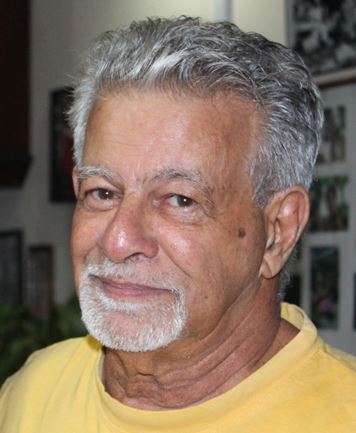
Emil van der Poorten
While there has been no dearth of analysis of one description or another
of Sri Lanka’s progress towards an out-and-out dictatorship and of the
hopeful signs since the 8th of January 2015 of at least a partial
retreat from that headlong journey to perdition, at no point has the
state of affairs from which I hope we escaped (at least temporarily)
been subjected to a psychiatric/psychological examination. Neither has
there has there been, to my knowledge, any attempt to put those
dictating the direction in which this country has been taken on some
kind of psychological/psychiatric examination table. In fact, leave
alone microscopic examination, there hasn’t even been cursory attention
paid to what made those who governed us “tick.”
While there has been no shortage, particularly since the white van menace
has been in (temporary?) abeyance, of those who are now brave enough to
classify the crimes of the recently dethroned, those critiques have
generally been of the narrower “political” kind, listing the financial
excesses and outright thefts committed in the name of governance in the
“Democratic Socialist Republic of Sri Lanka.” Overall, there has been
measurement of the miscreants on a scale of “badness.” However, the
matter of “madness,” clinical or otherwise and serious examination for
signs of mental illness driving particular behaviours has been
conspicuous by its absence.
 What
got me thinking about this subject which is of particular relevance in
our current context, was a piece by Prof. Raveen Hanwella in the
MEDiScene supplement to the Sunday Times of April 26th, in which he deals quite comprehensively with the topic of the psychopath, given the length of the article.
What
got me thinking about this subject which is of particular relevance in
our current context, was a piece by Prof. Raveen Hanwella in the
MEDiScene supplement to the Sunday Times of April 26th, in which he deals quite comprehensively with the topic of the psychopath, given the length of the article.
The simple yardstick of measurement he adopts is extracted from a test
devised by psychologist Dr. Robert D. Hare: Psychopathy Check List –
Revised (PCL-R). To quote Prof. Hanwella: “The following are some of the
traits listed: glib and superficial, egocentric and grandiose, lack of
remorse or guilt, lack of empathy, deceitful and manipulative, shallow
emotions, impulsive, poor behavior controls, need for excitement, lack
of responsibility, early behavior problems and adult.(sic).”
Minister Mangala Samaraweera's speech on foreign policy delived at the Bandaranaike Diplomatic Training Institute

 The
Bandaranaike International Diplomatic Training Institute is the
training ground for our future ambassadors to the world. Started twenty
one years ago, its courses have rightly emphasized the importance of
professional competence in our diplomatic corps - focussing on training
in negotiations, public speaking, economic diplomacy and policy
analysis.
These are key tools that every diplomat aspires to perfect. It is with
this in mind that I’d like to briefly outline some ideas on the theme
“Sri Lanka at the cross-roads of the Asian Century” that could serve as
an opportunity for you to exercise your newly acquired skills.
But before we can begin to consider policy, we must first survey our
context. One of the sweeping changes of this epoch is the rise of Asia.
On almost every measure the world’s centre of gravity is shifting
towards the East, so there can be no doubt that this is the Asian
Century: by 2030 Asia is projected to become world’s largest economic
region and in 2013, for the first time in modern history, Asian defence
spending exceeded Europe’s.
Any period of change generates new opportunities annew risks. And a
historic shift of this magnitude is no exception. But it is timely to
remember that changes around us, and even changes within, do not
profoundly alter our fundamental foreign policy objectives. Ensuring the
security of all Sri Lankans and advancing their development will always
be at the core of a government’s duties in the foreign policy realm.
Over the last few years, Sri Lanka’s foreign relations were not aligned
to our country’s needs - the interests of the few were served, while the
needs of the many were ignored. As we reset our foreign policy, we
should gear our strategy and policies towards harnessing the
opportunities the Asian Century has to offer, while navigating and
minimizing the risks that will inevitably accompany her rise. In this
speech I will offer a few ideas to start a broader discussion on how
this can be done, starting with the risks and then suggesting three
policies we can adopt to begin tapping this Century’s potential.
Asia’s rise has heralded the end of the post-Cold War unipolar world
order. The United States will remain the preponderant power for the
foreseeable future but the balance of power is shifting in Asia’s
favour. China and India are emerging as global power centres and Japan
remains an important power. Together they are home to just over a third
of the world’s population, generate an estimated 26 percent of global
output and are among the top ten defence spenders. Historically, the the
rise of new powers has almost always led to a period of flux and
instability - the old order gives way, but the new order is yet
toharden. In these fluid decades Sri Lanka will have no choice but to
make strategic choices in her global positioning.
Both ancient history and contemporary experience suggest that Sri
Lanka’s success will depend on maintaining friendly and intimate ties
with India. India is our closest neighbour, one of the world’s largest
and fastest growing economies, the world’s most populous democracy, our
largest source of tourists and a country with whom we share ancient and
contemporary civilizational ties. Thus the imperatives of security and
economic development both make the late Foreign Minister Lakshman
Kadirgamar’s thesis that Indo-Lanka relations must be that of
“irreversible excellence” almost self-evident.
Similarly, China is rapidly becoming the world’s economic powerhouse.
Experiencing rapid growth over the past few decades on some measures she
is now the world’s largest economy - a position China has held for much
of the last 2000 years. China’s export-driven rise means that it has
large surpluses of capital which enables it to invest abroad and play an
increasingly important role in determining the architecture of global
capital allocation. China is also now the world’s largest source of
tourists. So Sri Lanka’s relationship with China needs to build on
existing relations to zero-in on securing Chinese FDI, enabling access
to Chinese markets and promoting Sri Lanka’s tourism.
The rise of a multipolar world system also makes preserving and
developing the system of international rules and norms essential. This
is especially true for a small island state. As a small state,
international norms and the multilateral system of institutions help
protect our sovereignty, security and give us a voice in global affairs.
Similarly, as an island highly dependent on external trade, remittances
and energy: ensuring open sea lanes, free financial flows and stable
energy supplies is critical. While India is becoming a nett security
provider in the region, it is the United States that is the primary
architect, underwriter and sustainer of this rules based global order.
Having outlined the main risks and broad response strategies to them, we
can now move on to the question of how we can leverage and harness the
great potential of the Asian Century. While we must first put our own
house in order, and there is a great deal of work that needs to be done
on that score, it is also important to devote some time for blue-sky
reflection. There are three main ideas I’d like to focus on today. The
first involves the reconceptualisation of Sri Lanka as an Indian Ocean
country, the second is exploring the use of paradiplomacy and the third
is leveraging the tremendous resource of the Sri Lankan diaspora.
Throughout its ancient history, Sri Lanka had close links with the
entire Indian Ocean rim spanning from Africa, the Arab Gulf, Persia,
South Asia, South East Asia and Australia. Sri Lanka, geographically
located the centre of the Indian Ocean and sitting astride major
East-West and South-South trade routes, was at the crossroads of the
Indian Ocean world. However, by and by, we came to be classified as a
South Asian country and our own imaginations and those of others turned
towards the Indian hinterland. Reclaiming our Indian Ocean identity
helps us and others unlock the tremendous opportunities for attracting
FDI, accessing markets and developing our tourism industry. For as a
middle income country Sri Lanka can no longer depend on aid to create
jobs, generate growth and improve our living standards. As a result, for
the modern Sri Lankan diplomat, salesmanship will be as important as
statesmanship. Securing foreign investment, encouraging exports,
promoting tourism and acquiring foreign expertise will be at the very
centre of the foreign ministry’s role. (Of course that does not mean
turning embassies into private tea trading centres as some Ambassadors
did under the previous administration).
While we look towards the sea, the Indian hinterland and further away
China also beckon. As study after study have noted, Sri Lanka’s failure
to integrate into Indian supply chains and into the Indian economy in
general has significantly hampered our economic development. In order to
reverse this trend, we will have to begin seriously engaging with
provinces and states that are playing an increasingly important economic
decision-making role in India and China. The acceleration of
paradiplomatic efforts by other countries has reflected these changes.
For example, in the last two years alone Singaporean ministers have
visited Indian states over a dozen times.The third idea is not new. Per
capita Sri Lanka probably has one of the largest diasporas in the world
and it is also one of the most illustrious diaspora communities. In
fact, the late Lee Kuan Yew once said, “In terms of numbers, the
Ceylonese, like the Eurasians, are among the smallest of our various
communities. Yet in terms of achievements and contributions to the
growth and development of the modern Singapore and Malaysia they have
done more than warranted by their numbers.”
But to our loss they have not featured prominently in our foreign policy
making, and as a country we have done little to harness their capital,
relationships and knowledge for our development.This is not true of many
other countries. India has an entire ministry dedicated to Overseas
Indian Affairs, while eight other countries also have diaspora affairs
ministerial portfolios. Sri Lanka would do well to have a systematic
approach and mechanism for harnessing the diaspora, which would also
enable them to participate directly in the Asian Century. Allow me to
sum up by reiterating that our foreign policy must be aligned to the
interests and welfare of all Sri Lankans. This of course means
cautiously navigating the emerging multipolar regional order, while
taking the initiative to harness the tremendous opportunities of the
Asian Century. I trust that you will see your training here at the
Bandaranaike Diplomatic Training Institute as an induction into a
community of thinkers and practitioners, and as a foundat on for
lifelong involvement in Sri Lanka’s foreign affairs. With your support
one day Sri Lanka can again be at the centre of theIndian Ocean world
and at the crossroads of Asia.
Thank you.
The
Bandaranaike International Diplomatic Training Institute is the
training ground for our future ambassadors to the world. Started twenty
one years ago, its courses have rightly emphasized the importance of
professional competence in our diplomatic corps - focussing on training
in negotiations, public speaking, economic diplomacy and policy
analysis.
These are key tools that every diplomat aspires to perfect. It is with
this in mind that I’d like to briefly outline some ideas on the theme
“Sri Lanka at the cross-roads of the Asian Century” that could serve as
an opportunity for you to exercise your newly acquired skills.
But before we can begin to consider policy, we must first survey our
context. One of the sweeping changes of this epoch is the rise of Asia.
On almost every measure the world’s centre of gravity is shifting
towards the East, so there can be no doubt that this is the Asian
Century: by 2030 Asia is projected to become world’s largest economic
region and in 2013, for the first time in modern history, Asian defence
spending exceeded Europe’s.
Any period of change generates new opportunities annew risks. And a
historic shift of this magnitude is no exception. But it is timely to
remember that changes around us, and even changes within, do not
profoundly alter our fundamental foreign policy objectives. Ensuring the
security of all Sri Lankans and advancing their development will always
be at the core of a government’s duties in the foreign policy realm.
Over the last few years, Sri Lanka’s foreign relations were not aligned
to our country’s needs - the interests of the few were served, while the
needs of the many were ignored. As we reset our foreign policy, we
should gear our strategy and policies towards harnessing the
opportunities the Asian Century has to offer, while navigating and
minimizing the risks that will inevitably accompany her rise. In this
speech I will offer a few ideas to start a broader discussion on how
this can be done, starting with the risks and then suggesting three
policies we can adopt to begin tapping this Century’s potential.
Asia’s rise has heralded the end of the post-Cold War unipolar world
order. The United States will remain the preponderant power for the
foreseeable future but the balance of power is shifting in Asia’s
favour. China and India are emerging as global power centres and Japan
remains an important power. Together they are home to just over a third
of the world’s population, generate an estimated 26 percent of global
output and are among the top ten defence spenders. Historically, the the
rise of new powers has almost always led to a period of flux and
instability - the old order gives way, but the new order is yet
toharden. In these fluid decades Sri Lanka will have no choice but to
make strategic choices in her global positioning.
Both ancient history and contemporary experience suggest that Sri
Lanka’s success will depend on maintaining friendly and intimate ties
with India. India is our closest neighbour, one of the world’s largest
and fastest growing economies, the world’s most populous democracy, our
largest source of tourists and a country with whom we share ancient and
contemporary civilizational ties. Thus the imperatives of security and
economic development both make the late Foreign Minister Lakshman
Kadirgamar’s thesis that Indo-Lanka relations must be that of
“irreversible excellence” almost self-evident.
Similarly, China is rapidly becoming the world’s economic powerhouse.
Experiencing rapid growth over the past few decades on some measures she
is now the world’s largest economy - a position China has held for much
of the last 2000 years. China’s export-driven rise means that it has
large surpluses of capital which enables it to invest abroad and play an
increasingly important role in determining the architecture of global
capital allocation. China is also now the world’s largest source of
tourists. So Sri Lanka’s relationship with China needs to build on
existing relations to zero-in on securing Chinese FDI, enabling access
to Chinese markets and promoting Sri Lanka’s tourism.
The rise of a multipolar world system also makes preserving and
developing the system of international rules and norms essential. This
is especially true for a small island state. As a small state,
international norms and the multilateral system of institutions help
protect our sovereignty, security and give us a voice in global affairs.
Similarly, as an island highly dependent on external trade, remittances
and energy: ensuring open sea lanes, free financial flows and stable
energy supplies is critical. While India is becoming a nett security
provider in the region, it is the United States that is the primary
architect, underwriter and sustainer of this rules based global order.
Having outlined the main risks and broad response strategies to them, we
can now move on to the question of how we can leverage and harness the
great potential of the Asian Century. While we must first put our own
house in order, and there is a great deal of work that needs to be done
on that score, it is also important to devote some time for blue-sky
reflection. There are three main ideas I’d like to focus on today. The
first involves the reconceptualisation of Sri Lanka as an Indian Ocean
country, the second is exploring the use of paradiplomacy and the third
is leveraging the tremendous resource of the Sri Lankan diaspora.
Throughout its ancient history, Sri Lanka had close links with the
entire Indian Ocean rim spanning from Africa, the Arab Gulf, Persia,
South Asia, South East Asia and Australia. Sri Lanka, geographically
located the centre of the Indian Ocean and sitting astride major
East-West and South-South trade routes, was at the crossroads of the
Indian Ocean world. However, by and by, we came to be classified as a
South Asian country and our own imaginations and those of others turned
towards the Indian hinterland. Reclaiming our Indian Ocean identity
helps us and others unlock the tremendous opportunities for attracting
FDI, accessing markets and developing our tourism industry. For as a
middle income country Sri Lanka can no longer depend on aid to create
jobs, generate growth and improve our living standards. As a result, for
the modern Sri Lankan diplomat, salesmanship will be as important as
statesmanship. Securing foreign investment, encouraging exports,
promoting tourism and acquiring foreign expertise will be at the very
centre of the foreign ministry’s role. (Of course that does not mean
turning embassies into private tea trading centres as some Ambassadors
did under the previous administration).
While we look towards the sea, the Indian hinterland and further away
China also beckon. As study after study have noted, Sri Lanka’s failure
to integrate into Indian supply chains and into the Indian economy in
general has significantly hampered our economic development. In order to
reverse this trend, we will have to begin seriously engaging with
provinces and states that are playing an increasingly important economic
decision-making role in India and China. The acceleration of
paradiplomatic efforts by other countries has reflected these changes.
For example, in the last two years alone Singaporean ministers have
visited Indian states over a dozen times.The third idea is not new. Per
capita Sri Lanka probably has one of the largest diasporas in the world
and it is also one of the most illustrious diaspora communities. In
fact, the late Lee Kuan Yew once said, “In terms of numbers, the
Ceylonese, like the Eurasians, are among the smallest of our various
communities. Yet in terms of achievements and contributions to the
growth and development of the modern Singapore and Malaysia they have
done more than warranted by their numbers.”
But to our loss they have not featured prominently in our foreign policy
making, and as a country we have done little to harness their capital,
relationships and knowledge for our development.This is not true of many
other countries. India has an entire ministry dedicated to Overseas
Indian Affairs, while eight other countries also have diaspora affairs
ministerial portfolios. Sri Lanka would do well to have a systematic
approach and mechanism for harnessing the diaspora, which would also
enable them to participate directly in the Asian Century. Allow me to
sum up by reiterating that our foreign policy must be aligned to the
interests and welfare of all Sri Lankans. This of course means
cautiously navigating the emerging multipolar regional order, while
taking the initiative to harness the tremendous opportunities of the
Asian Century. I trust that you will see your training here at the
Bandaranaike Diplomatic Training Institute as an induction into a
community of thinkers and practitioners, and as a foundat on for
lifelong involvement in Sri Lanka’s foreign affairs. With your support
one day Sri Lanka can again be at the centre of theIndian Ocean world
and at the crossroads of Asia.
Thank you.
 The
Bandaranaike International Diplomatic Training Institute is the
training ground for our future ambassadors to the world. Started twenty
one years ago, its courses have rightly emphasized the importance of
professional competence in our diplomatic corps - focussing on training
in negotiations, public speaking, economic diplomacy and policy
analysis.
The
Bandaranaike International Diplomatic Training Institute is the
training ground for our future ambassadors to the world. Started twenty
one years ago, its courses have rightly emphasized the importance of
professional competence in our diplomatic corps - focussing on training
in negotiations, public speaking, economic diplomacy and policy
analysis.
Independence for Foreign Service and Public Service through 19A
 May 1, 2015
The administrative system, adopted and incorporated into Sri Lanka’s
first Constitution after independence, suffered serious interference in
1972, when the Civil Service Commission was abolished and most of its
functions were passed on to the cabinet of ministers.
The most importan t
of these functions were the appointment, promotion and disciplinary
control of all public servants. The taking of these by the cabinet
resulted in a discontinuity with the traditions of civil service
introduced by Britain, in which the position of the permanent secretary
as the chief accounting officer of a ministry was downgraded.
t
of these functions were the appointment, promotion and disciplinary
control of all public servants. The taking of these by the cabinet
resulted in a discontinuity with the traditions of civil service
introduced by Britain, in which the position of the permanent secretary
as the chief accounting officer of a ministry was downgraded.
These permanent secretaries played a key role in shaping and directing their ministries. The direct cabinet interference into the workings of the civil service damaged its independence, and led to the politicisation of the public service.
While some of the powers of the Public Service Commission were somewhat restored in 1978, the position of permanent secretary was not restored. At the same time, the creation of the executive presidential system meant that the ministers came under the president’s control.
The deterioration process that began with the cabinet taking over the administrative functions got further amplified with the president becoming more or less responsible for appointing, promotions and also for the discipline of the Public Service.
The 17th Amendment to the Constitution in 2001 was an attempt to remove this interference through independent commissions that would oversee the appointments of public servants. Five of these commissions were appointed, and they were to ensure that the civil service had the necessary independence to function well, with no direct interference from the office of the president. That too was replaced by a new amendment.

Due to this politicisation, which began in 1977, our once competent Foreign and Public Services lost their edge and capability to perform. Therefore the enactment of 19A on Tuesday paves the way for setting up of an independent Public Service Commission, where the appointment, promotion and disciplinary control of all public servants will be managed through that commission. This will certainly minimise the political interference in the service in the future. But a lot remains to be done to bring our Public Service back to speed.
The most importan
 t
of these functions were the appointment, promotion and disciplinary
control of all public servants. The taking of these by the cabinet
resulted in a discontinuity with the traditions of civil service
introduced by Britain, in which the position of the permanent secretary
as the chief accounting officer of a ministry was downgraded.
t
of these functions were the appointment, promotion and disciplinary
control of all public servants. The taking of these by the cabinet
resulted in a discontinuity with the traditions of civil service
introduced by Britain, in which the position of the permanent secretary
as the chief accounting officer of a ministry was downgraded.These permanent secretaries played a key role in shaping and directing their ministries. The direct cabinet interference into the workings of the civil service damaged its independence, and led to the politicisation of the public service.
While some of the powers of the Public Service Commission were somewhat restored in 1978, the position of permanent secretary was not restored. At the same time, the creation of the executive presidential system meant that the ministers came under the president’s control.
The deterioration process that began with the cabinet taking over the administrative functions got further amplified with the president becoming more or less responsible for appointing, promotions and also for the discipline of the Public Service.
The 17th Amendment to the Constitution in 2001 was an attempt to remove this interference through independent commissions that would oversee the appointments of public servants. Five of these commissions were appointed, and they were to ensure that the civil service had the necessary independence to function well, with no direct interference from the office of the president. That too was replaced by a new amendment.

Due to this politicisation, which began in 1977, our once competent Foreign and Public Services lost their edge and capability to perform. Therefore the enactment of 19A on Tuesday paves the way for setting up of an independent Public Service Commission, where the appointment, promotion and disciplinary control of all public servants will be managed through that commission. This will certainly minimise the political interference in the service in the future. But a lot remains to be done to bring our Public Service back to speed.
Public Service capacity
For example, over the years, the politicising of the Foreign Service and linking up internal politics with foreign policy curbed Sri Lanka’s negotiation capacity with its counterparts. Foreign policy is often the bridge between Sri Lanka and the world. To get the best result for our country in the future, the country requires sound diplomacy. To do that effectively we would require highly skilled diplomats.
While the Public Service badly needed the independence to function effectively they also need now to make that difficult transition from a predominantly narrow bureaucratic mindset toward a more broad-based governance approach to management; an important consideration would therefore be the quality of training and development provided to public managers.
The question is, how can/should public managers be trained to sort through these issues and become effective management practitioners? What conceptual frameworks, practical tools and skills, and professional abilities do they need to be able to lead and manage effectively to deliver value to the public?
The system of higher education— especially universities and School of Public Administration – that helps to build Public Service capacity by producing skilled professionals (engineers, doctors, IT specialists, architects, managers, lawyers, and professors), to name a few, needs to be reoriented and ramped up.
Although some progress has been made, several challenges remain, including the new role imposed on the service by societal changes, global and international environment, and the need to align public sector reforms with training and development for public administration. Therefore with the new empowerment we also need to build competence to ensure the public is better served by the Public Service.
For example, over the years, the politicising of the Foreign Service and linking up internal politics with foreign policy curbed Sri Lanka’s negotiation capacity with its counterparts. Foreign policy is often the bridge between Sri Lanka and the world. To get the best result for our country in the future, the country requires sound diplomacy. To do that effectively we would require highly skilled diplomats.
While the Public Service badly needed the independence to function effectively they also need now to make that difficult transition from a predominantly narrow bureaucratic mindset toward a more broad-based governance approach to management; an important consideration would therefore be the quality of training and development provided to public managers.
The question is, how can/should public managers be trained to sort through these issues and become effective management practitioners? What conceptual frameworks, practical tools and skills, and professional abilities do they need to be able to lead and manage effectively to deliver value to the public?
The system of higher education— especially universities and School of Public Administration – that helps to build Public Service capacity by producing skilled professionals (engineers, doctors, IT specialists, architects, managers, lawyers, and professors), to name a few, needs to be reoriented and ramped up.
Although some progress has been made, several challenges remain, including the new role imposed on the service by societal changes, global and international environment, and the need to align public sector reforms with training and development for public administration. Therefore with the new empowerment we also need to build competence to ensure the public is better served by the Public Service.
(The writer is a HR thought leader.)
Subscribe to:
Posts (Atom)