Peace for the World World ! Your War Our Lives

The Dalai Lama
A Brief Colonial History Of Ceylon(SriLanka)
Sri Lanka: One Island Two Nations
A Brief Colonial History Of Ceylon(SriLanka)
Sri Lanka: One Island Two Nations
(Full Story)
Back to 500BC.

Saturday, October 1, 2016
Clinton campaign accuses Trump of 'unhinged' attack on Alicia Machado
The
Republican’s Twitter tirade against former Miss Universe has been
labeled a ‘Machado meltdown’ after Clinton brought her story to national
attention

Donald
Trump alluded to unproven accusations against the former Miss Universe
winner and claimed she had been helped to become a US citizen so
Democrats could exploit her. Photograph: Jewel Samad/AFP/Getty Images
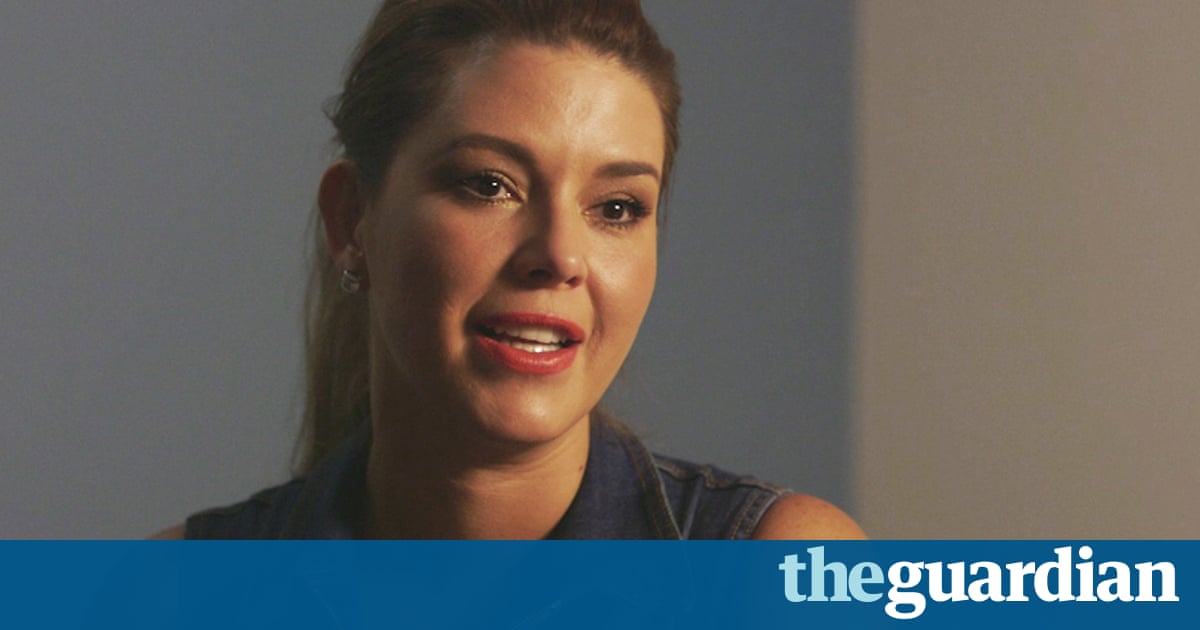
 Donald Trump was accused by the Clinton campaign of “unhinged” behaviour toward a former Miss Universe winner on Friday after he fired off a tirade of personal attacks against her in the middle of the night.
Launching the fourth day of a war of words against Alicia Machado that
is causing consternation among Republicans, the party’s candidate
accused Machado of having a “disgusting” past after she criticised his
attitude toward women.
Machado captured national attention during the US presidential debate on Monday when Hillary Clinton recalled how Trump had first labeled her “Miss Piggy” and publicly shamed her for putting on weight when he owned the beauty contest.
But widespread sympathy garnered by the Venezuelan-born actress – who earliertold the Guardian she had struggled with years of eating disorders after incident – appears to have riled the celebrity property tycoon.
In a string of tweets sent between 5:14am and 5:30am from New York,
Trump alluded to unproven accusations against Machado and claimed she
had been helped to become a US citizen so Democrats could exploit her.
“Wow, Crooked Hillary was duped and used by my worst Miss U. Hillary
floated her as an ‘angel’ without checking her past, which is
terrible!” wrote Trump.

“Did Crooked Hillary help disgusting (check out sex tape and past)
Alicia M become a US citizen so she could use her in the debate?” he
added.
The Clinton campaign denies playing any part in Machado’s citizenship
application, but seized on the apparently false rumours of a sex tape as
evidence of an attempt to smear her in revenge for speaking out.
“This is … unhinged, even for Trump,” responded Hillary Clinton’s
Twitter account on Friday. “What kind of man stays up all night to smear
a woman with lies and conspiracy theories?” (The tweet was not signed
“H”, which Clinton uses to indicate she has written messages herself.)
Machado posed topless for Playboy in Mexico and briefly took part in a risqué, but censored, scene on a reality TV show, but the New York Times says fact-checkers have found no evidence to support conservative rumours of a sex tape.
Trump’s apparent obsession with attacking Machado has added to worry
among many Republicans that his campaign has lost focus since Clinton
got under his skin in Monday’s debate.
“Alicia deserves praise for courageously standing up to Trump’s attacks.
And he has the gall to blame her – and say he ‘helped’?” added the
Clinton campaign. “When something gets under Donald’s thin skin, he
lashes out and can’t let go. This is dangerous for a president.”
“Trump is on the verge of blowing it,” wrote the former George W Bush press secretary Ari Fleischer on Friday. “Free advice: Focus on Hillary. No one else. Hillary is your opponent. No one else is.”
A Trump campaign aide in Florida also resigned on Friday citing concerns with
the candidate’s behaviour. “It is clear the campaign is now going in a
direction I am no longer comfortable with and I have decided to move
on,” Healy Baumgardner told Bloomberg.
Trump, however, seems to be following a pattern of personal and sexually
explicit attacks against women who have slighted him. As well as
threatening to introduce Clinton sex scandals into the next presidential
debate, he also suggested a Fox News moderator in the first primary
debate was hostile toward him because she was menstruating.
It is also not the first time Trump has expressed an interest in sex tapes. In one of Trump’s many appearances on Howard Stern’s radio show he said he had watched a leaked video of Paris Hilton having sex.
“Now, somebody who a lot of people don’t give credit to but is in
actuality very beautiful is Paris Hilton,” Trump told Stern. “I’ve known
Paris Hilton from the time she’s 12, her parents are friends of mine,
and the first time I saw her she walked into the room and I said, ‘Who
the hell is that?’ At 12, I wasn’t interested … but she was beautiful.”
“Trump obsessively bullies Rosie O’Donnell – an accomplished actor. He
insulted Kim Kardashian for her weight – when she was pregnant,” added
Clinton’s Twitter account in her response to what she called “day 5 of
the Machado meltdown” on Friday. “We’ve heard Donald’s insults for
years, and his policies reflect this disregard – even contempt – for
women.”
Her campaign spokeswoman, Jennifer Palmieri, later claimed the
“distasteful” behaviour was backfiring for Trump and ridiculed his
pre-dawn breakdown. “Where is he now? Is he awake? … 5.30am it stopped. I
don’t understand.”
Additional reporting by Adam Gabbatt in New York

Philippines' Duterte likens himself to Hitler, wants to kill millions of drug users
Philippines president likens himself to Hitler
By Karen Lema and Manuel Mogato-Sat Oct 1, 2016
 Philippines
President Rodrigo Duterte appeared to liken himself to Nazi leader
Adolf Hitler on Friday and said he would "be happy" to exterminate three
million drug users and peddlers in the country.
Philippines
President Rodrigo Duterte appeared to liken himself to Nazi leader
Adolf Hitler on Friday and said he would "be happy" to exterminate three
million drug users and peddlers in the country.
By Karen Lema and Manuel Mogato-Sat Oct 1, 2016
Philippines
President Rodrigo Duterte appeared to liken himself to Nazi leader
Adolf Hitler on Friday and said he would "be happy" to exterminate three
million drug users and peddlers in the country.
His comments triggered shock and anger among Jewish groups in the United
States, which could add to pressure on the U.S. government to take a
tougher line with the Philippines leader.
Duterte recently insulted President Barack Obama and in a number of
remarks he has undermined the previously close relationship between
Manila and Washington.
In a rambling speech on his arrival in Davao City after a visit to
Vietnam, Duterte told reporters that he had been "portrayed to be a
cousin of Hitler" by critics.
Noting that Hitler had murdered millions of Jews, Duterte said, "There
are three million drug addicts (in the Philippines). I'd be happy to
slaughter them."
"If Germany had Hitler, the Philippines would have ...," he said, pausing and pointing to himself.
"You know my victims. I would like (them) to be all criminals to finish
the problem of my country and save the next generation from perdition."
Duterte was voted to power in a May election on the back of a vow to end
drugs and corruption in the country of 100 million people. He took
office on June 30 and over 3,100 people have been killed since then,
mostly alleged drug users and dealers, in police operations and
vigilante killings.
Duterte's comments were quickly condemned by Jewish groups.
Rabbi Abraham Cooper, head of the Simon Wiesenthal Center's Digital Terrorism and Hate project, called them "outrageous".
"Duterte owes the victims (of the Holocaust) an apology for his disgusting rhetoric," Cooper said.
The Anti-Defamation League, an international Jewish group based in the
United States, said Duterte's comments were "shocking for their
tone-deafness".
"The comparison of drug users and dealers to Holocaust victims is
inappropriate and deeply offensive," said Todd Gutnick, the group's
director of communications. "It is baffling why any leader would want to
model himself after such a monster."
United Nations spokesman Stephane Dujarric said any use of "the
Holocaust and the suffering of the Holocaust in comparison to anything
else, frankly, is inappropriate and needs to be rejected." He said
Secretary-General Ban Ki-moon had made clear that the fight against
illegal drugs must be done "in accordance with human rights standards."
State Department spokesman Mark Toner called Duterte's remarks "troubling."
"America's ... partnership with the Philippines is ... based on a mutual
foundation of shared values and that includes our shared belief in
human rights and human dignity," Toner said.
"President Duterte's comments are a significant departure from that tradition and we find them troubling."
A White House official stuck to a strategy of stressing long-standing
ties with Manila, saying, "We continue to focus on our broad
relationship with the Philippines and will work together in the many
areas of mutual interest."
EX-PRESIDENT'S WARNING
Two days before the Philippines election, outgoing President Benigno
Aquino had warned that Duterte's rising popularity was akin to that of
Hitler in the 1920s and 1930s.
Duterte has been scathing about criticism of his anti-drugs campaign and
has insulted the United Nations and the European Union, as well as
Obama, at various times in recent weeks.
On Friday, reacting to critical comments on his war on drugs by U.S.
Senators Patrick Leahy and Benjamin Cardin, Duterte said: "Do not
pretend to be the moral conscience of the world. Do not be the policeman
because you do not have the eligibility to do that in my country."
He also reiterated there will be no annual war games between the
Philippines and the United States until the end of his six-year term,
placing the longstanding alliance under a cloud of doubt. It also may
make Washington's strategy of rebalancing its military focus towards
Asia in the face of an increasingly assertive China much more difficult
to achieve.
Still, U.S. Defence Secretary Ash Carter, speaking before the latest
remarks from Duterte, said Washington had an "ironclad" alliance with
Manila.
A senior U.S. defence official, also speaking earlier, told reporters
that the United States had a long enduring relationship with the
Philippines regardless of who was president.
Murray Hiebert, a Southeast Asia expert at the Center for International
and Strategic Studies think tank in Washington, said Obama was "taking
the long view" in dealing with Duterte. Obama leaves office in January.
Malcolm Cook, a senior fellow at Singapore's ISEAS Yusof Ishak
Institute, said the U.S-Philippines alliance was not necessarily at
risk, but Washington could seek to focus on ties elsewhere in the
region.
"We are all in some sense becoming, by necessity, desensitised to Duterte's language," he said.
"Diplomatically, the U.S. would say they'll continue to work with him
and the alliance is strong. But it's whether they'll continue to
strengthen that alliance or not."
(Additional reporting by Brendan O'Brien in Milwaukee, Yeganeh Torbati
in San Diego, Marius Zaharia in Singapore, Michelle Nichols at the
United Nations, Jeff Mason in Jerusalem, and David Brunnstrom and Matt
Spetalnick in Washington; Editing by Raju Gopalakrishnan, Toni Reinhold)
Turkish media boss quits after email 'scam' fuels press freedom fears
Leftist
hacker group RedHack released a series of emails last week implicating a
number of senior officials in controversial dealings

Front
pages of Turkish newspaper on 3 June reacting after German parliament
labelled the World War I massacre of Armenians by Ottoman forces as
genocide (AFP)
 Friday 30 September 2016
The head of one of Turkey's largest media groups quit on Friday after
hackers released what they said were emails showing him yielding to
editorial pressure from members of President Recep Tayyip Erdogan's
inner circle.
In a statement announcing his resignation, Mehmet Ali Yalcindag of Dogan
Media denied that the emails leaked on social media this week had come
from him, and vowed to take legal action.
He described the act, carried out by the leftist RedHack group, as an "ugly scam".
The group's titles include leading newspaper Hurriyet, broadcaster CNN
Turk and mainstream television channel Kanal D. Yalcindag's resignation
comes amid concern about pressure on the media in Turkey, particularly
since emergency rule imposed after a failed July coup gave authorities
sweeping powers.
More than 100 journalists have been detained since the attempted coup of
July 15, when soldiers commandeered tanks and fighter jets in a bid to
seize power.
Wider purges have seen some 100,000 police, soldiers, judges, and civil
servants sacked or suspended on suspicion of links to the secretive
network blamed for the coup.
Yalcindag said he was resigning to prevent damage to the reputation of
parent company Dogan Holding, one of Turkey's best-known family
conglomerates, with interests ranging from media and real estate to
energy and retail.
"I have decided to leave this post, which I have occupied with
dedication and care since the beginning of this year, to prevent the
allegations directed at me from harming the reputation of the Dogan
group," he said.
The alleged emails released by RedHack included correspondence
supposedly between Yalcindag and Erdogan's son-in-law, Energy Minister
Berat Albayrak, in which the Dogan executive appears to show willingness
to adjust the editorial line of Dogan brands to appease the government.
Officials in Albayrak's office declined to comment.
Dogan Holding shares dropped as much as 3.6 percent on Friday, after falling around 3.5 percent on Thursday.
"In the technical inspections on my personal computer, it was uncovered
that these e-mails were not sent by me, and were not sent through my
computer. This is an ugly scam," Yalcindag said in his statement.
'Charlatans'
In the latest media closures following the coup, Turkey has ordered 20
television and radio stations shut down, including one that airs
children's programmes, on charges that they spread "terrorist
propaganda".
Prominent journalist Ahmet Altan, who is also a popular novelist, was detained for trial last week.
He is accused of participating in the coup by sending out subliminal messages to the troops who tried to seize power.
Officials reject the notion that the actions are a bid to stifle
dissent, saying the extent of the crackdown is justified by the gravity
of the threat to the state. Those found not to have links to the coup
will be released, they have said.
Dogan Holding has long had a tense relationship with Erdogan and the ruling AK Party.
In May, Dogan was suspended from state tenders after Erdogan accused its
head, Aydin Dogan, of being a "coup lover" and described its media
columnists as "charlatans".
In 2009, Dogan Media was fined $2.5 billion for unpaid taxes, in what
government opponents saw as an attempt to crush media criticism of
Erdogan, following its coverage of corruption allegations against
members of his inner circle.
Following the tax bill, founder Dogan was forced to sell the group's
Milliyet and Vatan newspapers, the Star TV channel, and other holdings.
In a statement shortly after Yalcindag's resignation, Aydin Dogan,
honorary president of Dogan Holding, said the unity of the Dogan family
would not be affected.
"Mehmet Ali Yalcindag resigned from his post to prevent any
misunderstanding," he said. "Since the start of the year he carried out
his work and duties successfully. I respect the sensitivity shown my
Mehmet Ali and thank him. The Dogan Media Group has for 40 years tried
to engage in independent and objective broadcasting based on universal
standards.
"We have been committed to our republic and democracy and within that framework have defended our nation and state".
Inside FARC’s Postwar Jungle Camp Finishing School

 BY SEPTEMBER 30, 2016
YARI PLAINS, Colombia — At dawn in a jungle clearing in
southern Colombia, rebels wearing pixelated fatigues, berets and Lenin
badges form up in a loose parade before the start of their school day.
They belong to the country’s largest and oldest guerrilla group, the
Revolutionary Armed Forces of Colombia (FARC), which reached a peace
agreement with the government last month after more than 50 years of
civil war — morning military training has thus been replaced by
classwork.
After a shout of “Viva Colombia!” the guerrillas,
ranging in ages from 18 to 59, disperse into improvised classrooms
formed by camouflage tarpaulins stretched between trees. There is some
awkwardness when they put down their guns and pick up the textbooks that
are the key to the new phase of their struggle.
“We are going into a new type of battle, and politics
requires just as much training as war,” said Paula Sáenz, 26, a group
monitor at the FARC’s Isaias Pardo school, which was set up in 1984 to
train the movement’s top command. Sáenz, whose job is to turn her fellow
fighters into party operatives, says the FARC’s aspiration to conquer
the hearts and minds of their countrymen will collapse “if we don’t
understand the issues that the country faces or how to get across our
political message.”
After more than 50 years of fighting, and four years of
tense negotiations, the FARC and the Colombian government signed a
peace agreement on Sept. 26 in the colonial city of Cartagena, Colombia.
The deal will be put to a public referendum on Oct. 2, after which the
group hopes to cease its existence as a Marxist guerilla movement
committed to overthrowing the state and begin a new life as a leftist
political organization prepared to compete in elections.
The
Isaias Pardo school is at the center of the group’s current preparation
for civilian life, but the FARC’s emphasis on education is nothing new. “Our
motto has always been ‘first you arm a guerrilla’s mind, then you put a
gun in his hand,” said Frankie, 29, as he made notes in his
cartoon-covered textbook. “If you don’t prepare a guerrilla
ideologically, culturally, and politically, he won’t know what he is
fighting for, and just as easily as he can fire that way, he could fire
back this way.”
Unassuming and timid, Frankie left school in the city
at age 13 after a pulling a knife on a teacher who was about to hit him,
and sold candy and recycled trash on the streets of Bogotá before
joining the FARC one year later. He said most FARC guerrillas had little
or no education when they joined the movement.
According to government figures, more than 1.5 million
Colombians are illiterate; that’s more than 3 percent of the population.
“I’ve had to teach people who arrived at the FARC and didn’t even know
how to spell their name,” he recalled. “In the villages where they
lived, if they worked they couldn’t study, and if they studied they
couldn’t eat.”
FARC recruits would go through two years of basic
education in literacy, ideology, and the movement’s command structure at
local training camps. Their military training– courses in explosives,
intelligence, and sniper shooting –was typically preceded by classes in
reading or writing. Those recruited for the top command would be sent to
schools like the Isaias Pardo Mixed School in the Yari Plains jungle
camp, one of a handful of national training camps.
The FARC has now developed a “pedagogy for peace” curriculum to create a new cadre of political leaders.
Unit commanders from across the FARC’s eastern bloc
have marched for hundreds of miles to attend the Isaias Pardo school’s
nine-month course. Frankie walked for five weeks from the north across
the Cordillera mountains; Paula came from the southwest, trekking
through dense jungle.
“The [Isaias Pardo] school has always had a strong
ideological component grounded in Marxist-Leninism from the beginning,”
explained Victoria Nariño, 34, who joined the FARC’s urban guerrilla 12
years ago after studying social sciences in Bogotá and has been the
camp’s main professor for the past nine months. “But since the peace
accords began, the military training has disappeared and political
training has intensified ahead of the huge, transcendental step — from
armed fighters to civilians — that we are about to take.”
The daily routine begins at dawn with national and international news headlines and circulares —
updates from the central command at the negotiating table in Havana.
“Listening to news on the radio is such a ritual for us like praying is
for Christians,” Victoria explained. “We do it everyday.” In the morning
twilight the guerrillas drink tinto — sweetened coffee — to
stay awake and keep warm. Banners emblazoned with the faces of the
FARC’s leadership and other Marxist figureheads hang from the eaves of
the large hut where they gather for lectures under a roof made of
plastic sheeting and palm leaves.
In rough rows of eight, rebels sit on benches or stools
crafted from logs. Their guns are always by their side, placed on the
dirt floor or hanging from tree branches just outside the shelter. They
spend most of their time immersed in left-wing political theory and
cultural history: classes in party structure, philosophy, history and
political economy. They discuss supply-side economics in terms of crops:
plantains, coffee, and yuca, the starchy root vegetable typical of the
Andes. The work by historian Renán Vega on social movements in Colombia —
class struggle, unions, and the fight against state terrorism — was
recently added to the curriculum.
Ahead of the plebiscite on the peace accords, the FARC
will have to convince a skeptical public that they can indeed do
peaceful politics. It is unclear at this stage
whether the FARC will form its own political party or — more likely —
join efforts with other leftist groups, especially in rural areas where
they have their strongest support base.
Recent polls have swung between approval and rejection of the FARC’s political future, reflecting deep polarization in Colombia. If
the deal passes in the referendum, the FARC still has to contend with
vehement opposition. According to an Ipsos poll, 79 percent of
respondents said FARC leaders should not be allowed to participate in politics, even though they would be allowed to under the accords.
For Kristian Herbolzheimer, a
conflict resolution expert with Conciliation Resources, an international
nongovernmental organization which has consulted with negotiators in
the Colombian peace process, the integration of
the FARC into the democratic sphere will be the biggest test to the
peace process. It bodes well that the group has already shown a
willingness to moderate its ideology. “They have accepted private
property, foreign investment, and abiding by a constitution and a legal
framework they have been fighting against for decades,” he said.
Herbolzheimer also noted that FARC
negotiators in Havana had shown flexibility on their initial demands
and won significant concessions on land rights and retribution —
original objectives of the insurrection — as a result. But the FARC’s commitment to disarm and enter formal political channels is a “fundamental but insufficient condition,” he said. “The main question is how existing political parties will respond and engage with a new political player.”
Meanwhile, in the jungle camp, Frankie and his fellow
guerrillas still follow the motions of armed insurgency: Armed lookouts
stand guard among the bushes, listening for unexpected sounds, their
eyes scanning the darkness for an enemy that is no longer searching for
them. Many still dig trenches beside the huts where they sleep — a
precaution from the days of heavy bombing raids.
But there is also a growing spirit of ease. Frankie emphasized that the movement has always been a “military-political”
organization. “The political agenda only took a hit when the fighting
got really tough during Plan Colombia years,” he added, referring to a
U.S.-backed military campaignagainst
the rebels that began in the late 1990s. In October 2015, the FARC
announced it had stopped military training and was now actively
preparing its fighters for legal politics.
Today, many students at the camp spend long stretches of their afternoons reading for pleasure in hammocks tied between their caletas,
the wooden and palm beds they sleep on. Novels and short stories that
“lift the revolutionary spirit” are circulated in the camps, with
Mikhail Sholokhov’sOne Man’s Destiny being a camp favorite. On the few available laptops, Charlie Chaplin films among more typical Hollywood fare.
The guerrillas at the camp say they are more interested
in grassroots activism than state politics. “Everyone is expected to
carry their political militancy with them even if they don’t aspire to
office,” explained Victoria. “In
addition to being a farmer, I might be the chairman of the community
action group of my village and affect change that way, from the bottom
up,” she said, listing actions against multinational companies and
extractive industries.
Days before the announcement of the peace deal in September, Carlos Antonio Lozada,
FARC’s urban commander who is now preparing to lead his organization
into politics, arrived at the camp to answer rebels’ concerns about the
process of demobilizing as a military group. He answered a wide range of
questions in the school’s main lecture shelter.
After the plebiscite on Oct. 2, the FARC will move to
23 U.N.-monitored concentration zones to begin the demobilization and
disarmament process,
and they will remain there for up to six months. Lozada assured rebels
that their families could visit them in these areas and that the group
was still negotiating to allow the children of FARC members to live with
them during this period. He also explained that FARC members who
committed or ordered atrocities but confess to their crimes will avoid
serving their sentences in jail, instead performing “community service”
projects and acts of reparation.
His audience seemed confident they will eventually
enjoy political success outside of big cities. “We already have a lot of
popularity in our areas,” said Frankie. “We have relied on that support
base and would have been defeated long ago if it didn’t exist.” In the
Yari Plains region, there are few traces of the central government.
Bridges and roads have been constructed by the FARC and the local
population tends to see the guerrilla organization as their most
dependable form of local government. Many locals doubt the central
government’s capacity to make good on promises of investment in
infrastructure and development projects. They also tend to see the FARC
as preferable to the organized paramilitary groups, which were born from
a botched demobilization process in the early 2000s of the United
Self-Defense Forces of Colombia (AUC), a federation of right wing
paramilitaries, and are growing in power.
Among the guerrillas at the Isaias Pardo school,
violence from these paramilitary forces is considered the biggest threat
to the peace process and their personal safety. The previous FARC
attempt to enter peaceful politics in the 1980s was undone by similar
groups. Close to 3,000 party members, including two presidential
candidates, were murdered and many of the remainder fled the country. In
a break from her duties as class monitor, Paula Sáenz said that
paramilitaries beat her uncle to death in front of her when she was a
child and forced her family to abandon their home. “Paramilitarism is
not the ghost everyone wants it to be; it’s real and every guerrilla is
terrified it is coming to kills us just like before,” she said.
In the school, students, divided in their squadrons
that will later become political cells, spend much time discussing both
the fine print of the peace agreement and broader questions about their
future lives. Many know they will soon begin work as farmers, and wonder
what they will do for food while they wait for their crops to grow.
Eliodoro Suarez, 58, one of the camp’s veterans, explains they will
receive a minimum-wage salary from the government following
demobilization. “That is an answer we can work with,” says Miller, 43,
his assault rifle lying across his lap. “Crops don’t grow overnight.”
The vast majority of the FARC’s rank-and-file is on board with the peace deal. Only
one unit, the 200-strong Armando Ríos First Front in the southern
central province of Guaviare, has said it will not disarm but continue
to fight. The FARC quickly responded by rejecting the unit from the movement as military airstrikes against it began.
Paula Sáenz said she understands that many of the
FARC’s fighters see little alternative to returning to war if their
comrades start disappearing or being murdered. But she says she trusts
the FARC’s promise that
the movement will not raise its rifles again. “We were born without
these guns so we can’t say they define us” she said, wrapping her
textbooks in plastic to protect them from the jungle humidity. “It might
be difficult to leave them behind, but it is the path to peace.”
For now, there is a spirit of optimism in the Isaias
Pardo school: The future brings the possibility of political rebirth.
And while the model of armed struggle may be ending, Sáenz insists the
FARC will remain. “No one is going to fight for 50 years, hand in their
gun and say, ‘Give me $17, and the story ends here.'”
Photo credit: LUIS ACOSTA/AFP/Getty Images
Gandhi: ‘My life is my message’

Each of us has a choice. We can stand aside in the great fight for survival in which humanity is now engaged. Or we can be involved. What is your choice?
 by Robert J. Burrowes
( September 29, 2016, Melbourne, Sri Lanka Guardian) As
most of the world ignores or hypocritically celebrates the 147th
birthday of Mohandas Karamchand Gandhi on the International Day of
Nonviolence on 2 October, some of us will quietly acknowledge his life
by continuing to build the world that he envisioned. When asked for his
message for the world, Gandhi responded with the now famous line ‘My
life is my message’ reflecting his lifelong struggle against violence.
Gandhi’s life was dotted with many memorable quotes but one that is less
well known is this: ‘You may never know what results come of your
actions but if you do nothing there will be no results’.
Fortunately, there are many committed people who have identified the
importance of taking action to end the violence in our world – whether
it occurs in the home or on the street, in wars, as a result of economic
exploitation or ecological destruction – and this includes the
courageous people below. These people have identified themselves as part
of the worldwide network, now with participants in 96 countries,
committed to ending violence in all of its forms. I would like to share
their inspirational stories and invite you to join them.
Christophe Nyambatsi Mutaka is the key figure at the Groupe Martin Luther King which
promotes active nonviolence, human rights and peace. The group is based
in Goma in the eastern Democratic Republic of the Congo (DRC) in
central Africa. They particularly work on reducing sexual and other
violence against women.
Also based in Goma, the Association de Jeunes Visionnaires pour le Développement du Congo headed
by Leon Simweragi is a youth peace group that works to rehabilitate
child soldiers as well as offer meaningful opportunities for the
sustainable involvement of young people in matters that affect their
lives and those of their community.
Given the phenomenal suffering in the DRC, which has experienced the
loss of six million lives and the displacement of eight million people
due to the long war driven by Western corporations keen to exploit the
country’s mineral wealth, Christophe, Leon and their colleagues are
testimony to the fact that committed people strive in the most adverse
of circumstances.
Tess Burrows in the UK is an adventurer (including parachutist,
mountaineer, cyclist and marathon runner), peace activist, author,
speaker, healer, and ‘most importantly a mother and grandmother’. In her
words: ‘I am dedicated to the pursuit of World Peace and the healing of
the Earth.’ Tess has written several books and, if you are looking for
inspiration, I suggest you try these: ‘Cry from the Highest Mountain’
(describing a climb to the point furthest from the centre of the Earth),
‘Cold Hands, Warm Heart’ (describing a trek across the coldest, driest,
windiest place on Earth: the Geographic South Pole), ‘Touch the Sky’
(describing her climb of Mt Kilimanjaro, in Africa’s heartland, pulling a
car tyre which included peace messages from every nation on Earth and
embodying their desire for everyone to pull together to promote peace)
and her latest book ‘Soft Courage’. Her video ‘Climb For Tibet‘
won’t bore you either! The funds raised from sales of the books and
donations have, among other things, built six schools in Tibet and
supported a Maasai community tree-planting project in Africa. Tess
collects messages of peace from individuals and speaks them out from
‘far high places’. So far, this has included the North and South Poles,
the Himalayas, Andes, Pacific and Africa. You can be part of her next
Peace Climb in Australasia by writing your personal message on her website where you can also check out her books. Be warned however, this website will exhaust you!
Recently, on the International Day of Peace, the Afghan Peace Volunteers
and Borderfree Street Kids in Kabul, mentored by Dr Teck Young Wee
(Hakim), reached out to the visually impaired and blind students at
Rayaab (Rehabilitation Services for the Blind Afghanistan). They brought
MP3 players as gifts to 50 visually impaired students. The students
will use the MP3 players to listen to recorded school lessons and
educational programs. Rayaab is an Afghan non-governmental organization
run by Mahdi Salami and his wife Banafsha, who are themselves visually
impaired. If you want to see photos from this day, and to watch an
extraordinary three minute video, you can do so at ‘To Touch a Colourful Afghanistan‘.
Kristin Christman in the USA continues her tireless efforts to make our
world more peaceful by seeking to understand the deeper drivers of
conflict while offering practical steps forward. She is currently
working on a book based on her monumental ‘Taxonomy of Peace: A Comprehensive Classification of the Roots and Escalators of Violence and 650 Solutions for Peace‘ A recent rather personal article offers insight into her approach: ‘Make serving in war an option, not an order‘ and illustrates how violence is ‘built-into’ society.
Ghanaian Gifty A. Korankye has just developed a new website titled ‘Daughters of Africa‘.
Explaining why, she writes: ‘Over the years I watched women go through
unbearable pain …. Our daughters go through FGM in their puberty…. The
humiliation we face when we lose our spouse, all in the name of customs
and tradition.’ Determined to help address the issues that plague many
African women she wants to give them the chance to be ‘a useful voice to
our communities’, to share the success stories of African women and
African-American women in business administration, the entertainment
industry and elsewhere in order to share learning from their journeys
and to ‘help mentor our young generation’. She invites African women to
write to share their stories and work together to find solutions. ‘We
can do it because we are daughters of Africa.’
So what about you? Do you believe that ending human violence is
possible? Even if you believe that it is not, do you believe that it is
worth trying? As Gandhi noted: ‘The future depends on what we do in the
present.’ What will you do?
In essence, working to end human violence and to create a world of
peace, justice and ecological sustainability for all life on Earth might
not be what gets you out of bed in the morning. But if it is or you
would like it to be, you are welcome to join those of us who are
committed to striving for this outcome by signing the online pledge of ‘The People’s Charter to Create a Nonviolent World‘.
And if you subscribe to Gandhi’s belief that ‘Earth provides enough to
satisfy every [person’s] needs, but not every [person’s] greed’, then
you might consider participating in ‘The Flame Tree Project to Save Life on Earth‘ which he inspired as well.
Each of us has a choice. We can stand aside in the great fight for
survival in which humanity is now engaged. Or we can be involved. What
is your choice?
The bottom line is this: What will be the message of your life?
Robert J. Burrowes
 Biodata: Robert J. Burrowes has
a lifetime commitment to understanding and ending human violence. He
has done extensive research since 1966 in an effort to understand why
human beings are violent and has been a nonviolent activist since 1981.
He is the author of ‘Why Violence?’ http://tinyurl.com/whyviolence His
email address is flametree@riseup.net and his website is at
http://robertjburrowes.wordpress.com
Biodata: Robert J. Burrowes has
a lifetime commitment to understanding and ending human violence. He
has done extensive research since 1966 in an effort to understand why
human beings are violent and has been a nonviolent activist since 1981.
He is the author of ‘Why Violence?’ http://tinyurl.com/whyviolence His
email address is flametree@riseup.net and his website is at
http://robertjburrowes.wordpress.com
How the Pill messes with women's minds
 Bizarre as it sounds, it was an almost-empty carton of orange juice that nearly put an end to my relationship.
Arriving home from a hard day at the office, tired and dehydrated, I
reached into the fridge for the carton, poured out its contents — and
the tiniest, meanest dribble of liquid fell into the glass.
What can only be described as murderous rage surged through my body. I
hurled the glass across the kitchen, sending it smashing into tiny
pieces against the wall.
 At
At
At breaking point: Taking the Pill can make some women become angry and emotional (posed by model)
My boyfriend came racing into the room to find me wailing that life wasn’t fair and I hated everything... including him.
We had a blazing row and I stormed out of the kitchen. Looking back, I’m
astonished the poor boy was still in the house when I sheepishly
returned an hour later. Especially when for weeks I’d been irritable and
moody, barely wanting to touch him, let alone sleep with him.
But stay he did. Robin is now my husband and he still refers to that
moment as ‘the time you went a bit psychotic’. He also admits it’s the
closest he’s ever come to ending our relationship.
That was more than ten years ago and what saved us was the fact we both
knew my behaviour wasn’t normal. My mood swings and uncharacteristic
tearful outbursts were, we decided, down to the Microgynon contraceptive
Pill I’d started taking several months earlier.
Days after I stopped taking it, I returned to my (relatively) sane, easygoing self.
Since then, I’ve never experienced anything like it, but I’ve often wondered how many other women have had similar episodes.
The Pill, which celebrated its 50th birthday last year, revolutionised
how we think about sexuality and relationships. Not only is it more than
99 per cent effective, if taken correctly, there’s evidence it reduces
the risk of cancer, heart disease and stroke.
'The Pill sent me crazy. One minute I'd feel fine, the next I'd be crying'
Today, three-and-a half million women in Britain — one in three women of
reproductive age — use it. And last year a four-decade study of
long-term Pill takers, published in the British Medical Journal, found
they may live slightly longer than those who don’t take it.
We all know the physical side-effects — nausea, weight gain and an
increased risk of deep vein thrombosis — but little is said about the
psychological risks.
Last week, however, scientists at Stirling University claimed the Pill
affects women’s choice in men. The study showed women taking it tend to
choose reliable, caring and steady men, rather than adventurous, dashing
and dangerous types.
The theory is the hormones in the Pill — oestrogen and progestogen (an
artificial hormone like the female hormone progesterone) — guide women
away from macho types who might not stay put to help bring up children.
Final proof, perhaps, of what many of us have long suspected — the Pill affects us mentally, too.
 Hormone
changes: One in three women of reproductive age in Britain take the
Pill, but for some, could it be doing more harm than good?
Hormone
changes: One in three women of reproductive age in Britain take the
Pill, but for some, could it be doing more harm than good?
Yet, despite the findings, doctors remain unsure whether the Pill can change a woman’s behaviour.
‘It’s established that oestrogen and progestogen alter the brain’s nerve
circuits, but to what extent that affects mood is hard to tell,’ says
endocrinologist Professor Saffron Whitehead at St George’s Hospital,
South London.
‘We know oestrogen acts on the limbic system in the brain, which is
linked with moods — but scientists aren’t sure where moods come from.
All we know is hormones affect our brains.’
Certainly, more women are asking their GPs for alternative contraception after experiencing dramatic mood changes on the Pill.
Angeline Brunel, 33, a call handler from Glasgow, has vowed never to go
back on the Pill after trying several brands in her early 20s.
‘When I started seeing my ex-boyfriend I went to my GP and got the
combined Pill, a brand called Cilest. Within days, it was affecting me
emotionally,’ says Angeline, who now lives with her husband Thomas, 32,
and four-year-old daughter Madeleine.
'I don't like putting hormones into my body, but I use the Pill for birth control, as it's so convenient'
‘It sent me crazy. One minute I’d feel fine, the next I’d be crying. All
I can liken it to is the feeling of being pregnant, but more
emotional.
‘I went back to the doctor and he was very dismissive. He said: “You’ve
just read about those side-effects on the packet. That’s why you’re
feeling like that.”’
After registering with a new doctor, Angeline was prescribed a second
brand of Pill, called Yasmin, but found it just as disturbing.
‘I was studying and found I couldn’t focus on my work. I’m sure I was
suffering from depression, as I was so unpredictable to live with and
would pick arguments or cry at the drop of a hat. Not long after, my
boyfriend and I broke up. I’m convinced the Pill was to blame.’
Angeline says many of her friends now take a non-hormone-based method of contraception.
‘I’m in my 30s and I don’t know anyone who is still on it. We all tried
it in our 20s and a few of us had quite bad reactions. But at that age,
you’re not aware of other options.’
Sarah Marshall, 31, an executive assistant from North London, was
prescribed Ortho Tri-Cyclen (a U.S. brand, as she was living in the
States at the time).
‘I went on the Pill in my early 20s. Initially, I was delighted that my
cycle became so regular. But then every month, three days before my
period, I’d get angry and upset.
‘One time, my sister and I shared a four-hour car journey. Suddenly, I
became hysterical and started crying. When she asked me what was wrong, I
didn’t know. It was four hours of total madness.’
Sarah, who is married to Ken, 35, a film producer she met six years ago,
stuck with the Pill for two years before returning to her GP.
‘My doctor told me it can take a while for some women to find the right
Pill and that I might be suffering from side-effects, as it was a high
oestrogen Pill, which can make some women emotional.
Side effects: Experts say any mood changes that occur as the body adjusts to the Pill should wear off within a few months
 ‘He
put me on Yasmin, but that made me vomit every morning. For the past
ten years, I’ve been on Synphase, which is the right mix of oestrogen
and progestogen for me. I don’t like putting hormones into my body, but I
use the Pill for birth control, as it’s so convenient and isn’t
permanent; so when we want to start trying for a family we can.’
‘He
put me on Yasmin, but that made me vomit every morning. For the past
ten years, I’ve been on Synphase, which is the right mix of oestrogen
and progestogen for me. I don’t like putting hormones into my body, but I
use the Pill for birth control, as it’s so convenient and isn’t
permanent; so when we want to start trying for a family we can.’
The anecdotal experiences of women who have struggled with the Pill is, admittedly, convincing, but what of scientific proof?
One of the few academic studies into the emotional effects of the Pill
was conducted in 2005 at an Australian university. Using a medically
respected questionnaire, researchers found Pill takers had an average
depression rating of 17.6 compared to 9.8 in non-users.
Professor Jayashri Kulkarni, who led the study, said: ‘Since this study,
we have been looking at the varying moods between users of different
types of Pills. We found women taking Pills with lower doses of
oestrogen had significantly worse moods than those using higher-dose
Pills or women not using a Pill at all. In fact, their scores were
indicative of mild clinical depression.
‘Conversely, women using pills with a higher dose of oestrogen had
better moods than women not using a contraceptive Pill at all.
‘This suggests different oestrogen doses in oral contraceptive Pills can have differential effects on mood.’
However, this study is neither completed nor published.
For years, women have reported suffering from reduced libido while
taking the Pill. A study of more than 1,000 women at Germany’s
University of Heidelberg found the Pill dramatically reduces levels of
desire and arousal during sex.
Yet many GPs remain sceptical. Dr Diana Monsour, consultant in
gynaecology and reproductive health in the North-East, says: ‘Emotional
effects for most women on the Pill do not happen. Our moods vary and
it’s too easy to blame the Pill if we’re feeling low. Any scientific
evidence in this area is very woolly, indeed.’
So, what is the official guidance for those in doubt?
Lynn Hearton, of the Family Planning Association, says: ‘Any mood
changes that occur as the body adjusts to changing hormone levels from
the Pill should wear off within a few months.
‘For the majority of women, the benefits of the Pill far outweigh the side-effects.’
That’s as may be.
But as I — and many other women who have had a bad experience on the
Pill — believe, suffering a crippling emotional fall-out once a month is
a heavy price to pay.
Friday, September 30, 2016
Political justice is not enough to rebuild Sri Lanka

* Any views expressed in this article are those of the author and not of Thomson Reuters Foundation.
For Sri Lanka, gender equity will be fundamental to a stable, peaceful and equitable future

The civil war that raged for 26 years in Sri Lanka was always about more
than political grievances. The politics were rooted in economic and
social disenfranchisement of the Tamil minority by the Sinhala majority.
A government policy adopted in the mid-1950s that declared Sinhala to
be the country’s only official language may have been the spark that
started the fire, but the impact over decades was a systemic
marginalization in all sectors of politics and the economy that fueled
Tamil grievances and a quest for a separate state.
With the end of the war in 2009, many commentators pointed out that the
war was over but the conflict was not. While this has become a cliché,
the reality is no less true, seven years on. Rebuilding Sri Lanka's
economy, especially in the war-torn Northern and Eastern provinces, is
paramount for the country not only to thrive politically but also
economically. The language policy, long since rescinded,
institutionalized both economic and political discrimination.
A healthy, more equitable economy is key to any society emerging from a
war as bitter as Sri Lanka experienced, and is crucial to mitigating
future conflict. A critical element to address discord is equal
treatment under the law. Yet there is rising concern that, across a
broad range of issues, this equality has yet to be realized. Women in
any society are intrinsic to a vibrant economy and important
stakeholders in post-conflict transitions. For Sri Lanka, gender equity
will be fundamental to a stable, peaceful and equitable future.
A recent study by
the Solidarity Center titled, "Workers in Post-Civil War Jaffna: A
Snapshot of Working Conditions, Opportunities and Inequalities in
Northern Sri Lanka," points out the challenge not only to providing
opportunities to grow the economy but also to promoting the basic labor
rights that are essential to a well-functioning industrial relations
atmosphere and a sense of equitable development.
For instance, here are some telling findings: In Jaffna, 81 percent of
workers across a range of professions have no written contract spelling
out their working conditions, much less have an opportunity to engage in
collective bargaining. Even more workers, 85 percent, were not aware
there was a legally stipulated minimum wage, which in Jaffna is now
10,000 Sri Lanka rupees, or only about $69 a month.
Not surprisingly, widespread wage discrimination is disadvantaging women
in the region. Survey results demonstrate that the region’s female
workforce experiences gender-specific consequences born of poor working
conditions, weak enforcement of legal provisions and non-conformity with
international labor standards. Nisha Thellipalai, a volunteer at the
Center for Human Rights and Development, a Sri Lankan nongovernmental
organization, recounted one survey interviewee’s report that she
“responded to a job advertisement which exclusively solicited female
respondents. The tasks in the advertisement were not for traditionally
gendered work, but the employer replied matter-of-factly that they would
only hire women because women don’t have to be paid as much as men.”
The survey also found that 81 percent of workers work more than five
days a week, in violation of national law, and the majority of people
working extra hours were women.
Sri Lanka is one of the rare developing countries in the region that has
had in place, by law, a pension and social safety net for workers.
These two funds are called the Employee Provident Fund (EPF) and the
Employee Trust Fund (ETF), and employers are statutorily obligated to
contribute to both. The study in Jaffna revealed that for more than
two-thirds of workers, their employers are simply not paying into the
funds.
This set of conditions in Jaffna, and by extension the Northern
Province, creates an incredibly precarious situation for workers who are
hoping to earn a livelihood that can sustain them and support their
future. It also points to the distinction between enforcement and equal
treatment under the law for the north and other parts of the country.
While implementation of the labor code is problematic countrywide,
unions outside of the north and east have a tradition of challenging
employers and the government in court to ensure the law is fairly
applied and provides some measure of remedy. But despite having
island-wide unions in the public sector—for the postal service,
telecommunications and health sectors—workers in the north and east
still seem to lose. Union activists point to unequal distribution of
funding for the public sector, effectively disadvantaging government
services for the population.
The remedies are not difficult to identify, as outlined by the report.
First, trade unions, NGOs and international development partners can
play a pivotal role in sensitizing the government and business community
to their obligations under national and international labor standards,
while also raising awareness among workers about their rights. Second,
support for unions to conduct worker outreach, which had been severely
curtailed during the war, will improve the effectiveness of dialogue
among workers, employers and government.
Third, the Sri Lankan government should fully adopt and promulgate the
International Labor Organization's (ILO) Decent Work Agenda to promote
inclusive growth, poverty alleviation, shared prosperity and basic
minimum standards of living. The Decent Work agenda is obligatory for
ILO member countries such as Sri Lanka. And that is no accident: The ILO
was founded, following World War I, “to pursue a vision based on the
premise that universal, lasting peace can be established only if it is
based on social justice." The agenda is all the more important because
its elements are fundamental to lasting peace and stability in the
country.
Finally, given the wage and hour disparities between male and female
workers, trade unions, NGOs, and international partners should pay
particular attention to raising rights awareness among women workers and
support targeted outreach to women who can become leaders in gender
equality and non-discrimination against all workers.
“After the survey I learned a lot that I did not know before,” said
Sritharan Easwari, president of the Northern Women Society, who helped
conduct the survey. “We all hear about injustice and exploitation at the
workplace, but it is deeper than that. Myself and other women believe
that these women’s issues in the workplace can be tackled effectively by
forming a union. These problems can be solved if we work together.”
Tim Ryan is Solidarity Center Asia director.
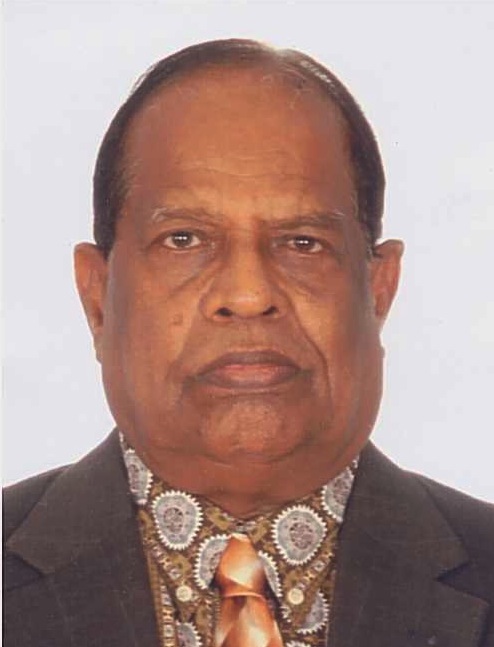
Office Of Missing Persons Sri Lanka: Deceptive & Futile

By Thambu Kanagasabai –September 30, 2016
Thambu Kanagasabai
The Office of the Missing Persons [OMP]
expected to function shortly has been welcomed as a positive step from
various quarters towards reconciliation after the war. However, a close
scrutiny and analysis of the legislation governing it reveals the
deception and futility underlying most of the provisions in The Act.
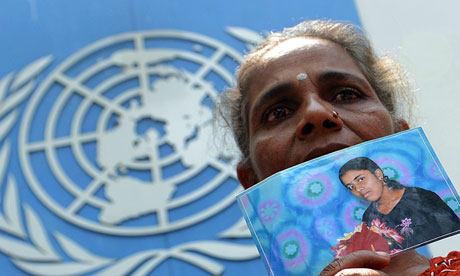
Sri Lanka ranks second in the list of countries after Iraq to record the
largest number of disappearances with unofficial estimated numbers of
about 90,000 since 1980s. Out of these disappearances, enforced or
involuntary disappearances are reported to be around 65,000.
Enforced Disappearances always involve state officials and/or security
forces. They happen when a person is illegally arrested and detained in
undisclosed centres where torture and other ill-treatment including
killing and disposal of the dead takes place. The arrest and detention
is carried out violating all rules and procedures including court
process.
The UN Working Group on Enforced or Involuntary Disappearances, [WGEID
c/oOHCHR] in its report on July 08, 2016 after staying in Sri Lanka from
09 – 18 November 2015, has plainly made the following damning
statement: “Enforced disappearances have been used in a massive and
systematic way in Sri Lanka for many decades to suppress political
dissent, counter-terrorism activities or in internal conflicts and many
enforced disappearances could be considered as war crimes or crimes
against humanity if addressed in a court of law.” The UN working Group
received 12,000 cases of enforced disappearance related to Janatha
Vimukkti Perumuna [JVP] uprisings and during the armed conflict between
Liberation Tigers of Tamil Eelam [LTTE} and the Sri Lankan government
forces from 1980 to 2010.
File photo
Missing Persons include those who are arrested, or surrendered or
summoned for inquiry and detained by the security forces during the war.
These persons finally suffer disappearances mostly by killing and are
generally untraceable. About 19,000 persons were reported to the
Paranagama Commission as confirmed missing.
The Sri Lanka parliament passed the Office of the Mission Persons Act
No. 14 of 2016, coming into effect from 26th August 2016, the government
introducing the Bill in accordance with an undertaking given under the
UNHRC resolution of October 01, 2015.
Due to international pressure and United Nations concerns over the
hither to unresolved cases of enforced disappearances and missing
persons, the Office of the Missing Persons Bill was passed in undue
haste, ignoring the protests and concerns of affected parties who
demanded prior consultation and consideration of their input as called
for in the UNHRC Resolution in October 2015.
Subscribe to:
Posts (Atom)