

Peace for the World World ! Your War Our Lives

The Dalai Lama
A Brief Colonial History Of Ceylon(SriLanka)
Sri Lanka: One Island Two Nations
A Brief Colonial History Of Ceylon(SriLanka)
Sri Lanka: One Island Two Nations
(Full Story)
Back to 500BC.
Wednesday, March 1, 2017
10 Things to Watch for in Trump’s Address to Congress

 BY , , FEBRUARY 28, 2017
Donald Trump’s speech tonight will be, like everything he does, a spectacle. The last time Trump had such a stage was his inaugural, where all of official Washington stood behind him as he looked out over what (in his mind) were trillions of people. But tonight, he will be looking right into the eyes of Congress, his Cabinet, the Joint Chiefs, the Supreme Court, and diplomatic corps. He can’t resist working the room — name-checking, fawning, heckling — so expect this to be the wackiest joint session address you’ve ever seen.
But we’ll be listening for what Trump says about substance (that is, if he can refrain from attacking the press and refuting the numbers at his inauguration). So in that spirit, here are the top 10 things we hope to hear about in Trump’s speech tonight. These can be used as checklist to grade the president — and we’ll offer our take on how we think he did later in the week.
The first three are questions that President Barack Obama posed in his final State of the Union address over a year ago, but are even more relevant today.
“First, how do we give everyone a fair shot at opportunity and security in this new economy?”
“Second, how do we make technology work for us, and not against us, especially when it comes to solving urgent challenges like climate change?”
“Third, how do we keep America safe and lead the world without becoming its policeman?”
Fourth, how will America work with its longstanding democratic allies in Europe and Asia?
Fifth, what more should we know about Russia meddling in our election, and how can we better defend our country (and work with our partners) to ensure that future elections are free and fair, protected from Russian influence?
Sixth, what is the strategy behind the defense spending increases Trump plans to unveil, and how does paying for those increases by slashing money for diplomacy and foreign assistance make America stronger and safer?
Seventh, how will President Trump denounce hate crimes, especially the alarming wave of anti-Semitism and targeting of immigrants and people of color?
Eighth, we have heard next to nothing from President Trump or his administration about future of Afghanistan and the mission of the 8,400 U.S. troops that are still fighting there. What are Trump’s goals?
Ninth, does Trump believe it is in America’s interests to promote democracy abroad? If so, how does he suggest we do it better?
Finally, Trump has put Iran “on notice,” but said little about his intentions regarding the Iran nuclear deal. Does he plan to stand by it? And if he takes a more confrontational approach toward Iran, how does he plan to avoid a spiral to war?
So this is what we’ll be looking for tonight. Tune in later this week to see how we think he did.
Photo credit: ALEX WONG/Getty Images

The Government is accused of using EU citizens as bargaining chips

A
letter from Home Secretary Amber Rudd says the Government will not go
further than giving the verbal assurances it has already given Getty
FEBRUARY 28, 2017

Theresa May faces a defeat in the House of Lords after refusing to write
into legislation a Post-Brexit guarantee for EU citizens currently in
Britain.
Lords wanted a clause in Ms May’s bill to trigger Article 50 stating
that EU citizens already in the UK will have the same rights to live and
work here after Brexit.
But a letter from Home Secretary Amber Rudd seen by The Independent says the Government will not go further than giving verbal assurances it has already given.
With a face-off over the matter expected on Wednesday, Lords are now
likely to push the matter to a vote and defeat the Government – with
Tories in a minority in the upper House, and Labour, Lib Dems,
cross-bench peers and potentially rebel Tories united on the issue.
After Ms Rudd’s letter was sent to Lords, a Labour source said: “They are going to dig in.
“They are trying to buy off the vote on Wednesday, just by saying that
people’s rights will be protected. Now there’s going to be a vote, it
will likely end up in a Government defeat.”
Ms May’s bill to trigger Article 50 passed through the Commons
unamended, but faces attempts to change it over several issues in the
Lords including on EU citizens’ rights and guaranteeing Parliament a
final vote on Ms May’s Brexit deal – the “meaningful vote amendment”.
But with the issue of EU citizens set to come to a head in the Lords on
Wednesday, Ms Rudd wrote that no guarantee could be given to EU
nationals until official Brexit talks are agreed and a similar guarantee
is given to Brits living in Europe.
She said: “There is absolutely no question of treating EU citizens with
anything other than the utmost respect. That’s why we will be making
securing their status a priority as soon as we trigger Article 50 and
the negotiations begin.
“Strong views have been expressed about the wish for the Government to
move unilaterally on this issue. As Lord Lamont said during Second
Reading of the bill, a unilateral move by the Government to address the
issues facing EU nationals in the UK, however well intentioned, will not
help the situation of the hundreds of thousands of our own citizens in
the EU.”
In response to the Home Secretary’s letter on EU citizens’ rights in the
UK, Labour’s leader in the House of Lords, Baroness Angela Smith of
Basildon said: “To continue to use people as bargaining chips in this
way is not only shameful but could have a dire impact on the UK’s
economy and essential services.
“Confirming the rights of those EU citizens living in the UK can only be
of benefit to our citizens worried about their future in EU countries
but the Government’s approach seems to be to sit back and wait for
others to blink first."
Liberal Democrat Leader Tim Farron said the Government was determined to
use the 3.3 million EU citizens in the UK as “bargaining chips” in
Brexit talks.
He added: “The fact is that the UK Government can and should act
unilaterally to secure the rights of EU citizens here in the UK, and all
open and tolerant people in the Lords should support the cross party
amendment to do that.
“No amount of attempted 11th hour manipulation from the Home Secretary will change this.”
Election Expenses: New emails reveal PM’s top aide in central role in local campaign
A
cache of secret documents obtained by Channel 4 News reveal the Prime
Minister’s chief of staff Nick Timothy played a central role in a
controversial election campaign now under police investigation.
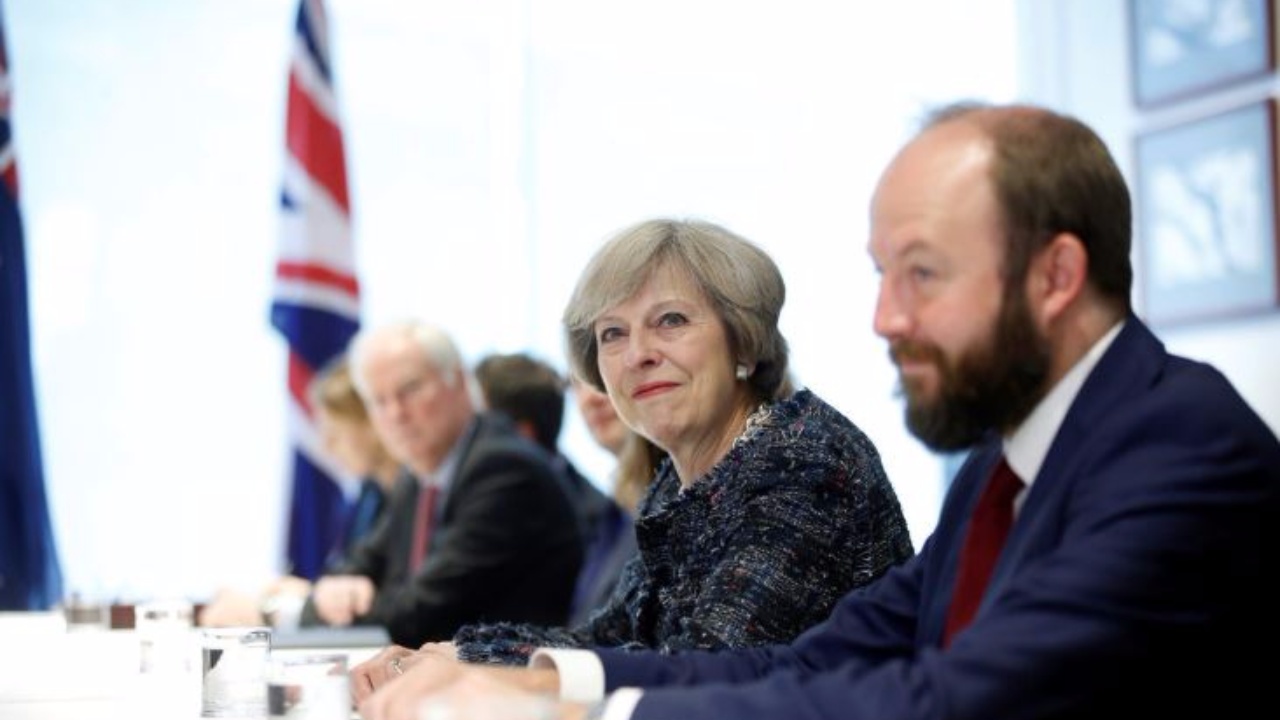
 28 FEB 2017
The emails between Conservative campaigners could be crucial to the
police probe into whether a Conservative MP properly declared tens of
thousands of pounds of campaign spending on his spending return as
required by law.
They also appear to directly contradict a previous statement issued by
the Party which, when asked about Mr. Timothy’s role in South Thanet,
said Mr Timothy “provided assistance for the Conservative Party’s
national team”.
The Conservative Party has consistently denied that Mr Timothy worked
directly on Craig Mackinlay’s local campaign against Nigel Farage in
South Thanet in the 2015 General Election.
But emails seen by this programme appear to show Mr Timothy devising
strategy and campaigning messages that were used by Mr Mackinlay’s local
campaign.
Among the documents seen by Channel 4 News is a
“message sheet” written by Mr Timothy dictating crucial arguments used
to persuade voters in South Thanet to vote for the Conservative
candidate.
Key sections of that text later appeared word for word on thousands of
leaflets that were distributed to voters in the constituency.
The South Thanet seat is one of 29 currently under police investigation after Channel 4 News revealed hundreds of thousands of pounds in Conservative campaign spending may not have been properly declared.
The dates of the documents contained in the cache further suggest that
Mr Timothy may have breached strict civil service rules that banned
special advisors from any political activity while they are still
receiving their taxpayer-funded salary.
New emails reveal Timothy’s role in the local campaign
The documents include emails sent by Mr Timothy to key staff about the direction of the Thanet campaign.
One exchange sent on the 29 March 2015 to a senior Conservative campaign
strategist already working in South Thanet appears to show Mr Timothy
devising strategy for the local Mackinlay campaign, writing at 15:58:
“are we not putting ‘two horse’ race on everything? don’t we need to?”
Then, at 17:38 he sends another email to senior Conservatives entitled
‘First draft of messages’, containing a carefully crafted 500-word
messaging document, with headings such as ‘Craig Mackinlay is a local
man through and through’.
In the email he writes: “Let me know what you think of the first cut of
the message sheet. So far, I’ve only worked off the polling book, some
local research, and what Craig seems to have been saying locally.
He adds: “We have to define this as a two-horse race between us and UKIP as soon as possible.”
Within weeks, residents in South Thanet began to receive an A3 leaflet
through their doors seemingly based on Mr. Timothy’s strategy, entitled:
“IT COULDN’T BE CLOSER! Election in South Thanet is a Two-Horse Race
Between the Conservatives and UKIP”, and including a number of phrases
exactly matching the messages he had sent.
The leaflets carried an imprint stating they were promoted by Mr
Mackinlay’s local agent, Nathan Gray, apparently acknowledging them as
local campaign activity.
The emails could be key because the Conservative Party has consistently
claimed that Mr Timothy was only involved in the national rather than
the local campaign.
An investigation by Kent Police is examining whether a group of
Conservatives, including Mr Timothy, who stayed at the Royal Harbour
Hotel in Ramsgate were in fact working on the Mackinlay campaign.
Channel 4 News has previously revealed that the £14,000
bill racked up at the hotel was declared nationally. However if any of
the Conservatives staying at the hotel were working to promote the local
candidate, at the same time, then the costs for their accommodation
should have been declared on the local spending returns.
If those costs should have been included in the local return, Mr
Mackinlay would have breached his legal spending limit of just over
£15,000.
The matter is also being examined by the Electoral Commission which is expected to report its findings within weeks.
In a statement last November the Conservative Party categorically denied
that Mr. Timothy helped the local South Thanet campaign.
The party said: “During the GE 2015, Mr Timothy was a volunteer for the
Conservative Party. His role included briefing policy and political work
on Home Office policy, briefing party spokespeople on Home Office
policy, supporting Theresa May, and working on a variety of other
matters for the Conservative Party during the campaign.”
In relation to his role in Mr Mackinlay’s campaign the party said Mr.
Timothy provided “assistance for the Conservative Party’s national
team”.
Asked about his work for Mr. Mackinlay, the statement added: “Mr.
Timothy would have given advice to any candidate who asked for it and
indeed did so.”
There is no suggestion that Mr. Timothy was responsible for declaring campaign spending in South Thanet.
In a statement, a spokesman for Craig Mackinlay said: “We maintain that
the South Thanet general election return was both lawful and proper.”
Code of Conduct
The Channel 4 News emails also raise questions about whether Mr Timothy
broke civil service rules by working on the campaign, while he was still
a paid government employee.
The Code of Conduct for Special Advisors in force at the time stated
that those who “wish to take part in a … campaign … must first resign
their appointment.”
The Conservative Party previously said that Mr Timothy was not involved
in any campaigning until after he resigned on 30 March 2015, a position
backed up by a letter from head of the civil service Sir Jeremy Heywood.
Yet some of the correspondence – from Mr Timothy’s Gmail account – dates
from the 29 March 2015, the day before he resigned his post as special
advisor to then-Home Secretary Theresa May.
He is also referenced in a document from the campaign dated 25 March,
entitled ‘South Thanet update’ which under a ‘Help needed’ heading
states: “Nick Timothy here asap”, while his name also appears in the
party’s ‘South Thanet contacts’ list.
In a statement in November, the Conservative Party denied that Mr
Timothy has breached the Special Advisers Code of Conduct, saying:
“Since he took no part in the General Election campaign until after [30
March], it is clear that Mr Timothy did not breach the code.
“Mr Timothy is fully aware of the Code of Conduct governing the activity
of Special Advisers, and we trust that you will not attempt to besmirch
the character of a senior Downing Street official with inaccurate
information.”
At the same time, Sir Jeremy Heywood wrote to Channel 4 News stating
categorically that Mr Timothy did not campaign for the party before 30
March 2015 – the date Parliament was dissolved, marking the start of the
final electioneering period known as the ‘short campaign’.
He wrote: “Nick Timothy left government employment on 30 March 2015 along with the majority of other special advisers.
“I have discussed the allegations in your letter with Mark Sedwill,
Permanent Secretary at the Home Office who has confirmed that in
accordance with the Code of Conduct for Special Advisers, Mr Timothy did
not undertake any campaign activity when employed as a special
adviser.”
Mr Timothy’s actions in South Thanet may now be a matter for the Prime Minister.
Tonight, in a further letter to Channel 4 News the Cabinet Secretary Sir Jeremy Heywood told Channel 4 News said he had reviewed the Channel 4 emails and had “no plans to carry out an investigation.”
“It is clear that the emails of 29 March were sent on a Sunday from Mr
Timothy’s personal email account, clearly in his own time and on the
afternoon before his last day in Government. They show he was preparing
for what he would do once he was no longer in Government service.”
India's strong GDP data leaves economists scratching their heads

File Photo - An employee works inside an undergarment factory in Kolkata, India, February 1, 2017. REUTERS/Rupak De Chowdhuri/File Photo
| NEW DELHI

India defied expectations on Tuesday to retain the title of the world's
fastest growing major economy, despite the pain caused by Prime Minister
Narendra Modi's shock crackdown on cash.
Annual gross domestic product (GDP) growth for the October-December
period came in at 7.0 percent, a tad slower than 7.4 percent in the
previous quarter but much faster than the 6.4 percent expansion forecast
by economists in a Reuters poll.
It was also higher than China's 6.8 percent growth for the last three months of 2016.
Modi's decision last November to outlaw old 500 rupee and 1,000 rupee
banknotes was widely expected to exact a heavy toll on an economy where
most people are paid in cash and buy what they need with cash.
Little surprise, then, that Tuesday's robust GDP figures have left
economists dazed, and have also raised fresh doubts about the quality of
India's official economic data reporting.
"Perhaps this data is not capturing the impact of demonetisation," said
Aneesh Srivastava, chief investment officer, IDBI Federal Life Insurance
Co.
"I am totally surprised and stunned to see this number."
VINDICATION
Modi had received flak for his shock monetary therapy from political
opponents as well as prominent economists such as Amartya Sen and Paul
Krugman. The move sucked 86 percent of the currency out of circulation
virtually overnight and left many companies, farmers and households in
misery.
Anecdotal evidence suggested massive job losses following the cash
crunch in India's vast informal sector, which not only supports the
formal sector but also employs nine out of 10 workers.
The government as well as the Reserve Bank of India (RBI), however, all
maintained the pain would be short-lived and predicted a sharp economic
rebound.
The latest GDP data vindicated their assessment.
"The numbers completely negate the kind of negative projections and
speculations which were made about the impact of demonetisation,"
Economic Affairs Secretary Shaktikanta Das told reporters after the data
release.
The strong performance in the Oct-Dec period allowed the federal
statistics office to retain its growth forecast for the fiscal year that
ends in March 2017 at 7.1 percent.
Strong growth figures would also dash hopes of further interest rate
cuts by the central bank, which has shifted its focus squarely to
inflation.
The Reserve Bank of India (RBI) left the policy repo rate on hold at
6.25 percent for a second meeting in a row this month and signalled an
end to its longest easing cycle since the global financial crisis,
citing growing inflationary risks.
"With inflation pressures also building, we think that the RBI could
begin hiking rates over the next 12-18 months," analysts at Capital
Economics wrote in a note.
CREDIBILITY
The strong data have also reignited the debate about the credibility as well as the quality of the official GDP data.
Ever since India changed its methodology to measure economic activity
two years back, which transformed a sluggish economy into the world's
fastest-growing major economy overnight, private economists have been
struggling to square it with the not so rosy reality on the ground.
The latest data has only added to the confusion.
For example, the official figures show economic growth was primarily
driven by consumer spending, offsetting a fall in government
expenditure. However, this is not backed up by the earnings of consumer
goods firms in the last quarter.
As cash-strapped households turned wary, sales of various goods from
beverages to domestic appliances to cars all plunged. The lacklustre
consumer spending prompted several companies to trim their revenue
outlook.
Consumer confidence also fell sharply, with households uncertain about
their income, employment and spending capability, according to an RBI
survey published this month.
"There are widespread doubts about the accuracy of the national accounts
numbers," analysts at Capital Economics wrote. "The unexpected strength
of today's data will do nothing to allay these concerns."
(Additional reporting by Manoj Kumar; Editing by Randy Fabi and Gareth Jones)
Female engineer sues Tesla, describing a culture of 'pervasive harassment'
AJ
Vandermeyden sits in her Tesla outside her family’s home in San Carlos,
California. ‘Unless someone stands up, nothing will change.’
Photograph: Ramin Talaie for the Guardian

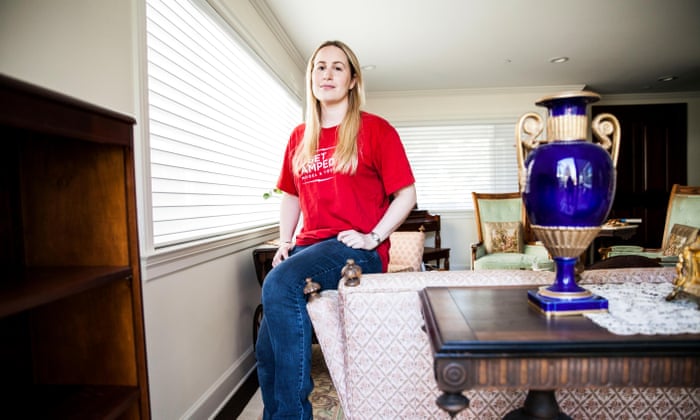
AJ
Vandermeyden at her family’s home. She says her complaints to Tesla
about her treatment at work were often sidelined. Photograph: Ramin
Talaie for the Guardian
 Exclusive: AJ
Vandermeyden paints picture of a hostile work environment that promoted
less-qualified men and retaliated against her for raising concerns
Exclusive: AJ
Vandermeyden paints picture of a hostile work environment that promoted
less-qualified men and retaliated against her for raising concerns
A female engineer at Tesla has
accused Elon Musk’s car company of ignoring her complaints of
“pervasive harassment”, paying her a lower salary than men doing the
same work, promoting less qualified men over her and retaliating against
her for raising concerns.
The allegations of AJ Vandermeyden, who still works at the celebrated electric car manufacturer, paint a picture of a hostile work environment dominated by men where inappropriate sexual behavior is tolerated and women face numerous barriers to advance their careers.
Vandermeyden, 33, shared her story with the Guardian at a time when Silicon Valley is reeling from the explosive allegations of former Uber engineer Susan Fowler. In a viral blogpost, she alleged that management and HR dismissed her complaints about documented sexual harassment and sexism, protected a repeat offender because he was a “high performer” and suggested that women in the company were not as skilled as men.
Offering a rare public account of discrimination from a tech worker who remains employed at her company, Vandermeyden said her dedication to Tesla motivated her to advocate for fair treatment and reforms – despite the serious risks she knows she faces for going public.
“Until somebody stands up, nothing is going to change,” she said in a recent interview, her first comments about a discrimination lawsuit she filed last year. “I’m an advocate of Tesla. I really do believe they are doing great things. That said, I can’t turn a blind eye if there’s something fundamentally wrong going on.”
Vandermeyden began at Tesla in 2013 and was eventually promoted to a manufacturing engineering position in the general assembly department, which consisted mostly of men and where she was paid less than male engineers whose work she directly took over, according to her complaint.
It was common for her to be the only woman in meetings with 40 to 50 men, she said on a recent morning, seated in the living room of her family’s house in San Carlos, the city where Tesla was founded, located across the bay from its current factory in Fremont.
Currently, all chief executive positions are held by men at Tesla, and out of more than 30 vice-presidents, only two are women, she added.
“It’s shocking in this day and age that this is still a fight we have to have.”
Vandermeyden said that when complaints arise at Tesla about workplace issues or inequality, the response is often: “‘We’re focused on making cars. We don’t have time to deal with all this other stuff.’”
Tesla, founded in 2003, has gained international recognition for its battery-powered vehicles and “autonomous” driving technology, promoted by Musk, the ambitious entrepreneur who makes headlines for bold pledges about space travel, artificial intelligence, underground tunnels and driverless cars.
But Vandermeyden’s complaint, filed last fall, alleges that there were inadequacies in the quality testing of cars, and that she raised issues about the flaws she observed, which supervisors and male engineers had missed.
Although she came up with a solution, men were granted positions above her, her lawyers wrote. She and other female engineers were denied promotions even though they were “equally or more qualified” than the men, according to the complaint.
At the same time, she also experienced “unwelcome and pervasive harassment by men on the factory floor including but not limited to inappropriate language, whistling, and catcalls”, the lawsuit said.
Vandermeyden recounted to the Guardian an incident in 2015 when she said a group of roughly 20 men standing on a platform above her and a female colleague began taunting as they walked past.
“They all started hooting and hollering and whistling,” she said. “That can’t happen without somebody noticing … It’s disturbing.”
But her objections about sexual harassment and unequal pay only caused her more trouble, according to her complaint. The lawsuit alleges that after she raised concerns in the fall of 2015, management told her that in order to advance her position, she needed to achieve a performance standard in the factory that was unattainable and not expected of male engineers.
Despite positive performance evaluations, she felt she had to transfer out of general assembly to the purchasing department where she continues to work today, according to her suit.
The lawsuit said Tesla also denied her overtime pay, rest breaks and meal periods when she worked in sales, and retaliated against her for being a “whistleblower” when she raised concerns about cars “sold in a defective state”.
Some of her claims of mistreatment echo those that have recently emerged from Tesla factory workers, who allege that they have to work long hours for low wages in unsafe conditions. Musk has vigorously denied those claims and criticized an effort by workers to unionize.
Tesla initially declined to respond to the Guardian’s questions about Vandermeyden’s claims, but after publication of this report, released a statement on Tuesday defending its actions and refuting her allegations.
A spokesperson said that Tesla had hired a “neutral third party” last year to investigate her accusations and that an “exhaustive review of the facts” concluded her “claims of gender discrimination, harassment, and retaliation have not been substantiated”.
The company added in its statement: “Tesla is committed to creating a positive workplace environment that is free of discrimination for all our employees.”
Therese Lawless, Vandermeyden’s lawyer, criticized the investigation, saying, “We did not believe that it was a comprehensive report ... We vehemently disagree with their finding.”
Vandermeyden’s suit said she has suffered “mental distress” and “humiliation”.
In an interview, she said it takes a toll on her knowing that her work is undervalued.
“Equal pay is something that is essentially in the back of your mind every single day,” she said. “You have all these data points showing how you’ve exceeded some of the predecessors and improved on the system. It wears on you.”
Many women in similar positions choose not to speak up, Lawless said. “It’s very difficult for women to come forward. They’re concerned that their career is going to be hindered or jeopardized.”
For those who do raise complaints, dealing with HR can be a painful struggle, added Lawless, who represented former Reddit CEO Ellen Pao in her high-profile discrimination lawsuit against venture capital firm Kleiner Perkins Caufield & Byers.
“Most of my clients come in and say, ‘human resources isn’t helping me. They’re just protecting the company.’”
Vandermeyden recently took out a hefty loan to buy the cheapest version of the Model S Tesla car and has a reservation for the upcoming Model 3. She is hopeful her lawsuit and public comments won’t end her career at a company she loves: “I think they’re a revolutionary and innovative company.”
But she admitted she has doubts about her future.
“Half the time when I walk into work, I wonder if my badge is going to work.”
The allegations of AJ Vandermeyden, who still works at the celebrated electric car manufacturer, paint a picture of a hostile work environment dominated by men where inappropriate sexual behavior is tolerated and women face numerous barriers to advance their careers.
Vandermeyden, 33, shared her story with the Guardian at a time when Silicon Valley is reeling from the explosive allegations of former Uber engineer Susan Fowler. In a viral blogpost, she alleged that management and HR dismissed her complaints about documented sexual harassment and sexism, protected a repeat offender because he was a “high performer” and suggested that women in the company were not as skilled as men.
Offering a rare public account of discrimination from a tech worker who remains employed at her company, Vandermeyden said her dedication to Tesla motivated her to advocate for fair treatment and reforms – despite the serious risks she knows she faces for going public.
“Until somebody stands up, nothing is going to change,” she said in a recent interview, her first comments about a discrimination lawsuit she filed last year. “I’m an advocate of Tesla. I really do believe they are doing great things. That said, I can’t turn a blind eye if there’s something fundamentally wrong going on.”
Vandermeyden began at Tesla in 2013 and was eventually promoted to a manufacturing engineering position in the general assembly department, which consisted mostly of men and where she was paid less than male engineers whose work she directly took over, according to her complaint.
It was common for her to be the only woman in meetings with 40 to 50 men, she said on a recent morning, seated in the living room of her family’s house in San Carlos, the city where Tesla was founded, located across the bay from its current factory in Fremont.
Currently, all chief executive positions are held by men at Tesla, and out of more than 30 vice-presidents, only two are women, she added.
“It’s shocking in this day and age that this is still a fight we have to have.”
Vandermeyden said that when complaints arise at Tesla about workplace issues or inequality, the response is often: “‘We’re focused on making cars. We don’t have time to deal with all this other stuff.’”
Tesla, founded in 2003, has gained international recognition for its battery-powered vehicles and “autonomous” driving technology, promoted by Musk, the ambitious entrepreneur who makes headlines for bold pledges about space travel, artificial intelligence, underground tunnels and driverless cars.
But Vandermeyden’s complaint, filed last fall, alleges that there were inadequacies in the quality testing of cars, and that she raised issues about the flaws she observed, which supervisors and male engineers had missed.
Although she came up with a solution, men were granted positions above her, her lawyers wrote. She and other female engineers were denied promotions even though they were “equally or more qualified” than the men, according to the complaint.
At the same time, she also experienced “unwelcome and pervasive harassment by men on the factory floor including but not limited to inappropriate language, whistling, and catcalls”, the lawsuit said.
Vandermeyden recounted to the Guardian an incident in 2015 when she said a group of roughly 20 men standing on a platform above her and a female colleague began taunting as they walked past.
“They all started hooting and hollering and whistling,” she said. “That can’t happen without somebody noticing … It’s disturbing.”
But her objections about sexual harassment and unequal pay only caused her more trouble, according to her complaint. The lawsuit alleges that after she raised concerns in the fall of 2015, management told her that in order to advance her position, she needed to achieve a performance standard in the factory that was unattainable and not expected of male engineers.
Despite positive performance evaluations, she felt she had to transfer out of general assembly to the purchasing department where she continues to work today, according to her suit.
The lawsuit said Tesla also denied her overtime pay, rest breaks and meal periods when she worked in sales, and retaliated against her for being a “whistleblower” when she raised concerns about cars “sold in a defective state”.
Some of her claims of mistreatment echo those that have recently emerged from Tesla factory workers, who allege that they have to work long hours for low wages in unsafe conditions. Musk has vigorously denied those claims and criticized an effort by workers to unionize.
Tesla initially declined to respond to the Guardian’s questions about Vandermeyden’s claims, but after publication of this report, released a statement on Tuesday defending its actions and refuting her allegations.
A spokesperson said that Tesla had hired a “neutral third party” last year to investigate her accusations and that an “exhaustive review of the facts” concluded her “claims of gender discrimination, harassment, and retaliation have not been substantiated”.
The company added in its statement: “Tesla is committed to creating a positive workplace environment that is free of discrimination for all our employees.”
Therese Lawless, Vandermeyden’s lawyer, criticized the investigation, saying, “We did not believe that it was a comprehensive report ... We vehemently disagree with their finding.”
Vandermeyden’s suit said she has suffered “mental distress” and “humiliation”.
In an interview, she said it takes a toll on her knowing that her work is undervalued.
“Equal pay is something that is essentially in the back of your mind every single day,” she said. “You have all these data points showing how you’ve exceeded some of the predecessors and improved on the system. It wears on you.”
Many women in similar positions choose not to speak up, Lawless said. “It’s very difficult for women to come forward. They’re concerned that their career is going to be hindered or jeopardized.”
For those who do raise complaints, dealing with HR can be a painful struggle, added Lawless, who represented former Reddit CEO Ellen Pao in her high-profile discrimination lawsuit against venture capital firm Kleiner Perkins Caufield & Byers.
“Most of my clients come in and say, ‘human resources isn’t helping me. They’re just protecting the company.’”
Vandermeyden recently took out a hefty loan to buy the cheapest version of the Model S Tesla car and has a reservation for the upcoming Model 3. She is hopeful her lawsuit and public comments won’t end her career at a company she loves: “I think they’re a revolutionary and innovative company.”
But she admitted she has doubts about her future.
“Half the time when I walk into work, I wonder if my badge is going to work.”
India: Why Neduvasal Residents Protest Against Gas Exploration Project ?

 by N.S.Venkataraman-
( February 27, 2017, Chennai, Sri Lanka Guardian) The
writer had the opportunity to interact with the local people living in
and around Neduvasal in Pudukottai district in Tamil Nadu , who are
protesting against the proposal to take up natural gas exploration
projects in the region. The interaction took place during a two hour
session with the concerned people in a programme organized by a leading
Tamil TV channel (News 18 Tamil), when cross section of people in
different age groups , education level and income level, both men and
women , from the region and local MLA participated and were encouraged
to express their views . The writer was asked to respond to their
observations , provide the necessary clarifications and suggest
appropriate future course of action.
The programme took place on 23rd February,2017.
Background :
There is a proposal approved in principle by the Government of India to
launch hydro carbon (natural gas) exploration project in Neduvasal and
the nearby areas, where the preliminary study indicated that there could
be considerable gas reserves. This area is amongst several other areas
in various states in India approved for exploration.
It is reported that 20 to 23 gas wells would be launched in regions
surrounding Neduvasal , which is a region where more than 5 lakh people
live. Each well may be drilled to a depth of 1500 metre to 6000 metre
depending upon the particular condition .There would be requirement of
around 25 cubic metre of water per well per day for operating the well
for tapping the gas.
It is possible that some of the wells may not yield adequate level of
gas to justify the investment and economics of the project. In such a
case, it is possible that such wells may be capped.
Why the government of India approved the project ?:
India presently produces around 31 billion cubic metre of natural gas
per year and imports almost an equal quantity of natural gas , as the
indigenous production is inadequate. World over , around 26% of the
energy generation and use is met by natural gas which is considered as
eco friendly fuel, particularly in comparison to coal and crude oil. In
India, the usage level of natural gas is 6% at present.
Government of India proposes to increase the consumption of natural gas from the present level of around 6% to around 15%.
As the demand for natural gas is steadily increasing , Government of India is concerned about the outflow of foreign exchange due to import and the dependence on import from various countries. In such circumstances, Government of India’s desire to increase the domestic production of natural gas is appropriate.
As the demand for natural gas is steadily increasing , Government of India is concerned about the outflow of foreign exchange due to import and the dependence on import from various countries. In such circumstances, Government of India’s desire to increase the domestic production of natural gas is appropriate.
Based on the preliminary study ,several locations have been approved for
drilling, exploration wells and Neduvasal and surrounding area is one
such location identified.
Why local people are concerned ?:
There is considerable fear and anxiety amongst the local people in
Neduvasal and surrounding areas that the drilling of the gas wells would
deplete the ground water sources. Further, local people think that
valuable agricultural land would be diverted for drilling the wells ,
which would lead to loss of jobs and occupation for them. There is also
unfounded fears that gas wells would spread diseases. Another fear
expressed is that any leakage of gas in the area may spread disasters by
way of massive fire.
The explanation offered to the people :
The writer explained to the people during the interaction various
aspects and the people listened with rapt attention and also put
subsequent queries seeking clarifications.
The writer explained that the coal bed methane gas project which was
earlier conceived in delta region in Tamil Nadu and later on given up
due to public protests is different from the proposed natural gas wells.
This has to be said ,since there seem to be an impression that the
process of extracting coal bed methane gas is the same as that of
natural gas.
The coal bed methane gas , lying below the soil caught between the coal
seams, is a low pressure gas and it would lie under the water table.
Since it is a low pressure gas and the coal bed methane gas wells would
be drilled several thousand feet below ground, very large quantity of
water has to be pumped out to enable the methane gas to come out. Such
pumped out water would be contaminated with metallic salts, high total
dissolved solids and other chemicals and therefore ,cannot be used for
irrigation purposes or any human consumption without elaborate and
expensive treatment. Such tapping of huge quantity of water would
inevitably lead to depletion of ground water resources, which the
agricultural dominated Neduvasal and surrounding region cannot afford.
Therefore, the protest against the coal bed methane gas project is
totally justified.
In the case of the present proposal to drill natural gas wells ,the
requirement of water would be only around 25 cubic metre per day per
well and it would be around 500 cubic metre per day for 20 wells. This
is not a large quantity of water.
It is true that some agricultural land area would be diverted for
drilling the oil wells. This would be a case of cost benefit analysis ,
where it remains to be evaluated whether the diversion of agricultural
land for drilling gas well can be justified from the overall benefits to
the country and without unduly affecting the interests of the local
people.
It was also clarified that rumours about spreading of disease due to gas
well is totally un founded. There are more than 450 onshore gas wells
already operating for last several years in India and any spread of
disease around the area due to the wells have not been reported.
The responsibility of the governments :
What is particularly surprising is that no minister or official from
government of India have so far cared to contact the concerned local
people and allay their apprehensions.
The local people seem to be reasonable in their approach and are not
blind agitators. They want adequate and proper explanations from the
state and central government authorities, credible technologists and
engineers and demand answers for their queries logically, with good
understanding of the local situation and the ground realities.
Further, it is not certain as to whether Government of India has taken
the Tamil Nadu state government into confidence , before announcing the
decision and provided adequate details to it to enable Tamil Nadu
government to communicate with the local people Certainly, the state
government is in a position to understand the sentiments of the people
and local economic and social situation much better than the central
government. Communication with the local people by the state and central
government is conspicuous by absence.
What is the way out ?
During the interactive discussion that took place in good climate, the
following observations were made by the writer and the people listened
in silence but did not respond nor they objected to the observations.
- In a democratic set up, it would not be advisable to force such project on the people, when there is ground swell of opposition ,with the people thinking that they would be socially and economically uprooted. They have to be convinced.
- While the consumption of water for use in the drilled wells would not be very large, still if the required water would be tapped from the ground , this would really cause concern in Neduvasal and nearby areas , where the ground water resources have already depleted in recent months due to drought and lack of water in the Cauvery river.
- In such circumstances, the authorities have to assure that the water would not be tapped from the ground in the area but would be brought from elsewhere. Perhaps, like what Koodankulam nuclear power project in Tamil Nadu has done , a separate desalination plant can be put up to meet the water requirement.
- People in the region are still not aware as to how much agricultural land area would be diverted for the project , how much loss would be there due to diversion of agricultural land and how the farmers there would be compensated in the short term and long term.
- There is thunderous silence on the part of ministers and authorities, both in state and central governments, in responding to the local people’s fear and anxiety.
The writer suggested that a meeting should be immediately organized by
Tamil Nadu government involving the participation of central government,
state government, representatives of the local people and the technical
experts. Let there be a detailed , frank and healthy discussions with
good understanding of the various view points.
Hopefully, the local people would be convinced after the discussions ,
balancing the need of the state and the sacrifice that they will have to
make and how their interests would be protected.
If the local people would not be convinced, the project has to be given up.
What alternate for natural gas?
LNG gas terminal is now being constructed in Ennore port near Chennai
for import of natural gas involving an investment of around Rs.6000 cr.
with capacity of 5 million tonne.
The project is likely to be completed and ready for commissioning by 2018.
To utilize the imported gas, it is proposed to lay gas pipeline of
around 1170 kilometre from Ennore port to Tuticorin in Tamil Nadu for
utilization of gas at various locations in Tamil Nadu for setting up
downstream projects based on natural gas. Such projects have the
potential of generating investment of around Rs. 15000 cr. that would
lead to significant economic and industrial development in the state.
However, the firm strategies for laying the pipelines are yet to be made
, which involves acquisition of land across the state for laying the
long pipeline. Pipeline route may involve cris cross roads, agricultural
fields and even buildings in some densely populated areas. Such
acquisition of land for the project may lead to acrimonious debates and
protests delaying the pipeline project. In such case, the LNG terminal
at Ennore would remain largely unutilized for long time.
It has to be pointed out that Kochi LNG terminal in Kerala with an
investment of around Rs. 4500 cr. is now operating at just 5% capacity
utilization level, since the pipeline project extending around 310
kilometre in Tamil Nadu has to be stopped due to protest against the
acquisition of land.
When 310 kilometre gas pipe project has suffered such a fate in Tamil
Nadu , one has to keep the fingers crossed about the proposed 1170
kilometre gas pipeline project from Ennore to Tuticorin.
Obviously, central and state government should know that communication
with the local people is very vital in implementing such projects and
Neduvasal gas exploration project is an instant to remember with regard
to the importance of communication.
China: Considering birth rewards and subsidies for second child

China is considering introducing birth rewards and subsidies to encourage people to have a second child. Source: AP.

28th February 2017
CHINA is
considering introducing birth rewards and subsidies to encourage people
to have a second child, after surveys showed that economic constraints
were making many reluctant to expand families, the state-owned China Daily newspaper reported.
The potential move was revealed by Wang Peian, vice-minister of the
National Health and Family Planning Commission at a social welfare
conference on Saturday, the newspaper said on Tuesday.
Birth rates rose to 17.86 million in 2016, the highest level since 2000,
after the country issued new guidelines in late 2015 allowing all
parents to have two children amid growing concerns over the costs of
supporting an ageing population.
“That fully met the expectations, but barriers still exist and must be addressed,” Wang was quoted as saying.
“To have a second child is the right of each family in China but affordability has become a bottleneck that undermines the decision.”
A poll conducted by the commission in 2015 found that 60 percent of
families surveyed were reluctant to have a second baby largely due to
financial constraints.
China‘s
birth rate, one of the world’s lowest, is fast becoming a worry for
authorities, rather than the achievement it was considered at a time
when the government feared over-population.
China began
implementing its controversial “one-child policy” in the 1970s in order
to limit population growth, but authorities are now concerned that the
country’s dwindling workforce will not be able to support an
increasingly ageing population. – Reuters
Blood tests spot ovarian cancer early
Caroline Presho took part in the trial and believes the blood test would be an enormous benefit to women
 By James Gallagher-28 February 2017
A blood test every four months could help women at high-risk of ovarian cancer find tumours early, say doctors.
There is currently no screening programme for the disease, so high-risk
women are advised to have their ovaries and fallopian tubes removed.
In the trial on 4,348 women, published in the Journal of Clinical
Oncology, cancers were detected earlier, when they should be easier to
treat.
However, it is not yet clear if the regular blood test would save lives.
Breast and ovarian cancer runs in Caroline Presho's family.
The 43-year-old, from Hertfordshire, has inherited a genetic flaw called BRCA2.
"I'm a bit of a rubbish mutant," she told the BBC News website.
"I say it's like the X-Men, but I have the ability to develop cancer."
Ms Presho was advised to have surgery to reduce risk, but having the ovaries and tubes removed starts the menopause.
She said: "I was always going to have surgery, but the screening allowed
me to finish having my family, and I didn't want to go through the
menopause at 35.
"It's very young and starting that early has a detrimental effect on cognitive function, bone and heart health."
Without screening, the only other option would be to keep an eye out for symptoms including:
- feeling constantly bloated
- a swollen stomach
- discomfort in the stomach or pelvic area
- feeling full quickly when eating, or loss of appetite
- needing to urinate more often or more urgently than normal
Blood monitoring
About two in every 100 women will develop ovarian cancer at some point in their life.
But the study focused on women, like Caroline, who faced a greater than one-in-10 chance.
The trial, at 42 centres across the UK, monitored levels of a chemical called CA125 in women's blood.
Three times a year, doctors tracked changes in the levels of CA125,
which is produced by ovarian tissue, to see if levels became elevated - a
sign of cancer.
The women also had annual scans, and surgery if doctors thought cancer was likely.

Ovarian cancer is the seventh most common cancer in women worldwide, with about 240,000 cases each year
During three years of screening and the year after the last test, 19 cancers were detected. Ten of them were at an early stage.
In the five years after that, 18 more ovarian cancers were detected. But now only one of them was at an early stage.
The key principle of all cancer treatment is the earlier the tumour is found, the better the chances are of survival.
And screening was finding them earlier. However, the study has not been
running for long enough to know if the screening saves lives.
Surgery still best
While screening does detect cancer, tumours are far less likely to develop in the first place if women have surgery.
Prof Usha Menon, one of the researchers and a professor of
gynaecological cancer from UCL, said: "What we're trying to do is get
women to have surgery.
But she told the BBC News website: "From my point of view, women really
struggle with this issue of menopause, and it seems like four-monthly
screening is better than symptom awareness.
"The screening definitely picks up less advanced disease, but we cannot say for sure if we're saving lives."
Previous trials have produced insufficient evidence for mass screening of all women.
And in the US, the Food and Drug Administration recently recommended "against using currently offered tests to screen for ovarian cancer", including ones looking at CA125.
One potential issue is having a blood test could put women off surgery.
"This is what everyone's worried about," says Prof Menon. However, she
pointed out there was already an issue with women delaying surgery.
She wants UK health officials to review screening and all other advice to high-risk women.
'So stressful'
Caroline Presho had her fourth and last child - "I know I'm a lunatic,"
she says - in the same year as she eventually had surgery.
She told the BBC: "I think it's a very exciting prospect to have screening.
"You're told to have children before 35, but you might not have settled down or found a partner.
"It's just so stressful to feel like you've got a deadline and the only
option is surgery, I think it would be an enormous benefit."
About 3% of women are in the high-risk category like Caroline.
Athena Lamnisos, the chief executive of The Eve Appeal, which
part-funded the trial, said: "This research gives women hope and
confidence that there is an evidence-based approach to screening if they
decide to delay risk-reducing surgery."
Annwen Jones, the chief executive of Target Ovarian Cancer, said: "An
effective screening programme for women at high risk of ovarian cancer
due to family history would potentially have a major impact on mortality
and survival from this disease.
"[But] it is still uncertain whether detecting ovarian cancer by
screening increases the chance of a woman surviving the disease overall.
"Women at a higher risk of ovarian cancer still need to weigh up the
risks and benefits of surveillance versus preventative surgery."
Follow James on Twitter.
Subscribe to:
Posts (Atom)