Peace for the World World ! Your War Our Lives

The Dalai Lama
A Brief Colonial History Of Ceylon(SriLanka)
Sri Lanka: One Island Two Nations
A Brief Colonial History Of Ceylon(SriLanka)
Sri Lanka: One Island Two Nations
(Full Story)
Back to 500BC.

Saturday, July 1, 2017
Hitler’s American Model: The United States & The Making Of Nazi Race Law
Prof. Charles Sarvan

Book Review – James Whitman, Hitler’s American Model: The United States and the Making of Nazi Race Law, Princeton and Oxford, 2017
Hannah Arendt in The Origins of Totalitarianism states
that one of the major contributions of the Western world has been
“race-thinking”, as distinct from “class-thinking”. Race is a political,
and not a biological, concept. ‘Race’, a concept without scientific
foundation, does not lead to racism; rather it’s racism that creates
race. Ta-Nehisi Coates writes in Between the World and Me that
racism is not the innocent product of Mother Nature; race is not the
father of racism but its child. And, Whitman observes (p. 117),
unfortunately even mentally gifted individuals are not immune from the
sickness of racism.
Whitman,
a Professor of Law at Yale, is meticulously careful not to over-state
the case in his study: influence does not mean exact imitation but,
rather, selective borrowing and adaptation. The Nazis were not demons
who suddenly erupted on stages: there were traditions within which they
worked, continuities, examples and inspirations (p. 15). It must be
borne in mind that contemporary Germany rests on the moral foundation of
refusing to deny responsibility for what happened under the Nazis
(ibid). Germany has repeatedly acknowledged guilt, expressed contrition,
paid reparation. One recalls Willie Brandt, Chancellor of Germany,
spontaneously kneeling (7 December 1970) at the monument to the victims
of the Warsaw Ghetto Uprising. It was a silent but brave and eloquent
gesture, most unusual for a head of state. Equally, it may seem strange
to see America as an inspiration for the Nazis because the USA soon
fought Germany, and has long set itself as a bastion of freedom and
democracy (p. 140).

James Whitman, Hitler’s American Model: The United States and the Making of Nazi Race Law, Princeton and Oxford, 2017
But
in the 1930s, Nazi Germany and ‘Jim Crow’ America were similar in that
both were “unapologetically racist regimes”. For example, “American
blacks being de jure citizens, were de facto second class” (p. 39) while
Nazi Germany had Reichsbürger who possessed full rights and mere Staatsangehörige. America
was for the Nazis an excellent example of a country with racist
legislation and practice. Prior to the Shoah, sporadic riots and attacks
on Jews, condoned but not organised by the State, were equated with the
lynch-mobs in America: one recalls the song “Strange
fruit grows on Southern trees”, made famous by the 1939 Billie Holliday
recording (now available on the ‘Net’). Hitler admired the way
Americans had killed and reduced millions of Native Americans to a few
hundred, and kept the modest remnant under observation in cages: Hitler,
quoted on p. 9. (In passing, I would draw attention to The Other Slavery: The Uncovered Story of Indian Enslavement in America by
Andres Resendez, 2016.) To the Nazis, the very foundation of America
was a fateful turning point in the worldwide rise of white domination: the US Naturalization Act of 1790 opened naturalization to “any alien, being a free white person” (p. 34). “America
may have been the global leader in the creation of racist law, well
known and much cited long before Hitler came to power” (p. 70). Germans
paid “studious scholarly attention to American immigration Law”” (52),
“hailing America as a forerunner of Nazism” (p. 54). On 23 September
1935, forty-five leading Nazi lawyers sailed to America on a first-hand
study-tour (p. 132) because in the early twentieth century, America was “the leading
racist jurisdiction” (p. 138, original emphasis). Characteristic of
race-thinking the world over, a very small minority (here, the blacks)
were seen as trying to “get the upper hand” (67).
But
the nefandus (such shame or evil that it cannot be spoken of) both for
Americans and Nazis was inter-racial sexual relationships outside and
within marriage; more precisely, between individuals of different skin
pigmentation. (Often what is meant by a “race” problem in the West means
a “problem” of colour difference. Elsewhere, I have suggested that in
such contexts, “colourism” is a more accurate word than “racism”.) Of
course, American society turned a blind eye on children born of the rape
of slave women: the incidence was too common.
Read More

Don’t sugarcoat this. Trump just called for 32 million people to lose health coverage.

(Evan Vucci/Associated Press)

THE MORNING PLUM:
President Trump’s profound ignorance about policy and the inner workings of our system, and his total disinterest in informing himself about these topics, have produced an unfortunate result: Many of his tweets about matters of substance tend to get ignored as Trump just being Trump. Meanwhile, the viscerally disgusting insults (such as the one claiming Mika Brzezinski bled from her face-lift) make international news.
But Trump’s tweet this morning about health care actually does matter, a lot:

If Republican Senators are unable to pass what they are working on now,
they should immediately REPEAL, and then REPLACE at a later date!
Beyond this, though, it’s worth taking Trump’s tweet as an actual policy statement. Trump has now called for total repeal of the Affordable Care Act, with no guarantee of any specific replacement later, or even a guarantee that any replacement would ever materialize at all.
The Republicans' time-crunched effort to pass a health-care bill is hitting a lot of resistance in the Senate. The Post's Paige Cunningham explains five key reasons the party is struggling to move their plan forward. (Video: Jenny Starrs/Photo: Jabin Botsford/The Washington Post)
We can estimate the impact of repealing those things. Indeed, the Congressional Budget Office has already done so, when it analyzed a previous version of a GOP repeal bill over a year ago. And that analysis found that repealing those things would result in 32 million people losing coverage by 2026, 19 million of them people who would lose Medicaid coverage.
President Trump and his advisors claim spending for Medicaid will continue to increase under the Senate health-care proposal. CBO projections suggest otherwise. (Video: Meg Kelly/Photo: Julio Negron/The Washington Post)
“When Republicans floated their repeal bill back in 2016, CBO concluded that 32 million people would lose coverage, relative to the current baseline, by 2026,” Nicholas Bagley, a health policy expert at the University of Michigan, emailed me today. “Fully 19 million people would be kicked off of Medicaid. Those coverage losses are even grimmer than the losses from the House and Senate bills that are currently under discussion.”
Whether Trump meant this or not, or even knew what he was calling for, are irrelevant. That’s because it could theoretically happen. In fact, conservative senators such as Rand Paul of Kentucky and Ben Sasse of Nebraska are actively calling on fellow Republicans to go forward with repeal alone right now. Sasse doubled down by tweeting an endorsement of Trump’s demand.
Trump, it pains me to inform you, is the president. When he calls on Congress to do something, he is basically saying that he would sign it if they did do it. There is no reason to treat this as trivial or frivolous simply because Trump is an ignoramus and a buffoon. Indeed, Republicans have in fact voted for repeal multiple times in the past. The only reason they aren’t doing so right now is because repeal cannot pass, now that there is a Republican in the White House who would actually sign such a bill. (Yes, Trump would sign such a bill in two seconds. He called for one today, remember?)
In this sense, Trump’s tweet is actually kind of useful. It reveals once again that Republicans have been running a massive scam on Obamacare for years. They constantly fulminated for repeal, and voted repeatedly for it, in the full knowledge that President Barack Obama would veto it and that they would not face the consequences of their rhetoric and vote. The promise of unspecified replacements allowed Republicans to claim they would act to make sure millions didn’t lose coverage, without saying how. But now that repeal could become a reality, they are no longer willing to vote for it, because they would be held accountable for those consequences. By calling for straight-up repeal right now, Trump has inadvertently called their bluff.
Indeed, it’s not even clear that Senate Republicans can pass repeal and replace, because it has become obvious that even this would result in many millions losing health coverage, extracting an immense human toll that is now a genuine possibility. Moderate Republican senators have conceded this to be the case, and their seemingly genuine qualms about this constitute a pleasant surprise. But Republicans who have no serious misgivings about such an awful outcome have resorted, for political reasons, to all manner of lies and obfuscation to obscure this reality.
This includes Trump and the White House, who have dissembled relentlessly about how their plan would leave everybody covered and wouldn’t cut Medicaid at all. But now Trump has confirmed that he is indeed for full repeal, full stop — which would result in 32 million fewer covered — without any guaranteed “replacement” providing any cover to advance the lie that millions wouldn’t lose coverage. Trump has unmasked his own scam.
* BLEEDING-HEART REPUBLICANS OBJECT TO TAXES ON RICH: Note how Sen. Bob Corker (R-Tenn.) is now criticizing the GOP health bill:
“It’s not equitable to have a situation where you’re increasing the burden on lower-income citizens and lessening the burden on wealthy citizens. That’s not a proposition that is sustainable, and I think leadership knows that.”That’s nice, but there is no way the final bill will not do this to a great extent, even if they throw a bit more spending into it. Yet Corker will still vote “yes” in the end.
* IS WHITE HOUSE PLANNING TRADE WARS? Axios reports that at a tense meeting this week, top White House officials debated whether to launch trade wars by seeking to boost tariffs on steel and other imports. Trump and top adviser Stephen K. Bannon favor this. But:
More than 75% of those present … were adamantly opposed, arguing it was bad economics and bad global politics. At one point, Trump was told his almost entire cabinet thought this was a bad idea. But everyone left the room believing the country is headed toward a major trade confrontation. The reason, we’re told: Trump’s base — which drives more and more decisions, as his popularity sinks — likes the idea, and will love the fight.We’ll find out soon enough how real this is, but for now, the disturbing thing is that it is perfectly plausible that this actually is the “thinking.”
* DEBUNKING WHITE HOUSE NONSENSE ABOUT MEDICAID: Trump and the White House like to say that the health bill wouldn’t actually “cut” Medicaid, because spending would still rise more slowly. Michelle Ye Hee Lee sets the record straight:
In 2017, the federal government spent $393 billion on Medicaid. If no change is made to the current law, that spending is expected to be $624 billion by 2026. The CBO calculates this by taking several factors into account, such as projected enrollment growth, health-care costs, inflation, population growth and policies that states may enact. … But things would change under the Senate bill. Instead of Medicaid spending growing to $624 billion by 2026, it would be $464 billion — a difference of $160 billion in 2026. This means a reduction of $772 billion over 10 years, from 2017 to 2026.It’s amazing that what the White House claims is not a cut would somehow result in 15 million fewer people on the program, isn’t it?
* REPUBLICANS FACE DAUNTING SUMMER AGENDA: NBC’s First Read crew points out that Republicans have a ton of hurdles ahead, even putting aside the health-care mess:
Trump and Congress have a lot on their plate before their summer recess in August — raising the debt limit, passing a budget, moving on tax reform. It’s a daunting agenda during the best of times. And it’s much, much harder with a distracted president, a commander-in-chief whose approval rating is in the 30s and 40s.Just wait until Trump starts tweeting about the debt limit.
* WHY REPUBLICANS KEEP PUSHING FOR REPEAL AND REPLACE: Paul Krugman explains it:
Because Republicans spent almost the entire Obama administration railing against the imaginary horrors of the Affordable Care Act — death panels! — repealing Obamacare was bound to be their first priority. Once the prospect of repeal became real, however, Republicans had to face the fact that Obamacare, far from being the failure they portrayed, has done what it was supposed to do: It used higher taxes on the rich to pay for a vast expansion of health coverage. Correspondingly, trying to reverse the A.C.A. means taking away health care from people who desperately need it in order to cut taxes on the rich.
Right. And no matter how hard they hope for a magical escape hatch from the political and moral predicament this has created, this is what they will be supporting if they vote “yes.”
* JOE AND MIKA HIT BACK: Joe Scarborough and Mika Brzezinski write a joint op-ed hitting back at Trump’s claim
that Brzezinski was “bleeding badly from a face-lift,” claiming that
the face-lift never happened and that Trump “is not well.” Note this:The president’s unhealthy obsession with our show has been in the public record for months … This year, top White House staff members warned that the National Enquirer was planning to publish a negative article about us unless we begged the president to have the story spiked. We ignored their desperate pleas.It’s hard to know what’s stranger about this anecdote — the suggestion that White House staffers made this warning or the claim that they demanded a show of groveling to the president.
* WHITE HOUSE DEFENDS TRUMP’S MIKA TWEET: Top Trump adviser Kellyanne Conway was asked on “Good Morning America” if she endorses Trump’s tweets about Brzezinski. Conway replied:
“I like the fact that the president uses his social media platform to connect directly with Americans. And in this case … the president normally does not draw first blood. He is a counter-puncher.”
The funny thing about this is that it’s probably more about keeping Trump’s ego puffed up than about convincing anyone else. Trump likes to think of himself as a “counter-puncher.”
China: Controversial new spy law goes into effect

by Caroline Roy-

Courtsey: shanghaiist.com
(June 30, 2017, Beijing, Sri Lanka Guardian) A
controversial new intelligence law went into effect on Wednesday aimed
at allowing the Chinese government to even further crack down on foreign
spies by monitoring suspects, searching homes, seizing property and
mobilising spies of their own, providing legal ground for domestic
intelligence agencies for carrying out operations both inside China and
abroad.
The National Intelligence Law was approved (rather quickly) at
the bi-annual meeting of the National People’s Congress (NPC) Standing
Committee and has now taken full effect in China. It is China’s first
attempt at legislating — and providing legislative cover for — its spy
agencies and operations.
Passed with the intention of combating foreign espionage, the law
demands that “China’s intelligence personnel should collect and process
intelligence related to overseas organisations and individuals or anyone
sponsored or instigated by them, as well as relevant intelligence about
threats to China’s national security and interests.”
While this sounds like China’s Counter-espionage Law passed back in 2014, this new law reportedly focuses less on defence and encourages direct actions against possible foreign spies.
“Foreign spies are rampant in China,” anti-terrorism expert Li Wei told
the Global Times. “The intelligence law, which also supports
counter-espionage work, gives Chinese intelligence officials more power
and ‘legal authorization’ to crack down on spies, who conduct their
operations in the shadows.”
Li thinks the law will make it easier for government departments to work
together and target suspects more efficiently than before.
“Previously, intelligence personnel needed to ask permission from
authorities on a case-by-case basis as there was no law in the field,”
he said. “Now they can carry out their intelligence work in accordance
with the law.”
The law allows the Chinese government to investigate possible cases of
espionage in all areas “where China’s interests are involved,” according
to Wang Qiang, a specialist on non-war military actions. Wang claims
that it’s crucial for the law to extend outside of China’s borders
because of “widespread terrorism.”
As Reuters notes,
the law passed unusually quickly. Most laws get at least two rounds of
public consultation before being approved, but the National Intelligence
Law received only one three-week long round. The standing committee
also passed it after just two rounds of discussion, less than most laws,
which are discussed for three or more rounds.
While foreign espionage is cause for concern, many are worried about the
law’s other implications — most of which grant the government more
power to use surveillance.
According to the law, obstructing espionage work can lead to up to 15
days detention, along with harsh inspections and “quarantines” for rule
breakers.
Additionally, if the government suspects someone of espionage, they can
confiscate personal property like vehicles, cellphones and even homes,
according to Reuters.
However, it appears that even without this latest law, China’s
counter-espionage efforts have been rather successfully recently. Last
month, the New York Times published a report alleging that China had
managed to cripple US spying operations in its country by killing or imprisoning 20 CIA spies earlier this decade.
Additionally, China has often looked to crowdsource its counter-intelligence operations. Back in 2015, the country set up a national hotline so
that citizens could easily report foreign agents. To help its people
identify a foreign spy, authorities issued a handy list of suspicious
traits to look out for, including: “People who regularly visit certain
places to exchange good or documents.” This April, the Beijing
department of China’s National Security Bureau offered rewards of up to 500,000 yuan for help in unmasking foreign spies.
Most infamously, last April, Beijing’s state security launched a
campaign to warn susceptible Chinese women to be wary when dating
foreign men, in case they should turn out to be spies, only after
China’s secrets.
EU states start to examine whether UK is likely to reverse Brexit
Ambassadors review likelihood of reversal despite many concluding no foreseeable scenario exists to allow for such a move
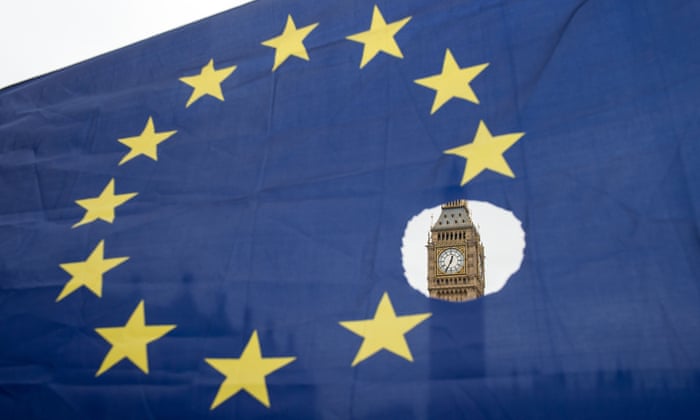
The
UK might come to realise it made a mistake, German finance minister
Wolfgang Schäuble suggested this week. Photograph: Oli Scarff/AFP/Getty
Images
 Ambassadors
from larger EU states have started to review whether the UK will
reverse its Brexit decision in light of the election result, despite
many concluding no foreseeable political scenario exists for abandoning
it.
Ambassadors
from larger EU states have started to review whether the UK will
reverse its Brexit decision in light of the election result, despite
many concluding no foreseeable political scenario exists for abandoning
it.
Splits in Theresa May’s cabinet have emerged this week as senior figures
set out alternative timetables for Brexit while the German finance
minister, Wolfgang Schäuble, suggested the UK might realise at some
point it “made a mistake”.
But the diplomats say senior UK civil servants have given no sign to
them of an imminent change to May’s red lines on leaving the single
market, the customs union and the jurisdiction of the European court of
justice. They are expressing private impatience at the inability of the
British government to set out a more detailed plan for Brexit more than a
year after the referendum.
“It is is very inconvenient in my job that I cannot tell my capital what
kind Brexit either of the main parties wishes to pursue. There is no
clear information, just information on what politicians will not
accept,” said one ambassador.
The chancellor, Philip Hammond, said this week in Berlin that the UK
would not seek to remain members of the EU single market or the customs
union but also called for early discussions on a lengthy transition period.
He said the UK might want to negotiate a deal that was equivalent to
being in the single market or the customs union without taking that
legal form.
One ambassador at the heart of the talks said there was no guarantee the
EU would even accept a transition, referring to a statement by the
European council president, Donald Tusk, that there were only two
options open to Britain: hard Brexit or continued EU membership.
The UK Treasury is desperate to reduce the levels of uncertainty about a
future relationship, but this, EU diplomats say, is one of their
strongest negotiating hands and talks on a possible transition may not
begin until next year.
An EU-based diplomat said the onus remained on the UK to come up with a
plan. He cited a recent speech by the former UK ambassador to the EU Lord Kerr,
who said: “It is odd, if we want a deep and special relationship with
the EU, not to have proposed one. A year after the referendum, we have
still put forward no plan, suggestion, outline or proposal for how one
might in future organise cooperation”.
The ambassadors do recognise, however, that softer Brexit solutions are
likely to come back under discussion in coming months as the UK
government’s apparent willingness before the general election to leave without a deal had
faded. These options include membership of the European Economic Area,
potentially on a temporary basis to maintain full single market access,
joining the European Free Trade Association as a shortcut to replacing
free trade deals negotiated by the EU and a customs union agreement with
Brussels.
A third ambassador from a country close to the UK said he believed
Whitehall departments were still coming to terms with the scale of the
administrative tasks facing civil servants once outside the EU.
“The tragedy is that the issue that set all this off may be solved by
the time the UK comes to Brexit,” he said. “There is a good chance the
UK economy is heading for a quite nasty downturn due to its reliance on
financial services, just as the EU is on an upturn, so the Poles that
came to the UK will either stay at home or be going to elsewhere like
Germany, and the numbers of migrants coming to the UK will be below
100,000.”
No, the Queen’s pay rise didn’t come from the magic money tree.


It’s been widely reported that the Queen got a £6 million pay rise this week.
In these straightened times of austerity, many have criticised the
government for what seems to be a selective approach to managing the
public finances.
The now-infamous phrase “magic money tree” has been used a lot this week (we FactChecked the DUP deal on the same basis yesterday).
But when it comes to the Queen’s finances, it’s not quite so simple.
FactCheck investigates.
The map below shows how the Estate’s assets – from castles, to forests, to offshore wind farms – are scattered throughout the country.
 Since
1961, the Crown Estate has been a “statutory corporation”. Although the
Queen legally owns the assets of the Crown Estate, they are not her
personal property. She has no powers of management or control over them.
Since
1961, the Crown Estate has been a “statutory corporation”. Although the
Queen legally owns the assets of the Crown Estate, they are not her
personal property. She has no powers of management or control over them.
The Crown Estate is a business. All its profits go straight to the Treasury. The Treasury gives the Queen some of the money back in the form of the Sovereign Grant.
The law says that the Queen should get a Grant equal to 15 per cent of the Crown Estate’s profits from two years previously.
Two years ago, the Crown Estate made a profit of £285.1 million. So the Grant for the financial year 2016-17 was 15 per cent of that figure – i.e. £42.8 million.
That’s a £2.1 million increase on the Sovereign Grant for 2015-16. It went up because the Crown Estate’s profits were higher two years ago.
In autumn last year, the government announced that it would change the way the Sovereign Grant is calculated in order to fund “essential” repairs to Buckingham Palace.
From this year (2017-18), the Sovereign Grant will equal 25 per cent of the Crown Estate’s profits, rather than 15 per cent. That means the Queen will get £76.1 million from the Sovereign Grant this year. It’s a massive increase.
But officials say that without renovations to Buckingham Palace, it risks “catastrophic building failure”. The work will replace the Palace’s 33-year-old boilers and 60-year-old electrics.
The £6 million pay rise reported this week comes from the Crown Estate’s increased profits two years ago. Because of the way the Sovereign Grant is calculated, the benefit is only now trickling through.
The amount of money the Queen gets is set out in law. That was increased in 2016, but only to carry out essential maintenance to a palace that hasn’t been properly renovated in decades.
The now-infamous phrase “magic money tree” has been used a lot this week (we FactChecked the DUP deal on the same basis yesterday).
But when it comes to the Queen’s finances, it’s not quite so simple.
FactCheck investigates.
Where does the Queen get her money?
The Queen owns the Crown Estate – which is the collective term for all the land and properties that belong to the monarch. The Estate is the ultimate source of her income, but it’s up to the Treasury to decide how much she can access.The map below shows how the Estate’s assets – from castles, to forests, to offshore wind farms – are scattered throughout the country.
Since
1961, the Crown Estate has been a “statutory corporation”. Although the
Queen legally owns the assets of the Crown Estate, they are not her
personal property. She has no powers of management or control over them.The Crown Estate is a business. All its profits go straight to the Treasury. The Treasury gives the Queen some of the money back in the form of the Sovereign Grant.
How does the Treasury decide what to pay the Queen?
The exact amount that the Queen gets from the Sovereign Grant changes each year because it depends on how much profit the Crown Estate makes.The law says that the Queen should get a Grant equal to 15 per cent of the Crown Estate’s profits from two years previously.
Two years ago, the Crown Estate made a profit of £285.1 million. So the Grant for the financial year 2016-17 was 15 per cent of that figure – i.e. £42.8 million.
That’s a £2.1 million increase on the Sovereign Grant for 2015-16. It went up because the Crown Estate’s profits were higher two years ago.
In autumn last year, the government announced that it would change the way the Sovereign Grant is calculated in order to fund “essential” repairs to Buckingham Palace.
From this year (2017-18), the Sovereign Grant will equal 25 per cent of the Crown Estate’s profits, rather than 15 per cent. That means the Queen will get £76.1 million from the Sovereign Grant this year. It’s a massive increase.
But officials say that without renovations to Buckingham Palace, it risks “catastrophic building failure”. The work will replace the Palace’s 33-year-old boilers and 60-year-old electrics.
Is this the fruit of the magic money tree?
Not really. The Queen’s income goes straight to the Treasury. She gets only some of it back in the form of the Sovereign Grant.The £6 million pay rise reported this week comes from the Crown Estate’s increased profits two years ago. Because of the way the Sovereign Grant is calculated, the benefit is only now trickling through.
The amount of money the Queen gets is set out in law. That was increased in 2016, but only to carry out essential maintenance to a palace that hasn’t been properly renovated in decades.
Exclusive: India presses Microsoft for Windows discount in wake of cyber attacks


MUMBAI (Reuters) - India is pressing Microsoft Corp to offer a sharply
discounted one-time deal to the more than 50 million Windows users in
the country so that they can upgrade to the latest Windows 10 operating
system in the wake of ransomware attacks.
Microsoft officials in India have "in principle agreed" to the request,
Gulshan Rai, India's cyber security coordinator, told Reuters over the
phone on Friday.
A spokeswoman for Microsoft in India declined to comment on the matter.
Officials at the company's headquarters in the United States and
regional headquarters in Asia also declined to comment.
If Microsoft agreed to such a discount, it could open up the global
software giant to similar requests from around the world. Rai said the
government was in talks with Microsoft management in India. It is not
immediately clear whether any other countries were seeking similar
deals.
Rai said India began talks with Microsoft after the WannaCry ransomware
attack last month, noting that both WannaCry and this week's attack,
dubbed by some cyberexperts "NotPetya", exploited vulnerabilities in
older iterations of the Windows OS.
"The quantum of the price cut, we expect some detail on in a couple of
days," Rai said, adding the Indian government expected the company to
offer the software at "throw-away prices."
"It will be a one-time upgrade offer to Windows 10 and it will be a
discounted price for the entire country," said Rai, who was hand-picked
by Indian Prime Minister Narendra Modi to be the country's first cyber
security chief.
Rai declined to be more specific, but said he was confident that it would be "less than a quarter of the current price."
Rai, who has over two decades of experience in different IT areas
including cyber security, said his team began coordinating with
government agencies and regulators to push for OS upgrades soon after
the WannaCry attack began on May 12.
The government's quick action helped minimize the impact of the NotPetya
attack, which affected two of India's container port terminals, he
said.
The government has also worked with banks to ensure that some 200,000 of
the more than 240,000 ATMs in the country, most of which run on older
Windows XP systems, have been upgraded with security patches released by
Microsoft following the WannaCry attack, Rai said.
This is just an interim solution, however, said Rai, because although
the patches fix vulnerabilities in older OS versions, they retain the
limitations of those versions.
"New OS versions have different architecture, much improved architecture and much more resiliency," said Rai.
Price-Sensitive
Windows 10 Home currently retails for 7,999 rupees ($124) in India,
while the Pro version of the software typically used by large companies
and institutions costs 14,999 rupees ($232).
Roughly 96 percent of an estimated 57 million computers in India currently run on Windows,
according to Counterpoint Research. Apple- and Linux-based systems account for the rest.
Given that only a small minority of Windows users in India already have
Windows 10, Microsoft could be forgoing several billion dollars of
potential revenue if they agreed to sell just the more widely used Home
version of Windows 10 at a quarter of its current Indian retail price.
In the price-sensitive Indian market, people using computers in
households or small businesses often do not upgrade their OS given the
steep costs. The wide use of pirated Windows OS versions, which would
not automatically receive security patches, exacerbate the
vulnerabilities.
In light of the attacks, Rai said, the government "wants to incentivise the common man to upgrade their systems".
The WannaCry attack in May affected a state-run power firm in western
India, while the NotPetya attack this week crippled operations at two
port terminals in India operated by shipping giant AP Moller Maersk,
which was affected globally.
In Swift and Historic Shift, Germany Approves Same-Sex Marriage

 BY JUNE 30, 2017
In one week, Germany has shifted its stance on gay marriage, with lawmakers overwhelmingly voting Friday to allow the practice.
As recently as last week, German Chancellor Angela Merkel and her center-right Christian Democratic Union (CDU) were opposed to same-sex marriage. But speaking on June 26, the chancellor said she was open to the practice. But members of the CDU said they did not expect a vote on the issue until after national elections, on Sept. 24.
The three-left leaning parties in German parliament — the Greens, the Left Party and the Social Democrats — didn’t want to wait that long. On Friday morning, the lower house of Germany’s parliament approved four bills to allow marriage between same-sex couples by 393 votes in favor and 226 against. More than a quarter of CDU lawmakers voted for the laws. Merkel voted no, but praised the decision, saying she hoped it would create “a piece of social peace and togetherness.”
The vote ends a stunning week that saw the conservative wing of Merkel’s coalition — the Christian Social Union, based in Bavaria — turn against the chancellor after her she opened a path for the legalization of the practice. A day after her initial comments, Bavarian State Premier Horst Seehofer, a practicing Catholic, staunch conservative and leader of the CSU, accused Merkel of attempting to break up the coalition. Its members reacted angrilyto Friday’s vote.
Merkel’s shift was clearly made with political calculations in mind, even though she voted against the measure. Her main challenger for the chancellorship, Social Democrat leader Martin Schulz, has long criticized her for her stance on same-sex marriage. During the 2013 national election, Merkel argued against gay marriage on the grounds of “children’s welfare” and said that she had a “hard time” with the issue.
During this election cycle, she shifted her position as public support for the practice surged. A recent survey by the Germany’s anti-discrimination agency found that 83 percent of the German public favored marriage equality.
Outside the chancellery in Berlin, same-sex marriage backers celebrated the decision, which brings Germany in line with most Western nations.
“We woke up very early and we knew it was raining in Berlin, but we
thought it is so important we have to come here,” Nico, a 20-year-old
student who preferred to give only his first name, told CNN. “It is incredible, I can’t believe it. I think [Merkel] said it on Monday and today is Friday and we have a new law.”
Photo credit: TOBIAS SCHWARZ/Getty Images
Burma: Govt to refuse entry to UN team probing Rohingya abuses

 30th June 2017
30th June 2017
BURMA (Myanmar) will
refuse entry to members of a United Nations probe focusing on
allegations of killings, rape and torture by security forces against
Rohingya Muslims, an official said on Friday.
The government led by Nobel laureate Aung San Suu Kyi had already said
it would not cooperate with a mission set up after a Human Rights
Council resolution was adopted in March.
“If they are going to send someone with regards to the fact-finding
mission, then there’s no reason for us to let them come,” said Kyaw
Zeya, permanent secretary at the Ministry of Foreign Affairs in the
capital, Naypyitaw.
“Our missions worldwide are advised accordingly,” he said, explaining that visas to enter Burma would not be issued to the mission’s appointees or staff.
Suu Kyi, who came to power last year amid a transition from military rule, leads Burma through the specially created position of “State Counsellor”, but is also minister of foreign affairs.
Although she does not oversee the military, Suu Kyi has been criticised
for failing to stand up for the more than 1 million stateless Rohingya
Muslims in the western state of Rakhine.
She said during a trip to Sweden this month the UN mission “would have
created greater hostility between the different communities”. The
majority in Rakhine are ethnic Rakhine Buddhists who, like many in
Buddhist-majority Myanmar, see the Rohingya as illegal immigrants from Bangladesh.
Some 75,000 Rohingya fled northwestern Rakhine state to Bangladesh late last year after the Burmese army carried out a security operation in response to attacks by Rohingya insurgents that killed nine border police.
A UN report in February, based on interviews with some of the Rohingya
refugees, said the response involved mass killings and gang rapes of
Rohingya, and “very likely” amounted to crimes against humanity and
possibly ethnic cleansing.
Burma, along with neighbours China and India, dissociated itself from
the March resolution brought by the European Union, which called for a
mission to look into the allegations in Rakhine as well as reports of
abuses in ethnic conflicts in the north of the country.
Indira Jaising, an advocate from the Supreme Court of India, was
appointed to lead the mission in May. The other two members are
Harvard-trained Sri Lankan lawyer Radhika Coomaraswamy and Australian
consultant Christopher Dominic.
Burma insists
that a domestic investigation – headed by former lieutenant general and
Vice President Myint Swe – is sufficient to look into the allegations
in Rakhine.
“Why do they try to use unwarranted pressure when the domestic mechanisms have not been exhausted?” said Kyaw Zeya.
“It will not contribute to our efforts to solve the issues in a holistic manner,” he said.
An advisory panel headed by former UN chief Kofi Annan is set to propose
solutions for the broader issues in Rakhine but has not been asked to
investigate human rights abuses. – Reuters
Breast cancer

 2017-06-28
 Breast
cancer is a type of cancer developing in breast cells. Breast cancer
usually begins in the inner lining of milk ducts or lobules supplying
milk. A breast cancer that starts off in the lobules is known as lobular
carcinoma, while one that developed from the ducts is called ductal
carcinoma. It should also be noted that a malignant tumour can spread to
other parts of the body. Daily Mirror spoke to Consultant Oncologist
Dr. Jayantha Balawardene on how breast cancer forms and spreads.
Breast
cancer is a type of cancer developing in breast cells. Breast cancer
usually begins in the inner lining of milk ducts or lobules supplying
milk. A breast cancer that starts off in the lobules is known as lobular
carcinoma, while one that developed from the ducts is called ductal
carcinoma. It should also be noted that a malignant tumour can spread to
other parts of the body. Daily Mirror spoke to Consultant Oncologist
Dr. Jayantha Balawardene on how breast cancer forms and spreads.
“Breast cancer is the most common cancer among females globally and in Sri Lanka. Though breast cancer is more common in women, it is also present in men. There are many factors that lead to the occurrence of breast cancer; the most common being genetics. It also occurs among unmarried women, childless women and those who have their first child after the age of 30 or during early puberty and late menopause.”

The breast, like any other part of the body, consists of billions of microscopic cells. These cells multiply in an orderly fashion. New cells are made to replace those that die.
In a cancer, cells multiply uncontrollably and progressively. Cancer beginning in the lactiferous duct, known as the ductal carcinoma, is the most common type. Cancer beginning in the lobules, known as lobular carcinoma, is much less common
2017-06-28Breast
cancer is a type of cancer developing in breast cells. Breast cancer
usually begins in the inner lining of milk ducts or lobules supplying
milk. A breast cancer that starts off in the lobules is known as lobular
carcinoma, while one that developed from the ducts is called ductal
carcinoma. It should also be noted that a malignant tumour can spread to
other parts of the body. Daily Mirror spoke to Consultant Oncologist
Dr. Jayantha Balawardene on how breast cancer forms and spreads. “Breast cancer is the most common cancer among females globally and in Sri Lanka. Though breast cancer is more common in women, it is also present in men. There are many factors that lead to the occurrence of breast cancer; the most common being genetics. It also occurs among unmarried women, childless women and those who have their first child after the age of 30 or during early puberty and late menopause.”
The anatomy of a female breast
A mature human female’s breast consists of fat, connective tissue and
thousands of lobules [tiny glands which produce milk]. The milk of a
breast-feeding mother goes through tiny ducts [tubes] and is delivered
through the nipple.
The breast, like any other part of the body, consists of billions of microscopic cells. These cells multiply in an orderly fashion. New cells are made to replace those that die.
In a cancer, cells multiply uncontrollably and progressively. Cancer beginning in the lactiferous duct, known as the ductal carcinoma, is the most common type. Cancer beginning in the lobules, known as lobular carcinoma, is much less common
Symptoms of breast cancer
Symptoms are felt by the patient and the first of these are usually an
area of thickened tissue in the woman’s breast, or a lump. The majority
of lumps are not cancerous; however women should get them checked by a
healthcare professional. 
Some of the symptoms of breast cancer:
- A lump in the breast
- Pain in the armpits or breast that don’t seem to be related to the woman’s menstrual period
- Pitting or redness of skin in the breast resembling the skin of an orange
- Rash around [or on] one of the nipples
- Swelling [lump] in one of the armpits
- Area of thickened tissue in the breast
- A nipple discharge that may contain blood
- The nipple changes appearance, may become sunken or inverted
- The size or shape of the breast changes
- The skin of the breast or nipple may start to peel, scale or flake
Causes of breast cancer
- Genetics
Women who have a close relative who has/had breast or ovarian cancer are
more likely to develop the disease. Women who carry the BRCA1 and BRCA2
genes have a considerably higher risk of developing breast or ovarian
cancer. 
- Having had certain types of breast lumps
Women who have had some types of benign [non-cancerous] breast lumps are more likely to develop cancer later on
- Dense breast tissue
Women with denser breast tissue have a greater chance of developing breast cancer
- Estrogen exposure
Women who menstruated early or entered menopause later than usual have a
higher risk of developing breast cancer, as their bodies are exposed to
estrogen for a longer period of time.
- Obesity
Post-menopausal obese and overweight women may have a higher risk of developing breast cancer.
- Height
Taller-than-average women have a slightly greater likelihood of developing breast cancer.
- Alcohol consumption
The more a woman drinks, the higher her risk of getting breast cancer.
- Radiation exposure
Undergoing X-rays and CT scans may increase the risk of breast cancer
- HRT [Hormone Replacement Therapy]
Both forms, combined and estrogen only HRT therapies may increase a woman’s risk of developing breast cancer slightly.
There are two types of breast cancer known as Invasive and Non-invasive breast cancer.

The cancer cells break out from inside the lobules or ducts and invade nearby tissue. With this type of cancer, the abnormal cells can reach the lymph nodes and eventually make their way to other organs (metastasis), such as the bones, liver or lungs.
Non-invasive breast cancer

A cancer’s stage is a crucial factor in deciding what treatment options to recommend and in determining the patient’s prognosis. Staging is done after cancer is diagnosed. To do the staging, the doctor may order several different tests including blood tests, a mammogram, a chest x-ray, a bone scan, a CT scan, or a PET scan.

Hormone therapy (hormone blocking therapy)
Hormone therapy is used for breast cancers sensitive to hormones. The aim is to prevent cancer recurrence. Hormone blocking therapy is normally used after surgery but may sometimes be used beforehand to shrink the tumour.
Invasive breast cancer
The cancer cells break out from inside the lobules or ducts and invade nearby tissue. With this type of cancer, the abnormal cells can reach the lymph nodes and eventually make their way to other organs (metastasis), such as the bones, liver or lungs.
Non-invasive breast cancer
This is when the cancer is still in its place of origin and has not
broken out. Lobular carcinoma in situ is when the cancer is still inside
the lobules, while ductal carcinoma in situ is when they are still
inside the milk ducts. “In situ” means “in its original place”.
Diagnosing breast cancer
Women are usually diagnosed with breast cancer after a routine breast
cancer screening or after detecting certain signs and symptoms. 
- Breast exam
- X-ray [mammogram
- 2D combined with 3D mammograms
- Breast ultra sound
- Biopsy
- Breast MRI [Magnetic Resonance Imagining Scan]
Breast cancer staging
Staging describes the extent of the cancer in the patient’s body and is
based on whether it is invasive or non-invasive, how large the tumour
is, whether lymph nodes are involved and how many and whether it has
metastasised [spread to other parts of the body].
A cancer’s stage is a crucial factor in deciding what treatment options to recommend and in determining the patient’s prognosis. Staging is done after cancer is diagnosed. To do the staging, the doctor may order several different tests including blood tests, a mammogram, a chest x-ray, a bone scan, a CT scan, or a PET scan.
Treatments for breast cancer
Radiation therapy (radiotherapy). Controlled doses of radiation are
targeted at the tumour to destroy the cancer cells. There are certain
types of Radiotherapy as:
- Breast radiation therapy
- Chest wall radiation therapy
- Breast boost
- Lymph nodes radiation therapy
- Breast brachy therapy surgery

There are many surgeries a patient can undergo to reduce breast cancer such as:
- Lumpectomy
- Mastectomy
- Sentinel node biopsy
- Auxiliary lymph node dissection
- Breast reconstruction surgery Chemotherapy
Medication used to kill cancer cells are known as Cytotoxuc drugs. The
Oncologist may recommend chemotherapy if there is a high risk of cancer
recurrence, or if the cancer is spreading elsewhere in the body. This is
called adjuvant chemotherapy.
Hormone therapy (hormone blocking therapy)
Hormone therapy is used for breast cancers sensitive to hormones. The aim is to prevent cancer recurrence. Hormone blocking therapy is normally used after surgery but may sometimes be used beforehand to shrink the tumour.
- Biological treatment (targeted drugs)
- Trastuzumab (Herceptin)
- Lapatinib (Tykerb)
- Bevacizumab (Avastin)
- Low-dose aspirin
Subscribe to:
Posts (Atom)